Sleep
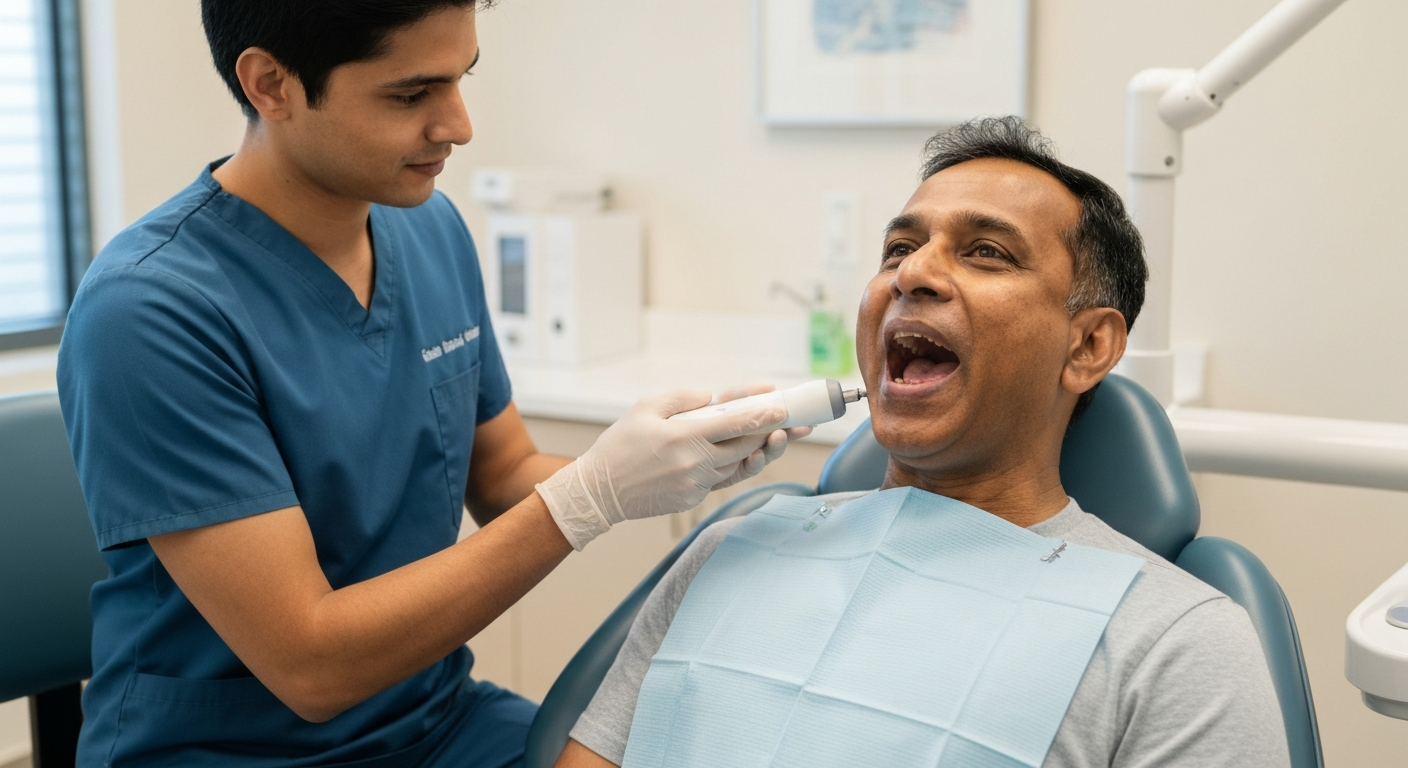

Snore laser treatment uses focused light energy to tighten and reshape the soft tissues in your throat—specifically the uvula, soft palate, and surrounding tissue—that vibrate and cause snoring. The procedure takes 15–30 minutes, requires no general anesthesia, and most people return to normal activities the same day. While it can reduce snoring volume by 50–70% in appropriate candidates, it's not a cure for everyone and works best for people whose snoring originates from floppy palate tissue rather than nasal obstruction or obstructive sleep apnea.
The laser delivers controlled thermal energy to soft palate tissue, triggering a wound-healing response that tightens and stiffens the tissue over several weeks.
When you snore, air flowing through a narrowed airway causes relaxed soft tissue to vibrate—like a flag flapping in the wind. Laser treatment addresses this by creating microscopic areas of controlled damage in the soft palate and uvula. As these tiny wounds heal, collagen contracts and new collagen forms, pulling the tissue tighter.
The two main laser technologies used for snoring are:
| Laser Type | How It Works | Sessions Needed | Downtime |
|---|---|---|---|
| CO2 Laser (Traditional) | Vaporizes tissue to physically reduce and reshape the uvula and soft palate | 1–3 | 1–2 weeks sore throat |
| Er:YAG Laser (NightLase) | Heats tissue without cutting to stimulate collagen tightening | 3–5 | Minimal (hours) |
The newer Er:YAG approach—often marketed as NightLase or similar brand names—has largely replaced the older surgical CO2 method because it causes less pain and doesn't require tissue removal.
"Laser-assisted uvulopalatoplasty results in significant reduction of snoring loudness and frequency in patients with primary snoring, though patient selection remains critical for optimal outcomes." — Dr. B. Tucker Woodson at the American Academy of Otolaryngology
Also Read: How Many Decibels Is Snoring? Volume Levels Explained
Laser treatment works best for people with primary snoring caused by floppy soft palate tissue—not for those with obstructive sleep apnea, nasal blockages, or tongue-based obstruction.
Before recommending laser treatment, an ENT specialist or sleep medicine physician will evaluate:
The ideal candidate has:
- Confirmed primary snoring without sleep apnea (AHI below 5)
- Visible elongated uvula or floppy soft palate on exam
- BMI under 30
- No significant nasal obstruction
Also Read: Snoring vs Sleep Apnea
Most laser snoring treatments take 15–30 minutes per session, use only topical or local anesthesia, and feel like mild warmth or tingling in your throat.
Here's what happens during a typical NightLase-style treatment:
For the older CO2 surgical approach, local anesthetic injections numb the area, and the surgeon physically trims and reshapes tissue. This involves more discomfort and a longer recovery.
Most non-ablative protocols require 3–5 sessions spaced 2–3 weeks apart. Results develop gradually as collagen remodels over 2–3 months following the final session.
Non-ablative laser treatment has minimal downtime—most people experience only mild throat irritation for a few hours—while surgical approaches require 1–2 weeks of recovery.
| Side Effect | Non-Ablative (NightLase) | Surgical (LAUP) |
|---|---|---|
| Sore throat | Mild, hours to 1 day | Moderate to severe, 1–2 weeks |
| Difficulty swallowing | Rare | Common for 7–14 days |
| Voice changes | Very rare | Possible temporarily |
| Bleeding | None | Possible |
| Return to work | Same day | 3–7 days |
Common post-procedure instructions include avoiding very hot or spicy foods for 24 hours and staying hydrated. Most people describe the sensation after non-ablative treatment as similar to having eaten toast that scratched their throat.
"The Er:YAG laser provides a non-invasive alternative that patients tolerate well, with most reporting only minor discomfort comparable to a mild sore throat." — American Academy of Sleep Medicine
Studies show snoring volume and frequency can decrease by 50–70% in well-selected patients, but results vary significantly and may diminish over 1–3 years.
The research on laser snoring treatment is mixed, partly because older studies focused on the more invasive LAUP technique while newer studies examine gentler approaches. Key findings:
The treatment is not a permanent cure. Tissue gradually re-relaxes over time, and many people need maintenance sessions every 12–18 months to sustain results.
Also Read: Does Snoring Mean Deep Sleep? The Truth About Sleep Quality
Expect to pay $1,500–$4,000 for a complete treatment series in 2026, typically not covered by insurance since snoring without apnea is considered cosmetic.
| Cost Factor | Typical Range |
|---|---|
| Single NightLase session | $400–$800 |
| Full 3-session package | $1,200–$2,400 |
| Full 5-session package | $1,800–$3,500 |
| Surgical LAUP (if offered) | $2,000–$4,000 |
| Annual maintenance session | $400–$800 |
Insurance rarely covers snoring treatment unless you have documented sleep apnea that hasn't responded to CPAP. Even then, laser approaches may be considered experimental by many insurers.
Geographic location matters significantly—procedures in major metropolitan areas cost more than in smaller markets. Some dental practices now offer laser snoring treatment at lower prices than ENT specialty clinics.
Many people can significantly reduce snoring with less invasive approaches, including oral appliances, positional therapy, and lifestyle changes.
Before committing to laser treatment, consider:
Mandibular Advancement Devices (MADs): Custom or semi-custom mouthpieces that hold your lower jaw forward, opening the airway. They're effective for mild to moderate snoring and mild sleep apnea, reversible, and less expensive than laser treatment.
Positional Therapy: If you only snore on your back, devices that keep you sleeping on your side can eliminate the problem entirely.
Weight Management: Losing even 10% of body weight often dramatically reduces snoring in people who are overweight.
Nasal Treatments: If nasal congestion contributes to your snoring, addressing allergies or a deviated septum may help more than palate treatment.
CPAP: For people with sleep apnea, CPAP remains the gold standard and is far more effective than laser treatment at protecting your health.
Also Read: Snore No More: 6 Evidence-Based Ways to Stop Snoring
Laser snoring treatment is worth considering if you've tried conservative approaches without success, have confirmed primary snoring without apnea, and your anatomy suggests palatal origin.
The procedure makes the most sense when:
- A sleep study has ruled out obstructive sleep apnea
- You've tried positional therapy and it didn't help
- You can't tolerate an oral appliance
- Your ENT confirms floppy palate tissue on examination
- You understand results may require maintenance
It's not the right choice if:
- You have untreated sleep apnea (the health risks remain even if snoring quiets)
- Your snoring comes primarily from nasal obstruction
- You have a BMI over 35
- You expect a permanent one-time cure
For snoring that persists despite trying these approaches, an oral appliance designed specifically for snoring offers a non-surgical alternative worth exploring before committing to laser treatment.
| ✓Our Pick |
Shop custom-fit anti-snoring mouthpieces — repositions jaw to open airway A top-rated pick that works — readers who tried this reported noticeable improvement within days. Learn More → |
Snore laser treatment tightens soft palate tissue to reduce the vibration that causes snoring, with modern non-ablative approaches requiring 3–5 sessions and minimal downtime. It works best for primary snoring originating from the palate—not for sleep apnea, nasal obstruction, or tongue-based snoring. Results typically reduce snoring volume by 50–70% in appropriate candidates but may diminish over 1–3 years, requiring maintenance sessions. At $1,500–$4,000 for a full treatment series, it's a significant investment that insurance rarely covers, so trying conservative approaches like oral appliances and positional therapy first makes sense for most people.
Non-ablative laser treatment (NightLase-style) causes minimal discomfort—most people describe mild warmth and a scratchy sensation during treatment, followed by throat irritation similar to eating rough food for a few hours afterward. No anesthesia is typically needed. The older surgical LAUP approach is more painful, requiring local anesthesia and causing significant sore throat for 1–2 weeks.
Results from laser snoring treatment typically last 12–24 months before some return of snoring occurs. The collagen remodeling that tightens tissue gradually relaxes over time. Most practitioners recommend maintenance sessions every 12–18 months to sustain results. A small percentage of patients maintain improvement for 3+ years without additional treatment.
Insurance rarely covers laser snoring treatment because primary snoring without sleep apnea is considered a quality-of-life issue rather than a medical necessity. If you have documented obstructive sleep apnea that hasn't responded to CPAP, some insurers may cover surgical approaches, but non-ablative laser treatments are often classified as experimental and excluded from coverage.
No. Laser treatment can reduce snoring volume but does not reliably treat obstructive sleep apnea. In fact, using laser treatment for sleep apnea can be dangerous—it may quiet the snoring while leaving the breathing pauses and oxygen drops untreated. Anyone considering laser treatment should have a sleep study first to rule out apnea. CPAP, oral appliances, or other evidence-based apnea treatments are appropriate for sleep apnea.
Studies report that 70–80% of appropriately selected patients experience meaningful snoring reduction after a full treatment course. However, "success" varies by definition—bed partner satisfaction often improves more than objective snoring measurements. Long-term success rates are lower, with many patients experiencing some return of snoring within 2 years. Patients with floppy palate tissue and normal BMI see the highest success rates.
Reviewed and Updated on June 14, 2026 by George Wright