


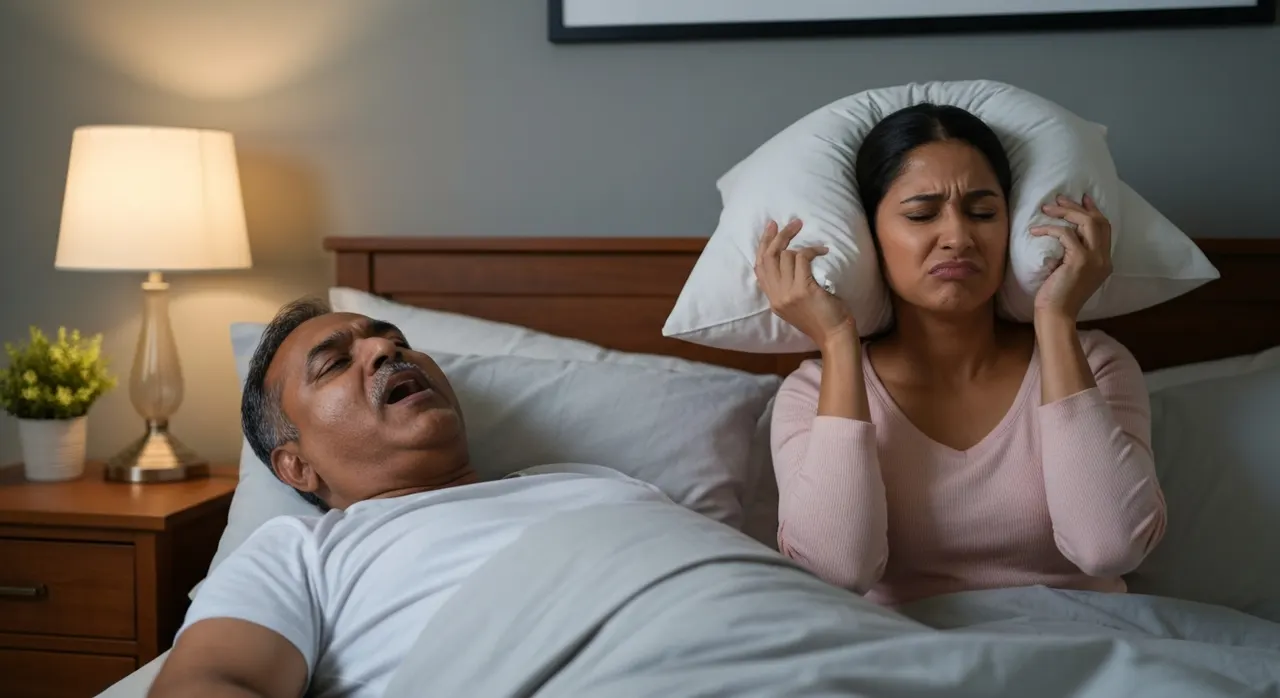
Snoring typically measures between 40 and 70 decibels (dB), roughly the volume of normal conversation to a running vacuum cleaner — though severe cases can exceed 90 dB, louder than a lawnmower.
The exact decibel level of a snore depends on several factors: sleeping position, airway obstruction, body weight, and whether an underlying condition like obstructive sleep apnea is involved. Understanding where your snoring falls on the decibel scale helps you gauge whether it's a minor nuisance or a sign of something more serious that needs attention.
How Loud Is Snoring in Decibels? A 2026 Breakdown
Most snoring falls between 40 and 70 dB, but the range extends from barely audible to genuinely damaging.
To put snore decibels in perspective, here's how common sounds compare:
| Sound Source | Decibel Level (dB) |
|---|---|
| Whisper | 30 dB |
| Quiet office | 40 dB |
| Normal conversation | 60 dB |
| Average snoring | 40–70 dB |
| Vacuum cleaner | 70 dB |
| Heavy traffic | 80 dB |
| Loud snoring (severe) | 80–90 dB |
| Lawnmower | 90 dB |
| Chainsaw / Rock concert | 100–110 dB |
| Loudest recorded snore | 111.6 dB |
The world record for the loudest snore ever recorded stands at 111.6 dB — louder than a low-flying jet aircraft and well into territory that can cause hearing damage with prolonged exposure.
"Prolonged exposure to sounds at or above 70 decibels can damage hearing over time. Sounds at or above 85 decibels can damage hearing more quickly." — Centers for Disease Control and Prevention
This means a bed partner sleeping next to someone who snores at 80+ dB is experiencing noise levels that, night after night, could genuinely affect their hearing — not to mention their sleep quality.
| ✓Quick Fix |
The Quick Fix Most People Reach for First A low-cost, no-commitment option to rule out before spending more on this problem. See on Amazon → |
Why Do Some People Snore Louder Than Others?
Snoring volume depends on how much the airway is obstructed and how forcefully air moves through the narrowed passage.
Several factors determine how many dB a snore reaches:
Does Sleeping Position Affect Snore Volume?
Back sleeping allows the tongue and soft palate to collapse backward into the airway, creating more obstruction and louder vibrations. Side sleepers typically snore more quietly because gravity pulls tissues away from the airway rather than into it.
Does Body Weight Increase Snoring Decibels?
Excess weight, particularly around the neck, adds tissue that can narrow the airway. Studies consistently show that people with higher body mass index (BMI) tend to snore louder and more frequently.
"Obesity is the strongest risk factor for OSA and is present in over 60% of patients." — American Academy of Sleep Medicine
Do Alcohol and Sedatives Make Snoring Louder?
Alcohol relaxes throat muscles more than normal sleep would, causing greater airway collapse. A nightcap before bed can easily push a 50 dB snorer into the 70+ dB range.
Does Nasal Congestion Affect Snore Decibels?
Blocked nasal passages force mouth breathing, which changes airflow dynamics and often increases snoring volume. Allergies, colds, and deviated septums all contribute to louder snoring.
Also Read: Does Snoring Mean Deep Sleep? The Truth About Sleep Quality
What Decibel Level of Snoring Is Dangerous?
Snoring above 50 dB consistently disrupts a partner's sleep, and levels above 85 dB can cause hearing damage over time.
The health implications of snoring aren't just about the snorer — they extend to anyone sharing the bedroom.
Impact on Sleep Partners
Research shows that bed partners of heavy snorers lose an average of one hour of sleep per night. At 60–70 dB, snoring repeatedly triggers micro-arousals (brief awakenings that fragment sleep cycles), even if the partner doesn't fully wake up. Over months and years, this leads to chronic sleep deprivation, daytime fatigue, and increased health risks.
Connection to Obstructive Sleep Apnea
Loud snoring — particularly above 60 dB with pauses or gasping sounds — is a hallmark symptom of obstructive sleep apnea (OSA). In OSA, the airway completely collapses multiple times per hour, cutting off oxygen and forcing the body to partially wake to resume breathing.
The decibel level alone doesn't diagnose sleep apnea, but louder snoring correlates with more severe airway obstruction. If your snoring regularly exceeds 70 dB or includes silent pauses followed by loud gasps, a sleep study is worth considering.
Also Read: Calming audiobooks and sleep stories — free for the first listen
How to Measure Your Snoring Decibels at Home
Smartphone apps and dedicated sleep trackers can give you a reasonable estimate of your snoring volume.
You don't need professional equipment to get a baseline measurement:
-
Smartphone apps — Apps like SnoreLab, Sleep Cycle, and Decibel X can record overnight audio and estimate snore decibels. Place your phone on the nightstand, about arm's length away, for the most accurate readings.
-
Smart watches and rings — Wearables like the Ultrahuman Ring track sleep metrics including snoring patterns and can detect apnea-like events through blood oxygen monitoring.
-
Dedicated sound level meters — For precise measurements, inexpensive decibel meters (around $20–30) provide more accuracy than phone microphones.
Track your snoring for at least a week to establish a pattern. Note variables like alcohol consumption, sleeping position, and congestion — you'll likely see clear correlations with decibel spikes.
Also Read: Does Alcohol Cause Snoring? 6 Facts & How to Stop It
How to Reduce Snoring Decibels
Reducing snore volume often comes down to keeping the airway more open during sleep.
Practical interventions that can lower your snoring decibels:
-
Change sleeping position — Side sleeping can reduce snoring by 50% or more for many people. A body pillow or tennis ball sewn into the back of a shirt prevents rolling onto your back.
-
Elevate your head — Raising the head of your bed by 4–6 inches (or using a wedge pillow) helps keep airways open.
-
Address nasal congestion — Nasal strips, saline rinses, or treating underlying allergies can reduce mouth breathing and lower snore volume.
-
Limit alcohol before bed — Avoid alcohol within 3–4 hours of sleep to prevent excessive muscle relaxation.
-
Maintain healthy weight — Even modest weight loss can significantly reduce neck tissue and improve airway patency.
-
Use an anti-snoring mouthpiece — Mandibular advancement devices (MADs) reposition the lower jaw slightly forward, preventing the tongue from falling back into the airway.
Also Read: Is Snoring Unhealthy? 6 Risks & What Your Body Is Telling You
In Short
Snoring typically ranges from 40 to 70 decibels — comparable to normal conversation up to a vacuum cleaner — though severe cases can exceed 90 dB and approach hearing-damage territory. The volume depends on airway obstruction, sleeping position, body weight, and factors like alcohol consumption. Snoring above 60 dB consistently disrupts a partner's sleep, and loud snoring with pauses often signals obstructive sleep apnea. Simple interventions like side sleeping, weight management, and anti-snoring mouthpieces can significantly reduce snore decibels and improve sleep quality for everyone in the household.
| ✓Our Pick |
Anti-snoring mouthpiece — adjustable mandibular advancement device (MAD) One of the highest-rated products in its category — a reliable, widely used fix. See on Amazon → |
What You Also May Want To Know
How many dB is considered loud snoring?
Snoring above 60 dB is generally considered loud — this is roughly the volume of a normal conversation and enough to consistently wake or disturb a sleeping partner. Snoring in the 70–90+ dB range is severe and may indicate significant airway obstruction or obstructive sleep apnea.
Can snoring actually damage hearing?
Technically, yes — if a bed partner is exposed to snoring above 85 dB for extended periods night after night, cumulative hearing damage is possible. The CDC notes that prolonged exposure to sounds at or above 70 dB can damage hearing over time, though most snoring falls below this threshold.
What does 50 decibels of snoring sound like?
50 dB of snoring sounds similar to moderate rainfall or a quiet conversation in the next room. It's noticeable but not jarring — your partner might describe it as a soft rumble that occasionally wakes them during light sleep phases.
Is there a link between snoring decibels and sleep apnea?
Yes, louder snoring correlates with more severe airway obstruction, which is the underlying mechanism of obstructive sleep apnea. However, volume alone doesn't diagnose sleep apnea — the key indicators are snoring with pauses, gasping, or choking sounds, along with daytime fatigue despite adequate sleep time.
How accurate are phone apps for measuring snore decibels?
Smartphone apps provide reasonable estimates but aren't as accurate as dedicated sound level meters. Phone microphones vary in quality, and placement affects readings significantly. For tracking trends and identifying patterns, apps work well — but if you need precise measurements for medical purposes, a calibrated decibel meter is more reliable.