


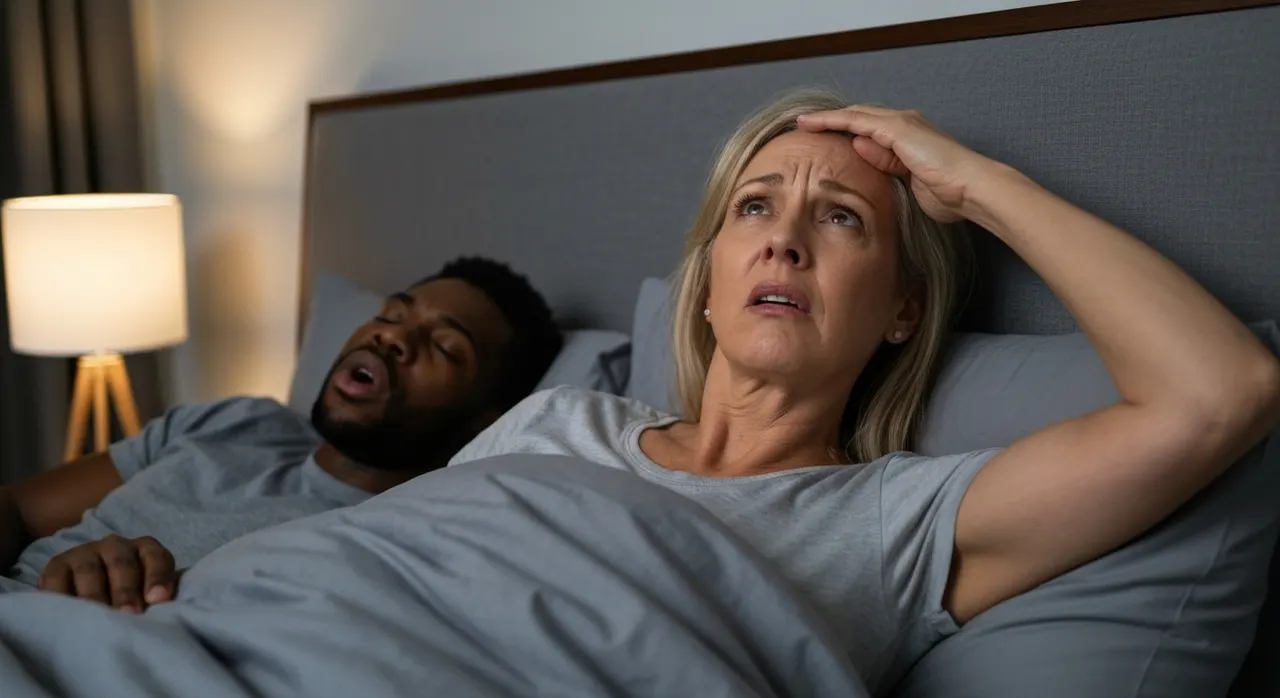
If your partner snores so loud you can't sleep, the Sleep Number bed's Partner Snore feature gently raises their head 7 degrees — often enough to quiet mild snoring without waking them — but it won't solve every case, especially if the snoring stems from sleep apnea or severe obstruction.
You're exhausted. Your husband snores like a chainsaw, your wife sounds like a freight train, or your boyfriend's rumbling keeps you staring at the ceiling until 3 a.m. You've tried nudging, earplugs, and sleeping on the couch — and you're wondering if a $3,000+ smart bed can actually fix this. The short answer: Sleep Number's Partner Snore technology works for some couples, but it's not a guaranteed solution. Let's break down exactly how it works, when it helps, and what to do when it doesn't.
| ✓Quick Fix |
The Quick Fix Most People Reach for First One of the simplest things to try immediately — no appointment, no waiting. See on Amazon → |
How the Sleep Number Partner Snore Feature Works
The Partner Snore setting automatically elevates your partner's head by 7 degrees when activated, which opens the airway and reduces the tissue vibration that causes snoring — all without requiring them to wake up or change positions manually.
Sleep Number beds use adjustable air chambers under each side of the mattress, and the Partner Snore feature leverages the same FlexFit adjustable base technology that lets you raise or lower the head and foot sections. When you tap the Partner Snore button in the SleepIQ app (or use voice commands through Alexa or Google Home), the bed quietly tilts your partner's side to that 7-degree angle over about 30 seconds.
The science behind this is straightforward: when you lie flat, gravity pulls the tongue and soft palate backward, narrowing the airway. Even a modest head elevation shifts these tissues forward and reduces the vibration that produces snoring. A 2017 study in the Journal of Clinical Sleep Medicine found that head-of-bed elevation significantly reduced snoring frequency and intensity in mild to moderate cases.
The feature is available on Sleep Number's 360 smart beds (the i8, i10, iLE, and pse models with FlexFit 2 or FlexFit 3 bases). You won't find it on their c2 or c4 entry-level models, which don't have the adjustable base capability.
"Elevating the head of bed is a simple, non-invasive intervention that can reduce snoring severity in many patients with positional snoring." — Dr. Eric Kezirian at USC Keck School of Medicine
Also Read: Free sleep stories and calming audiobooks to quiet a racing mind
Does It Actually Work? What the Reviews Say in 2026
Partner Snore works best for mild, positional snorers — people who snore primarily when flat on their back — but reviews are mixed for heavy snorers or those with underlying sleep apnea.
User reviews on Sleep Number's site and Reddit threads reveal a pattern: couples with occasional or moderate snoring often report noticeable improvement. The non-snoring partner can discreetly activate the feature without waking their spouse, and many say the snoring quiets within a minute or two of the bed adjusting.
However, partners of severe snorers frequently report that 7 degrees isn't enough. If your husband snores so loud the walls shake, or your wife's snoring sounds like it could wake the neighbors, a slight incline may not overcome the degree of airway obstruction involved.
| Snoring Severity | Partner Snore Effectiveness | Better Alternative |
|---|---|---|
| Mild (occasional, position-dependent) | Often effective | May be sufficient alone |
| Moderate (most nights, audible from next room) | Sometimes helpful | Combine with mouthpiece |
| Severe (gasping, choking sounds, very loud) | Rarely sufficient | Sleep study, MAD, or CPAP |
The feature also won't help if your partner rolls onto their side after the bed adjusts — though to be fair, side-sleeping often reduces snoring naturally anyway.
Also Read: Sleeping With a Snorer: 7 Strategies That Actually Work
When Sleep Number Won't Solve the Problem
If your partner's snoring includes gasping, choking, or silent pauses followed by loud snorts, they may have obstructive sleep apnea — a condition that requires proper diagnosis and treatment beyond what any bed can provide.
Sleep apnea affects an estimated 30 million Americans, and many are undiagnosed. The hallmarks include:
- Snoring that stops and starts abruptly
- Gasping or choking sounds during sleep
- Witnessed pauses in breathing
- Excessive daytime sleepiness despite a full night in bed
- Morning headaches or dry mouth
A Sleep Number bed — no matter how advanced — cannot treat sleep apnea. If you notice these symptoms in your partner, the right move is a sleep study (polysomnography), not a mattress upgrade. Untreated sleep apnea increases the risk of hypertension, heart disease, stroke, and car accidents from daytime drowsiness.
"Snoring is often dismissed as a nuisance, but when accompanied by breathing pauses or excessive daytime sleepiness, it warrants medical evaluation for obstructive sleep apnea." — American Academy of Sleep Medicine
Also Read: Snoring vs Sleep Apnea: Key Differences & When to Worry
How to Sleep When Your Partner Snores: 6 Strategies That Work
Beyond smart bed features, a combination of anti-snore devices, sleep positioning, and environmental adjustments can help you get rest even when your spouse snores loudly.
Can a Mandibular Advancement Device Stop the Snoring?
Mandibular advancement devices (MADs) are mouthpieces that hold the lower jaw slightly forward during sleep. This prevents the tongue from falling back and blocking the airway — the same mechanism Sleep Number targets with head elevation, but more directly. Custom-fitted MADs from a dentist run $500–$1,500, but over-the-counter options like boil-and-bite mouthpieces cost $30–$100 and work well for many people.
Does Sleeping on Your Side Reduce Snoring?
Side-sleeping is one of the most effective free interventions for positional snorers. When your partner lies on their back, gravity works against them. A body pillow behind their back or a wedge pillow can help them stay on their side. Some people sew a tennis ball into the back of a sleep shirt — uncomfortable enough to prevent back-sleeping without fully waking them.
Will White Noise Help You Sleep Through Snoring?
White noise machines don't stop snoring, but they can mask it enough to help you fall asleep and stay asleep. The key is consistency: your brain filters out steady background noise more easily than the variable rumble of snoring. Look for machines with pink noise or brown noise options — these lower-frequency sounds do a better job masking the bass tones of loud snoring.
Are Earplugs Effective for a Snoring Partner?
High-fidelity earplugs rated at 25–33 decibels of noise reduction can take the edge off moderate snoring. Foam earplugs work for many people, though some find them uncomfortable for all-night wear. Silicone or wax earplugs mold to your ear canal and may feel less intrusive. Keep in mind that earplugs won't block severe snoring entirely — they reduce volume, not eliminate it.
Should You Consider Separate Sleep Spaces?
Sleep divorce — sleeping in separate beds or bedrooms — sounds dramatic, but roughly 25% of American couples already do it, according to a 2023 survey by the American Academy of Sleep Medicine. If your spouse snores and you can't sleep no matter what you try, separate sleep spaces may actually improve your relationship by eliminating resentment and chronic sleep deprivation. Many couples report feeling closer emotionally when they're both well-rested.
Can Your Partner Reduce Snoring Through Lifestyle Changes?
Several factors make snoring worse, and addressing them can reduce both volume and frequency:
- Alcohol before bed relaxes throat muscles and worsens snoring — avoiding drinks within 3 hours of sleep often helps
- Excess weight, particularly around the neck, increases airway compression
- Nasal congestion from allergies or a deviated septum forces mouth breathing, which increases snoring
- Sedating medications like antihistamines or muscle relaxants can have the same effect as alcohol
Also Read: Does Alcohol Cause Snoring? 6 Facts & How to Stop It
Should You Buy a Sleep Number Bed for Snoring?
A Sleep Number 360 smart bed with Partner Snore is worth considering if your budget allows and your partner's snoring is mild to moderate — but it shouldn't be your first-line solution or your only intervention.
The Partner Snore feature is essentially an automated way to elevate your partner's head, which you could replicate with a wedge pillow ($30–$80) or an adjustable bed frame from other manufacturers ($300–$1,500). What you're paying for with Sleep Number is the convenience, the app integration, and the dual-sided adjustability that lets each partner customize their own firmness.
If you're already shopping for a new mattress and snoring is a concern, the Partner Snore feature is a nice addition. But if you're buying a Sleep Number bed specifically to fix snoring, you may be disappointed — especially if the underlying cause is something a bed can't address.
A more cost-effective approach: start with a mandibular advancement mouthpiece to address the snoring at its source. If your partner's snoring improves significantly with a MAD, you'll know the problem is treatable and can decide whether to pursue additional comfort upgrades like a smart bed.
| ✓Our Pick |
Anti-snoring mouthpiece — adjustable mandibular advancement device (MAD) Highly rated by thousands of buyers — one of the most effective at-home options for this. See on Amazon → |
In Short
Sleep Number's Partner Snore feature offers a convenient, hands-free way to reduce mild positional snoring by elevating your partner's head 7 degrees — but it's not a cure-all. For moderate to severe snoring, you'll likely need a mandibular advancement device, lifestyle changes, or a sleep study to rule out apnea. If you can't sleep because your husband, wife, or partner snores so loud, the best approach is addressing the snoring itself rather than just adapting around it — your sleep, your health, and your relationship will all benefit.
What You Also May Want To Know
How Can I Sleep Next to Someone Who Snores Loud?
Combine multiple strategies: use a white noise machine to mask the sound, wear high-quality earplugs rated for 25+ decibels, and encourage your partner to sleep on their side. If these don't help, consider whether your partner should try an anti-snoring mouthpiece — addressing the snoring at its source is more sustainable than working around it indefinitely.
What Should I Do When My Partner Snores and I Can't Sleep?
Start by ruling out sleep apnea — if your partner gasps, chokes, or has breathing pauses, they need a sleep study. For simple snoring, try a mandibular advancement device, head elevation with a wedge pillow, or positional therapy to keep them off their back. Many couples find that treating the snoring directly improves sleep for both partners and reduces relationship tension.
Why Does My Husband Snore So Loud That I Can't Sleep?
Loud snoring typically results from significant airway obstruction — either from the tongue falling back, excess soft tissue in the throat, nasal congestion, or all three. Contributing factors include sleeping on the back, alcohol consumption, excess weight (especially around the neck), and structural issues like a deviated septum. If the volume is severe enough to keep you awake, a medical evaluation is worthwhile to check for sleep apnea.
Can a Smart Bed Really Stop Snoring?
Smart beds like Sleep Number can reduce snoring in some cases by automatically elevating the head, which opens the airway. However, they work best for mild, positional snoring. For moderate to severe snoring — especially if sleep apnea is involved — a bed alone won't solve the problem. Think of it as one tool in a larger toolkit, not a standalone solution.
Is Sleeping in Separate Beds Bad for a Relationship?
Not necessarily. Research suggests that chronic sleep deprivation from a snoring partner can cause more relationship damage than sleeping apart. About 25% of American couples sleep separately, and many report improved intimacy and less resentment when both partners are well-rested. The key is maintaining connection through other means — bedtime conversations, morning coffee together, or other routines that keep you close emotionally.