


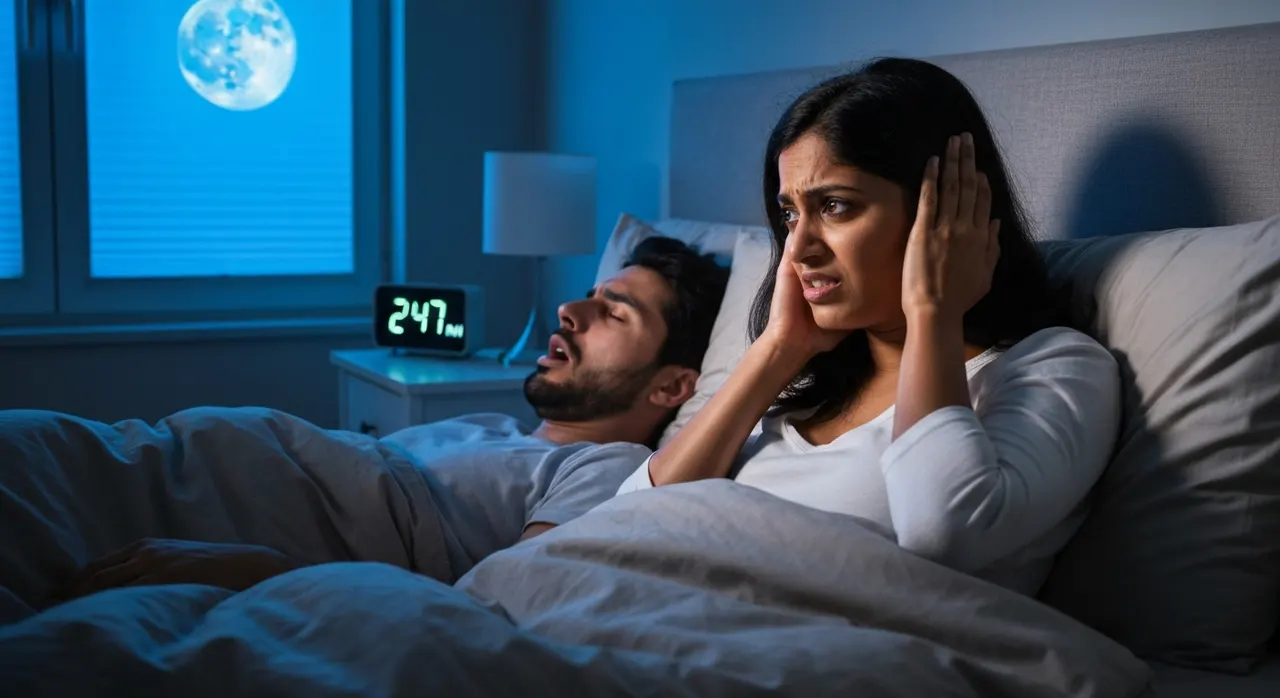
If your partner's snoring is keeping you awake, the fastest relief comes from using earplugs or white noise to mask the sound, while longer-term solutions involve helping the snorer address the root cause — such as a custom-fit anti-snoring mouthpiece that repositions their jaw.
Sharing a bed with someone who snores can feel like trying to sleep next to a running chainsaw. The frustration builds night after night, and the sleep deprivation that follows affects everything from your mood to your immune system. The good news is that you have options — both for surviving tonight and for finding a permanent fix. This guide covers immediate coping strategies, environmental modifications, and ways to address the snoring itself so both of you can finally rest.
Why Snoring Makes It So Hard to Fall Asleep
Snoring disrupts your sleep because it's unpredictable, variable in volume, and often occurs right as you're drifting off — triggering your brain's alertness response when you're most vulnerable to waking.
Unlike steady background noise (a fan, traffic hum, or rainfall), snoring is irregular. It starts and stops without warning, changes pitch, and can spike from a soft rumble to 80+ decibels in seconds. Your brain is wired to notice sudden changes in your environment — a survival mechanism that kept our ancestors alive but now keeps you staring at the ceiling at 2 a.m.
The timing makes it worse. Snoring typically intensifies during deeper sleep stages, which means your partner's loudest snores often coincide with your lightest, most easily disturbed sleep phases. You're caught in a cycle: just as you begin to relax and drift off, a snort or gasp pulls you back to full alertness.
"Bed partners of snorers report significantly higher rates of daytime sleepiness, morning headaches, and relationship dissatisfaction compared to those sleeping with non-snorers." — Dr. Michael Breus at The Sleep Doctor
The emotional component compounds the problem. Once you've been woken repeatedly, you may start anticipating the next snore, which creates anxiety that prevents sleep even during quiet moments. This hypervigilance can persist for hours.
| ✓Quick Fix |
The Quick Fix Most People Reach for First A low-cost, no-commitment option to rule out before spending more on this problem. See on Amazon → |
Immediate Solutions for Tonight
When you need to fall asleep right now despite active snoring, your best tools are sound masking, physical barriers, and strategic positioning — tactics that reduce the snoring's impact without requiring your partner to change anything.
Do Earplugs Actually Block Snoring?
Earplugs are the most direct solution, but effectiveness varies widely by type. Foam earplugs with a Noise Reduction Rating (NRR) of 32-33 dB are the highest-rated option and can reduce perceived snoring volume by roughly half. However, they won't eliminate it completely — especially for loud snorers reaching 70-90 dB.
For the best seal, roll foam earplugs into a tight cylinder, pull your ear up and back, and insert fully. Hold for 20-30 seconds while the foam expands. Silicone putty earplugs mold to your ear canal and often feel more comfortable for side sleepers. Some people layer earplugs with over-ear noise-canceling headphones for maximum sound blocking.
Can White Noise Machines Drown Out Snoring?
White noise works differently than earplugs — instead of blocking sound, it masks irregularity. A consistent 50-60 dB white noise can make 70 dB snoring far less noticeable because your brain no longer perceives the starts and stops as sharply.
| Sound Masking Option | Pros | Cons | Best For |
|---|---|---|---|
| White noise machine | Consistent, adjustable volume, no charging needed | Adds another device to bedroom | All-night coverage |
| Fan | Provides airflow too, familiar sound | Can be cold in winter, limited sound options | Warm sleepers |
| Phone app | Free or cheap, many sound options | May drain battery, temptation to check phone | Budget option |
| Brown/pink noise | Lower frequency masks low rumbles better | Less effective for high-pitched snoring | Deep snorers |
Position the sound source between you and the snorer for maximum masking effect. The sound should be loud enough to blend with the snoring but not so loud it keeps you awake on its own.
Does Changing Sleeping Positions Help?
If you typically fall asleep facing your partner, try turning away. Sound is directional, and putting your "good ear" down while facing away can reduce perceived volume significantly. Some people find that sleeping with a pillow partially covering their exposed ear helps without the discomfort of earplugs.
Going to bed before the snorer gives you a head start. Once you're in deeper sleep stages, you're less likely to be disturbed by moderate snoring. If your partner watches TV or reads before bed, use that window to get 30-60 minutes of uninterrupted sleep.
Also Read: How Many Decibels Is Snoring? Volume Levels Explained
Environmental Changes That Reduce Snoring Impact
Modifying your sleep environment can make snoring less disruptive without requiring either person to wear anything or change habits — think of it as soundproofing your sleep experience.
Does Bedroom Layout Affect How Much You Hear?
The position of your bed matters more than you might expect. If possible, orient the bed so the snorer's head is farther from your head — sleeping head-to-foot is an extreme version of this, but even diagonal positioning can help. Soft surfaces absorb sound, so thick curtains, rugs, and upholstered headboards reduce echo and make snoring seem less sharp.
Some couples invest in larger mattresses specifically for this reason. A California King puts maximum distance between sleepers, and the extra space means you're less likely to be physically jostled when your partner shifts position.
Can Elevating the Snorer's Head Help?
Raising the head of the bed by 4-6 inches — or using a wedge pillow — can reduce snoring intensity in many people. Gravity helps keep airways more open when the head is elevated. This won't eliminate snoring caused by structural issues or sleep apnea, but it often reduces volume and frequency for positional snorers.
"Elevating the head of the bed can reduce the severity of obstructive sleep apnea by approximately 20-30% in mild to moderate cases." — American Academy of Sleep Medicine
You can also try encouraging your partner to sleep on their side. Snoring is typically worst when sleeping on the back because gravity pulls the tongue and soft palate backward. Anti-snore pillows or a tennis ball sewn into the back of a sleep shirt can help maintain side-sleeping through the night.
Also Read: Free audiobooks on managing stress and sleeping better
Addressing the Snoring Itself in 2026
The most effective long-term solution isn't coping with snoring — it's reducing or eliminating it at the source, which benefits both the snorer's health and your sleep quality.
Do Anti-Snoring Mouthpieces Actually Work?
Mandibular advancement devices (MADs) are among the most effective over-the-counter solutions. These mouthpieces hold the lower jaw slightly forward during sleep, which prevents the tongue from falling back and blocking the airway. Studies show they reduce snoring in 70-90% of users.
Custom-fit options work better than one-size-fits-all versions because they stay in place through the night. The SnoreMeds mouthpiece, for example, uses a boil-and-bite fitting process similar to sports mouth guards, creating a personalized fit without the expense of a dental visit.
For snoring caused by nasal congestion rather than throat obstruction, nasal dilators or strips may help. These won't work for mouth snorers but can be effective for people who snore primarily due to restricted nasal passages.
Should You Encourage a Sleep Study?
If the snoring is accompanied by gasping, choking, or pauses in breathing, it may indicate obstructive sleep apnea — a condition that affects an estimated 30 million Americans, many undiagnosed. Sleep apnea requires medical treatment, typically with a CPAP machine, and ignoring it carries serious health risks including heart disease and stroke.
Signs that suggest sleep apnea rather than simple snoring:
- Witnessed breathing pauses during sleep
- Waking up gasping or choking
- Excessive daytime sleepiness despite "enough" sleep hours
- Morning headaches
- Difficulty concentrating during the day
A sleep study can be done at home or in a lab and provides definitive answers about what's causing the snoring and how severe it is.
| ✓Our Pick |
Anti-snoring mouthpiece — adjustable mandibular advancement device (MAD) A top-rated pick that works — readers report noticeable improvement within days. See on Amazon → |
When Separate Bedrooms Make Sense
Sleeping apart isn't a relationship failure — for many couples, it's a practical solution that improves both partners' health and actually strengthens the relationship by eliminating nightly resentment.
Sleep divorce — choosing separate sleeping arrangements — has become increasingly common and openly discussed. A 2023 American Academy of Sleep Medicine survey found that over a third of Americans occasionally or regularly sleep in a different room from their partner.
The stigma is fading as research confirms what affected couples already know: chronic sleep deprivation damages relationships more than sleeping apart does. Partners who sleep separately but well often report better communication, more patience, and improved intimacy compared to when they were exhausted and irritable from shared-bed sleep loss.
This doesn't have to be permanent or every night. Some couples sleep apart on weeknights and together on weekends. Others reunite in the same bed for intimacy before one person moves to a separate room for actual sleep. The arrangement that works is the one that leaves both partners rested and connected.
Also Read: Sleeping With a Snorer: 7 Strategies That Actually Work
Lifestyle Factors That Reduce Snoring
Certain lifestyle changes can significantly reduce snoring volume and frequency — these won't help you fall asleep tonight, but they can make future nights easier for both of you.
Alcohol is one of the biggest snoring triggers. It relaxes throat muscles more than normal sleep does, causing the airway to narrow and vibrate more intensely. Avoiding alcohol for 3-4 hours before bed can make a noticeable difference.
Weight plays a significant role in many snorers. Excess tissue around the neck and throat increases airway obstruction. Even modest weight loss — 10-15 pounds — can reduce snoring severity in overweight individuals.
Other factors that can worsen snoring:
- Sedating medications (antihistamines, sleep aids, muscle relaxants)
- Smoking, which irritates and inflames airway tissues
- Sleeping on the back
- Nasal congestion from allergies or illness
- Dehydration, which makes secretions stickier
Also Read: Snoring vs Sleep Apnea: Key Differences & When to Worry
In Short
Getting sleep when someone near you is snoring requires a two-pronged approach: immediate coping strategies like earplugs and white noise to survive tonight, and longer-term solutions that address the snoring itself. Earplugs and sound machines mask the noise; elevating the snorer's head and encouraging side-sleeping can reduce it; and anti-snoring mouthpieces that reposition the jaw address one of the most common root causes. If snoring is accompanied by gasping or breathing pauses, a sleep study should be the next step to rule out sleep apnea.
Also Read: Does Alcohol Cause Snoring? 6 Facts & How to Stop It
What You Also May Want To Know
How Can I Fall Asleep Quickly When Someone Is Snoring Next to Me?
The fastest approach combines sound masking with strategic positioning. Put in foam earplugs rated NRR 32 or higher, turn on a white noise machine or fan at medium volume, and face away from the snorer. Going to bed 30-60 minutes before your partner allows you to reach deeper sleep before snoring begins, making you less likely to wake up. Deep breathing exercises (4 counts in, 7 counts hold, 8 counts out) can also help counteract the alertness response that snoring triggers.
Do Noise-Canceling Headphones Work for Blocking Snoring?
Noise-canceling headphones are designed to eliminate consistent, low-frequency sounds like airplane engines — not irregular, mid-frequency sounds like snoring. They can help reduce snoring volume when combined with white or brown noise playing through them, but most people find them uncomfortable for side sleeping. Over-ear models layered over earplugs provide the maximum sound blocking but may feel bulky. Sleep-specific headband headphones are a more comfortable option, though they offer less noise reduction.
Can You Train Yourself to Sleep Through Snoring?
Some people do adapt over time, but it's not guaranteed. Your brain can learn to classify a familiar sound as "safe" and stop reacting to it, similar to how city dwellers eventually sleep through traffic noise. This process takes weeks to months and works better for consistent snoring than for irregular, loud snoring with gasps and pauses. If you haven't adapted after several months, you likely won't, and pursuing other solutions makes more sense than waiting indefinitely.
Is It Bad for My Health to Sleep Next to a Snorer?
Chronic sleep disruption from a snoring partner carries real health consequences. Studies link it to increased risk of cardiovascular problems, weakened immune function, weight gain, depression, and cognitive decline. The relationship between you and the snorer can also suffer as resentment builds. Addressing the problem — whether through coping strategies, treating the snoring, or sleeping separately — is a legitimate health priority, not an overreaction.
What's the Best Earplugs Brand for Sleeping With a Snorer?
Mack's Slim Fit Soft Foam earplugs and Howard Leight Max are consistently top-rated for high NRR (32-33 dB) and overnight comfort. For side sleepers who find foam uncomfortable, Mack's Pillow Soft Silicone putty earplugs conform to the ear opening rather than going inside the canal. Loop Quiet silicone earplugs offer a reusable option with slightly lower noise reduction but better comfort ratings for long-term wear. The best choice depends on your ear canal size and whether you sleep on your side or back.