Sleep

Snoring during sleep is caused by partial airway obstruction — soft tissue in the throat vibrates as air forces through a narrowed passage. To stop it, you need to widen or stabilize that passage. The most effective approaches are sleeping on your side, using a mandibular advancement device (MAD), and clearing nasal congestion before bed. For most adults, combining two of these methods reduces snoring significantly within one to two nights.
| ✓Our Pick |
 |
SnoreMeds custom-fit MAD — advances your jaw to open the airway and stop snoring tonight Trusted by professionals and everyday users alike — a smart investment that pays for itself. Learn More → |
Snoring is not a sound produced by the lungs — it is a vibration of the soft palate, uvula, tongue base, or throat walls as they partially collapse inward during sleep, narrowing the airway.
When you fall asleep, muscle tone throughout the body decreases. In the upper airway, this relaxation allows tissues to sag inward. Air turbulence through the narrowed passage sets those tissues vibrating — producing the sound of snoring. The pitch, pattern, and volume of snoring depends on where the obstruction is:
Knowing which type you produce helps target the right intervention. Positional changes work best for tongue-base snoring. MADs work well for palatal and tongue-base snoring. Nasal treatments work best for nasal-origin snoring.
"The gold standard for non-surgical snoring treatment is the mandibular advancement device. Clinical trials consistently show a 50-75% reduction in snoring index in patients who comply with nightly use." — American Academy of Sleep Medicine at aasm.org
Side sleeping is the single most accessible snoring intervention, and for tongue-base snorers it is highly effective immediately on the first night.
When you sleep on your back (supine position), gravity pulls the tongue and soft palate directly into the airway. Rolling onto your side — either the left or right — shifts that mass away from the airway centerline and dramatically reduces airway narrowing.
The main challenge is staying on your side throughout the night. Strategies that work:
Positional pillow: A body pillow or wedge pillow placed behind your back prevents rolling supine. Even a regular pillow tucked along your spine can be sufficient.
Tennis ball trick: A small, firm object sewn into the back of a sleep shirt makes supine sleeping uncomfortable enough to prompt an unconscious repositioning. This has been formally tested in clinical settings and shows durable results after 4–6 weeks of use.
Elevation: Raising the head of the bed 4–6 inches (using bed risers or a wedge pillow under the mattress) reduces tongue-base obstruction even when the sleeper is partially supine.
Also Read: Anti Snore Bed: How It Works & What to Look for in 2026
A mandibular advancement device (MAD) is a dental appliance that holds the lower jaw slightly forward during sleep, which mechanically opens the airway and prevents the tongue and soft palate from collapsing inward.
MADs are the first-line non-CPAP recommendation from the American Academy of Dental Sleep Medicine for primary snoring and mild-to-moderate obstructive sleep apnea. They work by:
Custom-fitted MADs from a dentist offer the best fit and adjustability, but cost $600–$2,000. Boil-and-bite MADs like those from SnoreMeds provide 70–80% of the functional benefit at a fraction of the cost — they are thermoplastic devices you mold to your own teeth at home.
"Mandibular repositioning devices are recommended for patients with primary snoring and are a clinically acceptable first-line alternative for patients with mild to moderate OSA who prefer an oral appliance to CPAP." — National Institutes of Health at nih.gov
Most users notice a significant reduction in snoring on the first or second night of MAD use. Mild jaw soreness for the first one to two weeks is normal and resolves as the muscles adapt.
If your nose is blocked at night, you automatically switch to mouth breathing — which bypasses the nasal airway, reduces airway pressure support, and dramatically worsens snoring.
Nasal congestion at night has several causes:
Interventions to open nasal passages before sleep:
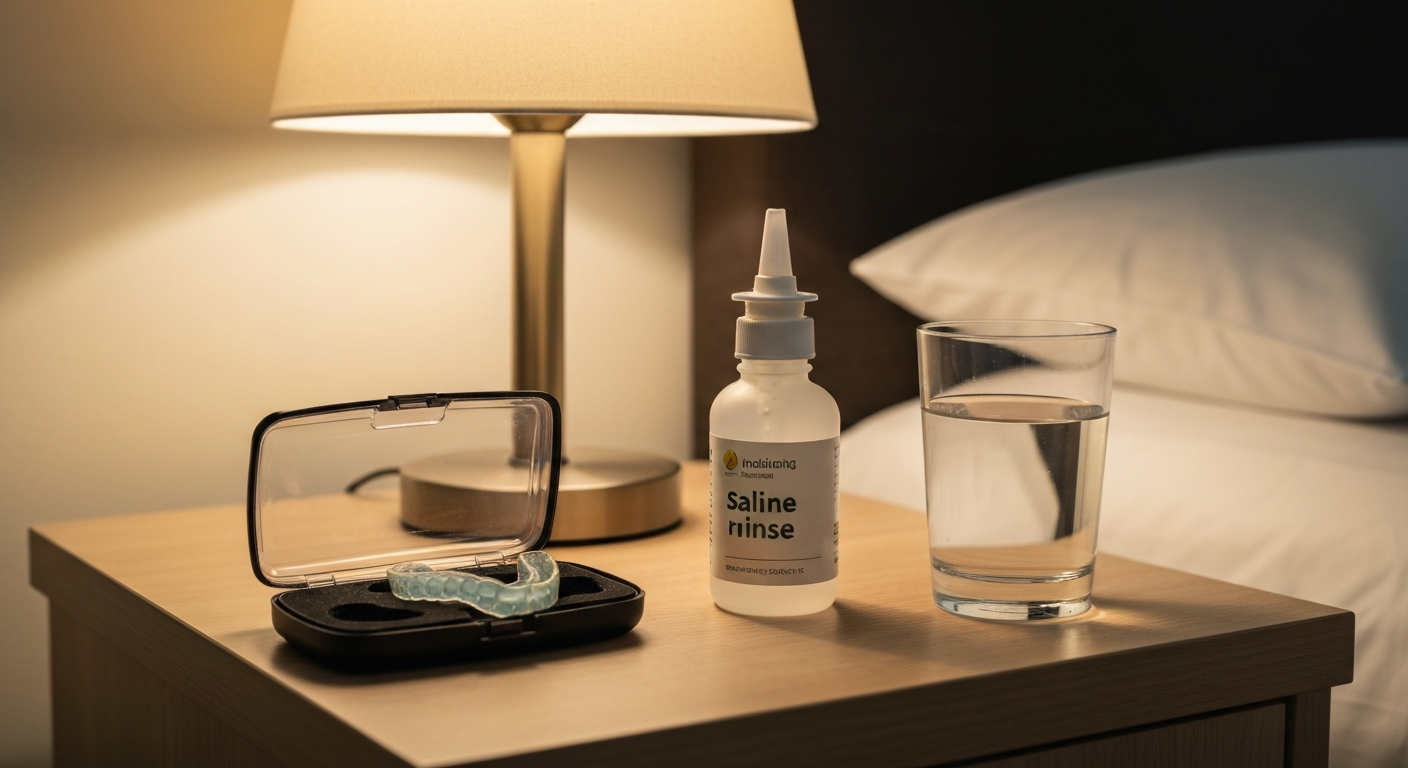
Nasal saline rinse: A neti pot or squeeze bottle with isotonic saline clears mucus and reduces mucosal swelling. Done 15–30 minutes before bed, it reduces nighttime congestion significantly.
Nasal strips: Adhesive strips placed across the bridge of the nose pull the nasal walls outward, physically widening the nasal passage. Clinical studies show a 32% reduction in snoring index in nasal-congestion snorers.
Nasal corticosteroid spray (e.g., Flonase, Nasacort): For chronic rhinitis, a daily nasal steroid spray reduces mucosal inflammation over one to two weeks of use. Available over the counter.
Antihistamine before bed: If allergic rhinitis is the cause, a non-sedating antihistamine (cetirizine, loratadine) or a sedating one (diphenhydramine) can reduce congestion for the night.
Also Read: Natural Remedies for Snoring: 8 Proven Methods That Work
Several modifiable lifestyle factors increase snoring severity by relaxing airway muscles further, increasing tissue volume, or altering breathing patterns.
Alcohol: Alcohol is a central nervous system depressant that significantly relaxes the pharyngeal muscles, worsening airway collapse during sleep. Snoring amplitude increases measurably on nights when alcohol is consumed within three hours of sleep. Cutting off alcohol at least three hours before bedtime reduces this effect.
Also Read: Does Alcohol Cause Snoring? 6 Facts & How to Stop It
Weight: Excess adipose tissue around the neck increases the mass that presses on the airway during sleep. A collar size of 17 inches or greater is a clinical risk factor for significant snoring and sleep apnea. Even modest weight loss of 5–10% of body weight has been shown to reduce snoring severity.
Sedatives and muscle relaxants: Sleep medications, benzodiazepines, and some antihistamines relax pharyngeal muscles similarly to alcohol. Where possible, address sleep issues with behavioral methods (sleep hygiene, CBT-I) rather than sedatives.
Smoking: Smoking irritates and inflames the upper airway mucosa, causing mucosal swelling that narrows the airway. Snoring prevalence is significantly higher in smokers than non-smokers.
Primary snoring — snoring without apnea or significant health consequence — can typically be managed with the interventions above. When snoring is accompanied by other symptoms, it may indicate obstructive sleep apnea (OSA), which requires a sleep study.
Signs that warrant medical evaluation:
OSA has cardiovascular consequences that primary snoring does not — it is associated with elevated blood pressure, atrial fibrillation, and stroke risk. If you have any of the above symptoms, request a sleep study referral from your primary care physician.
Also Read: What Type of Snoring Is Dangerous? 5 Warning Signs
To stop snoring during sleep: sleep on your side, use a mandibular advancement device, and treat nasal congestion before bed. These three interventions address the three most common snoring mechanisms — tongue-base collapse, palatal vibration, and mouth breathing from nasal blockage. Lifestyle changes (limiting alcohol, losing weight, quitting smoking) sustain the results long-term. If snoring is accompanied by witnessed apneas, gasping, morning headaches, or extreme daytime fatigue, seek a sleep medicine evaluation.
The fastest intervention is sleeping on your side with a pillow behind your back to prevent rolling supine. If you have a MAD, wear it. Rinse your nasal passages with saline and avoid alcohol tonight. This combination reduces snoring for most people on the first night.
Yes — MADs are the most clinically validated non-surgical snoring treatment. They reduce snoring index by 50–75% in compliance studies. Boil-and-bite MADs from brands like SnoreMeds provide functional benefit without the $1,000+ custom-device cost, though a custom-fitted device from a dentist offers better adjustability.
Myofunctional therapy — tongue and throat exercises — strengthens the airway muscles and reduces their tendency to collapse during sleep. A 2015 study published in Sleep found that myofunctional therapy reduced snoring frequency by 36% and intensity by 59%. Results take 3 months of daily exercise. It can be combined with other interventions.
Weight loss reduces snoring severity in overweight and obese individuals by reducing the fat mass around the neck and pharynx that compresses the airway during sleep. A 10% reduction in body weight typically produces a meaningful reduction in snoring, though results vary widely. Weight loss alone rarely eliminates snoring completely in people with significant structural airway factors.
Reviewed and Updated on June 16, 2026 by George Wright