Sleep
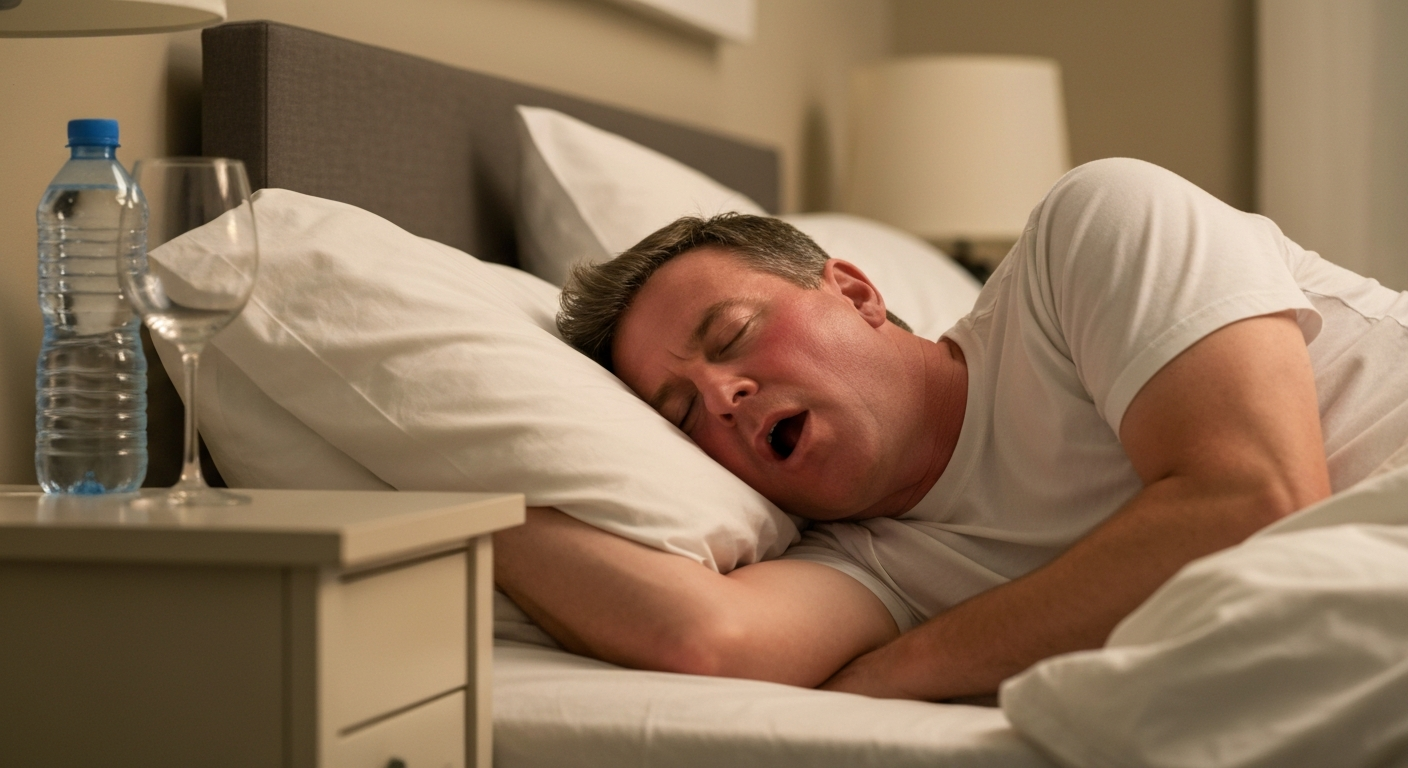

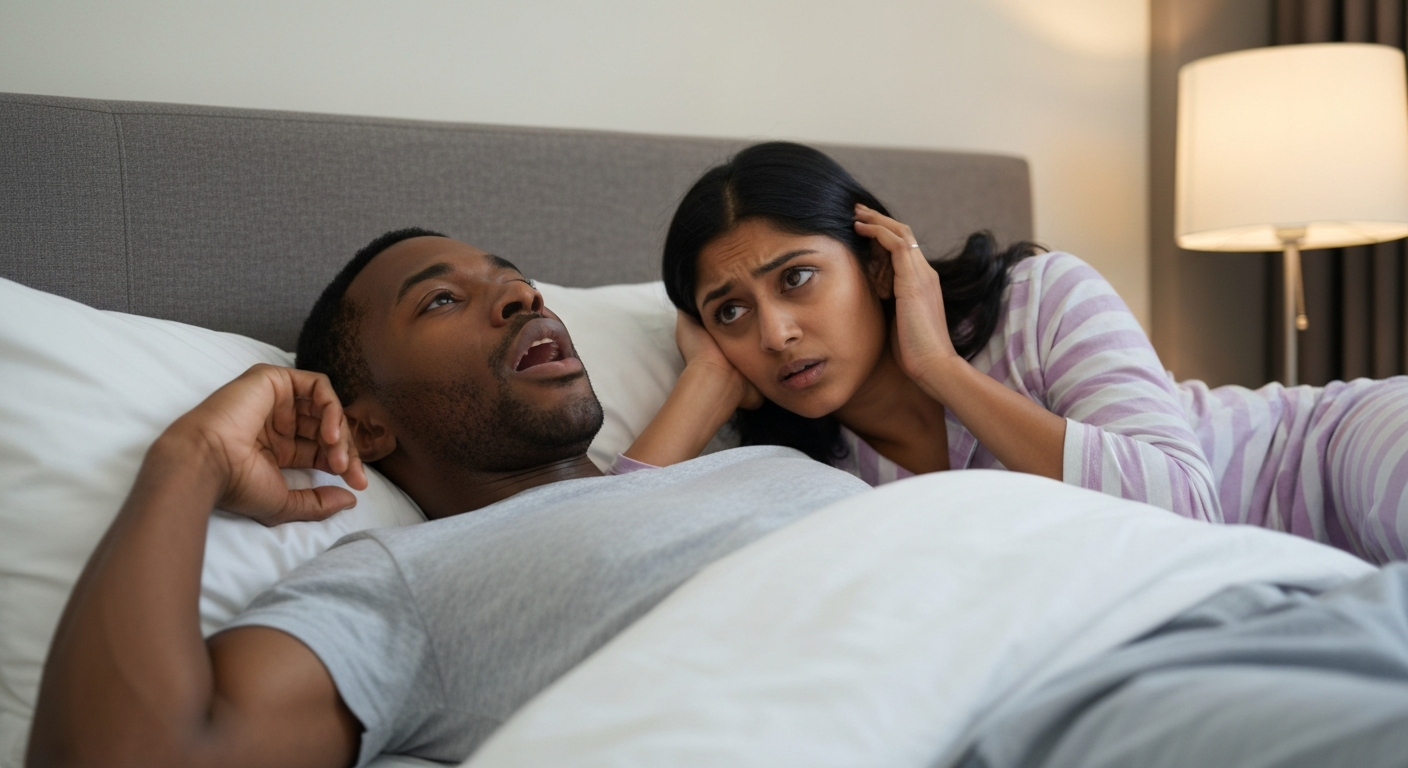
Yes, alcohol does cause snoring — and it can make existing snoring significantly worse. Drinking relaxes the muscles in your throat and tongue more than normal sleep would, narrowing your airway and causing the soft tissues to vibrate as you breathe. Even people who never snore may find themselves sawing logs after a few drinks, while regular snorers often become louder and more disruptive. The effect is dose-dependent: the more you drink and the closer to bedtime, the worse the snoring.
Alcohol is a central nervous system depressant that over-relaxes the muscles controlling your airway, including the tongue, soft palate, and throat walls.
When you drink, alcohol crosses the blood-brain barrier and slows neural signaling throughout your body. This sedative effect doesn't stop at making you feel relaxed — it extends to every muscle, including the ones that normally keep your upper airway open during sleep.
Here's what happens mechanically:
As you inhale, air has to squeeze through this narrowed passage. The reduced space forces air to move faster, creating turbulence that makes the relaxed tissues flutter and vibrate — that's the snoring sound.
"Alcohol ingestion increases upper airway collapsibility and is associated with increased snoring and sleep-disordered breathing." — Dr. Atul Malhotra at UC San Diego Health
The effect starts within about 20 minutes of your first drink and peaks as your blood alcohol level rises. Unlike caffeine, which clears your system relatively quickly, alcohol's muscle-relaxing effects can last throughout the night, especially if you've had several drinks.
Also Read: Is Snoring Unhealthy? 6 Risks & What Your Body Is Telling You
Even one or two drinks within four hours of bedtime can trigger or worsen snoring, though the effect intensifies with higher consumption.
Research shows a clear dose-response relationship between alcohol and snoring. A study published in the journal Sleep found that moderate alcohol consumption (equivalent to 2–3 standard drinks) increased the frequency and intensity of snoring episodes by up to 25% compared to alcohol-free nights.
| Drinks Before Bed | Effect on Snoring |
|---|---|
| 1–2 standard drinks | Mild increase in snoring; may trigger snoring in non-snorers |
| 3–4 standard drinks | Moderate increase; snoring becomes louder and more frequent |
| 5+ standard drinks | Significant increase; risk of breathing pauses (apneas) rises |
Timing matters as much as quantity. Your liver metabolizes alcohol at roughly one standard drink per hour. If you have three glasses of wine with dinner at 7 PM and go to bed at 11 PM, most of the alcohol will have cleared your system. The same three glasses at 10 PM means you're still processing alcohol as you fall asleep.
Body weight, biological sex, and individual tolerance also play roles. Women typically have less of the enzyme alcohol dehydrogenase, meaning alcohol stays in their systems longer. Someone who rarely drinks may snore after a single glass of wine, while a regular drinker might not notice effects until the third or fourth drink — though that doesn't mean the muscle relaxation isn't happening.
If you have obstructive sleep apnea (OSA), alcohol dramatically worsens the condition — sometimes dangerously so.
Sleep apnea occurs when your airway completely collapses during sleep, stopping breathing for 10 seconds or longer. Alcohol's muscle-relaxing effects make these collapses more frequent, longer, and harder for your body to overcome.
"In patients with obstructive sleep apnea, alcohol consumption before sleep increases the duration of apneic episodes and can lower oxygen saturation to dangerous levels." — American Academy of Sleep Medicine
Studies have documented that alcohol can:
This combination is particularly risky for undiagnosed sleep apnea. Many people don't know they have the condition until a partner notices breathing pauses or they experience daytime symptoms like excessive fatigue. If you snore loudly after drinking and wake up feeling unrested despite sleeping 7–8 hours, it's worth talking to a doctor about a sleep study.
Also Read: Snoring vs Sleep Apnea: Key Differences & When to Worry
Alcohol-induced snoring tends to be louder, more consistent throughout the night, and more resistant to positional changes than regular snoring.
Several factors compound to make post-drinking snoring particularly disruptive:
Deeper initial sleep cycles. Alcohol initially increases slow-wave (deep) sleep, which is when muscle tone is lowest and snoring is most likely. You may start snoring the moment you fall asleep rather than only during later sleep stages.
Suppressed REM sleep. While deep sleep increases early in the night, alcohol suppresses REM sleep. As your body metabolizes the alcohol (usually 3–4 hours into sleep), you experience a REM rebound with fragmented, lighter sleep — but the muscle relaxation effects haven't fully worn off, leading to continued snoring.
Nasal congestion. Alcohol is a vasodilator, causing blood vessels to expand. In your nasal passages, this creates swelling that partially blocks airflow, forcing you to breathe through your mouth. Mouth breathing during sleep almost always produces snoring.
Dehydration. Alcohol is a diuretic, meaning you lose fluids faster than normal. Dehydration thickens the mucus in your throat and nasal passages, adding another layer of resistance to airflow.
Position insensitivity. Normally, rolling onto your side can reduce or eliminate snoring. After drinking, the muscle relaxation is often severe enough that snoring continues regardless of sleep position.
The most reliable solution is timing: stop drinking at least 4 hours before bed to give your body time to metabolize the alcohol.
That said, reality doesn't always cooperate with ideal timing. Here are evidence-based strategies that can help reduce alcohol-related snoring:
Fewer drinks means less muscle relaxation. If you know you'll be drinking close to bedtime, cap yourself at 1–2 standard drinks rather than 3–4. This won't eliminate the effect, but it significantly reduces severity.
Drink one glass of water for every alcoholic beverage. Before bed, have another 8–12 ounces of water. Proper hydration keeps your mucous membranes from drying out and thickening.
While position changes are less effective after drinking, they still help somewhat. Use a body pillow or tennis-ball trick (sewing a tennis ball into the back of a sleep shirt) to keep yourself from rolling onto your back.
Sleeping with your head raised 4–6 inches reduces the gravitational pull on throat tissues. An adjustable bed frame works best, but a wedge pillow can achieve similar results.
Use a saline nasal spray before bed to counteract the congestion caused by alcohol's vasodilating effects. Breathe Right strips or similar external nasal dilators can also help keep nasal airways open.
A mandibular advancement device (MAD) holds your lower jaw slightly forward, preventing the tongue from falling back and keeping the airway more open. These are particularly effective for alcohol-related snoring because they mechanically counteract the muscle relaxation.
| ✓Our Pick |
Shop custom-fit anti-snoring mouthpieces — repositions your jaw to eliminate snoring Great value for money — this product tackles the root cause rather than just masking the symptoms. Learn More → |
If your snoring is accompanied by breathing pauses, gasping, or choking sounds, or if you experience excessive daytime sleepiness, seek medical evaluation.
Occasional snoring after a night out is normal and not usually a health concern. However, certain patterns warrant professional attention:
A sleep specialist can conduct a polysomnography (sleep study) to determine whether you have obstructive sleep apnea. If diagnosed, treatment options include CPAP therapy, oral appliances, or in some cases, surgery — and you'll likely be advised to significantly reduce or eliminate alcohol consumption.
Also Read: How to Stop Snoring While Sleeping: 6 Proven Methods
Alcohol causes snoring by over-relaxing the muscles in your throat and tongue, narrowing your airway and causing tissue vibrations. The effect is dose-dependent — more alcohol and closer to bedtime means worse snoring. For people with sleep apnea, drinking can be genuinely dangerous, extending breathing pauses and dropping oxygen levels. The most effective prevention is allowing 4+ hours between your last drink and bedtime, but strategies like side sleeping, hydration, and snore guards can also help. If your snoring includes breathing pauses or leaves you exhausted, talk to a doctor.
Not everyone will snore after drinking, but alcohol significantly increases the likelihood. People who already have narrower airways, carry extra weight around their neck, or sleep on their backs are most susceptible. Even non-snorers may snore after heavy drinking due to the pronounced muscle relaxation effect on throat tissues.
Snoring typically improves as your body metabolizes the alcohol, which happens at roughly one standard drink per hour. If you have four drinks, expect alcohol-related snoring to persist for at least 4–5 hours into your sleep. By morning, the direct effect has usually worn off, though dehydration may still contribute to some residual snoring.
This suggests your baseline airway is adequate during normal sleep, but the added muscle relaxation from alcohol tips you over the threshold into snoring. It's actually a useful warning sign — it indicates your airway has relatively little margin before obstruction occurs. Weight gain, aging, or developing nasal congestion could turn you into a regular snorer.
Yes, even a single glass of wine can trigger snoring in susceptible individuals, especially if consumed within 2 hours of bedtime. The effect is typically mild — perhaps light snoring rather than the wall-shaking variety — but it's enough to disturb a light-sleeping partner. Sensitivity varies significantly between people.
The type of alcohol doesn't matter as much as the total alcohol content. A 12-ounce beer, 5-ounce glass of wine, and 1.5-ounce shot of liquor all contain roughly the same amount of alcohol and will have similar effects on snoring. However, beer's carbonation may contribute to additional bloating and reflux, which can indirectly worsen snoring in some people.
Reviewed and Updated on June 14, 2026 by George Wright