


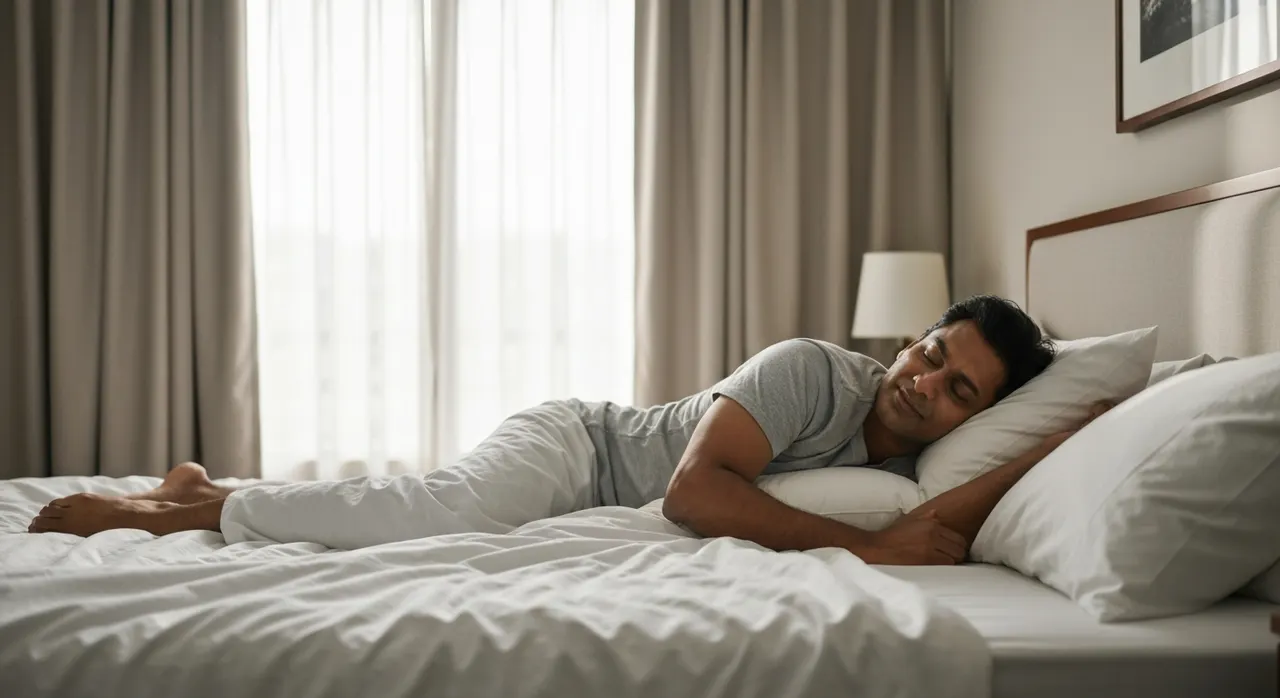
Natural remedies for snoring range from simple sleep position changes and nasal strips to throat exercises and essential oils — and many people find relief without ever needing devices or surgery. Snoring happens when relaxed throat tissues vibrate as air passes through a narrowed airway, and addressing the root cause with lifestyle adjustments often reduces or eliminates the noise entirely.
Snoring affects an estimated 57% of men and 40% of women in the United States, according to the American Academy of Sleep Medicine. Before reaching for expensive devices or considering medical procedures, it's worth trying proven natural approaches that tackle the underlying causes — from sleeping position and hydration to strengthening the muscles in your airway.
Why Does Snoring Happen in the First Place?
Snoring occurs when airflow through your mouth and nose is partially obstructed during sleep, causing the surrounding soft tissues to vibrate and produce sound.
During sleep, the muscles in your throat, tongue, and soft palate relax. When these tissues relax too much, they can partially block your airway. As you breathe, air forces its way through this narrowed passage, and the turbulence makes the relaxed tissues flutter — that's the snoring sound you (or your partner) hear.
Several factors influence how narrow your airway becomes:
- Anatomy — A thick soft palate, elongated uvula, or large tonsils physically reduce airway space
- Weight — Extra tissue around the neck compresses the airway, especially when lying down
- Muscle tone — Alcohol, sedatives, and natural aging cause throat muscles to relax more than usual
- Nasal congestion — Blocked nasal passages force mouth breathing, which increases airway resistance
- Sleep position — Lying on your back allows gravity to pull the tongue and soft palate backward
Understanding which factors apply to you helps you choose the most effective natural remedy.
Also Read: What Type of Snoring Is Dangerous? 5 Warning Signs
Does Changing Your Sleep Position Actually Reduce Snoring?
Yes — sleeping on your side instead of your back is one of the most effective natural remedies for snoring, and it works for approximately 50% of snorers.
When you sleep on your back (the supine position), gravity pulls your tongue and soft palate toward the back of your throat. This narrows the airway significantly. The same person who snores loudly on their back may breathe nearly silently on their side.
"Positional therapy is often underutilized despite evidence showing it can be as effective as CPAP in selected patients with positional obstructive sleep apnea." — Dr. Arie Oksenberg at Sleep and Breathing
How to Train Yourself to Sleep on Your Side
Breaking the habit of back sleeping takes persistence. Here are methods that work:
| Method | How It Works | Effectiveness |
|---|---|---|
| Tennis ball technique | Sew a tennis ball into the back of your pajama top — discomfort prompts you to roll onto your side | High for habit formation |
| Positional pillow | Wedge or body pillows physically prevent rolling onto your back | Moderate to high |
| Incline sleeping | Elevate your head 4–6 inches to reduce tissue collapse even when on your back | Moderate |
| Smart wearables | Vibrating devices detect back sleeping and gently prompt you to turn | High, with consistent use |
Elevating the head of your bed (not just using extra pillows, which can kink your neck) also helps by preventing tissues from collapsing backward. A 4- to 6-inch elevation using bed risers or a wedge pillow under the mattress makes a noticeable difference for many snorers.
| ✓Quick Fix |
The Fastest Fix People Try for This One of the simplest things to try immediately — no appointment, no waiting. See on Amazon → |
Can Throat Exercises Stop Snoring?
Oropharyngeal exercises (mouth and throat exercises) can reduce snoring frequency by 36% and snoring intensity by 59%, according to published clinical research.
These exercises strengthen the muscles of the tongue, soft palate, and throat — the same muscles that relax and cause airway obstruction during sleep. Stronger muscles are less likely to collapse into the airway.
"Oropharyngeal exercises significantly reduced the frequency and intensity of snoring and improved quality of sleep in patients with primary snoring." — Dr. Geraldo Lorenzi-Filho at CHEST Journal
Six Exercises to Try in 2026
Practice these for 15–20 minutes daily for at least three months to see results:
- Tongue slide — Press the tip of your tongue against the roof of your mouth and slide it backward 20 times
- Tongue press — Push your entire tongue flat against the roof of your mouth and hold for 3 seconds, repeat 10 times
- Vowel sounds — Repeat each vowel (A-E-I-O-U) loudly and clearly for 3 minutes
- Jaw stretch — Open your mouth as wide as possible, hold for 10 seconds, repeat 5 times
- Soft palate lift — Say "Ahh" in a sustained, exaggerated way while looking at a mirror — watch the back of your mouth lift
- Cheek resistance — Hook your finger inside your cheek and pull outward while resisting with your cheek muscles
Singing and playing wind instruments (especially the didgeridoo, which has actual research behind it) also strengthen these muscles. If dedicated exercises feel tedious, 20 minutes of singing in the shower accomplishes similar muscle engagement.
Also Read: Free audiobooks on managing stress and sleeping better
Do Nasal Remedies Work for Snoring?
Nasal remedies are highly effective when congestion or narrow nasal passages are the primary cause of snoring, but they won't help if the obstruction is in your throat.
If you snore primarily through your nose, or if nasal congestion forces you to breathe through your mouth at night, addressing nasal airflow can significantly reduce snoring.
Nasal Strips and Dilators
External nasal strips (adhesive strips that pull the nostrils open from outside) and internal nasal dilators (small plastic or silicone devices inserted into the nostrils) both work by mechanically widening the nasal passages. They're inexpensive, drug-free, and worth trying first.
Saline Rinses and Neti Pots
Flushing your nasal passages with saline solution before bed removes mucus, allergens, and irritants that cause congestion. This is especially useful during allergy season or if you have chronic sinusitis. Use distilled or previously boiled water to avoid rare but serious infections.
Humidifiers
Dry air irritates the membranes in your nose and throat, causing swelling that narrows the airway. Running a humidifier in your bedroom (aim for 40–50% humidity) keeps tissues moist and reduces snoring caused by dryness — particularly in winter when heating systems dry out indoor air.
Essential Oils and Steam Inhalation
Peppermint and eucalyptus oils may help open nasal passages temporarily. Add a few drops to a bowl of hot water and inhale the steam before bed, or use a diffuser. The evidence is mostly anecdotal, but many people find it helpful as part of a bedtime routine.
| ✓Our Pick |
Anti-snoring mouthpiece — adjustable mandibular advancement device (MAD) A well-reviewed choice that delivers real results — worth a look before anything pricier. See on Amazon → |
Does Weight Loss Reduce Snoring?
Losing weight is one of the most effective long-term natural remedies for snoring — even a 10% reduction in body weight can decrease snoring severity by 50% or more in overweight individuals.
Excess weight, particularly around the neck, compresses the airway. Fat deposits in the throat also reduce the space available for air to flow. When you lose weight, this tissue shrinks, and the airway opens.
"Weight loss should be recommended for all overweight and obese patients with OSA, given the strong evidence of improvement in sleep apnea severity." — American Thoracic Society Clinical Practice Guideline
This remedy requires commitment, but its benefits extend far beyond snoring — improved cardiovascular health, better sleep quality, and higher daytime energy.
Also Read: Does Snoring Mean Deep Sleep? The Truth About Sleep Quality
What Lifestyle Changes Help Stop Snoring?
Simple daily habits — avoiding alcohol before bed, staying hydrated, and managing allergies — can reduce snoring without any devices or medical intervention.
Does Alcohol Make Snoring Worse?
Alcohol is a muscle relaxant. Drinking within 3–4 hours of bedtime causes your throat muscles to relax more than they normally would, dramatically increasing snoring. Many people who only snore occasionally notice it happens exclusively after drinking.
If you enjoy evening drinks, try stopping alcohol at least 4 hours before sleep and see if your snoring improves.
Can Dehydration Cause Snoring?
When you're dehydrated, the mucus in your nose and throat becomes thicker and stickier. This creates more resistance to airflow and more vibration. Drinking adequate water throughout the day (not just at bedtime, which leads to bathroom trips) keeps secretions thin and airways clear.
Do Allergies Contribute to Snoring?
Allergies cause nasal congestion, post-nasal drip, and throat inflammation — all of which narrow the airway. If your snoring is seasonal or worse around dust, pet dander, or certain foods, managing allergies may solve the problem.
Keep your bedroom allergen-free by washing bedding weekly in hot water, using hypoallergenic pillowcases, and running an air purifier with a HEPA filter. Replace pillows every 1–2 years, as they accumulate dust mites.
Does Smoking Cause Snoring?
Smoking irritates the membranes in the nose and throat, causing swelling and increased mucus production. Smokers are nearly three times more likely to snore than non-smokers. Quitting smoking improves snoring within weeks as inflammation subsides.
Also Read: Does Being Overweight Make You Snore? The Science Explained
Natural Remedies for Snoring: What Works Best?
The most effective natural remedy depends on what's causing your snoring — position changes work for back sleepers, throat exercises help those with weak muscle tone, and weight loss is most effective for overweight snorers.
| If Your Snoring Is Caused By... | Try This Natural Remedy First |
|---|---|
| Sleeping on your back | Side sleeping + positional pillow |
| Weak throat muscles or aging | Oropharyngeal exercises daily |
| Nasal congestion | Nasal strips + saline rinses + humidifier |
| Excess weight | Gradual weight loss (even 5–10 lbs helps) |
| Alcohol consumption | Stop drinking 4+ hours before bed |
| Allergies | Hypoallergenic bedding + air purifier |
| Dry air | Bedroom humidifier at 40–50% humidity |
Most people benefit from combining several remedies. Side sleeping plus throat exercises plus a humidifier, for example, addresses multiple causes simultaneously and produces better results than any single approach.
Also Read: Snoring vs Sleep Apnea
When Should You See a Doctor About Snoring?
If natural remedies don't reduce your snoring after 4–6 weeks of consistent effort, or if you experience choking, gasping, or excessive daytime sleepiness, you may have obstructive sleep apnea and should consult a sleep specialist.
Warning signs that snoring requires medical evaluation:
- Witnessed pauses in breathing during sleep
- Waking up gasping or choking
- Morning headaches
- Extreme daytime fatigue despite adequate sleep time
- High blood pressure that's difficult to control
- Snoring that persists despite weight loss and lifestyle changes
Sleep apnea is a serious condition linked to heart disease, stroke, and diabetes. A sleep study can determine whether you have apnea and what treatment you need.
In Short
Natural remedies for snoring work best when you identify the underlying cause — whether it's sleep position, muscle tone, nasal congestion, weight, or lifestyle factors like alcohol. Side sleeping reduces gravity-related airway collapse. Throat exercises strengthen muscles that otherwise relax and obstruct breathing. Nasal strips, humidifiers, and saline rinses address congestion. Weight loss shrinks tissue that compresses the airway. Avoiding alcohol and managing allergies prevents inflammation and muscle over-relaxation. Most snorers benefit from combining several approaches, and consistent effort over 4–6 weeks is needed to see meaningful improvement.
What You Also May Want To Know
What Is the Best Natural Remedy to Stop Snoring?
The best natural remedy depends on the cause. For back sleepers, side sleeping with a positional pillow often produces immediate results. For snorers with weak muscle tone (common with aging), daily throat exercises reduce snoring by 36–59% over 3 months. For overweight snorers, losing even 10% of body weight can cut snoring in half. Most people get the best results by combining position changes, exercises, and lifestyle adjustments simultaneously.
Does Honey Help With Snoring?
Honey has anti-inflammatory properties and may soothe throat tissues slightly, but there's no clinical evidence that it significantly reduces snoring. Some people mix honey with warm water or herbal tea before bed as part of a calming routine, which may help with relaxation — but it won't address the mechanical causes of snoring like airway obstruction or muscle relaxation.
Can Essential Oils Cure Snoring?
Essential oils like peppermint and eucalyptus can temporarily open nasal passages through their menthol-like effects, potentially helping snorers whose primary issue is nasal congestion. However, they won't "cure" snoring caused by throat-level obstruction, excess weight, or sleep position. Use them as one component of a broader approach rather than a standalone solution.
How Long Does It Take for Throat Exercises to Reduce Snoring?
Clinical studies show measurable improvements after 3 months of daily practice (15–20 minutes per day). Some people notice changes within 4–6 weeks. Consistency matters more than duration — doing exercises every day for 15 minutes produces better results than sporadic 30-minute sessions. The exercises strengthen muscles gradually, so patience is essential.
Does Sleeping With Your Head Elevated Stop Snoring?
Elevating your head 4–6 inches can reduce snoring by preventing the tongue and soft palate from falling backward into the airway. This works best when combined with side sleeping. Use a wedge pillow under the mattress or bed risers rather than stacking regular pillows, which can kink your neck and actually worsen breathing.