Sleep
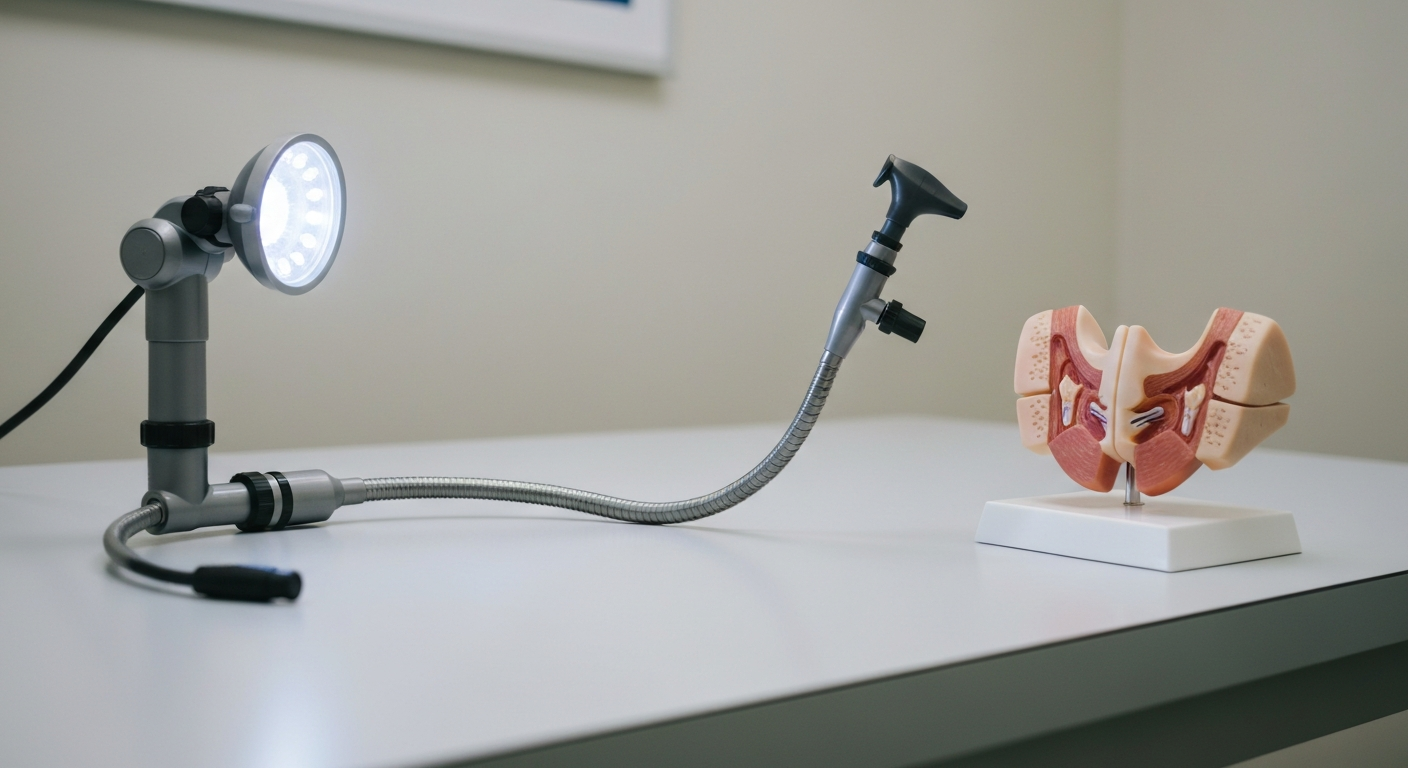

Procedures to stop snoring range from non-surgical in-office treatments that take 20 minutes to full throat surgeries performed under general anesthesia. The right choice depends on where your airway obstruction is, whether sleep apnea is present, and how severe the snoring is. Most ear, nose, and throat specialists recommend exhausting non-surgical options — sleep position, mandibular advancement devices, and nasal treatments — before recommending any procedure.
Not everyone who snores is a candidate for a procedural intervention. The decision starts with identifying the anatomical cause of the snoring.
A formal evaluation typically includes a physical exam of the oral cavity and nasal passages, a review of sleep history, and in many cases a sleep study (polysomnography) to rule out obstructive sleep apnea (OSA). OSA changes the treatment path significantly — procedures that address snoring alone (like soft palate stiffening) do not treat apnea and can give a false sense of resolution while leaving a serious condition untreated.
Procedural candidates tend to share these features:
- Primary snoring (snoring without significant apnea) confirmed by sleep study
- Conservative measures (MAD, positional therapy, weight loss) have been tried and found insufficient
- A specific anatomical target is identified — enlarged uvula, redundant soft palate tissue, deviated septum, or enlarged turbinates
- The patient is healthy enough for the chosen procedure
"Surgical procedures for snoring are indicated when conservative measures have failed and when a clear anatomical site of obstruction has been identified by clinical examination and, when appropriate, drug-induced sleep endoscopy." — American Academy of Otolaryngology-Head and Neck Surgery at entnet.org
Three non-surgical procedures can be performed in an ENT office under local anesthesia in under 30 minutes, with minimal recovery time.
Three small braided polyester rods (implants) are inserted into the soft palate through tiny incisions under local anesthesia. Over 4–6 weeks, scar tissue forms around the implants, stiffening the soft palate and reducing its tendency to vibrate during sleep.
The procedure takes approximately 20 minutes. Recovery involves a sore throat for several days. Clinical trials show a 39% reduction in snoring loudness in responders. Best candidates have isolated soft palate snoring without significant tongue-base involvement. Cost: approximately $1,000–$2,000 out of pocket (rarely covered by insurance for primary snoring).
A small probe delivers controlled radiofrequency energy into the soft palate or tongue base, creating a lesion that scars and contracts the tissue over 4–8 weeks, reducing its volume and stiffening it against collapse.
Multiple treatment sessions are often needed (typically 2–3, spaced several weeks apart). Each session takes 15–30 minutes under local anesthesia. Side effects are generally mild — swelling and soreness for several days post-treatment. Clinical response rates for primary snoring are around 40–60%. Cost per session: $800–$1,500.
If snoring is driven primarily by nasal obstruction — enlarged inferior turbinates forcing mouth breathing — turbinate reduction (radiofrequency or surgical) can open the nasal airway. This reduces mouth breathing during sleep, which in turn reduces palatal and tongue-base snoring secondary to the nasal obstruction.
Turbinate reduction under local anesthesia is the least invasive upper airway procedure available. Recovery is 1–3 days of mild congestion and crusting.
Also Read: Snore Laser Treatment: How It Works, Cost & Effectiveness
Surgical procedures for snoring are performed under general anesthesia, carry longer recovery times (1–3 weeks), and are typically reserved for cases where non-surgical approaches and in-office procedures have failed.
UPPP is the most common surgery for snoring and sleep apnea. The surgeon removes or tightens the uvula, soft palate, and sometimes the pharyngeal walls and tonsils, widening the posterior airway.
Recovery takes 2–3 weeks. Post-operative throat pain is significant for the first 10–14 days. UPPP reduces snoring in approximately 70–80% of patients, but long-term results at 5+ years show relapse rates, as tissue can re-sag with aging or weight gain. Success rates for OSA are more modest — roughly 50% achieve the clinical response threshold. Insurance typically covers UPPP when documented OSA is present; coverage for primary snoring alone varies by insurer.
If a deviated nasal septum or other structural nasal issue is the primary driver of snoring (by forcing obligate mouth breathing), septoplasty corrects the septal deviation under general anesthesia. Recovery is 1–2 weeks. Success depends on whether the nasal obstruction is truly the root cause — many patients have combined nasal and palatal snoring, and septoplasty alone may not fully resolve the snoring if both sites need addressing.
Inspire is an implantable device (cleared by the FDA for moderate-to-severe OSA, not primary snoring) that monitors breathing during sleep and delivers mild electrical stimulation to the hypoglossal nerve, preventing tongue-base collapse on each breath. This is not a snoring procedure per se — it is a sleep apnea treatment — but it is frequently discussed when patients ask about permanent airway intervention.
"Hypoglossal nerve stimulation produces clinically meaningful reductions in apnea-hypopnea index in patients with moderate to severe OSA who are unable to tolerate CPAP therapy. It does not replace evaluation for primary snoring without apnea." — National Institutes of Health / JAMA at nih.gov
If you are researching snoring procedures, a mandibular advancement device (MAD) is a critical intermediate step — it is non-invasive, reversible, clinically validated, and far less expensive than any procedure.
A MAD holds the lower jaw slightly forward during sleep, physically widening the airway and preventing soft tissue collapse. Response rates for MADs are comparable to UPPP for primary snoring — roughly 70–80% of patients report significant improvement — without the surgical risk, anesthesia, or recovery time.
Custom-fitted MADs from a dental sleep specialist run $600–$2,000. Custom-molded boil-and-bite devices like SnoreMeds offer most of the functional benefit without the dental appointment cost.
| ✓Our Pick |
SnoreMeds custom mouthpiece — moldable MAD that opens your airway without surgery Great value for money — this product tackles the root cause rather than just masking the symptoms. Learn More → |
No procedure guarantees permanent snoring elimination. UPPP has the strongest long-term data, with roughly 70–80% of patients showing improvement at one year; however, results degrade with aging and weight gain. Soft palate implants and radiofrequency ablation have moderate long-term response rates. Lifestyle factors — weight, alcohol, sleep position — affect outcomes for all procedures.
In-office procedures (Pillar implants, radiofrequency ablation) cost $1,000–$5,000 depending on the number of treatment sites and sessions. UPPP under general anesthesia runs $5,000–$15,000, often partially covered by insurance when sleep apnea is diagnosed. Nasal procedures (septoplasty, turbinate reduction) are typically covered by insurance if documented as medically necessary.
UPPP is notably painful during recovery — throat pain for 10–14 days is expected, and patients typically require strong analgesics for the first week. In-office procedures under local anesthesia (radiofrequency, implants) involve mild-to-moderate soreness for 2–5 days and do not require prescription pain management for most patients.
Yes. A deviated septum reduces nasal airflow, forcing mouth breathing during sleep, which bypasses the nasal humidification and airway-pressure mechanisms that partially protect against palatal collapse. Septoplasty corrects the structural deviation and can significantly reduce snoring in patients where nasal obstruction is the primary driver.
Reviewed and Updated on June 16, 2026 by George Wright