Sleep
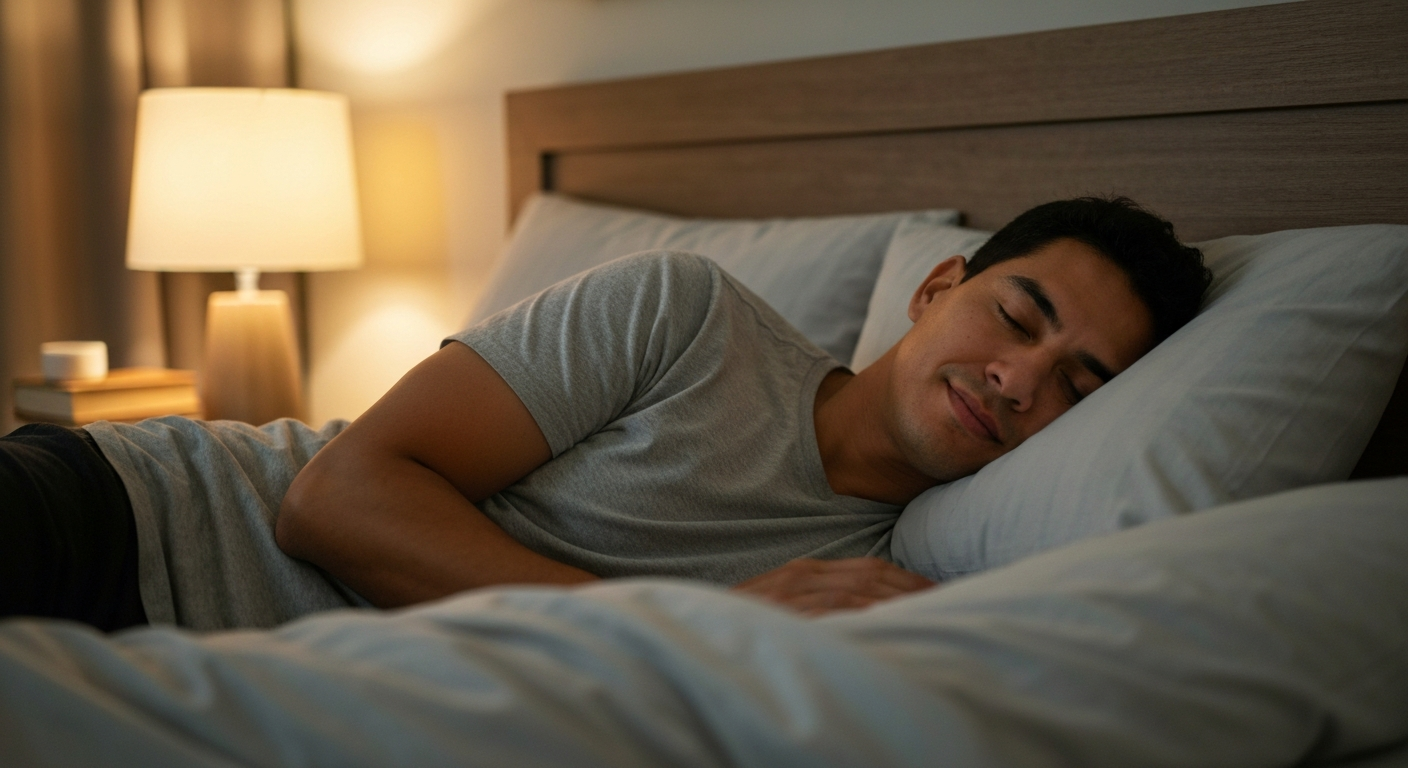

You can prevent snoring while sleeping by adjusting your sleep position, limiting alcohol before bed, managing nasal congestion, and — for persistent snoring — using a mandibular advancement device that repositions the jaw to keep the airway open all night.
Snoring is caused by vibrating soft tissue in the throat when the airway narrows during sleep. Any factor that relaxes the throat muscles, narrows nasal passages, or allows the tongue to fall backward will trigger or worsen it.
When you fall asleep, the muscles in your throat, soft palate, and tongue relax. If the airway narrows enough, incoming air creates turbulence that makes the uvula, soft palate, and tongue base flutter — producing the snoring sound. According to the American Academy of Sleep Medicine, approximately 90 million Americans snore at least occasionally, with around 37 million doing so regularly.
The cause matters because the fix is different for every snorer. A positional snorer needs a different solution than someone whose snoring is driven by nasal congestion or jaw anatomy.
"Snoring occurs when air flows past relaxed tissues in your throat, causing the tissues to vibrate as you breathe, which creates those irritating sounds." — Mayo Clinic at MayoClinic.org
Also Read: How to Stop Snoring in Your Sleep: 6 Proven Methods
Sleeping on your back is the most common positional trigger for snoring — gravity pulls the tongue and soft palate backward into the throat, narrowing the airway. Switching to your side can reduce or eliminate snoring the very first night.
When you lie on your back, the tongue naturally falls toward the throat, creating partial obstruction. Side sleeping keeps the tongue forward and the airway open. Studies show that position-dependent snorers who switch to side sleeping can reduce snoring frequency by 50 percent or more.
Staying on your side throughout the night takes some adjustment. A firm body pillow along your spine creates resistance when you try to roll back. Elevating your head by 4 inches using a wedge pillow also reduces backward pressure on the throat and can help even without a complete positional shift.
Also Read: Best Pillow for a Snorer: 4 Types That Actually Work
Weight, alcohol, and nasal health are the three lifestyle levers with the strongest evidence for reducing snoring. Adjusting all three creates a cumulative effect that positional changes alone cannot.
For people who carry extra weight around the neck and throat, fat deposits compress the airway when muscles relax during sleep. Even modest weight loss — 5 to 10 percent of body weight — can reduce snoring frequency and intensity in overweight individuals. This is especially relevant for people whose snoring developed gradually alongside weight gain over the years.
Alcohol is a muscle relaxant. Drinking within two to three hours of bedtime causes the throat muscles to relax more than usual — creating the exact conditions for tissue vibration. Even people who rarely snore will often snore the night after drinking heavily.
Avoiding alcohol within three hours of sleep is one of the most immediately effective behavioral changes a snorer can make.
Also Read: Does Drinking Make You Snore? 6 Facts & Fixes
Nasal blockage forces mouth breathing, which directs airflow through the throat in a way that bypasses the nose's natural airway-stabilizing structure. Managing year-round allergies with antihistamines, nasal corticosteroids, or regular saline rinses can meaningfully reduce snoring for people whose congestion and snoring tend to worsen together.
For snoring that persists after positional and lifestyle changes, mechanical devices address the airway problem directly. Mandibular advancement devices have the strongest clinical evidence of any non-prescription approach.
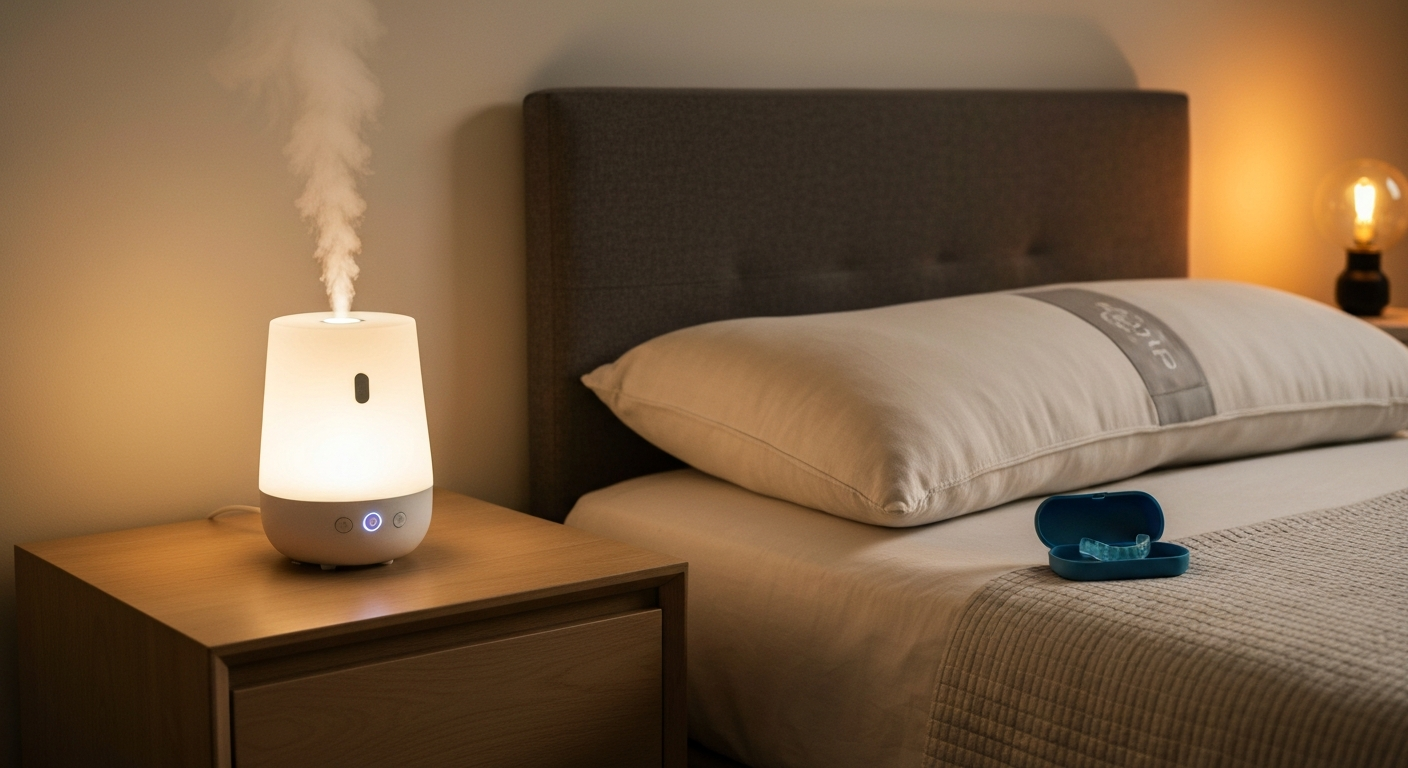
Mandibular advancement devices (MADs) gently push the lower jaw forward during sleep. This forward position keeps the tongue away from the throat wall and widens the airway. Clinical trials consistently show MADs reduce snoring frequency and loudness in the majority of users, typically by 50 percent or more.
Custom-fit MADs — made from an impression of your own teeth — are more comfortable and more effective than generic one-size-fits-all versions. SnoreMeds provides a self-impression kit that produces a personalized mouthpiece at a fraction of a dental office visit.
Nasal strips and internal dilators work when snoring originates from nasal obstruction. They physically widen the nostrils, reducing nasal resistance. They do not address throat-level tissue vibration.
"Oral appliance therapy using a mandibular advancement device is an effective, evidence-based treatment for snoring and mild-to-moderate obstructive sleep apnea." — American Academy of Dental Sleep Medicine at aadsm.org
A layered approach — combining positional changes, alcohol limits, nasal care, and a device — outperforms any single intervention. Think of it as a nightly checklist: sleep position, alcohol cutoff, nasal breathing, and device in place.
Start with the free changes: sleep on your side and avoid alcohol within three hours of bedtime. If snoring continues after two weeks, address nasal congestion with a saline rinse or decongestant. If it still persists, add a mandibular advancement device.
"The most effective non-surgical approach to snoring combines behavioral modifications — particularly avoidance of alcohol and supine sleeping — with a mandibular advancement device for patients who remain symptomatic." — National Sleep Foundation at thensf.org
If snoring is accompanied by gasping, choking, observed breathing pauses, or severe daytime fatigue, see a sleep specialist rather than self-treating. These are signs of obstructive sleep apnea, which requires medical evaluation.
| ✓Our Pick |
Stop snoring with a custom-fit jaw-repositioning mouthpiece — SnoreMeds ships direct to your door No special skills required — straightforward to use and most orders ship quickly. Learn More → |
Preventing snoring while sleeping means identifying the trigger and addressing it directly: sleep on your side, cut alcohol before bed, manage nasal congestion, and for persistent snoring, use a mandibular advancement device. Start with the free behavioral changes first — many snorers see significant improvement within the first week. If snoring comes with gasping or severe daytime fatigue, see a doctor to rule out sleep apnea.
Also Read: Natural Remedies for Snoring: 8 Proven Methods That Work
For some people, yes. If snoring is caused by excess weight around the neck, sustained weight loss can eliminate it permanently. If it is purely positional, consistently sleeping on your side can become a lasting habit. For structural causes — such as a recessed jaw, enlarged tonsils, or a deviated septum — lifestyle changes alone are typically not enough, and devices or medical procedures are needed.
Habitual nightly snoring affects roughly one in four adults. While occasional snoring is common, nightly snoring warrants attention because it can signal chronic airway narrowing or undiagnosed sleep apnea. Snoring that regularly disrupts your sleep or your partner's sleep is worth investigating and addressing.
Nasal blockage forces the mouth open during sleep, and mouth breathing directs airflow through the throat in a way that promotes tissue vibration. When you breathe through your nose, the nasal passages filter and stabilize airflow before it reaches the throat. Managing allergies with medication or allergen reduction typically reduces both congestion and snoring simultaneously.
Mouth breathing is both a cause and a result of snoring. When nasal passages are blocked, the mouth opens to compensate. The resulting airflow through the open throat increases the chance of tissue vibration. Addressing the underlying nasal obstruction — congestion, deviated septum, or allergies — typically reduces both mouth breathing and snoring.
See a doctor if snoring is accompanied by observed breathing pauses, gasping or choking at night, severe daytime sleepiness, morning headaches, or your partner reporting that you stop breathing. These are warning signs of obstructive sleep apnea — a condition that requires formal medical evaluation and should not be managed with lifestyle changes alone.
Reviewed and Updated on June 17, 2026 by George Wright