Sleep
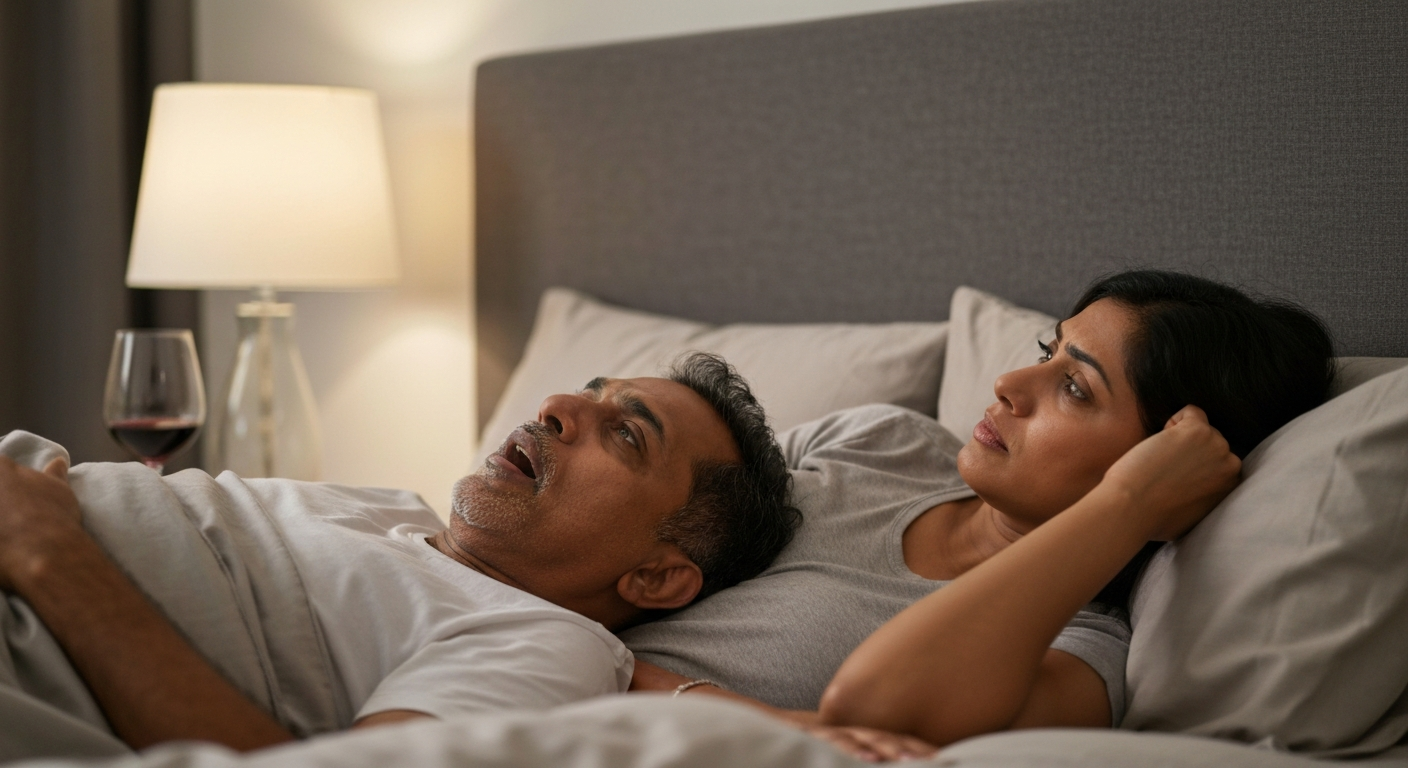

Yes, drinking alcohol does make you snore — and often makes existing snoring significantly louder. Alcohol relaxes the muscles in your throat and airway more than normal sleep does, causing the soft tissues to collapse inward and vibrate as you breathe. Even people who never snore when sober often become noticeable snorers after just a couple of drinks, and habitual snorers can become disruptively loud. The effect is dose-dependent (more drinks equals more snoring) and strongest in the first half of the night when blood alcohol levels are highest.
When you drink, alcohol acts as a powerful muscle relaxant that specifically affects the muscles keeping your airway open during sleep.
Your throat stays open while you're awake because muscles in your tongue, soft palate, and pharynx actively hold the airway walls apart. During normal sleep, these muscles relax somewhat, but they maintain enough tension to allow smooth, quiet breathing. Alcohol disrupts this balance.
Ethanol (the active compound in alcoholic drinks) enhances the effects of gamma-aminobutyric acid (GABA), a neurotransmitter that inhibits muscle activity. This is why you feel relaxed after a drink. But the same mechanism causes your throat muscles to become abnormally floppy during sleep.
"Alcohol ingestion increases the upper airway resistance during sleep, thereby promoting or exacerbating snoring and obstructive sleep apnea." — Dr. Ingo Fietze at Charité Universitätsmedizin Berlin
The result: narrowed airways plus extra-relaxed tissues equals turbulent airflow. That turbulence creates the vibration we hear as snoring.
Three specific changes happen after you drink:
| Change | What happens | Why it causes snoring |
|---|---|---|
| Soft palate collapse | The tissue at the back of your mouth roof drops lower | Creates a fluttering obstruction |
| Tongue fallback | Your tongue relaxes backward into your throat | Partially blocks the airway |
| Pharyngeal narrowing | Throat walls move closer together | Forces air through a smaller opening |
Alcohol can turn a non-snorer into a snorer because it pushes airway relaxation past the threshold where quiet breathing becomes possible.
Everyone's airway naturally narrows during sleep. In most people, this narrowing isn't enough to cause audible vibration. But alcohol tips the balance. A 2020 study published in Sleep Medicine Reviews found that moderate alcohol consumption (two to three standard drinks) increased snoring frequency by 25% in people who didn't normally snore.
Also Read: Does Alcohol Cause Snoring? 6 Facts & How to Stop It
The timing matters too. Snoring is almost always worse in the first three to four hours after falling asleep, when blood alcohol concentration is highest. As your liver metabolizes the alcohol through the night, snoring often improves — which is why your partner might notice you're quieter by morning.
Several factors determine how strongly alcohol affects your snoring:
| ✓Our Pick |
Custom-fit anti-snoring mouthpiece that repositions your jaw Backed by strong customer feedback — the most recommended solution in forums and Q&A communities. Learn More → |
If you already have obstructive sleep apnea (OSA), alcohol can transform moderate apnea into severe apnea and make existing snoring dangerous.
Sleep apnea involves repeated complete or partial airway blockages during sleep. Snoring is usually present, but the real danger is the breathing pauses that follow — sometimes lasting 10 seconds or longer, sometimes occurring hundreds of times per night.
"Alcohol consumption is associated with a worsening of sleep-disordered breathing severity and oxygen desaturation in patients with obstructive sleep apnea." — Dr. Susheel Patil at Johns Hopkins Center for Sleep
Here's what happens when someone with sleep apnea drinks:
This combination explains why alcohol is considered a risk factor for sudden cardiac events during sleep in people with untreated sleep apnea.
Even without diagnosed sleep apnea, heavy snoring after drinking deserves attention. If your partner reports that you gasp, choke, or stop breathing entirely, you should talk to a doctor — these symptoms suggest your snoring has crossed into sleep-disordered breathing territory.
Also Read: What Type of Snoring Is Dangerous? 5 Warning Signs
For most people, even one to two standard drinks consumed within four hours of bedtime can noticeably increase snoring.
A standard drink equals approximately 14 grams of pure alcohol: one 12-ounce beer, one 5-ounce glass of wine, or one 1.5-ounce shot of spirits. The effect scales roughly linearly — three drinks causes more snoring than one drink.
| Drinks consumed (4 hours before bed) | Effect on snoring |
|---|---|
| 1 drink | Mild increase, often unnoticed |
| 2 drinks | Moderate increase, audible to partner |
| 3–4 drinks | Significant increase, often disruptive |
| 5+ drinks | Severe snoring, possible breathing pauses |
Body weight affects alcohol metabolism, so a 200-pound person generally handles the same number of drinks better than a 130-pound person. But the muscle-relaxant effect still occurs regardless of tolerance — you might not feel drunk, but your throat muscles don't care.
The four-hour window matters because blood alcohol levels peak about 30 to 90 minutes after your last drink, then decline steadily. If you finish drinking at 8 PM and go to bed at midnight, the effect will be milder than if you have a nightcap at 11 PM.
You don't necessarily have to stop drinking entirely, but strategic changes can significantly reduce how much alcohol affects your sleep and snoring.
Yes — finishing your last drink at least four hours before bed allows your body to metabolize much of the alcohol before you fall asleep. This is the single most effective change. The same amount of alcohol consumed at dinner versus at a late-night gathering produces very different snoring outcomes.
Absolutely. Sleeping on your back maximizes gravity's effect on your relaxed throat tissues. Alcohol increases the tendency to roll onto your back. Side sleeping keeps your airway more open. Some people sew a tennis ball into the back of their sleep shirt to prevent back-sleeping, while others use wedge pillows or positional therapy devices.
Partially. Alcohol is a diuretic that causes dehydration, and dehydration thickens the mucus in your throat and nasal passages. This makes snoring worse. Drinking water between alcoholic drinks and before bed reduces this effect, though it won't counteract the muscle relaxation.
They can help with the nasal congestion component. Alcohol causes blood vessels in your nasal passages to swell, contributing to mouth breathing and snoring. Saline spray before bed or external nasal strips can improve nasal airflow, but they won't address the primary cause (throat muscle relaxation).
Mandibular advancement devices (MADs) that hold your lower jaw forward can be effective even when you've been drinking because they physically prevent the tongue from falling back into your throat. They address the mechanical problem directly rather than relying on muscle tone.
If you have diagnosed sleep apnea, use a CPAP machine, or your partner reports that you stop breathing in your sleep, alcohol and sleep simply don't mix well. The risks outweigh the benefits of that nightcap.
Also Read: Natural Remedies for Snoring: 8 Proven Methods That Work
Occasional louder snoring after a night out is normal, but certain patterns warrant medical evaluation.
See your doctor if:
A sleep study (polysomnography) can determine whether you have sleep apnea and how severe it is. If alcohol consistently makes your snoring dramatically worse, that's useful information for your doctor — it suggests your baseline airway stability is already compromised.
Don't dismiss snoring as just a nuisance. Chronic snoring and especially sleep apnea are associated with increased risk of cardiovascular disease, stroke, diabetes, and cognitive decline. Alcohol makes an existing problem worse and can unmask a problem you didn't know you had.
Also Read: Is Snoring Unhealthy? 6 Risks & What Your Body Is Telling You
Alcohol makes you snore by relaxing the muscles that keep your airway open during sleep, causing the soft tissues to vibrate as you breathe. The effect is dose-dependent — more drinks means louder snoring — and is strongest in the hours immediately after falling asleep. While occasional alcohol-related snoring in an otherwise healthy person is harmless, persistent loud snoring (especially with breathing pauses) may indicate sleep apnea, which alcohol significantly worsens. The most effective strategies are finishing your last drink at least four hours before bed, sleeping on your side, and staying hydrated.
Alcohol pushes airway relaxation past the threshold where quiet breathing becomes turbulent and noisy. Everyone's airway narrows during sleep, but alcohol causes additional muscle relaxation that tips non-snorers into snoring territory. The effect is temporary and resolves as your body metabolizes the alcohol.
The type of alcohol doesn't significantly affect snoring — what matters is the total amount of ethanol consumed. Beer, wine, and spirits all produce similar effects on throat muscle relaxation when adjusted for alcohol content. However, carbonated alcoholic drinks may cause additional bloating that worsens symptoms.
The peak effect occurs in the first three to four hours of sleep when blood alcohol concentration is highest. A healthy liver metabolizes roughly one standard drink per hour, so if you have three drinks at 9 PM, the effect will largely wear off by 1 or 2 AM. Finishing drinking earlier in the evening shortens the window of impact.
For most healthy people, occasional louder snoring after drinking is harmless. However, alcohol can trigger breathing pauses in people with undiagnosed sleep apnea and worsen oxygen levels in those with known apnea. If someone observes you stop breathing or gasp during sleep after drinking, that warrants medical evaluation.
Yes. Excess weight around the neck increases baseline airway narrowing, which alcohol then worsens. Losing even 10% of body weight often significantly reduces snoring severity. However, alcohol will still have some effect because the muscle-relaxant action is separate from body composition.
Reviewed and Updated on June 14, 2026 by George Wright