Sleep

Snoring happens when relaxed throat tissues partially block your airway during sleep, causing vibration as air squeezes through — and solving it requires identifying your specific trigger, whether that's sleep position, nasal congestion, excess weight, alcohol, or an underlying condition like sleep apnea.
Most people can significantly reduce or eliminate snoring with natural, at-home methods. The key is matching the right fix to your root cause. Positional changes work for back-sleepers. Nasal strips help congestion-driven snorers. Weight loss opens airways for those carrying extra pounds around the neck. And for anatomical causes — where the jaw or tongue falls backward — a custom-fit mouthpiece physically repositions the airway while you sleep.
Snoring is the sound of turbulent airflow through a narrowed airway — when the soft tissues of your throat, tongue, or soft palate vibrate against each other during breathing.
During waking hours, muscle tone keeps your airway open and stable. When you fall asleep, those muscles relax. In some people, this relaxation causes the airway to narrow enough that incoming air has to accelerate to get through. The resulting vibration creates the snoring sound. The narrower the passage, the louder the snore.
Several factors determine how much your airway narrows:
| Factor | How It Narrows the Airway |
|---|---|
| Sleep position | Lying on your back lets gravity pull the tongue and soft palate backward |
| Nasal congestion | Forces mouth breathing, which collapses the throat more than nasal breathing |
| Excess weight | Fat deposits around the neck compress the airway externally |
| Alcohol/sedatives | Over-relax throat muscles beyond normal sleep relaxation |
| Anatomy | Naturally large tonsils, long soft palate, or recessed jaw reduce baseline airway size |
| Age | Muscle tone decreases over time, especially after 40 |
Understanding which factors apply to you points directly to which solutions will actually work.
Also Read: Is Snoring Normal? When to Worry & When to Relax
Lifestyle and behavioral changes can eliminate snoring for roughly half of all snorers — without surgery, devices, or medication.
These approaches work by addressing the root causes rather than masking symptoms. They take consistency, but the results tend to be permanent once the underlying issue resolves.
Positional therapy is the simplest fix for gravity-induced airway collapse. When you sleep on your back, your tongue and soft palate fall backward against the rear of your throat. Side sleeping keeps them forward and out of the airway.
The challenge is staying on your side all night. Tennis ball therapy — sewing a pocket onto the back of your sleep shirt and inserting a tennis ball — creates enough discomfort to train you out of back-sleeping. Wedge pillows and positional sleep aids accomplish the same goal more comfortably.
"Positional therapy is effective in reducing the AHI [apnea-hypopnea index] in patients with position-dependent obstructive sleep apnea." — Jokic R, et al. in Chest
For overweight snorers, losing even 10–15% of body weight can dramatically reduce or eliminate snoring. Fat accumulates around the neck and compresses the airway externally. Losing that fat directly widens the breathing passage.
A study in the American Journal of Respiratory and Critical Care Medicine found that weight loss reduced sleep apnea severity by 50% or more in the majority of participants. Even modest weight loss showed measurable improvement.
Alcohol relaxes throat muscles more than normal sleep does. Drinking within 3–4 hours of bedtime turns mild snorers into loud ones and non-snorers into occasional snorers. Sedative medications, antihistamines, and muscle relaxants have similar effects.
The fix is straightforward: stop drinking at least 4 hours before sleep. Many people notice improvement the very first night they try this.
| ✓Our Pick |
Custom-fit anti-snoring mouthpiece — stops snoring by repositioning the jaw Used by over 10,000 satisfied customers — an easy, affordable option you can start using today. Learn More → |
Blocked nasal passages force mouth breathing, which dramatically increases airway collapse compared to nasal breathing. Chronic congestion from allergies, sinus issues, or a deviated septum is a major snoring trigger.
Solutions include:
If congestion is your primary trigger, addressing it often solves the snoring completely.
Also Read: Snoring Sinuses: 5 Causes & How to Clear the Airway
Oral appliances physically reposition your jaw or tongue to keep the airway open — they work for anatomical causes that lifestyle changes can't fix.
When natural methods aren't enough, anti-snoring devices offer the next level of intervention before considering surgery. The two main types work differently:
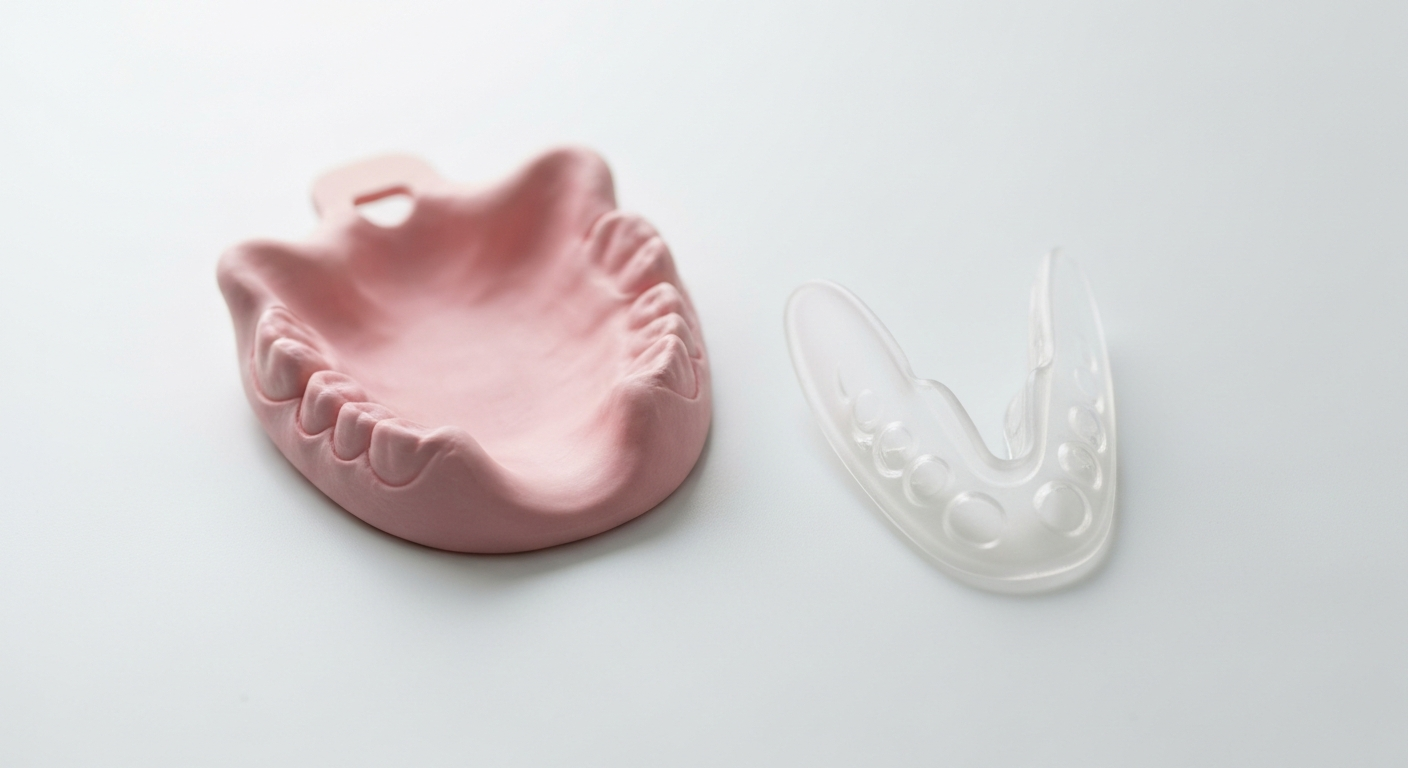
MADs look like sports mouthguards and work by holding your lower jaw slightly forward. This pulls the tongue forward as well, preventing it from falling back into the airway. They're the most effective over-the-counter option for most snorers.
Custom-fit versions molded to your teeth are more comfortable and effective than one-size-fits-all options. You boil them, bite down to create an impression, and the device holds that shape permanently.
"Mandibular advancement devices are effective in reducing snoring and mild-to-moderate obstructive sleep apnea." — Marklund M, et al. in Sleep Medicine Reviews
TRDs use suction to hold the tongue forward without repositioning the jaw. They work well for people with dentures or jaw issues that make MADs uncomfortable. The tradeoff is a longer adjustment period — holding your tongue in place feels strange at first.
Also Read: Custom Fit Snore Mouthpiece: Types, Results & How to Choose
| Feature | MAD | TRD |
|---|---|---|
| Works by | Advancing lower jaw | Holding tongue forward |
| Best for | Most snorers, jaw-related snoring | Denture wearers, tongue-base snoring |
| Adjustment period | 1–2 weeks | 2–4 weeks |
| Jaw soreness risk | Higher initially | Lower |
| Custom-fit available | Yes | Some models |
If you've tried lifestyle changes without success, a custom-fit MAD is the logical next step for most people.
Also Read: Snore Guard Guide: MAD vs TRD & How to Choose in 2026
Loud, chronic snoring accompanied by gasping, choking, or witnessed breathing pauses during sleep may indicate obstructive sleep apnea (OSA) — a condition that requires medical evaluation.
Sleep apnea involves complete or near-complete airway obstruction, not just narrowing. The brain senses oxygen dropping and triggers a micro-arousal to restore breathing. This cycle can repeat dozens or hundreds of times per night without the sleeper being aware.
Warning signs that suggest sleep apnea rather than simple snoring:
Untreated sleep apnea increases risk for heart disease, stroke, type 2 diabetes, and accidents from daytime drowsiness. If you have these symptoms, see a doctor for a sleep study rather than self-treating with snoring remedies alone.
CPAP (continuous positive airway pressure) remains the gold standard treatment for moderate-to-severe sleep apnea. Oral appliances can treat mild-to-moderate cases and are sometimes used when CPAP isn't tolerated.
Beyond the major interventions, smaller daily habits can make a meaningful difference — especially when combined with the primary fixes.
Consistent sleep schedules matter. Sleep deprivation causes deeper sleep when you finally do rest, which increases muscle relaxation and worsens snoring. Going to bed and waking at consistent times helps maintain normal muscle tone during sleep.
Elevating the head of your bed by 4–6 inches (not just adding pillows) can reduce snoring by changing the angle of the airway. This is especially helpful for congestion-related snoring.
Oropharyngeal exercises — also called myofunctional therapy — strengthen the muscles that support the airway. A review in the journal Sleep found that these exercises reduced snoring frequency by 36% and intensity by 59% in adults.
Exercises include:
Consistency matters more than intensity. Ten minutes daily for several months shows better results than sporadic longer sessions.
Also Read: How to Stop Snoring While Sleeping: 6 Proven Methods
Snoring results from narrowed airways during sleep, and solving it means identifying whether your trigger is positional, weight-related, congestion-based, alcohol-induced, or anatomical. Natural fixes — side sleeping, weight loss, cutting evening alcohol, and clearing nasal congestion — work for about half of snorers. When lifestyle changes aren't enough, custom-fit mandibular advancement devices physically hold the airway open. Chronic loud snoring with gasping or breathing pauses warrants a medical evaluation to rule out sleep apnea, which carries serious health risks if untreated.
The most effective natural approaches are side sleeping, weight loss (if overweight), avoiding alcohol within 4 hours of bedtime, and treating nasal congestion with saline rinses or nasal strips. Throat and tongue exercises practiced daily for several months can reduce snoring frequency by over 30%. These methods work by addressing the root causes — positional collapse, muscle relaxation, external airway compression, and nasal obstruction — rather than masking the symptom.
Many people can eliminate snoring entirely through lifestyle changes, especially if their snoring is triggered by sleep position, weight, alcohol, or congestion. However, those with anatomical causes — naturally large tonsils, elongated soft palate, or a recessed jaw — may need a mandibular advancement device or other intervention. The key is identifying your specific trigger through systematic testing of different approaches.
Positional changes and alcohol elimination can show results the same night you try them. Nasal congestion treatments typically take a few days to a week. Weight loss requires longer — most people need to lose at least 10% of body weight before seeing significant snoring reduction, which takes months of consistent effort. Throat exercises require 2–3 months of daily practice before measurable improvement appears.
Not necessarily. Simple snoring without breathing pauses, gasping, or excessive daytime sleepiness is common and not dangerous. However, loud chronic snoring is a major risk factor for obstructive sleep apnea. If your partner witnesses you stop breathing during sleep, if you wake gasping, or if you're excessively tired despite sleeping enough hours, you should get evaluated with a sleep study to determine whether treatment is needed.
Different people snore for different reasons, and remedies only work when they match your specific cause. Nasal strips help congestion-based snorers but do nothing for tongue-base collapse. Side sleeping helps positional snorers but won't help those who already sleep on their side. Weight loss helps those with neck fat but won't change anatomical factors. The solution is systematic testing — try one intervention at a time for at least a week to identify what actually affects your snoring.
Reviewed and Updated on June 14, 2026 by George Wright