Sleep

Snoring while sleeping is caused by partial airway obstruction — air moving through a narrowed passage vibrates the surrounding tissue, producing the noise. The most effective way to stop it is to address the obstruction directly: either by repositioning the jaw and tongue (a mouthpiece), changing sleep position, reducing airway inflammation, or in some cases addressing structural issues in the nose or throat. Which approach works depends on what's causing your airway to narrow.
Snoring isn't one condition — it's a symptom with multiple causes, each responding to different solutions. Applying the wrong fix wastes time and money.
The fastest way to identify your type is a short self-assessment:
Mouth breather test: Close your mouth and try to make your snoring sound. If you can't, you're primarily a mouth breather — the snoring starts at your open mouth, not your nose. Chin straps, mouth tape (for light snorers), and mouthpieces are high-priority for you.
Tongue-base snorer test: Stick your tongue out as far as you can and hold it between your teeth. Try making your snoring sound in this position. If the sound decreases, your tongue falling back is a major contributor. A mandibular advancement device (MAD) is your best single intervention.
Nose test: Alternately block each nostril and breathe through the other. If one side feels significantly restricted, nasal obstruction is contributing. Nasal strips, dilators, or decongestants address this.
Back-sleeping test: Ask your partner whether you snore equally in all positions or predominantly when on your back. If mainly on your back, you're a positional snorer — side sleeping is the first thing to change.
Most snorers have two or three contributing causes simultaneously. Fixing the dominant one reduces intensity even if it doesn't eliminate snoring entirely.
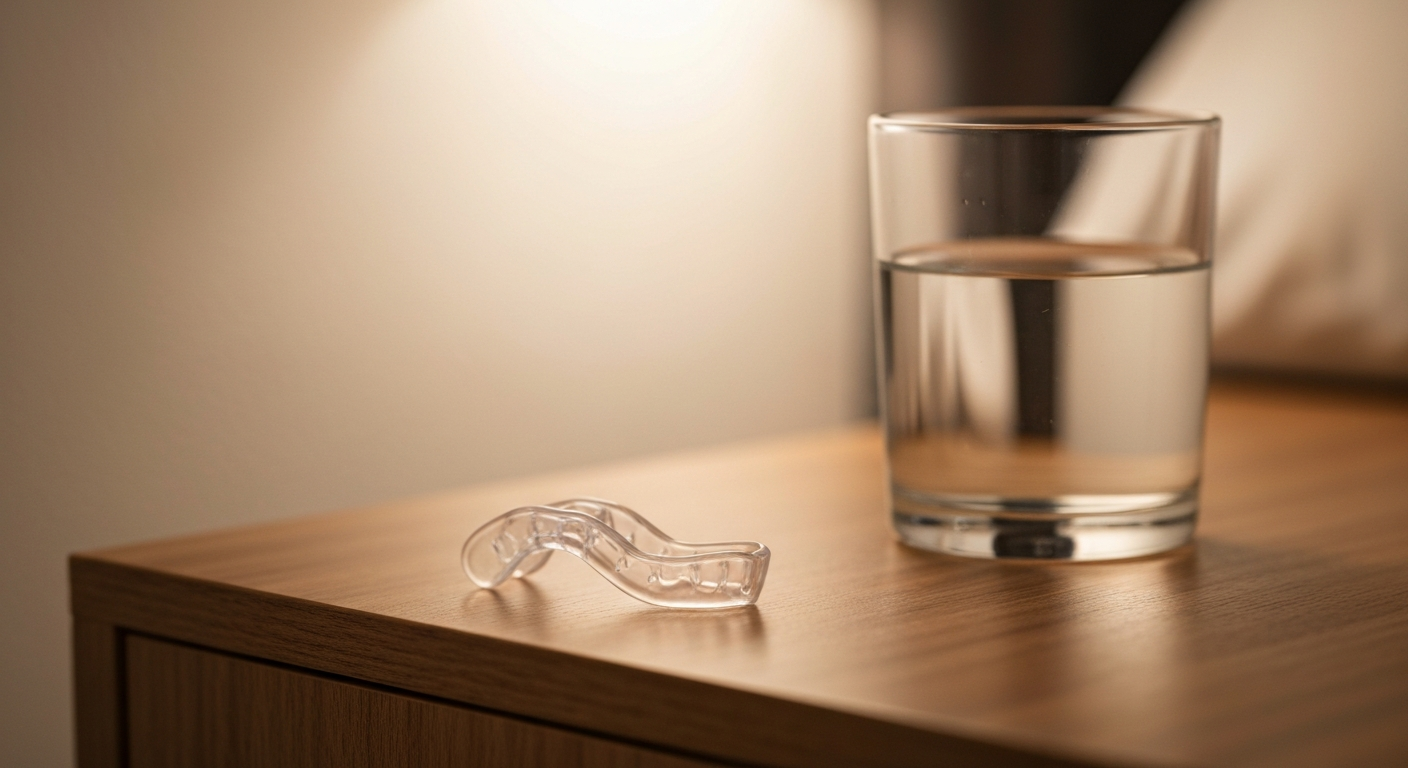
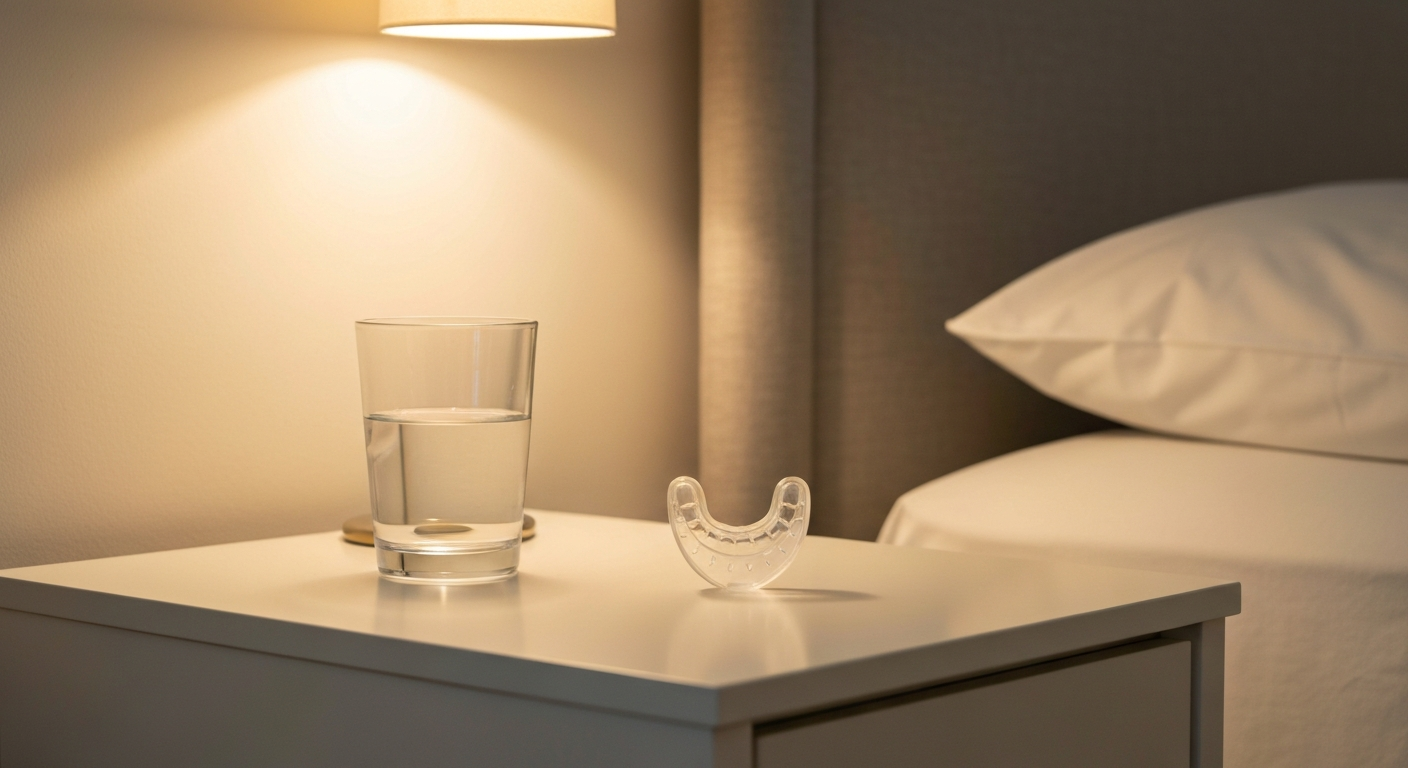
A mandibular advancement device (MAD) is the most widely clinically validated non-surgical snoring treatment. It physically moves the lower jaw forward during sleep, which pulls the tongue and soft palate away from the back of the throat and widens the airway.
MADs work best for the most common snoring type — tongue-base and jaw-position snoring — which accounts for the majority of adult habitual snoring. In clinical trials, MADs reduce snoring frequency in 80–90% of users and eliminate it in roughly 50–60%.
The devices range from boil-and-bite over-the-counter options (~$20–60) to custom laboratory-fabricated appliances prescribed by a dentist ($500–2,000). The custom fit matters: a properly fitted MAD holds the jaw in the optimal advancement position without causing jaw joint discomfort. For moderate-to-severe snoring, investing in a quality adjustable device pays off.
"Mandibular advancement devices are a well-established, evidence-based treatment for snoring and mild to moderate sleep apnea. They are recommended as first-line therapy when CPAP is not tolerated." — American Academy of Sleep Medicine, Clinical Practice Guidelines
For positional snorers — those who snore primarily or exclusively on their back — simply sleeping on your side can cut snoring by 50% or more without any device.
When you lie on your back, gravity pulls the tongue and soft palate directly back into the airway opening. On your side, they fall toward the side of the throat, leaving the central airway clear.
Maintaining side sleeping:
- Use a body pillow placed against your back to prevent rolling over.
- Sew a tennis ball into the back of your pajama top — discomfort prevents back-rolling.
- Elevate the head of your bed by 4–6 inches (not just pillows under the head, which can bend the neck and worsen the airway).
- Specialized positional therapy devices (wearable vests or alarms) exist for people who can't stay on their side.
Side sleeping alone won't help if you're a non-positional snorer whose snoring is equal in all positions — but it's the easiest, lowest-cost first step.
Snoring driven by nasal blockage requires clearing the nose — the jaw mouthpiece and positional tricks help less when mouth breathing is the primary driver.
Approaches by cause:
| Cause | Solution |
|---|---|
| Seasonal allergies | Daily nasal steroid spray (fluticasone OTC), antihistamines |
| Chronic congestion / narrow passages | Nasal dilator strips (Breathe Right-style) or internal nasal dilators |
| Deviated septum | ENT evaluation; septoplasty if causing significant obstruction |
| Enlarged turbinates | Nasal steroid spray first; turbinate reduction if persistent |
| Nightly congestion without clear cause | Saline rinse (neti pot) before bed; humidifier in bedroom |
Nasal strips work by physically pulling the nostril walls apart, increasing nasal passage area by ~25–30%. They work well for mild-to-moderate nasal snoring during the same night you use them but don't produce lasting change. For ongoing nasal snoring, address the underlying reason for congestion.
Alcohol is one of the single most reliably snoring-worsening factors. It relaxes the pharyngeal muscles that hold the airway open, often turning a non-snorer into one and a light snorer into a heavy one.
The effect lasts roughly 4 hours after the last drink. A glass of wine with dinner (3 hours before bed) has much less impact than a drink an hour before sleep.
Sedating medications — benzodiazepines, some antihistamines (diphenhydramine in standard OTC sleep aids), and sleep medication — cause the same muscle relaxation effect. If you take these regularly and snore, discuss alternatives with your doctor.
"Alcohol consumed within 4 hours of sleep onset significantly increases snoring frequency and intensity and reduces oxygen saturation during sleep, independent of sleep apnea diagnosis." — Sleep Medicine Reviews, Elsevier
Excess weight, particularly around the neck and throat, narrows the airway from the outside in. Neck circumference above 17 inches in men and 16 inches in women is associated with significantly higher snoring risk — every pound of fat deposited around the throat compresses the airway further.
Weight loss proportionally reduces snoring in overweight individuals. A 10% body weight reduction can reduce snoring frequency by 30–50% in studies. For those who snore specifically from weight-related airway narrowing, weight loss is the most lasting fix — but it's slow, and a mouthpiece or positional approach provides relief while that work happens.
A systematic review in the journal Sleep found that oropharyngeal exercises — targeted exercises for the tongue, soft palate, and pharynx — reduce snoring frequency by 36% and snoring intensity by 59% over two months.
The exercises work by strengthening the muscles that keep the airway open, increasing their tone during sleep when muscle relaxation is the problem. A typical program:
- Tongue push-ups (press tip of tongue to roof of mouth repeatedly)
- Soft palate exercises (push tongue against palate and hold)
- Uvula exercises (open mouth wide, move uvula up and down)
- Lateral tongue movements
Myofunctional therapy is particularly effective for mild-to-moderate snoring and works well combined with a MAD. A certified myofunctional therapist can provide a structured program; free exercise routines are also documented in the published literature.
| Product / Claim | Reality |
|---|---|
| Anti-snoring sprays (throat lubricants) | No clinical evidence of effect; the mechanism (lubricating the throat) does not address airway obstruction |
| Anti-snoring pillows | May help mild positional snoring; no evidence for non-positional snoring |
| Chin straps alone | Only prevents mouth opening — doesn't address tongue-base or nasal snoring; uncomfortable for most |
| Essential oils / nasal sprays | No clinical evidence for reducing snoring |
| "Smart" anti-snoring wristbands (electrical stimulation) | Some evidence for mild positional snoring; stimulation wakes you up enough to shift position, not a cure |
| ✓Our Pick |
SnoreMeds custom-fit mouthpiece — adjustable MAD with clinical backing This is what many people find solves the problem quickly, without a costly professional visit. Learn More → |
Snoring alone — even loud snoring — is not a medical emergency. But snoring combined with the following symptoms warrants a doctor visit and possibly a sleep study:
These signs suggest obstructive sleep apnea (OSA), where the airway closes completely rather than just narrowing. OSA has significant cardiovascular consequences if untreated. CPAP (continuous positive airway pressure) is the standard treatment; MADs are an effective alternative for mild-to-moderate OSA.
To stop snoring while sleeping: first identify your dominant type (tongue-base, mouth-breathing, nasal, or positional). The most effective single intervention for most adults is a mandibular advancement device — it addresses the anatomical root cause directly. Combine it with side sleeping, alcohol avoidance, and bedroom humidity control for maximum effect. For nasal snoring, clear the nose first. For overweight snorers, weight management provides the most lasting improvement. If you have gasping, morning headaches, or daytime fatigue alongside snoring, get evaluated for sleep apnea.
The fastest single-night intervention is side sleeping combined with alcohol avoidance. For an immediate mechanical fix, a boil-and-bite MAD can be ready to use the same evening. Nasal strips provide same-night relief for nasal snorers. Longer-term, a custom-fit MAD provides the most reliable nightly results.
Mouth tape keeps the mouth closed during sleep, which forces nasal breathing and eliminates mouth-breathing snoring. It works well for people who breathe through their mouths at night but can breathe nasally without obstruction. If your nasal passages are blocked, taping the mouth is uncomfortable and potentially unsafe — clear the nose first. Medical-grade mouth tape (surgical micropore tape) is safe; specialty mouth tape brands add expense without benefit.
For some people, yes. Snoring from weight-related airway compression can be permanently resolved through sustained weight loss. Snoring from nasal polyps or a deviated septum can be resolved surgically. For anatomical snoring from jaw or soft palate shape, surgical options (uvulopalatopharyngoplasty, genioglossus advancement) offer permanent correction in appropriate candidates. For most people, ongoing management (MAD worn nightly, maintenance of healthy weight, side sleeping) produces permanent silence without surgery.
The main variables are: alcohol consumption, sleep position, nasal congestion level (allergy seasons, colds), sleep stage distribution (more deep sleep after sleep deprivation → more snoring), and bedroom humidity. The same anatomical predisposition produces wildly different snoring severity depending on which triggers are active that night.
Reviewed and Updated on June 13, 2026 by George Wright