Health
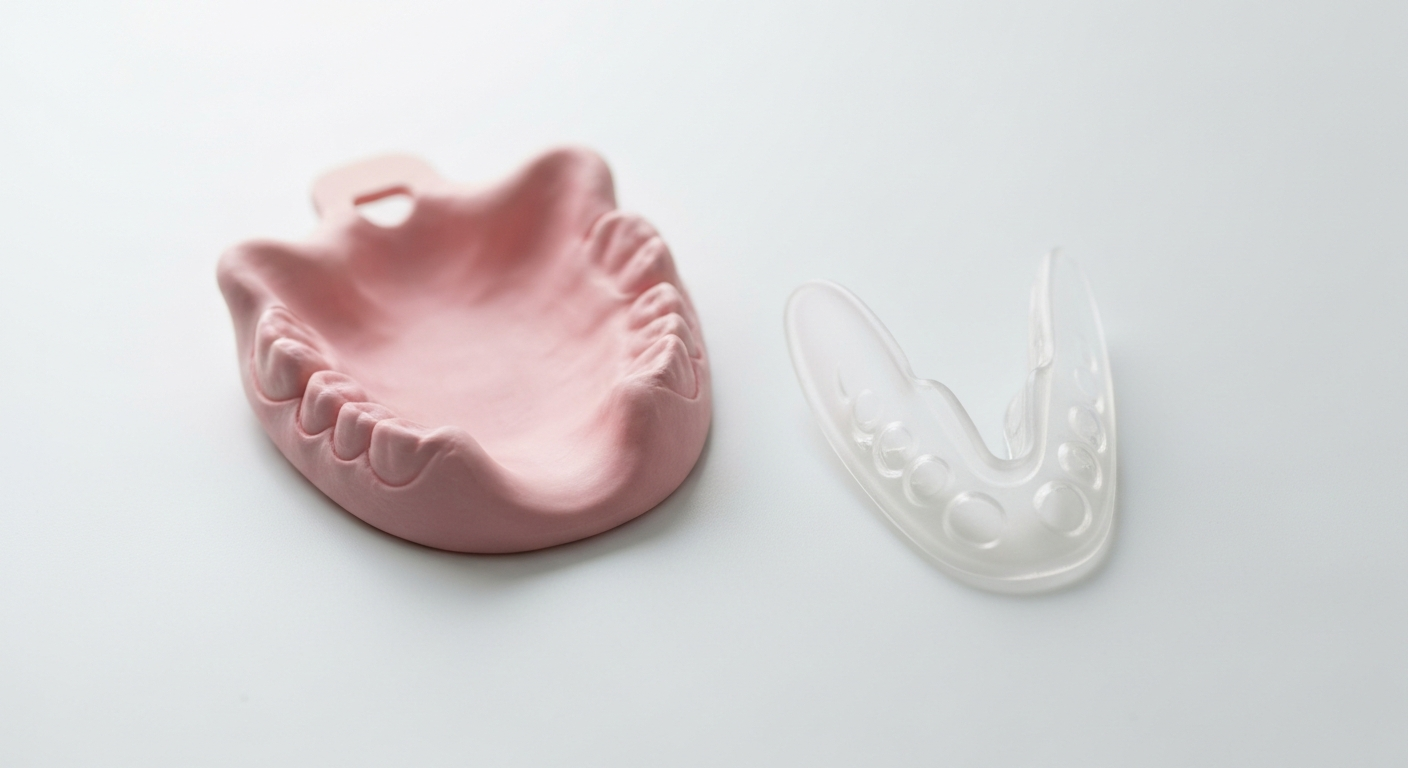

A custom-fit snore mouthpiece is a mandibular advancement device (MAD) shaped precisely to your dental anatomy — either from a professional impression taken by a dentist or from a self-impression kit sent to a lab. The fit matters because the degree of jaw advancement is what determines effectiveness, and a poorly fitting device can't maintain the precise position needed throughout a full night. Custom devices outperform boil-and-bite devices on both snoring reduction and nightly compliance.
| ✓Our Pick |
SnoreMeds adjustable mouthpiece with custom impression — professional fit at home Save yourself the frustration — a proven solution with consistently positive feedback from real buyers. Learn More → |
A mandibular advancement device works by holding the lower jaw in a specific forward position throughout sleep. The precision with which it maintains that position determines how well it works.
A standard boil-and-bite MAD creates an impression of your teeth in a softened thermoplastic material — the quality of the impression depends heavily on how well you formed it, and the resulting fit is rarely tight enough to prevent minor jaw movement during the night. If the device shifts even a few millimeters, it loses its advancement position and the airway narrows again. The snoring resumes, and you may not even know it happened.
A custom-fit device uses a precise dental impression (or a professional-grade at-home impression kit) to create an exact replica of your bite. The device then holds the jaw in a controlled, predetermined forward position with no slippage. This means:
"Compliance with mandibular advancement device therapy is significantly higher with custom-fabricated devices than with non-custom devices. Patient comfort and the ability to maintain consistent jaw advancement position are the primary drivers of this difference." — American Academy of Sleep Medicine
"Custom-fit" isn't a single thing — it spans from professional dental lab devices to self-impression consumer products.
The dentist takes a professional-grade impression of both arches and bite relationship, which is sent to a dental laboratory specializing in sleep appliances. The lab fabricates the device to exact tolerances. You receive a device that:
- Fits every tooth precisely
- Has controlled advancement range (typically 5–10mm) in 0.5–1mm increments
- Is made from medical-grade, long-lasting acrylic
- Comes with follow-up adjustment at the dentist's office
Cost: $500–2,000 typically, often partially covered by dental insurance if OSA is diagnosed.
Lifespan: 2–5 years with good care.
Best for: People with complex bite relationships, significant snoring or OSA diagnosis, or those who have tried OTC MADs and want maximum effectiveness.
Several manufacturers — including SnoreMeds — offer at-home impression kits that produce a level of customization significantly above boil-and-bite. The process:
These devices are adjustable (most allow 3–5mm of advancement) and durable (typically 12–18 months). They don't achieve the lab-quality precision of a dentist-fabricated device, but they substantially outperform generic boil-and-bite devices in fit stability and comfort.
Cost: $70–200 typically.
Best for: Most people who want meaningful customization without the dentist cost; a good intermediate step before committing to a dental lab device.
The impression step is the most important part — a poorly done impression produces a device that doesn't fit any better than a standard boil-and-bite.
For at-home impression kits:
For dentist-fabricated devices:
- Tell your dentist the specific advancement level you want to start at (usually conservative — 25–30% of maximum) and that you want the ability to adjust in small increments.
- Plan for 2–3 follow-up visits during the titration period (finding the optimal advancement) — this is normal and included in many dentist fees.
The optimal jaw advancement position varies by person and may take several weeks to identify. Adjustable devices allow this optimization without buying a new device.
Too little advancement: the airway still narrows, snoring continues.
Too much advancement: the jaw aches in the morning, TMJ discomfort develops, and compliance drops — you stop wearing it.
The target is the minimum advancement that stops the snoring. This is individual — for some people it's 3mm, for others 7mm.
Adjustable custom-fit devices allow you to move in 0.5–1mm increments. Start at the minimum, spend 5–7 nights at each setting, then advance if snoring is not yet controlled. Once snoring stops at a particular setting, stay there — advancing further doesn't improve outcomes and increases jaw discomfort.
Non-adjustable custom devices (some lab-fabricated versions) are set at a fixed advancement determined by the dentist during the impression appointment, based on clinical assessment. This is generally effective but removes the self-titration option.
| Situation | Recommendation |
|---|---|
| Never tried a MAD before | Start with a quality adjustable self-impression device ($70–200) |
| Tried a boil-and-bite, partial improvement | Move to a proper custom-impression device |
| Sleep apnea diagnosis, MAD prescribed | Dental lab device (insurance may cover) |
| TMJ disorder | Consult a dentist before any MAD — a specialist may design a different advancement geometry |
| Missing multiple back teeth | Dentist evaluation required — device needs anchor teeth |
| Dentures | MADs generally don't work with full dentures — consider TRD instead |
A custom-fit snore mouthpiece maintains precise jaw advancement throughout the night because it's shaped exactly to your dental anatomy — not a generic approximation. This precision is what separates meaningful snoring reduction from partial results. Self-impression consumer devices (quality kits from manufacturers like SnoreMeds) provide substantially better fit than boil-and-bite OTC products at a fraction of dental lab cost. For most people, a well-done self-impression custom device is the right starting point; dental lab devices make sense when insurance covers it or when a sleep apnea diagnosis is involved.
Yes — a custom device maintains its fit and jaw advancement position better through the night, resulting in more consistent snoring control and higher long-term compliance. A properly done self-impression custom device is significantly better than boil-and-bite; a dental lab device is the best available without surgery.
Self-impression consumer devices typically last 12–18 months with nightly use and proper cleaning. Dental lab devices made from hard acrylic last 2–5 years. Signs of replacement time: the fit loosens, the material shows visible wear, or the adjustment mechanism no longer holds position.
Yes — mandibular advancement devices are an approved treatment for mild-to-moderate obstructive sleep apnea (OSA) by the American Academy of Sleep Medicine. For sleep apnea treatment, a dental lab device with documented advancement titration is preferred (and typically required for insurance coverage). Custom consumer devices are appropriate for snoring and may help mild OSA but should not replace a professional evaluation for confirmed OSA.
Rinse under cool water immediately after removal. Brush gently with a soft toothbrush and mild soap or denture cleaning tablet weekly. Never use hot water (warps the material). Store dry in the ventilated case provided. Replace sooner if visible biofilm accumulates despite regular cleaning.
Reviewed and Updated on June 13, 2026 by George Wright