DIY
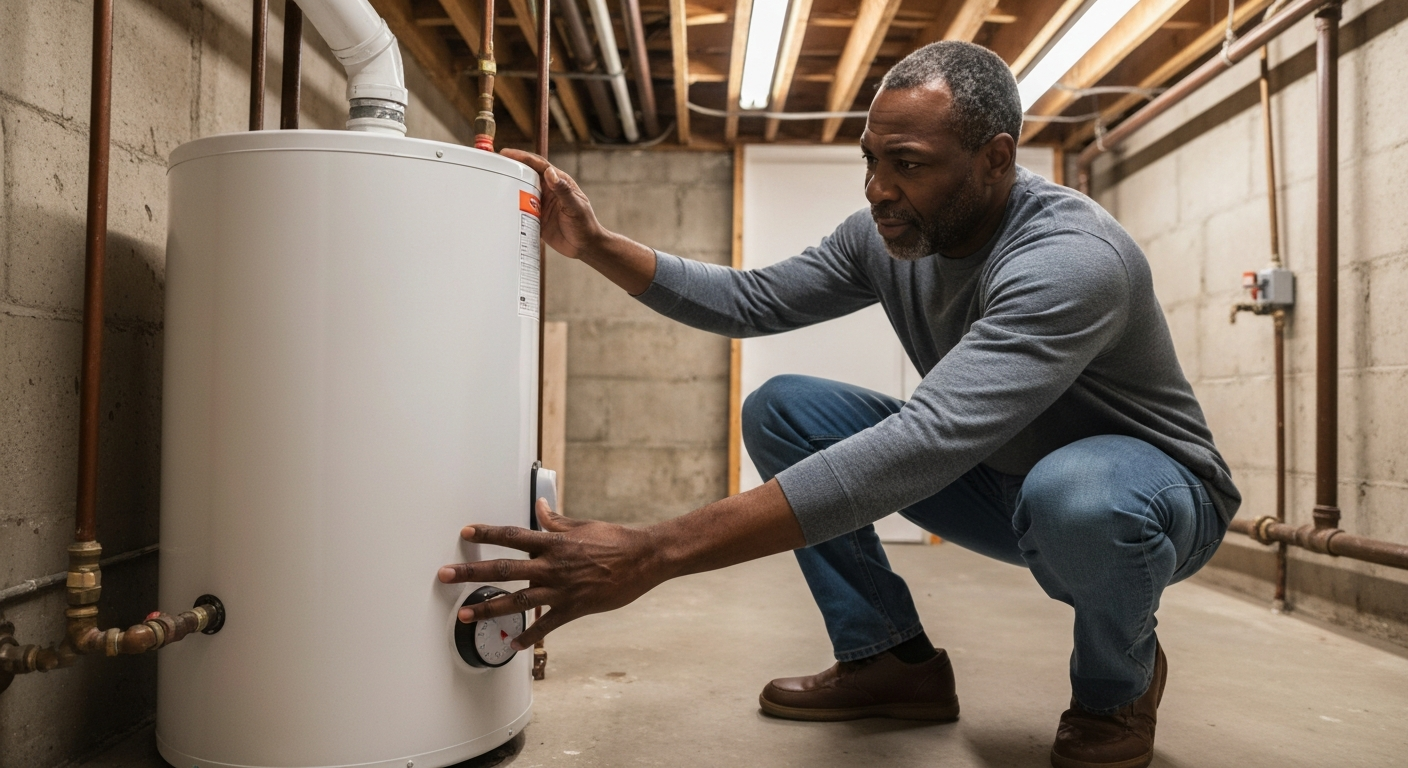

Your hot water is cold because your water heater has failed, run out of fuel or power, or has a faulty component like a thermostat, heating element, or pilot light — and identifying which part failed determines whether you need a simple reset or a professional repair.
When you turn on the hot tap and nothing but cold water comes out, the problem almost always traces back to your water heater. The unit either isn't receiving power or fuel, isn't heating the water it receives, or can't deliver the heated water to your fixtures. In some cases, you've simply used all the stored hot water faster than the tank can reheat it. The good news: most causes have straightforward fixes you can diagnose yourself before calling a plumber.
| ✓Our Pick |
Replacement heating elements and thermostats for water heaters This is the go-to fix recommended by professionals — save time and money by getting it right the first time. See on Amazon → |
The most frequent reasons your hot water isn't working include a tripped breaker, depleted tank, failed heating element, extinguished pilot light, faulty thermostat, sediment buildup, broken dip tube, gas supply interruption, or a unit that's simply reached the end of its lifespan.
Each cause points to a different system failure — electrical, gas, mechanical, or age-related. Below, I'll walk through each one so you can pinpoint exactly what's wrong with your setup.
Electric water heaters won't heat anything if they've lost power. Check your electrical panel for a tripped breaker — water heater circuits are typically labeled and use a dedicated 30-amp double-pole breaker. If the breaker has tripped, reset it once. If it trips again immediately, you have a short circuit or ground fault that requires an electrician.
Also verify the disconnect switch near the water heater itself hasn't been accidentally turned off. Some units have a reset button on the upper thermostat — press it firmly until you hear a click.
Gas water heaters rely on a small flame called a pilot light to ignite the main burner. If this flame extinguishes, the burner can't fire and your water stays cold. Common reasons the pilot goes out include drafts, a dirty thermocouple, or a faulty gas valve.
To check, remove the access panel at the bottom of the tank and look for a small blue flame. If it's out, follow the relighting instructions printed on the unit. Most modern heaters have a piezo igniter — turn the gas knob to "pilot," press and hold it, then click the igniter until the flame appears. Hold for 30 seconds before releasing.
"If the pilot light will not stay lit after several attempts, the thermocouple likely needs replacement. This safety device shuts off gas flow when it doesn't detect a flame." — U.S. Department of Energy
Tank water heaters store a finite amount of heated water — typically 40 to 80 gallons for residential units. If multiple people shower back-to-back or you run the dishwasher and washing machine simultaneously, you can drain the tank faster than it recovers.
Recovery time depends on your heater's BTU rating (gas) or wattage (electric) and the incoming water temperature. A standard 50-gallon electric heater takes roughly 60 to 80 minutes to fully reheat. If this happens frequently, you may need a larger tank or a tankless unit.
Water heater thermostats control when the heating elements or burner activate. If the thermostat fails or gets bumped to a low setting, your water won't reach the temperature you expect. The recommended setting is 120°F — hot enough for comfortable use but low enough to prevent scalding.
Electric heaters have two thermostats (upper and lower), each with its own heating element. If the upper thermostat fails, you'll get no hot water at all. If the lower fails, you'll get some hot water but it runs out quickly.
To adjust or test:
1. Turn off power at the breaker
2. Remove the access panels on the tank
3. Use a flathead screwdriver to adjust the dial to 120°F
4. Restore power and wait 2 hours before testing
Electric water heaters use one or two immersion heating elements to warm the water. These elements burn out over time, especially in areas with hard water where mineral deposits accelerate corrosion.
| Symptom | Likely Cause |
|---|---|
| No hot water at all | Upper element or upper thermostat failed |
| Hot water runs out quickly | Lower element failed |
| Water lukewarm but never hot | Both elements weakened or thermostat miscalibrated |
Testing elements requires a multimeter and turning off power first. A functioning 4,500-watt element should read between 12 and 14 ohms. Infinite resistance means the element is burned out.
Also Read: Why Is My Water Heater Beeping? 6 Causes & Quick Fixes
Over years of use, minerals from hard water settle at the bottom of your tank. This sediment layer insulates the water from the heating element or burner flame, forcing the unit to work harder and longer to heat the same volume.
Signs of sediment buildup include popping or rumbling sounds during heating cycles and inconsistent water temperature. The fix is draining and flushing the tank — a maintenance task recommended annually.
To flush your tank:
1. Turn off power or gas
2. Connect a garden hose to the drain valve
3. Open the valve and let water flow until it runs clear
4. Close the valve, refill the tank, then restore power
The dip tube is a plastic pipe that directs cold incoming water to the bottom of the tank, where it gets heated. If this tube cracks or deteriorates, cold water mixes directly with the hot water at the top of the tank.
Symptoms include lukewarm water even when the tank should be fully heated, and small plastic flakes appearing in aerators or showerheads. Dip tubes commonly fail in heaters manufactured in the mid-1990s with defective materials. Replacement requires draining the tank and removing the cold water inlet fitting.
Gas water heaters need a continuous fuel supply. If your gas line is shut off, the pilot light goes out and the burner can't ignite. Check other gas appliances in your home — if your stove or furnace also isn't working, the issue is likely at the meter or main supply line.
If only the water heater is affected, the gas valve on the unit itself may be closed or faulty. The valve should be in the "on" position, parallel to the gas line. A perpendicular handle means the valve is closed.
Tank water heaters typically last 10 to 15 years. Beyond that, internal corrosion, sediment accumulation, and component fatigue cause increasingly frequent failures.
"The average lifespan of a conventional storage water heater is 10 to 15 years. Tankless water heaters can last 20 years or more with proper maintenance." — International Association of Certified Home Inspectors (InterNACHI)
If your unit is older than 12 years and repairs are becoming frequent, replacement is usually more cost-effective than continued fixes.
When only your shower lacks hot water but other fixtures work normally, the problem is localized to the shower valve, anti-scald device, or the distance between the water heater and that bathroom.
The water heater itself is probably working. Instead, check these shower-specific causes:
Anti-scald valve set too low: Modern shower valves include a temperature limiter that caps maximum heat to prevent burns. This adjustment is usually accessible after removing the handle — a small plastic stop can be repositioned to allow hotter water.
Faulty mixing valve: Single-handle shower faucets use a cartridge to blend hot and cold water. If the cartridge wears out, it may not open the hot water port fully. Cartridge replacement costs $15 to $50 for parts.
Cross-connection in plumbing: A defective check valve or improper installation can allow cold water to flow backward into the hot water line. This is more common in homes with recent plumbing work.
Long pipe run: If the shower is far from the water heater, heat loss through the pipes may require running the water longer before hot water arrives.
Cold water coming out warm or hot indicates a plumbing cross-connection, a recirculating pump issue, or heat transfer through pipes running near hot water lines or heat sources.
This is the opposite problem — and it's not normal. Here's what causes it:
A cross-connection occurs when hot and cold water lines are improperly joined, allowing hot water to backflow into the cold supply. Common culprits include single-handle faucets with failed cartridges, washing machines with defective mixing valves, or incorrectly installed water heater connections.
Test by shutting off the cold water supply at the water heater. If the cold tap still runs warm at any fixture, the cross-connection is elsewhere in the system.
Homes with hot water recirculating systems pump heated water in a loop so hot water is instantly available at any tap. If the check valve fails, hot water can flow backward into the cold line.
Cold water pipes routed through attics, crawl spaces near heat ducts, or walls adjacent to hot water lines can absorb heat through conduction. Running the cold tap for 30 seconds should clear the warmed water and deliver genuinely cold water. If it doesn't, you have an active cross-connection.
Also Read: Why Is My House Not Heating Up? 11 Causes & Quick Fixes
Low hot water pressure with normal cold water pressure typically means sediment buildup, a partially closed valve, a kinked flex line, or a failing pressure-reducing valve affecting only the hot side.
| Possible Cause | How to Check | Fix |
|---|---|---|
| Partially closed shutoff valve | Locate valve on hot water outlet pipe from heater; ensure fully open | Turn valve counterclockwise until it stops |
| Sediment clogging pipes | Reduced flow at all hot fixtures | Flush water heater; consider whole-house water softener |
| Kinked flex connector | Inspect corrugated stainless steel line from heater | Straighten or replace flex line |
| Corroded galvanized pipes | Older home with original steel pipes; flow worsens over time | Repipe with copper or PEX |
| Faulty PRV | Pressure-reducing valve set incorrectly | Adjust or replace PRV |
If the problem appeared suddenly after plumbing work, double-check that all valves are fully open and no shutoffs were left partially closed.
Call a professional if you smell gas, see water pooling around the heater, have already reset the breaker or relit the pilot without success, or if your unit is more than 10 years old and repairs exceed $500.
Some repairs — like replacing a thermostat, element, or thermocouple — are manageable for handy homeowners. But gas line issues, major leaks, and tank replacements require licensed professionals for safety and code compliance.
Get multiple quotes before committing. In 2026, the average cost to replace a standard 50-gallon tank water heater (including installation) ranges from $1,200 to $2,500. Tankless units cost $2,000 to $4,500 installed but offer longer lifespans and lower operating costs.
Also Read: Why Is My Heat Pump Not Heating? 9 Causes & Fixes
Your hot water is cold because something in the water heating chain has broken — power supply, fuel delivery, heating components, or the tank itself. Electric heaters most often fail due to tripped breakers, bad thermostats, or burned-out elements. Gas heaters fail due to extinguished pilot lights, faulty thermocouples, or gas supply interruptions. If only certain fixtures lack hot water, the problem is localized to that fixture's valve or plumbing. If cold water runs hot, you have a cross-connection that needs immediate attention. Regular maintenance — flushing the tank annually and checking the anode rod — extends your heater's life and prevents most failures.
Your thermostat may be set too low, typically below 120°F. Sediment buildup can also insulate the water from the heating source. Check the thermostat setting first, then flush the tank if the problem persists.
Yes. Sediment accumulation, corroding anode rods, and aging heating elements all reduce efficiency. A unit older than 10 years may heat the same water volume using significantly more energy than when new.
The hot water must travel from the heater to the showerhead. Longer pipe runs mean more cold water sits in the line. A recirculating pump or point-of-use water heater can deliver instant hot water at distant fixtures.
Popping or rumbling sounds usually indicate sediment buildup at the tank bottom. While not immediately dangerous, this reduces efficiency and accelerates tank corrosion. Flush the tank to resolve it.
If your heater is under 8 years old and the repair costs less than half a new unit, repair makes sense. Beyond 10 to 12 years, especially with recurring problems, replacement is typically more economical long-term.
Reviewed and Updated on May 3, 2026 by Adelinda Manna