DIY
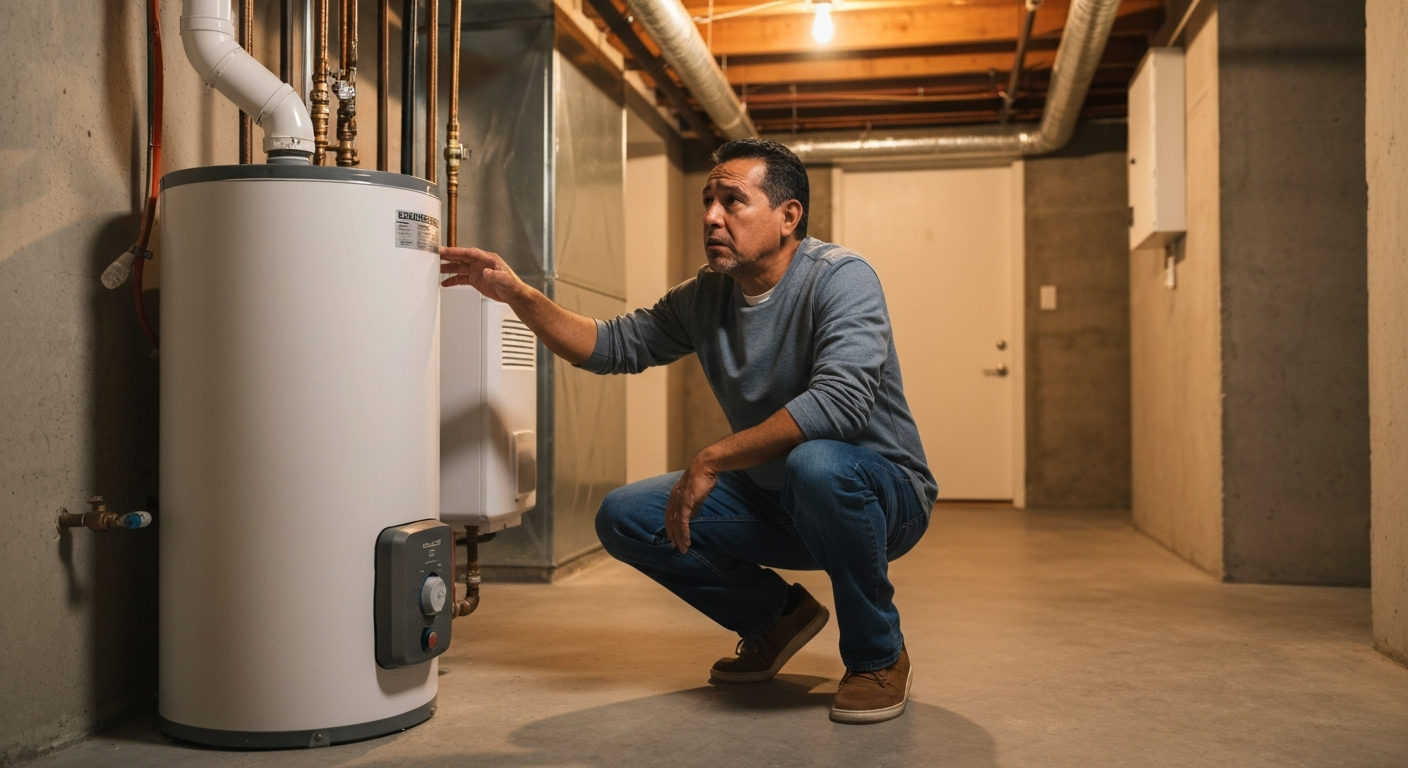

Your water heater is beeping because its built-in alarm has detected a problem — most commonly a gas leak, carbon monoxide presence, water leak at the base, overheating, or a failing component like the thermocouple or heating element.
The beeping is a safety feature, not a malfunction of the alarm itself. Water heaters manufactured after 2015 include audible alerts that activate when sensors detect conditions that could damage the unit or pose a danger to your household. Identifying the specific beep pattern and checking for accompanying error codes on the display panel will tell you exactly what triggered the alarm and whether you can fix it yourself or need to call a professional.
| ✓Our Pick |
Replacement water heater leak detectors and alarms Simple to use and genuinely effective — for many people this is all they ever needed. See on Amazon → |
A single beep typically indicates a minor issue like low battery in a sensor, while continuous rapid beeping signals an urgent safety concern such as a gas leak or carbon monoxide detection.
Water heater manufacturers use distinct beep patterns to communicate different problems. Understanding your unit's specific language helps you respond appropriately — some alerts require immediate evacuation, while others just need a button press.
| Beep Pattern | Likely Cause | Urgency Level | Immediate Action |
|---|---|---|---|
| Single beep every 30–60 seconds | Low battery in leak detector or CO sensor | Low | Replace battery |
| Continuous rapid beeping | Gas leak or CO detected | Critical | Evacuate and call gas company |
| Three beeps, pause, repeat | Water leak detected at base | High | Shut off water supply |
| Four beeps, pause, repeat | Overheating or thermal cutoff triggered | High | Turn off power, let unit cool |
| Intermittent chirping | Sensor malfunction or loose wiring | Medium | Check connections |
Your owner's manual contains the exact beep codes for your specific model. If you no longer have the manual, search the manufacturer's website using your model number — it is printed on a sticker on the side of the tank.
Gas leak detection triggers the most urgent beeping pattern on gas water heaters, and you should treat continuous rapid beeping as a potential emergency until proven otherwise.
Modern gas water heaters include combustible gas detectors near the burner assembly. These sensors trigger an alarm when they detect methane or propane concentrations in the air around the unit. The beeping is designed to be impossible to ignore.
If your gas water heater is beeping continuously, follow this sequence:
A gas leak does not always produce a strong smell. The odorant added to natural gas (mercaptan) can fade in concentration or be masked by other household odors. Trust the sensor over your nose.
"Gas detectors in water heaters are calibrated to alarm at concentrations well below the lower explosive limit, giving occupants time to evacuate before conditions become dangerous." — U.S. Consumer Product Safety Commission
Yes — many gas water heaters now include integrated carbon monoxide sensors that beep when they detect unsafe CO levels in the surrounding air.
Carbon monoxide is produced when gas burns incompletely. This happens when the burner is dirty, the flue is blocked, or ventilation around the unit is inadequate. CO is colorless and odorless, making it undetectable without a sensor.
The symptoms of CO poisoning include headache, dizziness, nausea, and confusion. If multiple people in your household feel unwell and your water heater is beeping, leave immediately and call 911.
Common causes of CO buildup around water heaters include:
A licensed HVAC technician can test CO levels and inspect the venting system. Do not attempt to diagnose a CO problem yourself — the gas is lethal at concentrations you cannot see or smell.
Also Read: Why Is My Heat Not Blowing Hot Air? 7 Causes & Fixes
Water heaters with integrated leak sensors or connected external leak detectors beep when moisture accumulates at the base of the tank, indicating a failing tank, loose connection, or condensation issue.
A beeping leak alarm means water is present where it should not be. Check the floor around your water heater immediately. Even a small puddle matters — it could indicate the beginning of tank failure.
Possible sources of water around your heater include:
If water is actively flowing from the tank body (not a valve or fitting), your tank has corroded through. Turn off the cold water supply to the heater immediately to limit water damage. A tank with a corrosion hole cannot be repaired — it must be replaced.
According to the Insurance Institute for Business & Home Safety, water heater failures are among the top five sources of residential water damage, with the average claim exceeding $4,000.
Water heaters beep when the internal temperature exceeds safe limits because overheating can cause pressure buildup, tank damage, or scalding water at your taps.
The thermostat on your water heater regulates burner or element cycling to maintain your set temperature — typically 120°F to 140°F. If the thermostat fails or the high-limit switch (also called the reset button or ECO switch) trips, the unit may overheat.
Signs your water heater has overheated:
For electric water heaters, reset the high-limit switch by turning off the breaker, removing the upper access panel, and pressing the red reset button. If it trips again, the thermostat or heating element needs replacement.
For gas water heaters, check that the thermostat dial has not been accidentally turned up. If the setting is correct and the unit is still overheating, the gas control valve may be malfunctioning.
Also Read: Why Is My Heat Pump Not Heating? 9 Causes & Fixes
Sometimes the beeping is not from the water heater itself but from a standalone leak detector, CO alarm, or smart home sensor positioned near the unit.
Check the devices around your water heater. Many homeowners install aftermarket water leak sensors or combination smoke/CO detectors in utility closets and basements where water heaters are located. These devices beep independently.
External sensors that might be beeping:
If the beeping is coming from a separate device, check its indicator lights. A solid green light with occasional beeps usually means low battery. A flashing red light with continuous beeping indicates an active alarm condition.
Replace batteries in leak sensors and CO detectors annually — even if they have not started chirping yet. Lithium batteries last longer than alkaline in high-humidity environments like utility rooms.
| ✓Our Pick |
Water leak detector sensors with adjustable sensitivity This is what many people find solves the problem quickly, without a costly professional visit. See on Amazon → |
To stop the beeping, you must first address the underlying cause — silencing the alarm without fixing the problem puts your household at risk.
Once you have identified and resolved the issue triggering the alarm, reset your water heater using the appropriate method for your unit type:
If your water heater has a digital control panel with an error code, note the code before resetting. The code tells you exactly what triggered the alarm and will help a technician diagnose recurring problems.
"Resetting a tripped high-limit switch without investigating why it tripped is like resetting a circuit breaker without finding the short — the underlying problem remains." — Department of Energy Water Heater Guide
Call a licensed plumber or HVAC technician if the beeping continues after resetting, if you smell gas, if the T&P valve is discharging repeatedly, or if the unit is more than 10 years old.
Some water heater problems exceed DIY repair territory. Professional service is necessary when:
A typical diagnostic service call costs $75 to $150. Repair costs vary widely depending on the component — a new thermocouple runs $20 to $40 for the part, while a control valve replacement can exceed $300 with labor.
If your water heater is over 10 years old and requiring frequent repairs, replacement is often more economical. Modern units are more efficient and include better safety features.
Also Read: Why Is My Electric Bill So High in My Apartment?
Use this systematic checklist to identify the cause of your water heater beeping quickly and safely.
| Step | Check | What to Look For |
|---|---|---|
| 1 | Smell the air near the unit | Rotten egg odor (gas leak indicator) |
| 2 | Check for standing water | Puddles at the base of the tank |
| 3 | Read the display panel | Error codes or flashing lights |
| 4 | Identify beep pattern | Continuous, intermittent, or single beeps |
| 5 | Inspect external sensors | Leak detectors, CO monitors nearby |
| 6 | Test hot water temperature | Unusually hot water indicates overheating |
| 7 | Check T&P relief valve | Water discharge or dripping |
| 8 | Examine pilot light (gas) | Out, flickering, or yellow instead of blue |
| 9 | Review recent changes | Thermostat adjustment, power outage, maintenance |
Work through this list in order. The first positive finding is likely your cause. Do not skip the gas leak check — it is the most dangerous possibility and takes only seconds to rule out.
Your water heater beeps when its sensors detect a problem requiring your attention — gas leak, carbon monoxide, water leak, overheating, or component failure. Check the beep pattern and any error codes to identify the specific cause. Address gas leaks and CO alarms as emergencies by evacuating and calling professionals. For water leaks and overheating, shut off the appropriate supply (water or power) before investigating further. If the beeping persists after troubleshooting or the unit is over a decade old, call a licensed technician for diagnosis or replacement.
Recurring beeping after a reset indicates the underlying problem has not been resolved. The most common causes are a failing thermostat that keeps overheating the water, a slow gas leak that the sensor continues to detect, or a cracked tank that keeps triggering the leak alarm. If the same alarm condition returns within hours or days of resetting, stop resetting and call a technician — the unit is telling you something is genuinely wrong.
Low water pressure alone does not trigger beeping on most residential water heaters. However, extremely low pressure can cause the tank to drain partially, which may expose heating elements (in electric units) and trip the high-limit switch. If you have low water pressure and your electric water heater is beeping, check that the tank is full before resetting — running a dry element will destroy it within minutes.
Tankless water heaters use error codes displayed on digital panels rather than simple beep patterns. The beeping alerts you to check the display for a specific fault code — common codes indicate ignition failure, exhaust blockage, scale buildup, or flow sensor problems. Consult your tankless unit's manual for code definitions, as they vary significantly between manufacturers.
Yes, if you cannot identify and resolve the cause of the beeping, turning off the unit is the safest course of action. For gas heaters, turn the gas control to OFF. For electric heaters, switch off the circuit breaker. This prevents potential damage from overheating and stops gas flow if a leak is present. A water heater that is off poses minimal risk while you wait for professional service.
Most integrated sensors in water heaters last the life of the unit — typically 8 to 12 years. External leak detectors and CO alarms have shorter lifespans, usually 5 to 7 years for the sensor element even if the battery is replaced regularly. If your water heater is more than a decade old and the alarms are triggering without apparent cause, sensor degradation is a real possibility and replacement of the unit may be warranted.
Reviewed and Updated on May 3, 2026 by Adelinda Manna