DIY
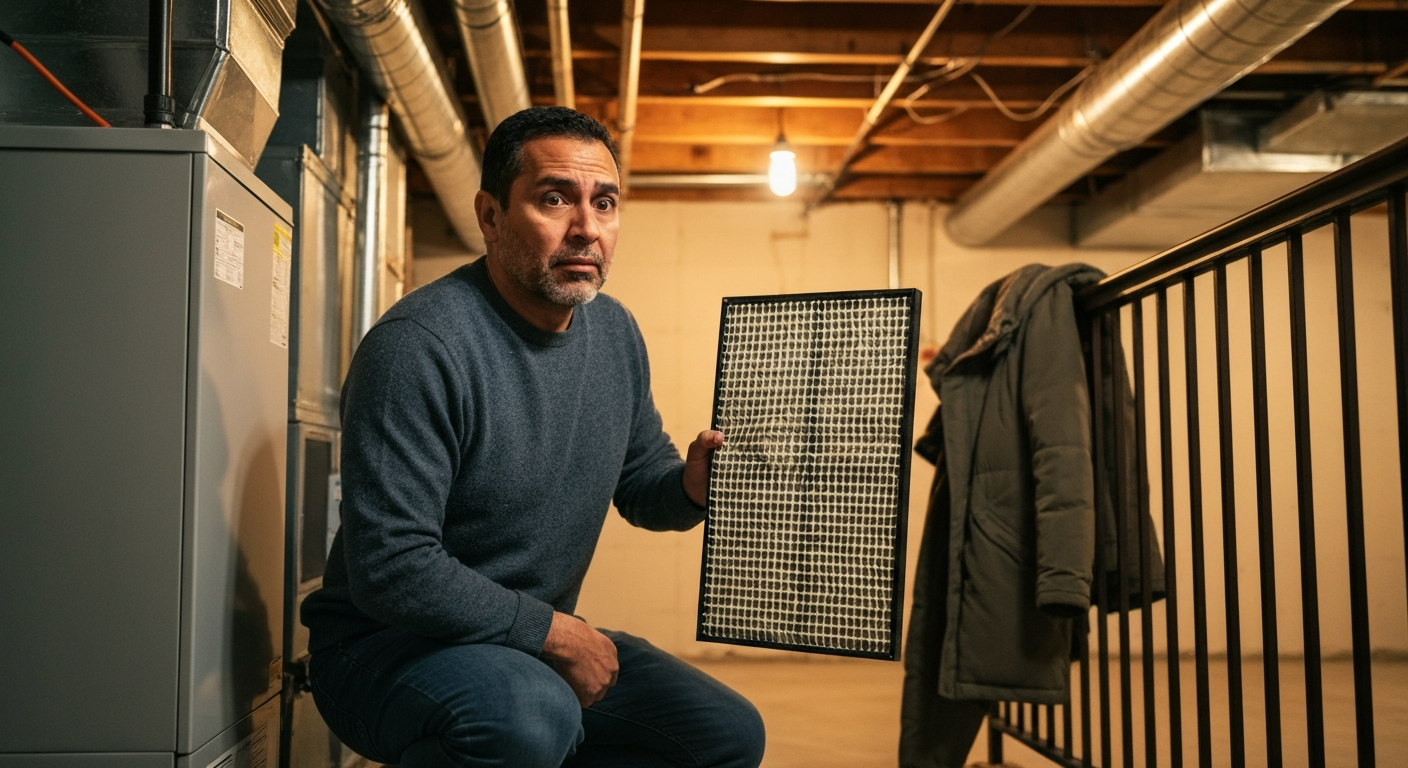

Your house isn't heating up because something is blocking the system from producing, distributing, or retaining heat—most commonly a clogged filter, incorrect thermostat settings, a pilot light that's gone out, or a malfunctioning furnace component.
The same principles apply if your house isn't cooling down: dirty filters, refrigerant issues, or a frozen evaporator coil can stop your AC from keeping up with demand. Below, you'll find the 11 most common causes for both heating and cooling failures, plus the fixes you can do yourself before calling an HVAC technician.
| ✓Our Pick |
Furnace filters and HVAC maintenance supplies This is what many people find solves the problem quickly, without a costly professional visit. See on Amazon → |
When your heater runs but blows cold air, the system is circulating air without actually heating it—usually due to a pilot light issue, a tripped safety switch, or a problem with the heat exchanger.
This is one of the most frustrating HVAC problems because you can hear the system working, feel air coming from the vents, yet the house stays cold. Here's what to check:
It sounds obvious, but thermostat errors cause a surprising number of service calls. Check that your thermostat is set to "HEAT" (not "COOL" or "OFF") and that the fan is set to "AUTO" rather than "ON." When the fan runs continuously on the "ON" setting, it blows unheated air between heating cycles, making it feel like cold air.
Also verify the temperature setting is higher than the current room temperature. A dead thermostat battery can cause erratic behavior or prevent the heating cycle from starting entirely.
If you have a gas furnace, a pilot light or electronic ignition starts the burners that heat the air. When the pilot light goes out—due to a draft, thermocouple failure, or gas supply issue—the burners never ignite, and the blower circulates cold air.
For standing pilot systems, you can usually relight the pilot yourself by following the instructions on your furnace. If it won't stay lit, the thermocouple likely needs replacing. Electronic ignition systems require a technician if the igniter fails.
Modern furnaces have safety switches that shut down heating if something goes wrong. A clogged condensate drain, overheated heat exchanger, or blocked flue can trip these switches. The blower may continue running to cool down the unit, but no heat is produced.
Check your furnace's LED indicator light—many models display error codes that tell you exactly what triggered the shutdown.
From simple filter clogs to major component failures, these are the causes HVAC technicians see most often during heating season.
| Cause | DIY Fix? | Typical Repair Cost |
|---|---|---|
| Dirty air filter | Yes | $5–$30 (filter cost) |
| Thermostat issues | Yes | $0–$250 (if replacing) |
| Pilot light out | Sometimes | $0–$150 |
| Tripped circuit breaker | Yes | $0 |
| Closed or blocked vents | Yes | $0 |
| Clogged condensate drain | Yes | $0–$50 |
| Blower motor failure | No | $300–$600 |
| Igniter failure | No | $150–$400 |
| Heat exchanger crack | No | $1,000–$3,500 |
| Low gas pressure | No | $75–$200 |
| Ductwork leaks | Sometimes | $200–$1,000+ |
Absolutely. A clogged air filter is the single most common cause of heating problems. When the filter is dirty, airflow through the furnace drops dramatically. This causes the heat exchanger to overheat, which triggers the safety limit switch and shuts down the burners.
The blower keeps running to cool the exchanger, but you get cold air instead of heat. According to the U.S. Department of Energy, replacing a dirty filter can improve your HVAC system's efficiency by 5% to 15%.
"Replacing a dirty, clogged filter with a clean one can lower your air conditioner's energy consumption by 5% to 15%." — U.S. Department of Energy
Check your filter monthly during heavy-use seasons. If you can't see light through it when held up to a window, it's time to replace it.
Yes. Closing too many vents disrupts the pressure balance your HVAC system was designed for. The furnace produces the same amount of heated air, but with fewer outlets, pressure builds in the ductwork. This can cause the system to short-cycle or force heated air out through duct leaks before it reaches your rooms.
Walk through your house and make sure all supply and return vents are open and unobstructed by furniture, curtains, or rugs.
Duct leaks are a hidden energy thief. Conditioned air escapes into your attic, crawlspace, or walls instead of reaching your living areas. The EPA estimates that the average home loses 20% to 30% of heated or cooled air through duct leaks.
Signs of leaky ducts include rooms that are always colder than others, higher-than-expected energy bills, and visible gaps at duct connections. Sealing ducts with mastic or metal tape (not standard duct tape, which degrades quickly) can make a noticeable difference.
Also Read: Why Is My Heat Pump Not Heating? 9 Causes & Fixes
If your air conditioner runs but your house isn't cooling down, the most likely culprits are a dirty filter, frozen evaporator coil, low refrigerant, or an undersized unit struggling in extreme heat.
Many of the same principles apply to cooling problems as heating problems—airflow restrictions and thermostat errors cause issues regardless of the season. Here's what's different for AC.
Air conditioners are typically sized to maintain a 20°F temperature difference between outdoors and indoors. When outdoor temperatures exceed 95°F to 100°F, your AC may not be able to keep up—not because it's broken, but because it's reached its design limit.
If your house only struggles on the hottest days of the year, this is likely normal. You can help by closing blinds on sun-facing windows, running ceiling fans, and avoiding heat-generating activities (oven use, clothes dryer) during peak afternoon hours.
When the AC runs continuously without cooling, refrigerant is often the issue. Refrigerant (the substance that absorbs heat from indoor air) doesn't get "used up"—if levels are low, there's a leak somewhere in the system. Only a licensed HVAC technician can diagnose and repair refrigerant leaks.
A frozen evaporator coil can also cause this problem. Ice forms on the coil when airflow is restricted (dirty filter, blocked return vents) or when refrigerant is low. If you see ice on your indoor unit or refrigerant lines, turn off the AC and let it thaw for 24 hours before running it again.
The outdoor condenser unit releases heat extracted from your home. When leaves, grass clippings, or debris clog the fins, heat can't escape efficiently. The compressor works harder and longer without cooling your house effectively.
Gently rinse your outdoor unit with a garden hose at the start of cooling season. Keep plants trimmed back at least 2 feet from the unit on all sides.
Also Read: Why Is My Air Not Blowing Cold? 9 Causes & Fixes
Before calling a technician, run through this checklist—many homeowners discover the fix is simpler than they expected.
If you've checked all these and your system still isn't working, document what you've found. This information helps HVAC technicians diagnose the problem faster, potentially saving you money on labor.
Some repairs require professional tools, refrigerant handling licenses, or safety expertise that DIY troubleshooting can't replace.
Call a technician if you notice:
"A cracked heat exchanger can leak carbon monoxide into your home. If your CO detector alarms or you smell rotten eggs (the additive in natural gas), evacuate immediately." — Consumer Product Safety Commission
Heat exchanger cracks are invisible from outside the furnace and require a combustion analysis to detect. If your furnace is old or has a history of overheating, request a heat exchanger inspection during your annual maintenance visit.
Also Read: Why Is My Electric Bill So High in My Apartment?
Annual maintenance catches small issues before they leave you without heat on the coldest night of the year—or without AC during a heat wave.
Schedule professional HVAC maintenance twice a year: once in spring before cooling season, once in fall before heating season. A typical maintenance visit includes:
Between professional visits, change your filter every 30 to 90 days depending on filter type, household size, and whether you have pets. Homes with multiple pets or allergy sufferers should change filters more frequently.
Consider upgrading to a programmable or smart thermostat if you haven't already. These devices optimize heating and cooling cycles, prevent the system from running when you're away, and alert you to maintenance reminders.
| ✓Our Pick |
Smart thermostats and programmable temperature controls This is what many people find solves the problem quickly, without a costly professional visit. See on Amazon → |
Your house isn't heating up because something is preventing the system from producing or distributing warm air—most commonly a dirty filter, thermostat error, pilot light issue, or tripped safety switch. For cooling problems, dirty filters, frozen coils, and low refrigerant are the usual suspects. Start by checking your filter and thermostat, then work through the diagnostic steps above. If you smell gas, see error codes you can't clear, or suspect a heat exchanger problem, call a professional immediately. Annual maintenance is the most reliable way to prevent these issues from happening when you need your HVAC system most.
Your heater blows cold air when the burners aren't igniting or the heat exchanger has overheated and triggered a safety shutdown. The most common causes are a clogged filter restricting airflow, a pilot light that's gone out, or a thermostat set to "fan ON" instead of "AUTO." Check your filter first—if it's clogged, the system can't move enough air across the heat exchanger, causing it to overheat and shut down while the blower continues running.
If your heat runs but the house stays cold, heat is being produced but not reaching your living spaces effectively. Check for closed vents, blocked return registers, or ductwork leaks. Poor insulation and drafty windows also let heat escape faster than your system can replace it. In older homes, duct leaks in unconditioned spaces like attics can waste 20% to 30% of your heated air.
Air conditioners are designed to maintain roughly a 20°F difference between outdoor and indoor temperatures. On extremely hot days above 95°F to 100°F, even a properly functioning AC may struggle. Help your system by closing blinds, running ceiling fans, and reducing heat-generating activities indoors during peak afternoon hours.
When your AC runs continuously without cooling, the refrigerant level is likely low due to a leak, or the evaporator coil is frozen. Check your filter first—restricted airflow causes the coil to freeze. If the filter is clean but you see ice on the indoor unit or refrigerant lines, turn off the system for 24 hours to thaw, then call a technician to check for leaks.
Change your filter every 30 to 90 days depending on the filter type, your household size, and whether you have pets. Standard 1-inch fiberglass filters need monthly replacement. Higher-quality pleated filters last 60 to 90 days. Homes with multiple pets, smokers, or allergy sufferers should change filters more frequently. Check monthly and replace when you can't see light through the filter.
Reviewed and Updated on May 3, 2026 by George Wright