Sleep

To stop snoring, start with the three behavioral fixes that work fastest — sleep on your side, cut alcohol three hours before bed, and clear nasal congestion — then add a mandibular advancement device if snoring persists. This four-step sequence resolves most cases of primary snoring without medical intervention.
Before trying anything, spend three nights noticing when and how your snoring happens. The pattern determines the most effective starting point.
Ask yourself (or ask a partner to observe):
Most snorers have a primary trigger with secondary contributors. Identifying it allows you to prioritize the highest-impact action first.
"Personalized snoring management — matching intervention to the anatomical and behavioral trigger — produces significantly better outcomes than generic one-size-fits-all approaches." — American Academy of Sleep Medicine at aasm.org
If you're a positional snorer (snoring primarily on your back), side sleeping is the fastest intervention available — free, effective the first night, and sustainable long-term with the right setup.
Start the night deliberately on your side rather than falling asleep on your back and hoping to stay there. Use:
The goal is making it physically inconvenient to stay on your back throughout the night. Most people establish consistent side sleeping within 4 to 6 weeks of deliberate effort.
Also Read: Best Pillow for a Snorer: 4 Types That Actually Work
If your snoring worsens after drinking — or if you snore more intensely on nights when you drink — the alcohol-muscle-relaxant connection is a primary contributor. Stopping alcohol three hours before sleep is the behavioral change with the most immediate measurable impact.
Alcohol relaxes the pharyngeal muscles that hold the throat open during sleep. The effect is dose-dependent and timing-dependent — the later you drink and the more you drink, the more pronounced the effect. Many people who implement the three-hour cutoff report their partner noting quieter sleep within the same week.
For ongoing reduction, shifting social drinking to earlier in the evening (6 to 7 p.m. rather than 9 to 10 p.m.) achieves the cutoff without changing how much or whether you drink.
Also Read: Does Drinking Make You Snore? 6 Facts & Fixes
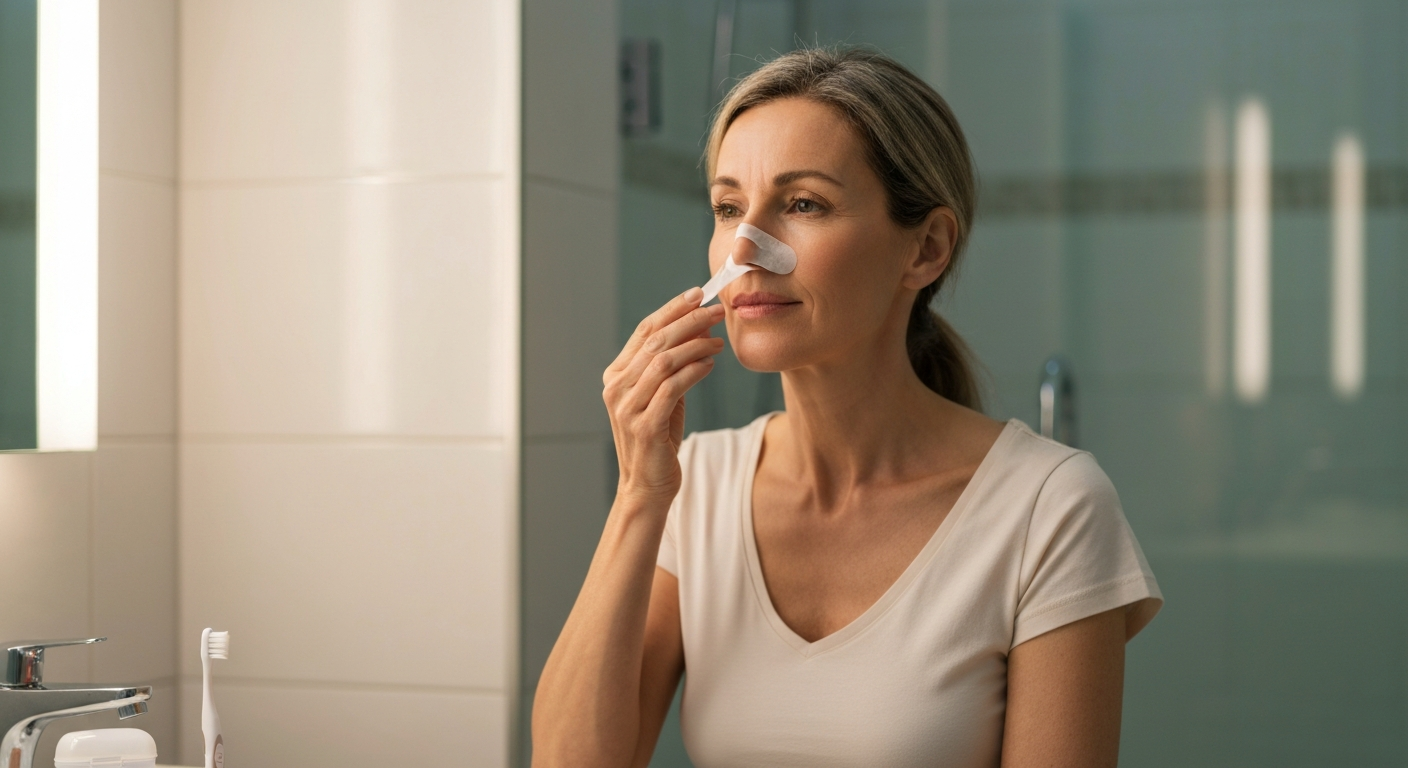
Nasal congestion is a major contributor to snoring because it forces mouth breathing, which sends air through the throat at a less stable angle. Clearing the nose before sleep reduces this cascading effect.
Implement a pre-bed nasal routine:
For people with allergies, also: encase your mattress and pillow in allergen-proof covers, wash bedding weekly in hot water (130°F or above), and run a HEPA air purifier in the bedroom.
If behavioral changes reduce but don't eliminate snoring after two weeks, a mandibular advancement device is the most evidence-backed next step.
A MAD holds the lower jaw slightly forward during sleep. This position:
- Moves the tongue base away from the back throat wall
- Increases airway width at the most commonly obstructed level
- Stiffens the soft palate, reducing its tendency to flutter
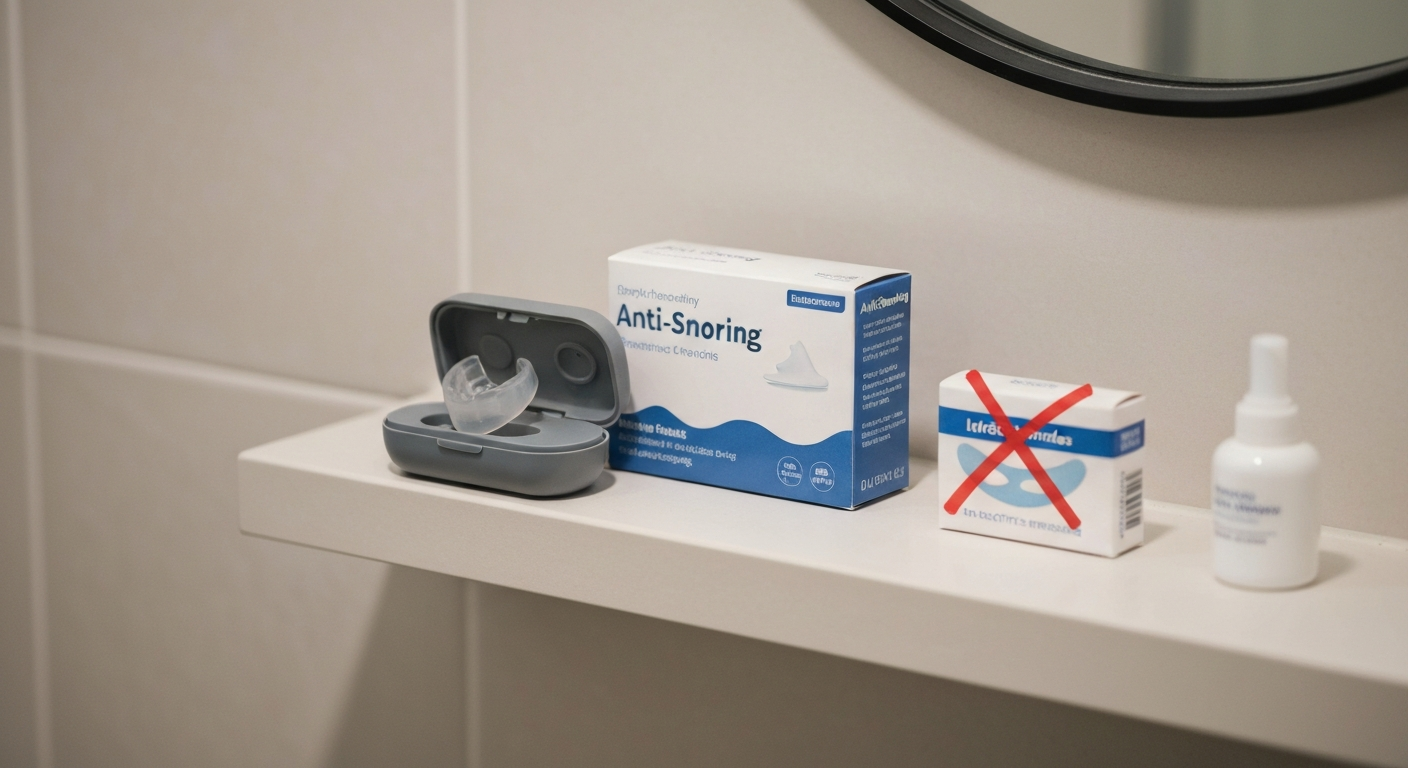
Clinical trials show MADs reduce snoring frequency and loudness by 50 to 75 percent in most users. Custom-fit MADs are more effective and comfortable than generic versions. SnoreMeds provides a self-impression kit that you mold to your teeth at home — no dental visit required.
| ✓Our Pick |
Stop snoring with a custom-fit SnoreMeds mouthpiece — mold it yourself at home, wear it tonight Simple to use and genuinely effective — for many people this is all they ever needed. Learn More → |
Behavioral changes and devices work best when they become habitual rather than occasional. Treat snoring reduction as a system to maintain, not a one-time fix.
Long-term reinforcement strategies:
Also Read: Natural Remedies for Snoring: 8 Proven Methods That Work
If snoring persists despite behavioral changes and a MAD — especially if it's loud, disruptive, and accompanied by any of these warning signs — a sleep medicine evaluation is needed.
Warning signs that require medical evaluation rather than continued home management:
- Observed breathing pauses during sleep
- Gasping, choking, or snorting on waking
- Severe daytime sleepiness despite adequate sleep time
- Morning headaches
- High blood pressure that is difficult to control
- Partner reports you stop breathing
These symptoms indicate possible obstructive sleep apnea, which requires a formal sleep study. CPAP therapy or a medically fitted oral appliance is the appropriate treatment — not additional lifestyle intervention.
What to do to stop snoring: identify your trigger, then attack it in order of speed. Sleep on your side first. Cut alcohol before bed second. Clear nasal congestion third. Add a mandibular advancement device if behavioral changes plateau. For persistent or worsening snoring with warning signs, seek a sleep medicine evaluation rather than adding another home remedy. Most primary snoring resolves significantly within two to four weeks of implementing this sequence consistently.
If side sleeping, alcohol limits, nasal care, and a MAD all produce only partial improvement, see an ENT or sleep specialist. Persistent loud snoring despite these measures suggests a structural cause — recessed jaw, large tonsils, significant nasal obstruction, or sleep apnea — that requires medical assessment and potentially a procedure or CPAP.
For positional and behavioral snorers — yes. Many people eliminate snoring entirely through side sleeping and alcohol management. For snorers with structural anatomy (narrow airway, recessed jaw) or significant obesity, reduction to tolerable levels is more realistic than complete elimination without medical intervention.
For most people, using a mandibular advancement device consistently produces the single largest measurable reduction. Combined with side sleeping, it addresses both the structural and positional contributors simultaneously. If you can only implement one change, start with the MAD.
Position changes and nasal strips take effect the first night. A MAD shows full effect within 2 to 4 nights. Alcohol cutoff produces results within 24 hours of the first alcohol-free night before bed. Throat exercises and weight management take 6 to 12 weeks for meaningful results. Most people achieve significant snoring reduction within two weeks of implementing the first three steps.
Reviewed and Updated on June 17, 2026 by George Wright