Sleep

Stopping snoring requires targeting the specific mechanism causing your airway to narrow during sleep. The most effective approaches — sleeping on your side, using a mandibular advancement device, managing nasal congestion, and limiting alcohol — address the four main mechanical causes of snoring and can produce significant improvement within days.
Snoring is the sound of soft tissue in the throat vibrating as air passes through a narrowed airway during sleep. Understanding the mechanism helps identify the most effective fix.
During sleep, the muscles that hold the throat open relax. If the airway narrows enough, airflow becomes turbulent. The surrounding tissue — soft palate, uvula, tongue base, and pharyngeal walls — begins to flutter, generating the characteristic snoring sound.
The degree of narrowing determines snoring severity. Small narrowings produce light snoring; severe narrowings produce loud, continuous snoring; complete obstruction produces the breathing pauses of sleep apnea.
"The pathogenesis of snoring involves vibration of pharyngeal soft tissues during sleep. The site of vibration varies — palate, tongue base, lateral pharyngeal walls, or a combination — and should guide selection of the most appropriate intervention." — Mayo Clinic at MayoClinic.org
Most cases of primary snoring can be significantly reduced through behavioral and device interventions that don't require a prescription or medical procedure.
Sleeping on your back allows gravity to pull the tongue and soft palate into the airway. Side sleeping repositions these tissues away from the airway center. For 50 to 60 percent of snorers, switching consistently to side sleeping produces significant or near-complete snoring reduction.
Supporting lateral position with a body pillow behind your back, a wedge pillow for upper-body elevation, or a positional alarm device makes the change sustainable.
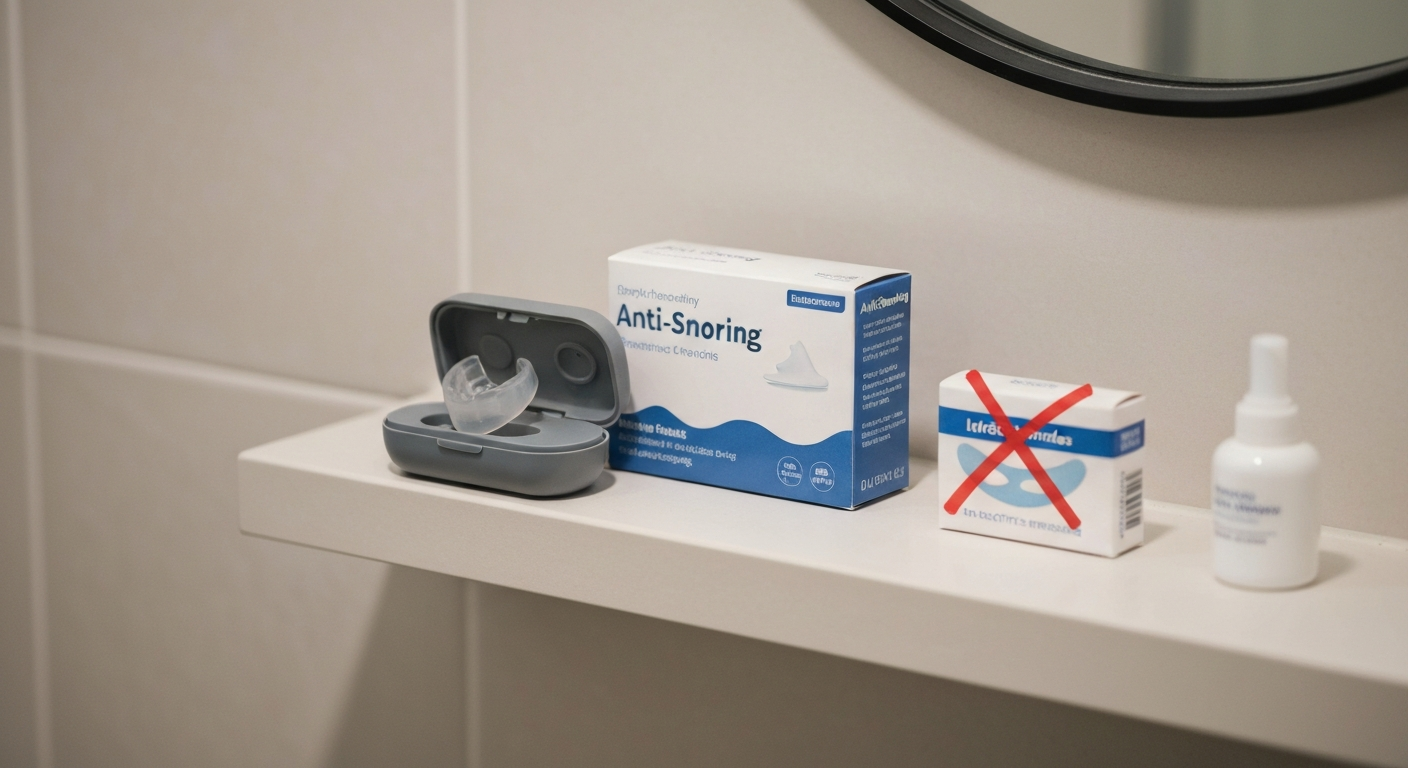
A MAD is a custom-moldable mouthpiece that holds the lower jaw slightly forward during sleep. This mechanical action:
- Pulls the tongue base forward, away from the posterior airway wall
- Widens the airway cross-section at the level of the tongue
- Stiffens the soft palate by changing its angle
Clinical trials consistently show MADs reduce snoring frequency by 50 to 75 percent in compliant users. They work for both positional and structural snoring — making them the most broadly effective non-prescription device available.
SnoreMeds provides a self-impression MAD that molds to your teeth at home, offering personalized fit without a dental appointment.
| ✓Our Pick |
Stop snoring with SnoreMeds — a custom-fit mandibular advancement device you mold at home Consistently earns five-star reviews — reliable, well-supported, and genuinely effective. Learn More → |
Alcohol relaxes the pharyngeal muscles significantly more than normal sleep-related relaxation does. Stopping alcohol three hours before bed reduces the additional muscle relaxation that narrowing the airway during the early sleep cycles. This single behavioral change consistently ranks among the most impactful for habitual snorers.
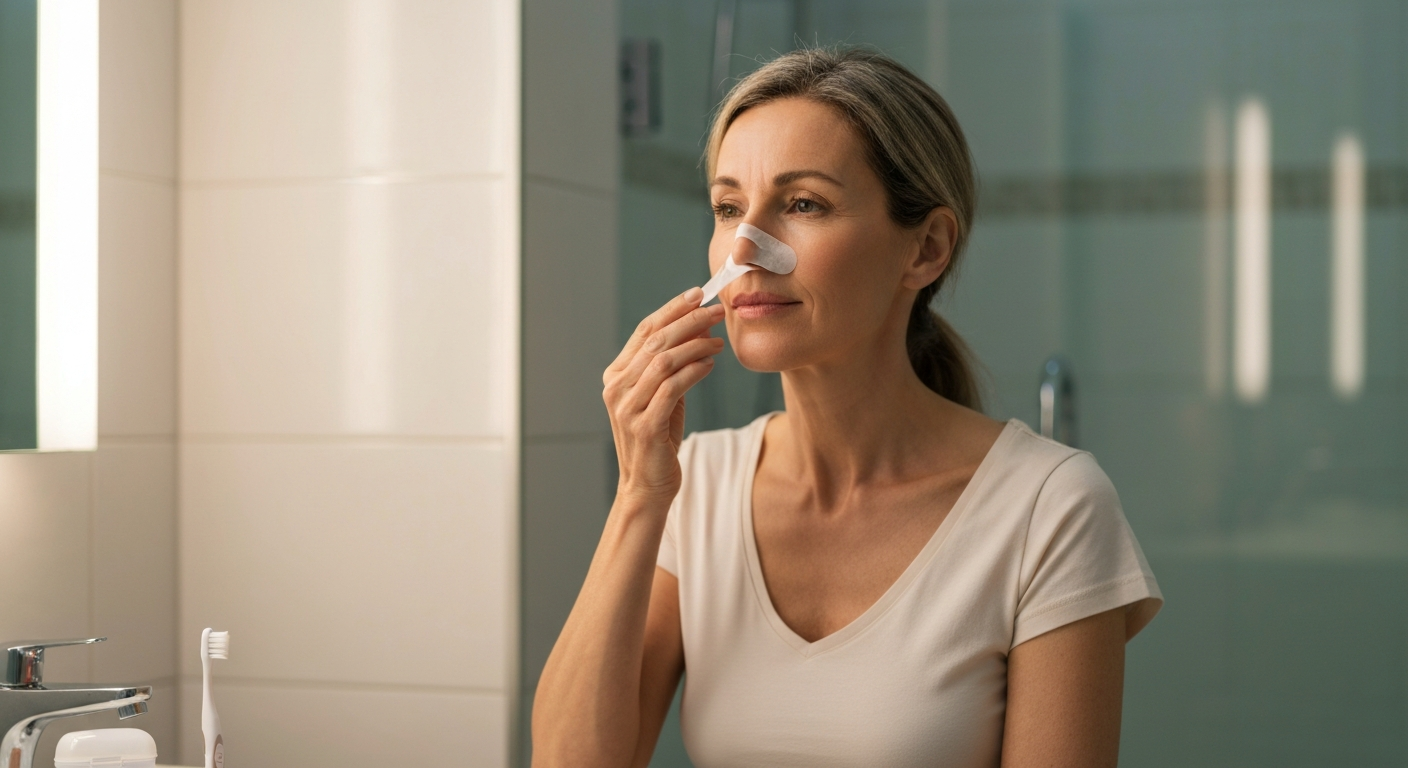
Nasal blockage forces mouth breathing, which bypasses the nose's airway-stabilizing function and promotes throat-tissue vibration. Managing nasal congestion — through saline rinses, nasal corticosteroid sprays for allergy sufferers, or nasal strips — reduces this cascade. For allergy-driven snoring, HEPA air purifiers and allergen-proof bedding reduce nighttime allergen exposure.
When non-prescription approaches reduce but don't resolve snoring, medical evaluation can identify structural causes and appropriate treatments.
| Approach | What It Targets | When to Consider |
|---|---|---|
| ENT evaluation | Tonsil size, septal deviation, nasal polyps | Persistent loud snoring, failed home treatment |
| CPAP therapy | Airway collapse (sleep apnea) | Confirmed sleep apnea diagnosis |
| Uvulopalatopharyngoplasty (UPPP) | Excess palatal tissue | Large tonsils, elongated uvula, failed MAD |
| Septoplasty | Deviated nasal septum | Persistent nasal obstruction |
| Radiofrequency ablation | Soft palate stiffening | Palatal snoring, failed MAD |
| Tongue-base surgery | Tongue-base obstruction | Severe tongue-base snoring, failed MAD |
Also Read: Stop Snoring Procedures: 6 Options from Office to Surgery
A systematic approach produces better results than trying random interventions. Implement in order of evidence strength and effort required.
Week 1 — behavioral changes:
- Switch to side sleeping with a body pillow
- Cut alcohol three hours before bed
- Use a saline nasal rinse and nasal strip before sleep
- Run a bedroom humidifier at 40–50% humidity
Week 2 — add a device:
- Order a mandibular advancement device if snoring persists
- Wear the MAD every night for at least 2 weeks to evaluate full effect
Week 4 — assess and escalate if needed:
- If snoring is significantly reduced: continue the regimen
- If snoring persists despite consistent MAD use: see a sleep specialist
- If snoring comes with gasping, breathing pauses, or severe fatigue: see a doctor now
Also Read: How to Stop Snoring in Your Sleep: 6 Proven Methods
Some interventions take weeks to months to show meaningful effect but produce durable results by changing underlying physiology.
Myofunctional therapy (daily throat exercises) strengthens the muscles that hold the airway open during sleep. A clinical trial found 3 months of myofunctional exercises reduced snoring frequency by 36 percent and loudness by 59 percent compared to control. Results begin around 6 to 8 weeks and continue improving.
Weight management reduces fat deposits around the neck that compress the airway. A 5 to 10 percent weight reduction produces meaningful snoring improvement in overweight individuals.
Both approaches complement device and behavioral interventions rather than replacing them.
"Myofunctional exercises targeting the oropharyngeal muscles have demonstrated clinically significant reductions in snoring intensity and frequency, with effects sustained at 6-month follow-up." — American Journal of Respiratory and Critical Care Medicine at atsjournals.org
Stopping snoring works best as a layered approach: start with the fastest behavioral changes (side sleeping, alcohol cutoff, nasal clearing), add a mandibular advancement device if snoring persists, and escalate to medical evaluation if device use doesn't resolve it. Most primary snoring responds to behavioral and device interventions within two to four weeks. Gasping, breathing pauses, or severe daytime fatigue are red flags that require a sleep study rather than additional home management.
For behavioral snorers — those whose snoring is driven by sleep position, alcohol, or nasal congestion — permanent resolution is achievable through sustained behavioral change. For structural snorers (jaw anatomy, excess throat tissue), long-term device use or a one-time procedure is typically needed to maintain improvement.
A chin strap holds the mouth closed during sleep, which encourages nasal breathing. It is most effective for snorers who snore specifically because their mouth falls open at night. It does not address throat-level tissue vibration directly and is less effective than a mandibular advancement device for most snorers.
CPAP is necessary for people who have obstructive sleep apnea. For people with primary snoring (no apnea), CPAP is not indicated. A mandibular advancement device, positional therapy, and behavioral changes are the appropriate first-line approaches for primary snoring without apnea.
Yes. Muscle tone in the upper airway decreases with age, making the airway more prone to collapse during sleep. Weight gain associated with aging and hormonal changes (particularly in women after menopause) also increase snoring tendency. Snoring that worsens after age 50 without a clear behavioral trigger warrants evaluation for sleep apnea.
Reviewed and Updated on June 17, 2026 by George Wright