Sleep
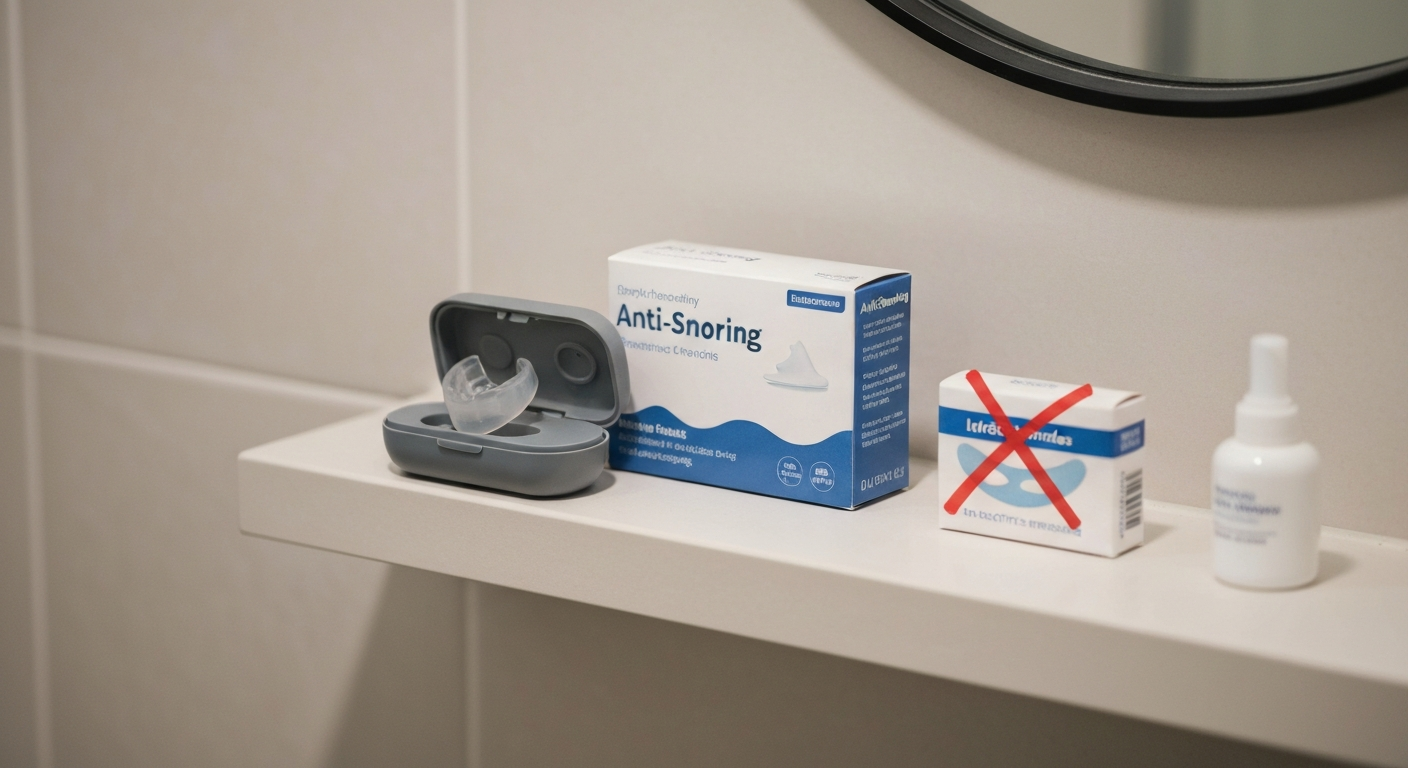

What actually helps snoring, ranked by clinical evidence: mandibular advancement devices and CPAP (for sleep apnea) produce the largest measurable reductions. Side sleeping, alcohol avoidance, and nasal dilation produce meaningful but smaller effects. Weight loss and throat exercises take months but produce durable results. Most popular remedies — throat sprays, snoring rings, and special pillows — have minimal or no evidence.
Dozens of anti-snoring products and lifestyle tips are marketed to the 90 million Americans who snore. The evidence for them varies enormously — from robust clinical trials to complete absence of data. This guide separates what works from what doesn't.
Snoring is caused by airway narrowing during sleep, which causes surrounding soft tissue to vibrate. Anything that genuinely widens the airway or reduces tissue relaxation will reduce snoring. The key is whether a given intervention actually does this in a meaningful, sustained way — or just feels like it should.
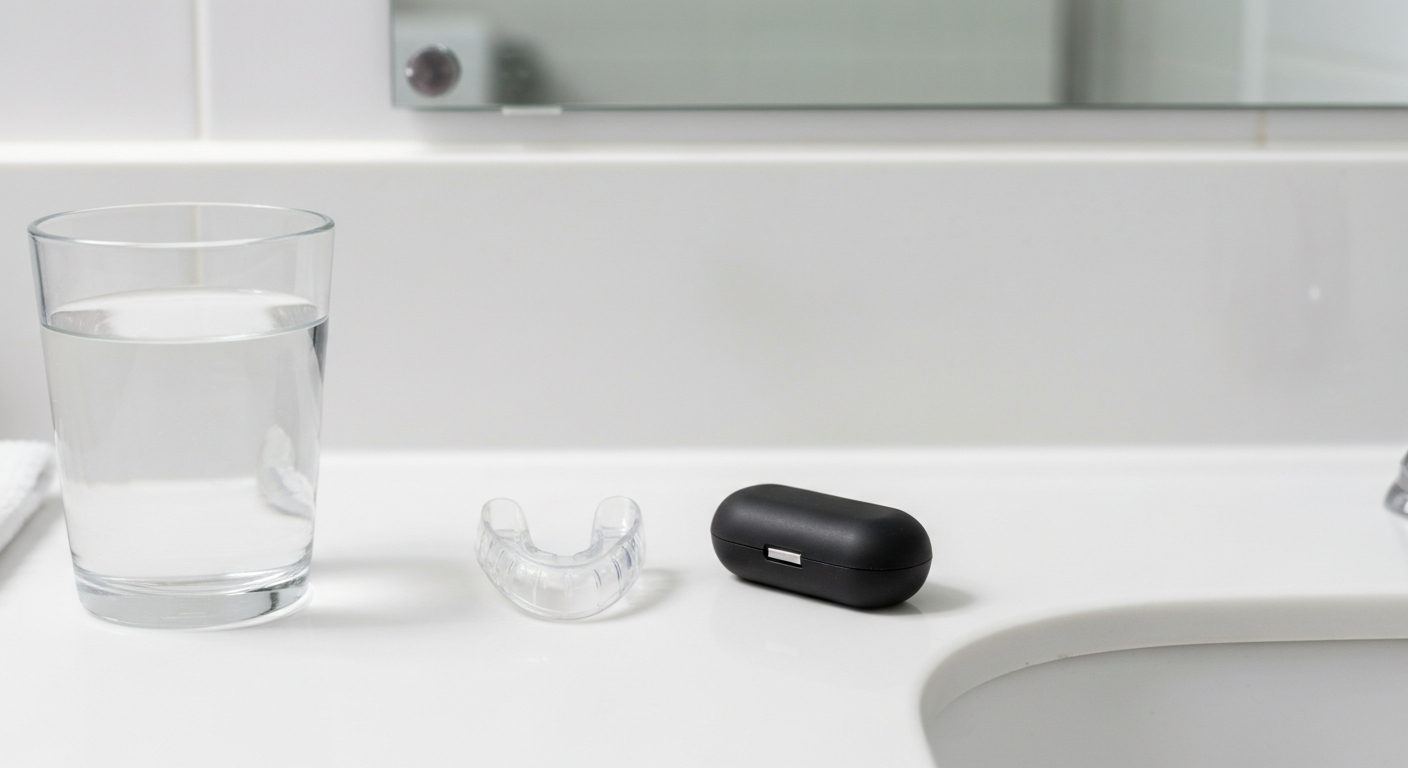
MADs are the most clinically studied non-prescription snoring intervention. They hold the lower jaw forward during sleep, widening the airway at the tongue-base level and stiffening the soft palate. Multiple randomized controlled trials show MADs reduce snoring frequency by 50 to 75 percent in compliant users.
Custom-fit MADs (molded to your teeth) are more effective and comfortable than generic ones. SnoreMeds provides a self-impression kit for home use.
"Mandibular advancement devices are effective for the treatment of primary snoring and are recommended as first-line treatment in patients who are not candidates for or do not tolerate CPAP." — American Academy of Sleep Medicine at aasm.org
Position-dependent snorers — approximately 50 percent of all snorers — see dramatic reductions in snoring when they consistently sleep on their side. The effect is immediate and produced on the first night. Body pillows and positional alarms help maintain lateral positioning.
Continuous positive airway pressure (CPAP) therapy eliminates snoring caused by obstructive sleep apnea by holding the airway open with positive pressure. It is the gold standard for apnea-associated snoring and is prescribed after a sleep study confirms the diagnosis.
Multiple studies confirm that alcohol significantly increases snoring frequency and loudness by relaxing pharyngeal muscles. Stopping alcohol 3 hours before bed consistently reduces snoring in alcohol-sensitive snorers, with results noticeable within one night.
External nasal strips and internal dilators reduce nasal resistance and help with nasal-origin snoring. Clinical trials show they reduce snoring loudness in people whose snoring is driven by nasal obstruction. They do not help for purely throat-level snoring.
| ✓Our Pick |
Custom-fit anti-snoring mouthpiece from SnoreMeds — repositions your jaw to keep your airway open all night You'll wonder why you didn't try this sooner — practical, well-reviewed, and easy to get started. Learn More → |
Excess weight around the neck compresses the airway. Weight loss of 5 to 10 percent reduces snoring in overweight individuals, with greater reductions at higher weight loss levels. This is among the most durable interventions because it changes underlying anatomy — but it takes months to produce results.
A 3-month program of daily oropharyngeal exercises reduces snoring frequency by 36 percent and loudness by 59 percent according to a randomized trial. Results take 6 to 8 weeks to appear and are cumulative. This approach is free and has no side effects but requires consistent daily effort.
For people whose snoring is driven by allergic rhinitis, nasal corticosteroids (fluticasone, budesonide) reduce nasal inflammation and improve nasal breathing. Studies show meaningful snoring reduction in allergy sufferers who use these consistently.
Also Read: Snoring Due to Allergies: Causes, Triggers & Fixes
| Remedy | Evidence | Why It Fails |
|---|---|---|
| Anti-snoring rings | None | No plausible mechanism; no clinical data |
| Acupressure wristbands | None | Designed for nausea; irrelevant mechanism |
| Throat lubricant sprays | Very low | Minimal effect on vibration; not sustained |
| Special "anti-snoring" pillows | Low-Moderate | Effective only if head angle matters for your snoring |
| Sleep position alarms alone | Low | Work only for positional snorers; no data on sustained outcomes |
| Herbal throat lozenges/drops | None | No clinical trials for snoring |
| Humming or singing daily | Low | May marginally strengthen palatal muscles; effects too small to recommend alone |
Acupressure rings worn on the little finger are marketed as snoring remedies based on claimed acupressure points with no anatomical connection to the upper airway. No peer-reviewed clinical trial has demonstrated efficacy for these devices. They are safe but ineffective.
OTC throat sprays typically contain glycerin, peppermint, or olive oil. The claimed mechanism — lubricating the throat to reduce friction — is not how snoring works. Snoring is caused by tissue vibration from airflow turbulence, not friction. Lubrication has no meaningful impact on this mechanism, and even if it did, it would not be sustained throughout the night.
Start with the interventions that are both fast-acting and evidence-backed, then add longer-term approaches.
What genuinely helps snoring: mandibular advancement devices, consistent side sleeping, alcohol avoidance before bed, nasal dilation, weight loss, and daily throat exercises. CPAP helps definitively for sleep apnea. What doesn't help: acupressure rings, throat sprays, magnets, and most "natural" remedies without clinical trial data. Match intervention to mechanism — widening the airway or reducing muscle relaxation — and you'll identify what works for your specific snoring pattern.
Also Read: How to Reduce Snoring Immediately: 6 Steps for Tonight
Yes — mandibular advancement devices (the clinical name for anti-snoring mouthguards) are the most evidence-backed non-prescription device for snoring reduction. Custom-fit versions show 50 to 75 percent reduction in snoring in most users. Generic boil-and-bite versions are less effective but still provide meaningful benefit for many people.
Elevating the head of the bed or using a wedge pillow (30 to 45 degrees) reduces snoring for people who snore on their backs by changing the gravitational orientation of the throat. It is more effective than just raising the head with pillows, which can create a chin-to-chest angle that narrows the airway further.
There is no clinical evidence that vitamin supplements directly reduce snoring. Vitamins that support sleep quality (magnesium, vitamin D) may indirectly improve sleep architecture, but none have been shown in trials to reduce snoring frequency or loudness. Focus on mechanically proven interventions rather than supplementation for snoring specifically.
Medical-grade mouth tape applied lightly across the lips encourages nasal breathing in habitual mouth breathers. It is safe when the nasal passages are confirmed clear and when specifically designed tape (with easy release) is used. It helps snorers who snore specifically because their mouth falls open — but should not be used if nasal obstruction is present.
Reviewed and Updated on June 17, 2026 by George Wright