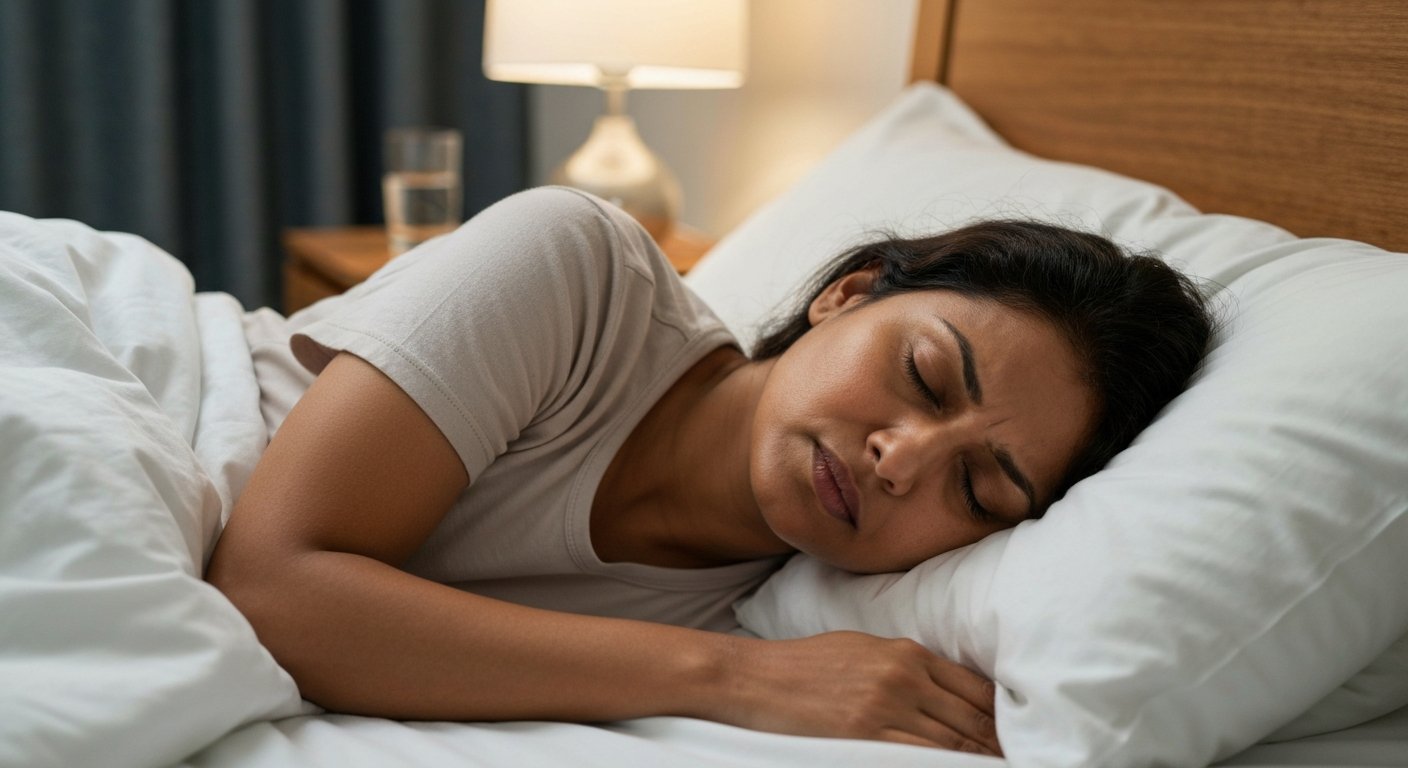
Sleep
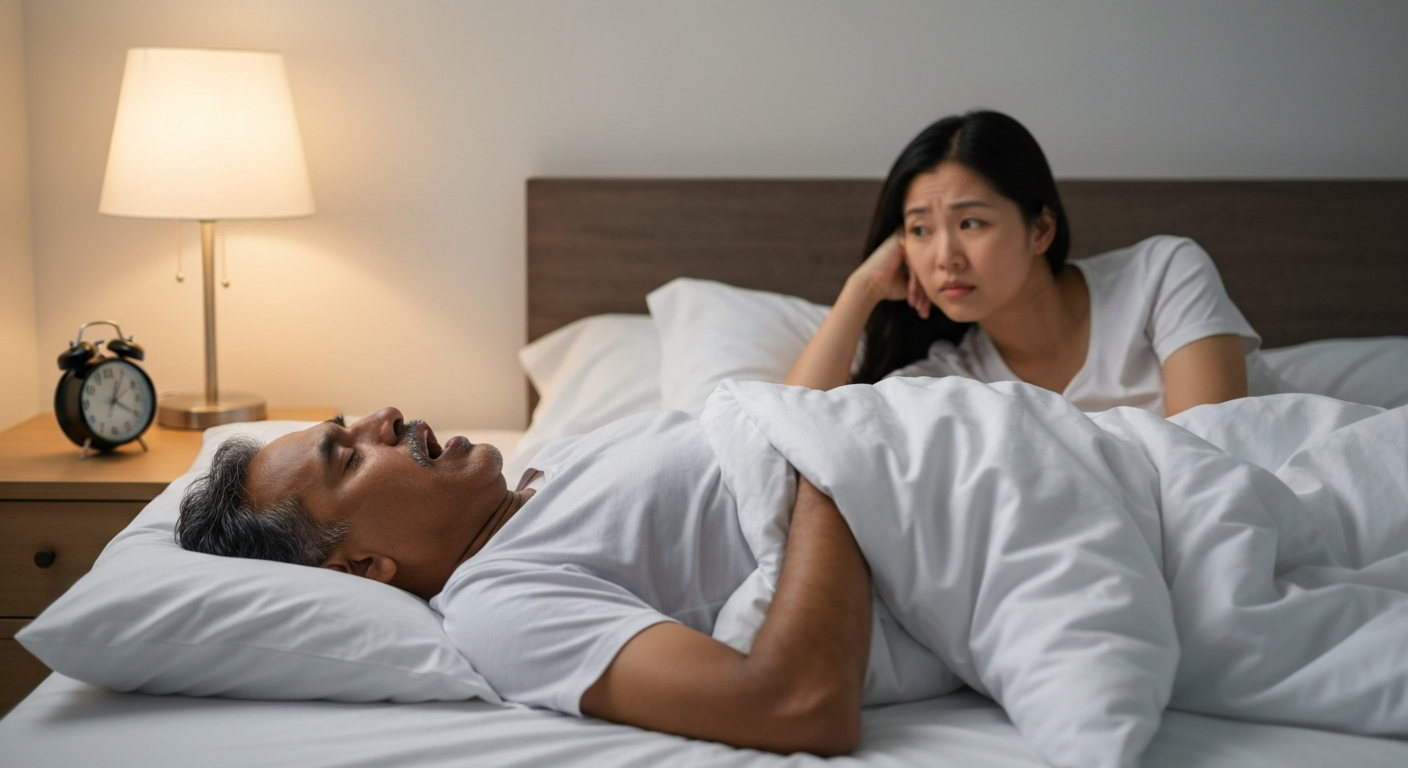

Snoring that starts the instant your head hits the pillow signals that your airway is collapsing unusually fast, typically because of muscle relaxation, nasal congestion, or sleep position—and while it's often harmless, immediate-onset snoring can sometimes indicate a condition worth checking out.
Most snorers begin their nightly noise after 20 to 30 minutes of sleep, once they've entered deeper sleep stages where muscle tone naturally decreases. When snoring kicks in within seconds of falling asleep, something is causing your airway to narrow faster than normal. The good news: this pattern is usually fixable once you identify what's driving it.
Also Read: Help With Snoring: 9 Natural Fixes & When to See a Doctor
Under normal circumstances, snoring begins during deeper sleep stages (N2 and N3) when the muscles supporting your throat and tongue relax significantly—this typically takes 15 to 45 minutes after you fall asleep.
Your body cycles through sleep stages throughout the night. During the initial transition from wakefulness to light sleep (N1 stage), most people maintain enough muscle tone to keep their airway open. As you progress into deeper sleep, the soft palate, tongue, and throat muscles lose tension. This is when the airway can partially collapse, causing the tissues to vibrate as air passes through—that vibration is the sound we call snoring.
When someone starts snoring immediately, it suggests their airway is already compromised before they even reach deeper sleep stages. Something is causing that faster-than-normal collapse.
Yes—severe fatigue is one of the most common causes of instant-onset snoring. When you're exhausted, your body skips the gradual descent through sleep stages and plunges directly into deeper sleep. This rapid transition means your throat muscles relax much faster than usual.
"Sleep deprivation causes the muscles of the upper airway to become even more relaxed during sleep, increasing the likelihood of airway collapse and snoring." — Dr. Rafael Pelayo, Sleep Medicine Specialist at Stanford Medicine
If you only notice immediate snoring after particularly long or stressful days, exhaustion is likely your culprit.
Alcohol is a muscle relaxant that directly affects the tissues in your throat, often causing snoring to start the moment you drift off. Even moderate drinking within 3 to 4 hours of bedtime can cause this effect.
Alcohol suppresses your body's natural ability to maintain airway muscle tone during the sleep transition. It also reduces your brain's arousal response, meaning your body is less likely to adjust position even when your airway becomes partially blocked.
| Drinks Before Bed | Effect on Snoring Onset |
|---|---|
| 0 drinks | Normal onset (15–45 minutes) |
| 1–2 drinks | May start within 5–10 minutes |
| 3+ drinks | Often starts immediately |
Blocked nasal passages force mouth breathing, which dramatically increases the likelihood of immediate snoring. When you breathe through your mouth, air hits the back of your throat directly, causing soft tissues to vibrate even in light sleep.
Common causes of nasal obstruction include:
Also Read: Snoring Sinuses: 5 Causes & How to Clear the Airway
Back sleeping allows gravity to pull your tongue and soft palate backward, narrowing or blocking your airway almost immediately. Many people who never snore on their sides will snore loudly and instantly when they roll onto their back.
This positional snoring is extremely common—studies suggest around 50% to 60% of snorers experience significantly worse symptoms when supine. The effect can be so pronounced that some people begin snoring within 30 seconds of rolling over.
Carrying extra weight, particularly around the neck and throat, can compress the airway enough to cause snoring the moment you lose consciousness. Fat deposits in the throat area physically narrow the breathing passage, meaning even minimal muscle relaxation triggers obstruction.
"Neck circumference greater than 17 inches in men or 16 inches in women is associated with an increased risk of obstructive sleep apnea and immediate-onset snoring." — American Academy of Sleep Medicine
This doesn't mean only overweight people snore immediately—but if you've noticed the pattern coinciding with weight gain, there's likely a connection.
Immediate-onset snoring can be an early indicator of obstructive sleep apnea (OSA), especially if accompanied by gasping, choking, or breathing pauses. In OSA, the airway doesn't just narrow—it completely collapses repeatedly throughout the night.
People with sleep apnea often have structural features (enlarged tonsils, a naturally narrow airway, or a recessed jaw) that predispose them to instant airway collapse. The rapid onset of snoring may reflect the severity of the underlying obstruction.
Also Read: Sleep Apnea vs Snoring: Key Differences & When to Worry
Instant snoring without other symptoms is usually benign, but certain warning signs suggest you should consult a doctor.
Watch for these red flags:
If you experience two or more of these alongside your immediate-onset snoring, a sleep study may be worthwhile. Your doctor can determine whether you have simple snoring or a more significant breathing disorder.
Sleeping on your side prevents gravity from collapsing your airway and can eliminate immediate-onset snoring entirely. This simple change works for roughly half of all snorers.
To train yourself to stay off your back:
Clearing your nasal passages before bed can shift you from mouth breathing to nasal breathing, delaying or preventing snoring onset. Options include:
If you have a deviated septum or nasal polyps, surgery may be necessary for lasting relief.
Avoiding alcohol for at least 4 hours before bed gives your body time to metabolize it before sleep, restoring normal muscle tone. Many people find this single change eliminates their immediate-onset snoring completely.
If you're going to drink, consider finishing earlier in the evening and having a glass of water between alcoholic beverages to slow absorption.
Mandibular advancement devices (MADs) physically reposition your jaw forward, keeping your airway open from the moment you fall asleep. These custom-fit mouthpieces are one of the most effective non-surgical options for snorers.
"Oral appliances that advance the mandible have been shown to reduce snoring in approximately 85% of patients and can be particularly effective for positional and immediate-onset snoring." — American Academy of Dental Sleep Medicine
Also Read: Custom Fit Snore Mouthpiece: Types, Results & How to Choose
If lifestyle changes don't reduce your immediate-onset snoring within 2 to 3 weeks, or if you have any of the red-flag symptoms mentioned earlier, schedule an appointment with a sleep medicine specialist.
A sleep study (polysomnography) can determine whether you have obstructive sleep apnea and how severe it is. Treatment options range from CPAP machines to surgical interventions depending on your diagnosis.
| ✓Our Pick |
Shop custom-fit anti-snoring mouthpieces—repositions jaw to open your airway Used by over 10,000 satisfied customers — an easy, affordable option you can start using today. Learn More → |
Snoring immediately after falling asleep happens when something causes your airway to collapse faster than normal—usually exhaustion, alcohol, nasal congestion, back sleeping, excess weight, or the early stages of sleep apnea. Most cases respond well to simple fixes like changing sleep position, avoiding alcohol before bed, or using a snoring mouthpiece. If you experience breathing pauses, daytime sleepiness, or gasping during sleep alongside your immediate snoring, see a doctor to rule out obstructive sleep apnea.
Your airway is narrowing faster than typical sleepers, usually because of extreme tiredness, alcohol consumption, or physical factors like nasal congestion or sleeping on your back. When you're exhausted, your body can skip lighter sleep stages and drop directly into deep sleep, causing rapid muscle relaxation in your throat. Address any obvious triggers first—avoid alcohol near bedtime, clear nasal passages, and try side sleeping.
It's not uncommon, but it's not typical either. Most snorers begin their nightly noise 15 to 45 minutes after falling asleep, once they reach deeper sleep stages. Immediate onset suggests something is predisposing your airway to collapse quickly. While it's not necessarily dangerous, it's worth investigating if it happens consistently or is accompanied by other symptoms like gasping or daytime fatigue.
It can be, particularly if you also experience witnessed breathing pauses, choking or gasping during sleep, excessive daytime sleepiness, or morning headaches. These symptoms together suggest obstructive sleep apnea, a condition where your airway repeatedly collapses during sleep. Sleep apnea is linked to hypertension, heart disease, and stroke, so it's worth getting checked if you have multiple warning signs.
Start with the simplest fixes: sleep on your side instead of your back, avoid alcohol within 4 hours of bedtime, and clear any nasal congestion before bed. If those don't work, try a mandibular advancement device (snoring mouthpiece) that holds your jaw forward to keep your airway open. Losing weight can also help if excess weight is contributing to the problem.
Not necessarily. Immediate-onset snoring has multiple causes, and sleep apnea is just one possibility. However, if your snoring is accompanied by breathing pauses, loud gasping, or you feel exhausted despite sleeping enough hours, sleep apnea becomes more likely. A sleep study is the only way to confirm or rule out the diagnosis.
Reviewed and Updated on June 14, 2026 by George Wright