Sleep

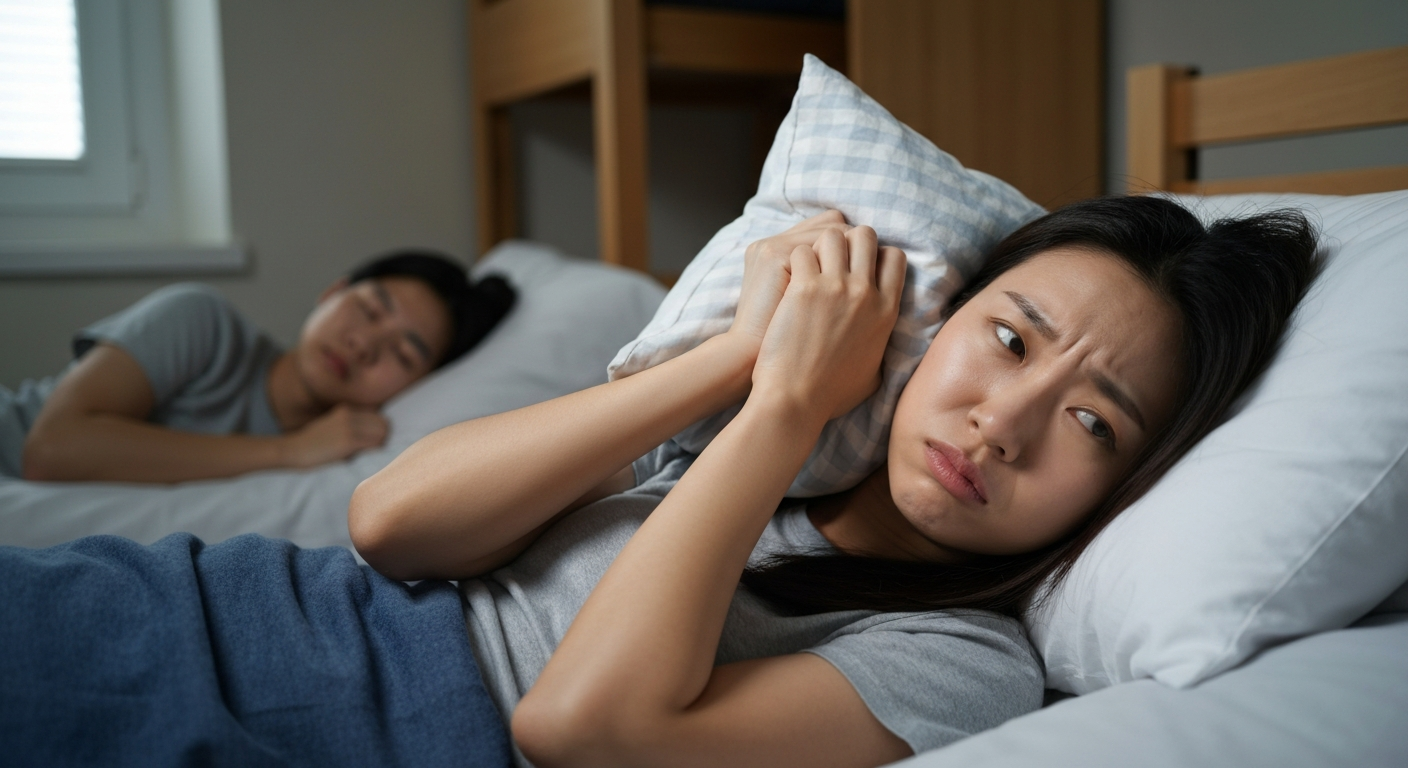
Hearing yourself snore means your snoring woke you up — at least briefly. This requires being in a light enough sleep stage to perceive sound, which means the snoring has caused a partial arousal. Occasional episodes are harmless; nightly wake-ups suggest snoring is fragmenting your sleep in ways that compound over time.
You can only hear yourself snore if you are awake enough to perceive sound — which means your own snoring has partially or fully roused you from sleep.
Snoring occurs when the muscles of the throat relax during sleep, narrowing the airway and causing soft tissue to vibrate as air moves through. Normally, you're unconscious while this happens. Hearing it means the vibration was loud enough — or your sleep stage was light enough — to produce a brief awakening.
This partial arousal is called a micro-arousal. It doesn't always feel like fully waking: you might register only a faint rumble before sliding back under. But it represents a genuine disruption to sleep architecture — a brief interruption of the restorative stages your body depends on.
There's also an internal sensation component: the vibration of snoring can be felt as well as heard, creating a buzzing or rattling sensation in the throat that registers even at the edge of consciousness.
Also Read: Hearing Yourself Snore While Sleeping: What It Actually Means
Whether you perceive your own snoring depends entirely on which sleep stage you're in at that moment. You can only be roused by sound during light sleep — deep sleep and REM make you far harder to wake.
The sleep cycle moves through four stages, each with a different arousal threshold:
"Sleep fragmentation from respiratory events — including snoring — disrupts sleep architecture by truncating slow-wave and REM sleep and increasing the proportion of lighter N1 and N2 sleep." — American Academy of Sleep Medicine at aasm.org
The practical implication: if you hear yourself snoring frequently, it signals you're spending significant time in the lighter sleep stages — either because sleep quality is already poor, or because snoring is creating repeated arousals that keep pulling you out of the deeper stages you need.
| ✓Our Pick |
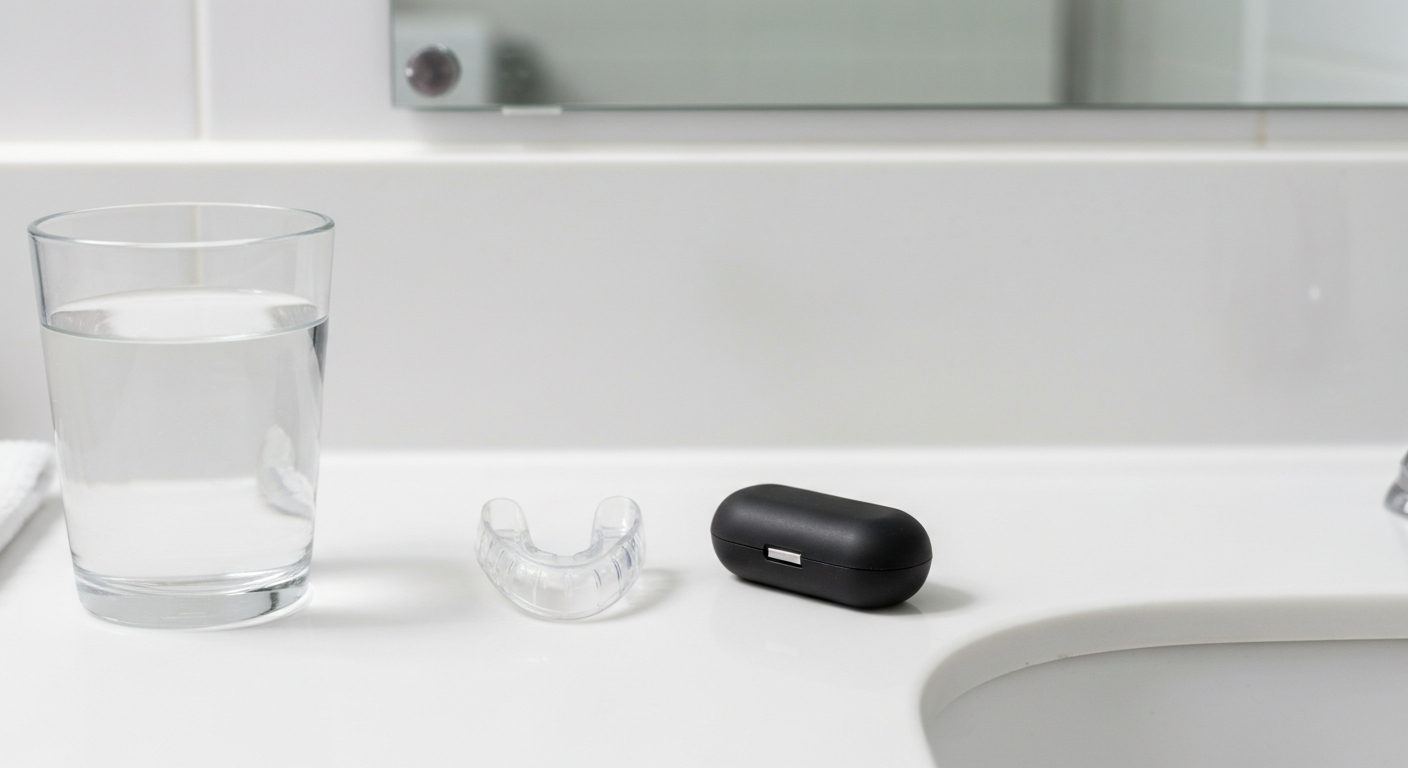
Try a SnoreMeds custom-fit mouthpiece — mold it at home to reduce snoring and the micro-arousals it causes Highly rated by thousands of buyers — this is one of the most effective solutions for this issue you can try at home. Learn More → |
Hearing yourself snore occasionally is not a warning sign. Hearing yourself snore most nights — or waking to it several times per night — indicates that snoring is fragmenting your sleep and warrants action.
On its own, hearing your own snoring is simply evidence that you snore loudly enough to rouse yourself. That's useful to know, but it doesn't automatically point to a medical condition.
It becomes a warning sign when combined with:
"Obstructive sleep apnea is characterized by recurrent episodes of complete or partial airway collapse during sleep, resulting in arousals, oxygen desaturation, and sleep fragmentation. Loud snoring with witnessed apneas and excessive daytime sleepiness are the most common presenting features." — National Heart, Lung, and Blood Institute at nhlbi.nih.gov
If hearing yourself snore comes with gasping, choking, or persistent daytime fatigue, a home sleep test or in-lab sleep study is the appropriate next step. A sleep apnea diagnosis changes the treatment path — from behavioral adjustments to CPAP therapy or a medically prescribed oral appliance.
Also Read: Snoring Help: 7 Proven Solutions That Actually Work
Each snoring-triggered arousal interrupts the sleep cycle. Repeated interruptions over weeks and months prevent the body from consistently reaching the restorative stages of sleep — producing the effects of sleep deprivation even when you're technically spending eight hours in bed.
A healthy night moves through roughly four to five 90-minute cycles, with progressively more N3 slow-wave sleep and REM sleep in the later cycles of the night. These deeper stages are when the body consolidates memory, repairs tissue, regulates hormones, and restores energy.
Snoring-related arousals interfere in two compounding ways:
The result is a night that produces tiredness, cognitive fog, and mood effects associated with insufficient sleep — even if the total time in bed looks adequate on paper.
Also Read: Does Snoring Make Your Throat Sore? Yes — Here Is Why
The most direct path is reducing snoring intensity — not just managing your reaction to it. Quieter snoring means fewer arousals and more uninterrupted deep sleep.
Side sleeping reduces snoring in 50 to 60 percent of snorers by removing the gravitational pull that collapses the tongue base toward the back of the throat. If you notice you only hear yourself snore after rolling onto your back, this positional change can eliminate the problem entirely. A firm body pillow placed behind your back — or a positional alarm device — makes side sleeping sustainable throughout the night.
A mandibular advancement device (MAD) is a custom-moldable mouthpiece worn during sleep that holds the lower jaw slightly forward. This mechanical repositioning pulls the tongue base away from the posterior airway wall and widens the airway at the level where it most commonly narrows. Multiple randomized controlled trials show MADs reduce snoring frequency and loudness by 50 to 75 percent in consistent users.
SnoreMeds provides a self-impression kit you mold to your own teeth at home — no dental visit required, with significantly better fit than generic boil-and-bite versions.
Alcohol relaxes the pharyngeal muscles well beyond normal sleep-induced relaxation, amplifying snoring intensity and the likelihood it's loud enough to rouse you. Stopping alcohol three hours before sleep reduces this effect and typically shows results within the first night.
If nasal blockage is contributing — forcing mouth breathing and sending air through the throat at a less stable angle — a saline rinse before bed, a nasal strip, or a nasal corticosteroid spray for allergy sufferers reduces this component of snoring.
"Mandibular advancement devices are effective for treating primary snoring and mild to moderate obstructive sleep apnea and are recommended as first-line treatment in patients who cannot tolerate CPAP." — American Academy of Sleep Medicine at aasm.org
Also Read: How to Reduce Snoring During Sleep: 8 Proven Methods
Hearing yourself snore means your snoring has woken you up — which requires being in a light sleep stage at the moment of arousal. Occasional instances are harmless, but regular wake-ups indicate snoring is fragmenting your sleep and robbing you of the deep, restorative stages that matter most for recovery. Side sleeping and a mandibular advancement device are the most evidence-backed interventions for reducing snoring loudness and the arousals it triggers. If hearing yourself snore comes with gasping, choking, or persistent daytime fatigue, a sleep study is warranted to rule out obstructive sleep apnea.
Not in a strict sense — perceiving sound requires at least minimal conscious awareness. What you experience when you "hear yourself snore" is the sound reaching you during a micro-arousal: a brief, partial return to wakefulness triggered by the snoring itself. You may drift back to sleep in seconds and barely register it, but you were awake enough to hear in that moment.
Not necessarily. Hearing yourself snore indicates your snoring is loud enough to cause micro-arousals. Sleep apnea involves episodes of breathing cessation, not just snoring. However, if the arousal comes with a gasp, choking sensation, or a feeling that you stopped breathing — rather than just the sound of snoring — that pattern is a recognized warning sign for obstructive sleep apnea and warrants a sleep study.
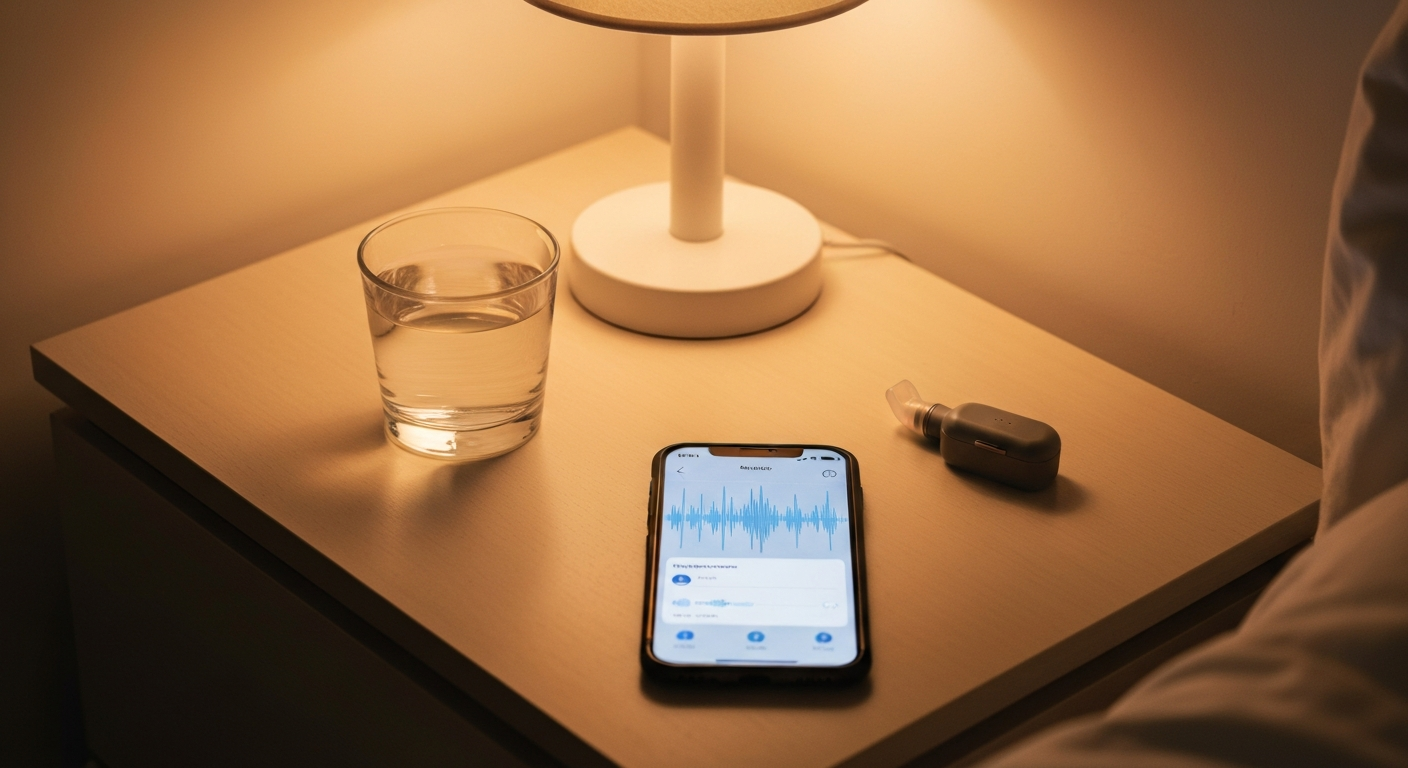
Yes, and most people who snore don't know until someone tells them. To know you snore, either a bed partner has to inform you or the snoring has to be loud enough to rouse you. Recording yourself with a sleep sound app — SnoreLab is a widely used option — during a night alone is a practical way to self-assess.
Waking with a gasp, snort, or choking sensation is more significant than waking to a sound. It indicates that a partial or complete airway obstruction preceded the arousal — the body triggered an emergency wake-up response to restore breathing rather than being roused simply by noise. This pattern is a classic sign of obstructive sleep apnea and should be evaluated by a sleep medicine provider if it occurs regularly.
Reviewed and Updated on June 17, 2026 by George Wright