Sleep
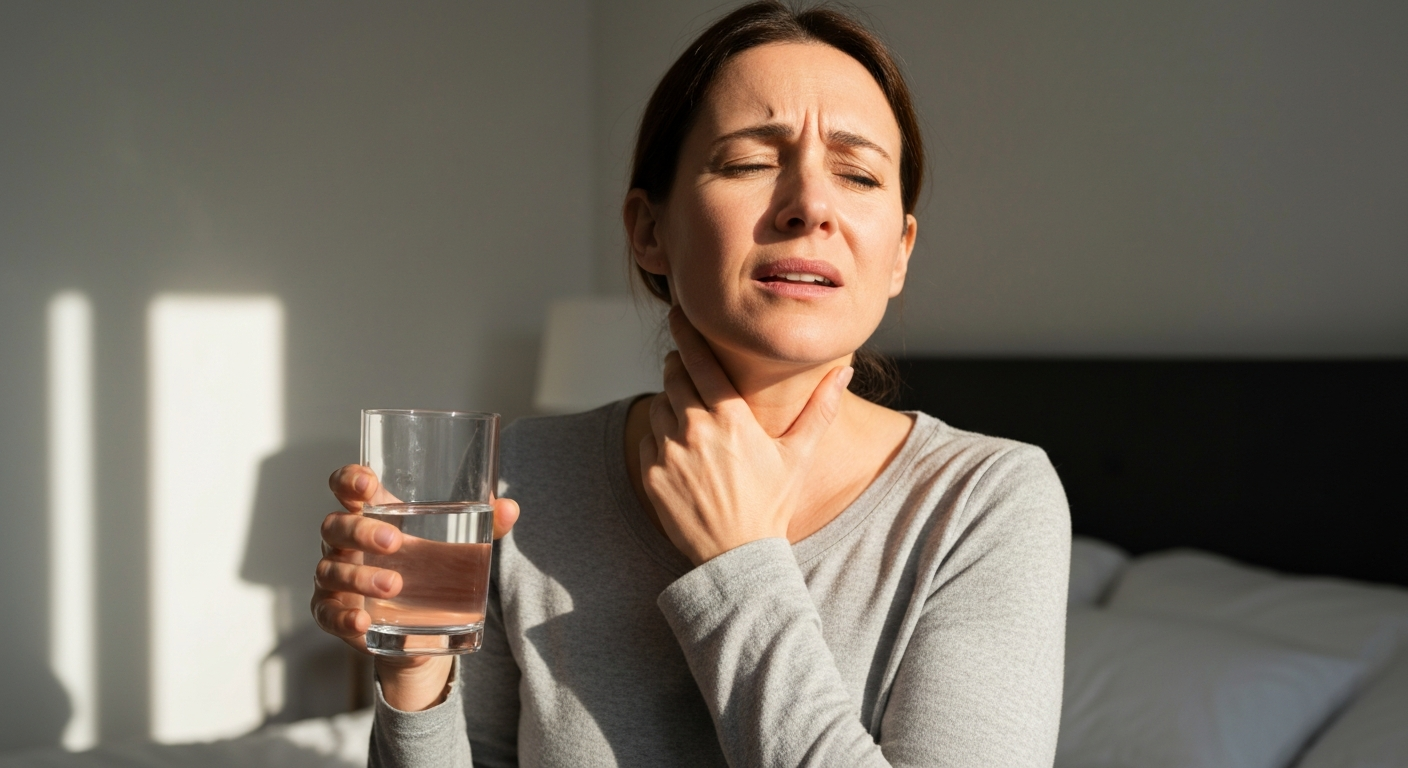

Yes, snoring can make your throat sore — and it commonly does. The vibration of soft tissues against the airway walls during snoring causes friction and micro-trauma. Mouth breathing that accompanies snoring dries out the mucous membranes of the throat, compounding the soreness. Waking with a raw or scratchy throat is one of the most reliable signs that you snored heavily during the night.
| ✓Our Pick |
 |
SnoreMeds custom mouthpiece — repositions your jaw to stop the tissue vibration that causes throat soreness Backed by strong customer feedback — the most recommended solution in forums and Q&A communities. Learn More → |
Snoring irritates the throat through two mechanisms: mechanical vibration trauma to the soft palate and pharyngeal walls, and desiccation (drying) of the mucous membranes from prolonged mouth breathing.
During snoring, the soft palate, uvula, and pharyngeal walls vibrate against each other at a rapid rate — typically 100–300 times per minute at peak snoring events. This repeated friction is similar in effect to rubbing the tissue against itself throughout the night. The result is localized inflammation and soreness by morning.
The intensity of tissue trauma correlates with snoring loudness. Loud snorers (above 60 dB) who snore for several hours per night experience more significant morning throat soreness than lighter snorers.
"Pharyngeal vibration during snoring produces measurable tissue edema (swelling) in the uvula and soft palate. Chronic snorers show structural changes in upper airway soft tissues consistent with ongoing mechanical trauma." — National Institutes of Health at nih.gov
Most heavy snorers breathe predominantly through their mouths during sleep — either because nasal congestion blocks the nasal airway, or because jaw relaxation opens the mouth passively. Mouth breathing bypasses the nasal passages, which normally warm, humidify, and filter incoming air.
Unhumidified air flowing over the throat tissue throughout the night dries the mucous membrane layer. By morning, the throat lining is dehydrated, sticky, and inflamed — producing the classic raw, scratchy feeling that many snorers wake up with.
A morning sore throat is not exclusively caused by snoring — several conditions can coexist or present similarly.
Gastroesophageal reflux disease causes stomach acid to reach the throat during sleep, producing chemical irritation that mimics snoring-induced soreness. GERD-related soreness often includes a bitter taste in the morning or a burning sensation behind the sternum. GERD also worsens snoring by irritating laryngeal tissues.
Allergen exposure during sleep triggers mucus production that drains down the back of the throat (post-nasal drip), causing soreness and the need to clear the throat in the morning. Dust mites in pillows and bedding are a common night-time allergen source.
In sleep apnea, the airway closes completely during apnea events. The subsequent gasping breath for air creates strong negative pressure in the throat — far more traumatic than snoring vibration alone. Morning sore throat combined with extreme fatigue, morning headaches, or witnessed breathing pauses should prompt a sleep study evaluation.
Addressing the root cause of snoring resolves the throat soreness more effectively than treating the soreness itself:
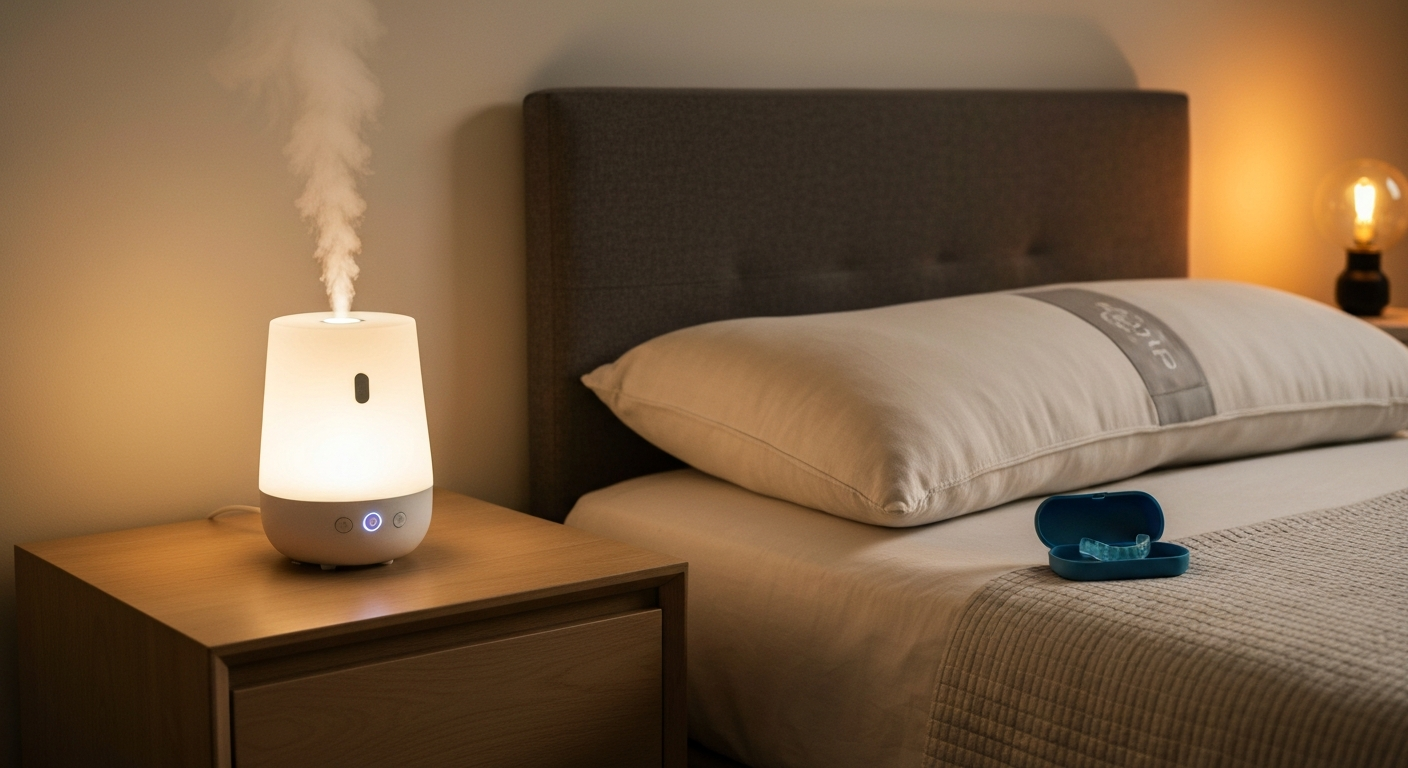
Humidifier: A bedroom humidifier (40–50% relative humidity) reduces desiccation of throat tissues during sleep. This helps regardless of whether mouth breathing is the primary snoring mechanism.
Nasal breathing support: If nasal congestion is forcing mouth breathing, treating congestion (saline rinse, nasal strip, antihistamine) reroutes airflow through the nose and significantly reduces throat dryness.
Mandibular advancement device: MADs hold the lower jaw slightly forward and most designs also help keep the mouth closed — reducing mouth breathing and therefore throat desiccation. They simultaneously reduce snoring vibration. The combined effect typically eliminates morning throat soreness in MAD users within a few days.
Hydration: Drinking a glass of water immediately before bed reduces baseline throat dryness. Staying well-hydrated throughout the day supports mucous membrane health generally.
Also Read: Why Snoring Causes Dry Mouth: 7 Causes and How to Fix It
Morning throat soreness from snoring is generally not harmful on its own. It becomes a clinical concern when it accompanies symptoms of obstructive sleep apnea or when it persists throughout the day despite addressing the snoring.
Seek medical evaluation if:
- Throat soreness persists into the afternoon despite adequate hydration
- Soreness is accompanied by swallowing difficulty (dysphagia)
- Morning soreness is combined with witnessed apneas, gasping, or daytime sleepiness
- You notice persistent swelling or visible changes to the back of your throat
An ENT (ear, nose, and throat specialist) can assess whether the palatal and uvular tissue has sustained chronic structural changes from long-term snoring — a condition called palatal edema that may warrant intervention beyond lifestyle changes.
Snoring makes your throat sore through tissue vibration trauma and mouth-breathing-induced desiccation. Waking with a raw, scratchy throat after snoring is expected, not alarming, but does indicate significant snoring activity during the night. A bedroom humidifier, nasal breathing support, and an anti-snoring mouthpiece address both the snoring and the resulting throat soreness simultaneously. Persistent daytime soreness or difficulty swallowing warrants an ENT or sleep medicine evaluation.
Snoring causes tissue vibration trauma in the soft palate and throat walls, plus desiccation from mouth breathing. By morning, this produces a raw or scratchy throat. Using a humidifier, sleeping on your side, and addressing nasal congestion before bed reduces both snoring and the resulting soreness.
Chronic heavy snoring is associated with structural changes to the soft palate and uvula — including tissue thickening and elasticity loss — from years of vibration trauma. These changes can worsen snoring over time (a self-reinforcing cycle). They are generally not dangerous in isolation but do lower the airway compliance that protects against sleep apnea development.
Yes. The uvula (the teardrop-shaped tissue hanging at the back of the throat) is one of the primary vibrating structures in snoring. Frequent snoring can cause uvular edema (swelling) that is visible in a mirror. A significantly swollen uvula is called uvulitis and may require medical evaluation if severe.
Not necessarily — snoring alone causes morning throat soreness. However, if soreness is combined with morning headaches, extreme fatigue despite adequate sleep time, or witnessed breathing pauses, those symptoms together suggest obstructive sleep apnea and warrant a sleep study.
Reviewed and Updated on June 16, 2026 by George Wright