Sleep
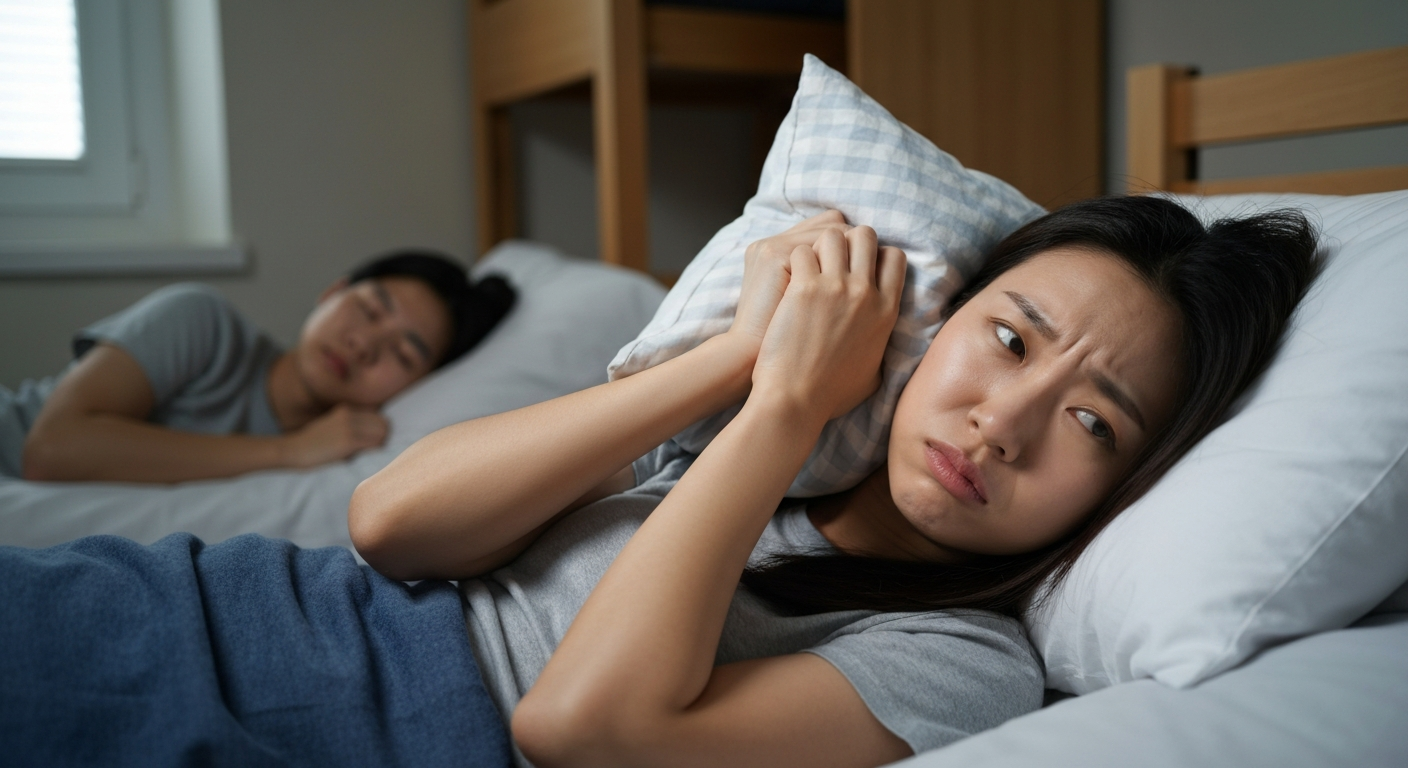

Dealing with a snoring roommate requires a combination of protecting your own sleep and — ideally — encouraging your roommate to address the snoring. The most immediately effective approaches for you: earplugs, white noise, and staggering sleep schedules. For longer-term solutions, a frank but compassionate conversation pointing toward treatment is the sustainable path.
Snoring from a roommate is a genuine health issue for you — chronic sleep disruption from noise exposure has documented effects on cognitive performance, mood, and cardiovascular health.
Snoring typically registers at 60 to 80 decibels, with loud cases reaching 90+ dB. The World Health Organization considers sleep-disturbing noise above 40 dB at night to be a health concern. Consistent exposure to snoring-level noise disrupts sleep architecture — reducing restorative deep sleep and REM sleep — even if you don't fully awaken each time.
Beyond the biological effects, sleep deprivation from a snoring roommate creates daytime impairment that affects concentration, productivity, mood, and reaction time. This is not a minor inconvenience — it's a legitimate quality-of-life problem that warrants a real solution.
"Nighttime environmental noise above 40 dB disrupts sleep quality even when it does not produce full arousal. Chronic sleep disruption from snoring has similar physiological consequences to other forms of sleep deprivation." — World Health Organization at who.int
The fastest path to relief doesn't require your roommate's cooperation — it requires reducing the noise that reaches you during sleep.
Standard foam earplugs reduce noise by 25 to 33 decibels (NRR rating). For most snoring, this is enough to bring the sound level to tolerable or below. Look for earplugs with a Noise Reduction Rating (NRR) of 32 or higher for maximum reduction.
Sleeping with earplugs takes 2 to 4 nights to become comfortable for most people. Soft, slow-recovery foam earplugs with a tapered design cause less ear canal discomfort during side sleeping.
White noise works differently from earplugs — rather than blocking the sound, it masks it. Consistent ambient noise is much easier to sleep through than the irregular, varying amplitude of snoring. White noise machines produce a constant broadband noise that the brain habituates to quickly.
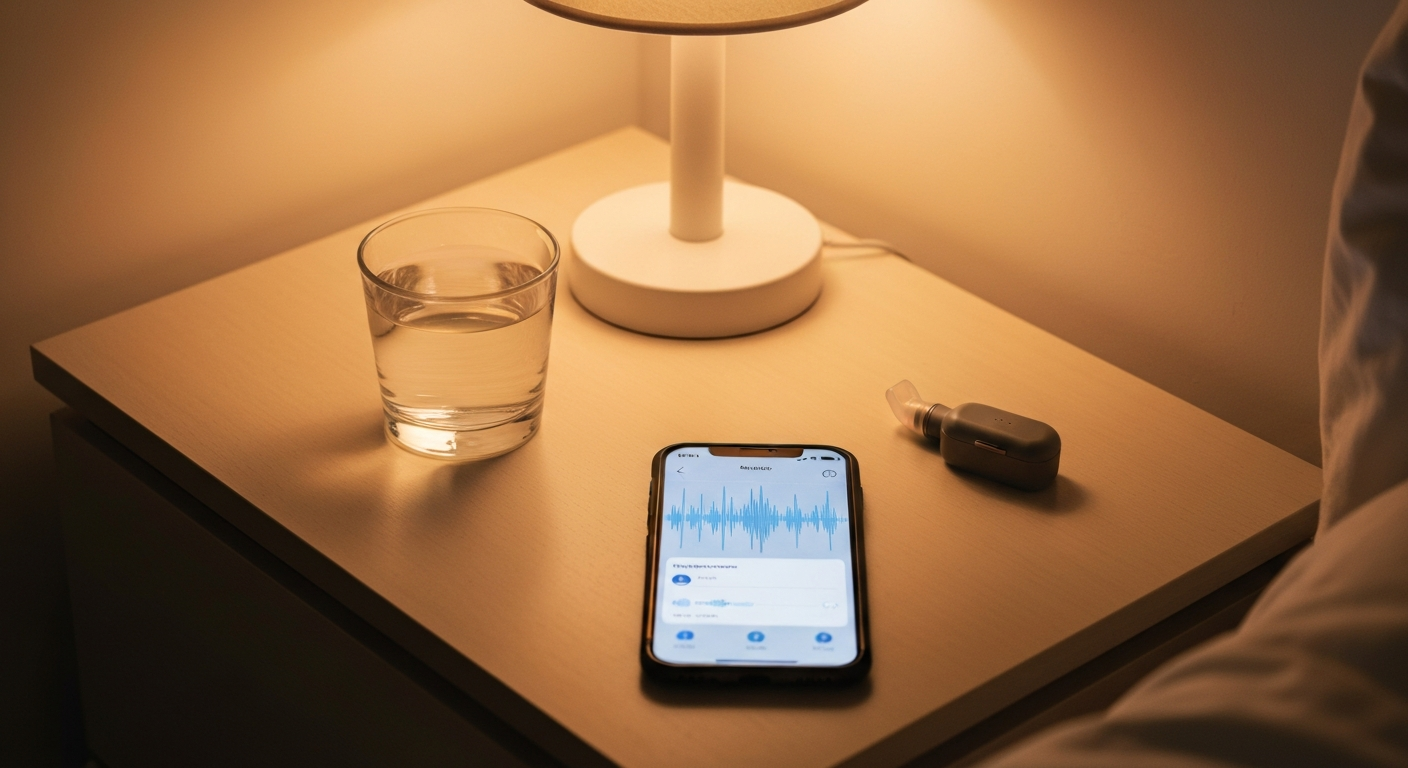
Apps like White Noise Lite, Sleep Sounds, or built-in sleep sounds on phones provide this at no cost. A physical machine (such as Marpac Dohm) produces a more consistent, mechanical sound that many people find superior for sleep masking.
The volume needs to be loud enough to mask the snoring — typically 60 to 65 dB for heavy snoring — which is similar to ambient conversation level.
A box fan or HEPA air purifier running on medium setting produces consistent ambient noise that masks snoring effectively. This doubles as air quality improvement in a shared bedroom space.
Also Read: Snoring Help: 7 Proven Solutions That Actually Work
If your schedules allow, falling asleep before your roommate eliminates the problem entirely — you'll already be in deeper sleep stages by the time snoring begins. Deep sleep is significantly more resistant to arousal from noise than light sleep (N1/N2).
A difference of even 30 to 45 minutes in sleep onset time can meaningfully reduce how much of your roommate's snoring you hear.
Most snorers are unaware of how loud they are or what their snoring sounds like. A well-framed conversation — ideally during the day, not at 3 a.m. — is the starting point for a longer-term solution.
What tends to work:
What doesn't work: passive-aggressive hints, complaints at night during a snoring episode, or framing it purely as your problem to solve while expecting your roommate to feel responsible.
Also Read: How to Help Someone Who Snores: 7 Strategies That Work
If your roommate is receptive, the most effective first steps are free and immediate.
Recommend they:
Sleep on their side: The fastest free intervention for most snorers — removes the gravitational factor that drops the tongue into the airway. A body pillow behind the back helps them stay lateral.
Cut alcohol before bed: Alcohol relaxes throat muscles, amplifying snoring. Not drinking within three hours of sleep often produces immediate results.
Use a nasal strip: A simple adhesive strip across the nose reduces nasal resistance for the portion of snoring driven by nasal obstruction. Available at any pharmacy.
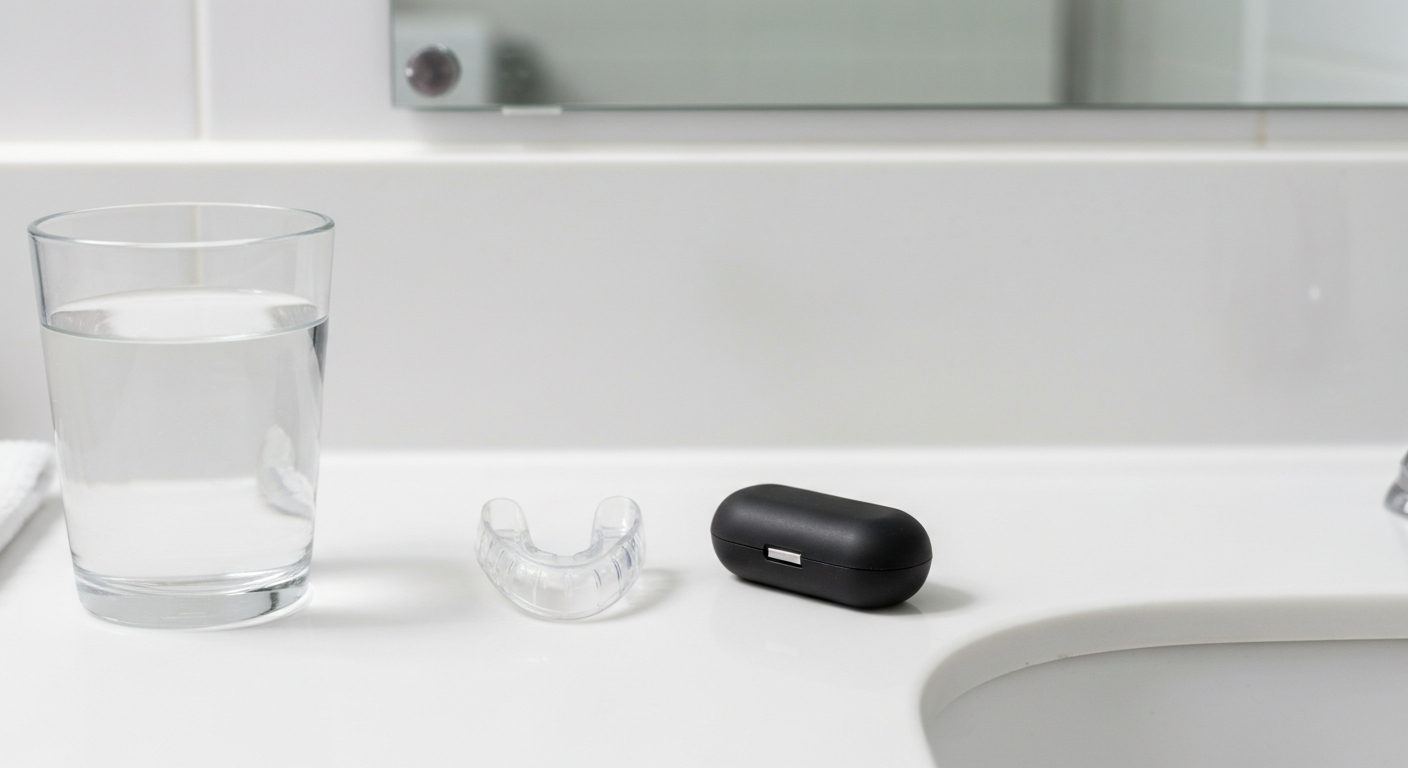
Consider a mandibular advancement device: For persistent snoring, a MAD holds the jaw forward during sleep, widening the airway. Self-impression MADs from SnoreMeds can be ordered online and molded at home.
| ✓Our Pick |
SnoreMeds custom-fit mouthpiece — share this with your roommate as an easy, effective snoring fix No special skills required — straightforward to use and most orders ship quickly. Learn More → |
In some living arrangements — college dorms, shared housing with contracts — persistent snoring that disrupts roommates' sleep may be subject to accommodation or mediation processes.
Most university residential systems have processes for roommate conflicts that include medical accommodations. If one roommate has documented sleep apnea or another medical condition causing snoring, accommodations may include a single room or a quieter living arrangement.
Document the issue (date logs, noise level recordings if needed) before escalating to a resident advisor or housing office. Mediation is typically available before formal accommodation processes.
Managing a snoring roommate starts with protecting your own sleep — earplugs with high NRR ratings and a white noise machine provide immediate relief. A straightforward conversation during the day, framed around health rather than annoyance, opens the door to longer-term solutions. The most effective fixes for the snorer are free: side sleeping and alcohol avoidance before bed. A mandibular advancement device addresses persistent structural snoring. In formal living arrangements, documentation of impact and escalation through housing processes are appropriate if the roommate is unresponsive.
Yes, with proper hygiene. Replace or clean earplugs regularly to prevent ear canal bacteria buildup. Foam earplugs should be replaced every few nights. Silicone and reusable options should be cleaned daily. Long-term daily earplug use is safe for most people when hygiene is maintained and the earplugs are removed each morning.
Broadband white noise — containing all frequencies equally — is effective for masking the irregular frequencies of snoring. Pink noise (more energy at lower frequencies) is often preferred for sleep because it sounds more natural. Commercially available white noise machines typically produce either pure white noise or variants; personal preference determines which is more effective for sleep.
Yes, and this is often the most effective direct request because side sleeping can immediately reduce snoring for position-dependent snorers. Offer to provide a body pillow, which makes the request easier to fulfill and shows you're invested in a shared solution rather than just complaining.
Not for the snoring itself — but if chronic sleep deprivation from the roommate situation is affecting your daytime functioning significantly, your own doctor can assess whether the sleep disruption warrants any treatment. Most of the time, the priority is resolving the noise source through the approaches above.
Reviewed and Updated on June 17, 2026 by George Wright