Sleep
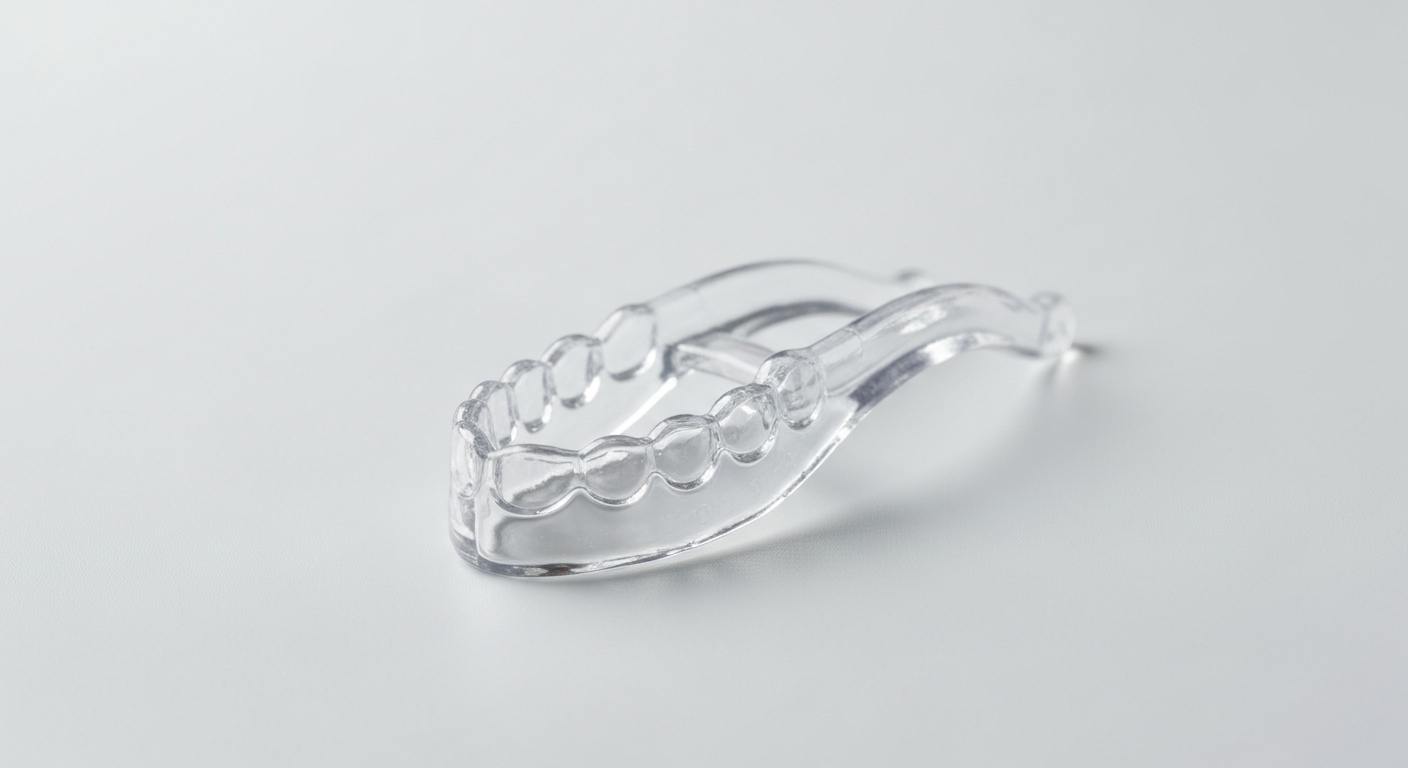

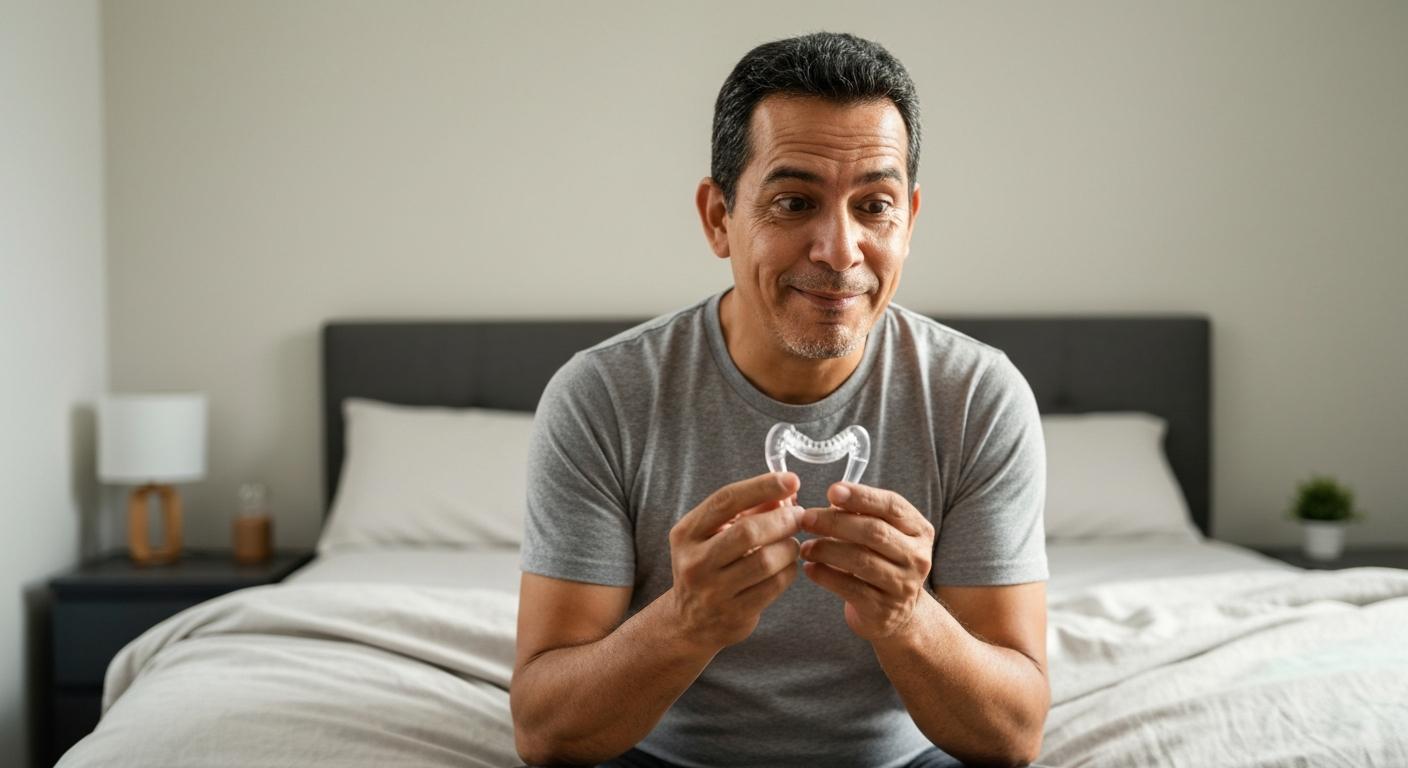
A custom snore guard is a mouthpiece molded specifically to your teeth and jaw that repositions your lower jaw forward while you sleep, opening your airway and reducing or eliminating snoring — and unlike generic devices, a custom-fit version won't slip out, cause jaw pain, or leave you mouth-breathing by morning.
Custom snore guards work by advancing your mandible (lower jaw) by 2–10 millimeters, which pulls the tongue base forward and tightens the soft tissues at the back of your throat. This prevents the vibration of relaxed tissues that causes snoring. The difference between a custom guard and a boil-and-bite version from the pharmacy is fit precision: a device made from your exact dental impression distributes pressure evenly across all teeth, stays securely in place through the night, and allows micro-adjustments to find your optimal jaw position.
Custom mandibular advancement devices (MADs) remain the most clinically effective non-CPAP option for snoring and mild-to-moderate obstructive sleep apnea, but they're not the only approach — nasal dilators, chin straps, tongue devices, and even anti-snore pillows each target different causes of snoring.
Understanding which device matches your snoring type is essential. Here's how the major categories compare:
| Device Type | How It Works | Best For | Limitations |
|---|---|---|---|
| Custom snore guard (MAD) | Advances lower jaw to open airway | Mouth snorers, throat-based snoring, mild sleep apnea | Requires dental impression; adjustment period |
| Anti-snore nose clip | Dilates nostrils mechanically | Nasal congestion, deviated septum | Won't help throat-based snoring |
| Anti-snore chin strap | Holds mouth closed during sleep | Mouth breathers who snore | Ineffective if nasal passages are blocked |
| Tongue retaining device (TRD) | Holds tongue forward with suction | Tongue-based snoring, denture wearers | Less comfortable; harder to talk or swallow |
| Anti-snore pillow | Encourages side sleeping, elevates head | Positional snorers (back sleepers) | Won't help all-position snorers |
| Anti-snore ring | Acupressure on finger | Unproven mechanism | No clinical evidence supporting effectiveness |
| Snore tape / mouth tape | Forces nasal breathing | Mild mouth breathing | Dangerous for those with nasal obstruction |
| Anti-snore spray | Lubricates soft palate | Mild soft palate vibration | Temporary effect; minimal clinical support |
"Mandibular advancement devices reduce the apnea-hypopnea index by approximately 50% and are recommended for patients with mild to moderate obstructive sleep apnea who prefer them to CPAP." — American Academy of Sleep Medicine
Also Read: 7 Best Anti-Snore Devices That Actually Work in 2026
Yes — mandibular advancement devices have strong clinical evidence showing they reduce snoring intensity and frequency in 70–90% of users, with the highest success rates in custom-fitted versions.
The mechanism is straightforward: when your jaw moves forward, your tongue moves with it. This prevents the tongue from falling back and partially blocking your airway during sleep. It also tightens the soft palate, reducing the tissue vibration that creates the snoring sound.
Generic boil-and-bite guards work on the same principle but suffer from poor fit. They tend to over-advance the jaw (causing morning soreness) or under-advance it (failing to open the airway enough). Custom guards from a dentist or lab allow millimeter-by-millimeter titration — you can adjust the advancement until you find the sweet spot where snoring stops without jaw discomfort.
Tongue retaining devices (TRDs) take a different approach. Instead of moving your jaw, they hold your tongue forward using suction. You insert your tongue into a bulb that creates negative pressure, pulling it forward and out of the airway.
TRDs can work well for people who:
- Wear dentures or have poor dental health
- Can't tolerate jaw advancement
- Have tongue-based snoring (often identified by snoring in all sleep positions)
The downside: they're less comfortable than MADs, make it impossible to talk or swallow while worn, and can cause tongue soreness during the adjustment period.
Anti-snore chin straps are effective only for a specific subset of snorers: those who breathe through their mouth but have clear nasal passages.
A chin strap wraps around your head and under your chin, mechanically holding your mouth closed. This forces nasal breathing, which can reduce snoring caused by mouth breathing. However, if your nasal passages are congested, blocked, or anatomically narrow, a chin strap will make breathing harder — not easier.
"Chin straps alone are not recommended as a treatment for obstructive sleep apnea. Studies show they do not improve the apnea-hypopnea index and may worsen hypoxemia in some patients." — Journal of Clinical Sleep Medicine
Chin straps work best as a supplement to CPAP therapy (keeping the mouth closed to prevent air leaks) rather than a standalone snoring solution.
Also Read: Snore Guard Guide: MAD vs TRD & How to Choose in 2026
Nasal dilator clips work by physically spreading your nostrils wider, reducing airflow resistance through the nose — but they only help if your snoring originates from nasal obstruction, not throat-level collapse.
There are two types of nasal clips:
Both reduce nasal resistance, which can help if you snore because of:
- Nasal congestion (allergies, colds)
- Deviated septum
- Naturally narrow nasal passages
- Nasal valve collapse during breathing
However, most adult snoring originates at the throat level — specifically the soft palate, uvula, and tongue base. A nasal clip won't help this type of snoring at all. You can test whether nasal obstruction is your issue: if your snoring improves significantly when you use a decongestant spray or breathe through your nose with your mouth taped (carefully, and only if you can breathe freely through your nose), nasal devices may help. If not, you need a jaw-advancing or tongue-retaining device instead.
Dentist-made snore guards cost $500–$2,000 but offer precise fit and adjustability; at-home custom impression kits cost $50–$200 and provide 80% of the benefit for a fraction of the price.
Here's what you get with each option:
| Feature | Dentist-Made Guard | At-Home Custom Kit |
|---|---|---|
| Impression method | In-office digital scan or putty impression | Mail-in putty impression kit |
| Material quality | Medical-grade dental acrylic | Medical-grade dental acrylic (usually same labs) |
| Adjustability | Titration screws for mm-by-mm advancement | Fixed or limited adjustment |
| Cost | $500–$2,000 | $50–$200 |
| Insurance coverage | Sometimes covered under sleep apnea diagnosis | Rarely covered |
| Professional oversight | Dentist monitors fit and jaw health | Self-directed |
For many snorers without diagnosed sleep apnea, an at-home custom-molded mouthpiece provides excellent results. You take a dental impression yourself using a kit, mail it to a dental lab, and receive a custom-fitted device in return. The fit is far superior to generic boil-and-bite guards because actual dental technicians fabricate it from your exact teeth molds.
Also Read: Custom Fit Snore Mouthpiece: Types, Results & How to Choose
Anti-snore pillows work for positional snorers — people who only snore on their back — by encouraging side sleeping or elevating the head to reduce airway compression.
If you or your partner notices that snoring happens only when you're on your back, a positional approach may be all you need. Back sleeping allows gravity to pull the tongue and soft palate backward, narrowing the airway. Side sleeping keeps the airway more open.
The best anti-snore pillows for side sleepers have these features:
- Contoured shape that cradles the head and neck in side position
- Firm enough to maintain elevation through the night
- Shoulder cutouts that prevent arm numbness
Some pillows use wedge elevation to keep the head above the chest, reducing gravitational airway compression even when back sleeping. Others have inflatable chambers that automatically nudge you onto your side when sensors detect back sleeping.
However, pillows won't help if you snore in all positions — that indicates throat-level obstruction requiring a mouthpiece or medical evaluation.
Anti-snore rings claim to reduce snoring through acupressure points on the finger. You wear a ring with small bumps that press on specific spots supposedly connected to nasal and sinus function.
There is no scientific evidence supporting acupressure rings for snoring. No peer-reviewed studies demonstrate any mechanism by which finger pressure could affect airway patency. These devices fall into the category of unproven alternative remedies. If you've tried one and experienced improvement, placebo effect or coincidental sleep position changes are more likely explanations than acupressure efficacy.
Custom mandibular advancement devices are FDA-cleared for mild-to-moderate obstructive sleep apnea and can be an effective alternative to CPAP for patients who can't tolerate continuous positive airway pressure therapy.
An apnea snore guard (the medical term is "oral appliance therapy") works the same way as a snoring guard: it advances the jaw to open the airway. The difference is the clinical context. For sleep apnea, the device must reduce the apnea-hypopnea index (AHI) — the number of breathing interruptions per hour — to acceptable levels.
"Oral appliance therapy is indicated for adult patients with obstructive sleep apnea who are intolerant of CPAP therapy or who prefer an oral appliance." — American Academy of Dental Sleep Medicine
If you've been diagnosed with sleep apnea, you'll need a prescription-level device fitted by a dentist trained in dental sleep medicine. Over-the-counter guards are not appropriate for apnea treatment because:
- They can't be titrated precisely enough
- They're not monitored for therapeutic effectiveness
- Sleep apnea requires professional follow-up to confirm the device is working
However, if you snore heavily but haven't been diagnosed with apnea, a custom snore guard from an at-home kit is a reasonable first step. If it doesn't resolve your symptoms — or if you have daytime fatigue, gasping awake at night, or witnessed breathing pauses — get a sleep study.
Also Read: Snoring vs Sleep Apnea: Key Differences & When to Worry
The best custom snore guard for you depends on your snoring type, jaw health, dental condition, and whether you've been diagnosed with sleep apnea.
Follow this decision tree:
Do you only snore on your back? → Try a positional pillow first. If that fails, move to a mouthpiece.
Do you snore with your mouth open? → A mandibular advancement device (MAD) is your best option. Consider adding a chin strap if mouth breathing continues.
Do you snore with your mouth closed? → This indicates nasal or deep throat obstruction. Try a nasal dilator clip. If ineffective, a MAD or tongue device may help.
Do you wear dentures or have loose teeth? → A tongue retaining device (TRD) is safer than a jaw-advancing guard.
Have you been diagnosed with sleep apnea? → See a sleep dentist for a prescription oral appliance with titration capability.
Are you just trying to reduce snoring for your partner's sake? → An at-home custom-molded snore guard offers the best value.
When selecting a device, prioritize adjustability. Your optimal jaw advancement position may change over time, and the ability to fine-tune millimeter by millimeter separates effective devices from ones that end up in a drawer.
| ✓Our Pick |
Shop custom-fit anti-snore mouthpieces — lab-made from your own impression Highly rated by thousands of buyers — this is one of the most effective solutions for this issue you can try at home. Learn More → |
A custom snore guard is the most effective non-CPAP solution for mouth-based and throat-based snoring, with clinical evidence showing 70–90% of users experience significant improvement. Dentist-made devices offer maximum adjustability for $500–$2,000, while at-home custom impression kits provide excellent fit for $50–$200. Nasal clips help only if your snoring originates from nasal obstruction. Chin straps work only for mouth breathers with clear nasal passages. Anti-snore pillows help positional snorers who only snore on their back. If you have symptoms of sleep apnea — gasping, witnessed breathing pauses, or severe daytime fatigue — get a sleep study before choosing any device.
Snore tape (mouth tape) forces nasal breathing by sealing your lips closed during sleep. It can reduce snoring in people who mouth-breathe but have clear nasal passages. However, it's potentially dangerous if you have any nasal obstruction — you could struggle to breathe. Never use mouth tape if you have nasal congestion, a deviated septum, or sleep apnea. For most snorers, a mouthpiece or nasal dilator is safer and more effective.
SmartGuard RX is a brand of mandibular advancement device that uses a boil-and-bite fitting method combined with adjustment screws for customization. It's a mid-tier option between generic pharmacy guards and fully custom dental lab devices. Like all MADs, it advances your lower jaw to open the airway. User reviews are mixed — some find the adjustment mechanism helpful, while others report fit issues compared to true custom-molded devices.
No — snore blocker ear plugs help the snorer's partner, not the snorer. They're simply noise-reducing ear plugs marketed for sleeping next to someone who snores. They do nothing to address the snoring itself. If you're the snorer, you need a device that opens your airway. If you're the partner, high-quality ear plugs or a white noise machine can reduce the disturbance while your partner seeks treatment.
The Sleep Connection wristband claims to detect snoring through sound sensors and deliver a mild electrical pulse to your wrist, prompting you to shift position without waking. Reviews are mixed, and there's limited clinical evidence for its effectiveness. The theory is that positional changes reduce snoring — but if you snore in all positions, a wristband nudge won't help. For confirmed positional snorers, it may provide modest benefit, though purpose-built positional therapy devices have better evidence.
You can, but with caution. Mandibular advancement devices change your jaw position, which can either improve or worsen TMJ symptoms depending on your specific condition. Some people with TMJ find that a properly fitted MAD actually reduces jaw clenching and grinding. Others experience increased jaw pain from the forward position. If you have TMJ disorder, work with a dentist who specializes in
Reviewed and Updated on June 14, 2026 by George Wright