Sleep
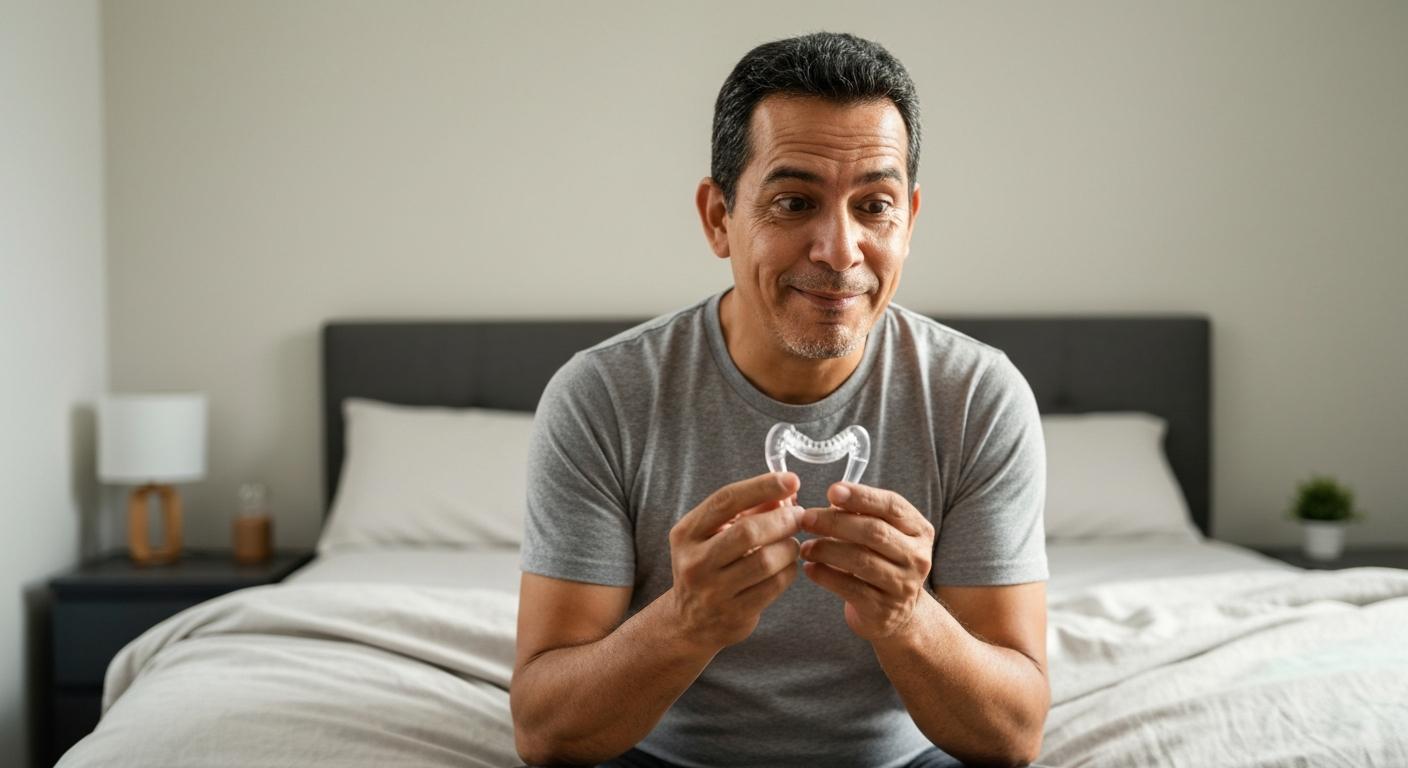

The Glidewell Snore Guard is a prescription mandibular advancement device (MAD) custom-made by Glidewell Dental Lab that repositions your lower jaw forward during sleep, opening the airway and reducing or eliminating snoring caused by soft tissue vibration.
Unlike over-the-counter boil-and-bite mouthpieces, the Glidewell Snore Guard is fabricated from digital impressions taken by your dentist, resulting in a precise fit that improves comfort and effectiveness. The device works by holding the mandible (lower jaw) in a slightly protruded position, which prevents the tongue and soft palate from collapsing backward and blocking airflow. For people whose snoring stems from airway obstruction rather than nasal congestion, this type of appliance can be highly effective — studies show MAD devices reduce snoring intensity by 45–80% in appropriate candidates.
The Glidewell Snore Guard is a two-piece oral appliance that fits over your upper and lower teeth, connected by a mechanism that keeps your lower jaw positioned forward while you sleep.
Glidewell Dental, one of the largest dental laboratories in the United States, manufactures this device using CAD/CAM technology from impressions your dentist sends to their lab. The appliance typically takes 2–3 weeks to fabricate and requires a fitting appointment to ensure proper jaw positioning.
The mechanism behind mandibular advancement is straightforward. When you fall asleep, your muscles relax — including those that hold your tongue and soft palate in place. In some people, this relaxation allows these tissues to fall backward, partially blocking the airway. As air squeezes past the obstruction, it causes the tissues to vibrate, producing the sound we recognize as snoring.
By holding the lower jaw forward, the Glidewell Snore Guard creates more space behind the tongue and tightens the soft tissues enough to reduce or prevent vibration. The device is adjustable, allowing your dentist to fine-tune how far forward your jaw is positioned until you find the sweet spot between effectiveness and comfort.
"Mandibular advancement devices work by moving the lower jaw forward, which increases the size of the upper airway and reduces air resistance that leads to snoring." — American Academy of Dental Sleep Medicine
Also Read: Snore Guard Guide: MAD vs TRD & How to Choose in 2026
The Glidewell Snore Guard is designed for adults with primary snoring or mild to moderate obstructive sleep apnea who want a custom-fit alternative to generic boil-and-bite devices.
This appliance works best for people whose snoring originates from throat-level obstruction rather than nasal issues. If your snoring is caused by a deviated septum, chronic nasal congestion, or allergies, a mandibular advancement device may not address the root problem.
Ideal candidates typically share these characteristics:
The device is not appropriate for everyone. People with severe sleep apnea generally need CPAP as first-line treatment. Those with fewer than 10 teeth per arch, active periodontal disease, or existing jaw pain may not be good candidates.
| ✓Our Pick |
Shop custom-fit anti-snoring mouthpieces — repositions jaw to eliminate snoring A top-rated pick that works — readers who tried this reported noticeable improvement within days. Learn More → |
Expect to pay between $500 and $1,200 for a Glidewell Snore Guard, including the dental appointments required for impressions and fitting.
The total cost breaks down into several components:
| Cost Component | Typical Range |
|---|---|
| Initial dental consultation | $75–$150 |
| Digital impressions or molds | $100–$200 |
| Lab fabrication (Glidewell) | $200–$500 |
| Fitting and adjustment appointments | $100–$250 |
| Total | $475–$1,100 |
Insurance coverage varies significantly. Some medical insurance plans cover oral appliances for diagnosed sleep apnea (you'll need a sleep study to qualify), while dental insurance rarely covers snore guards. Check with both your medical and dental insurance providers before proceeding.
Compared to over-the-counter options that cost $30–$100, the Glidewell Snore Guard represents a significant investment. However, custom devices typically last 3–5 years with proper care, while boil-and-bite alternatives often need replacement every 6–12 months due to material degradation and loss of fit.
"Custom-made oral appliances fitted by a dentist are more effective than over-the-counter devices for treating snoring and mild to moderate obstructive sleep apnea." — American Academy of Sleep Medicine
The Glidewell Snore Guard competes with several other prescription mandibular advancement devices, each with slightly different designs and features.
Here's how the major custom options compare:
| Device | Lab | Adjustment Type | Approximate Cost | Notable Feature |
|---|---|---|---|---|
| Glidewell Snore Guard | Glidewell Dental | Incremental advancement | $500–$1,200 | CAD/CAM precision manufacturing |
| SomnoDent | SomnoMed | Titration screw | $1,500–$2,500 | SMH BFlex comfort material |
| Herbst Appliance | Various labs | Telescopic arms | $1,000–$2,000 | Allows full mouth opening |
| EMA (Elastic Mandibular Advancement) | Myerson | Interchangeable straps | $800–$1,500 | Multiple strap strengths |
| TAP (Thornton Adjustable Positioner) | Airway Management | Dial mechanism | $1,200–$2,000 | Single-point adjustment |
The Glidewell option tends to be more affordable than premium competitors like SomnoDent while still offering custom fit. However, some of the higher-priced devices include features like more precise titration or materials designed for people with jaw sensitivity.
Also Read: Custom Fit Snore Mouthpiece: Types, Results & How to Choose
The process of getting a Glidewell Snore Guard involves 2–3 dental appointments spread over 3–4 weeks.
Here's the typical timeline:
Your dentist will examine your teeth and jaw to confirm you're a good candidate. They'll check for sufficient healthy teeth, assess your TMJ function, and may take X-rays. If everything looks good, they'll take digital scans or traditional impressions of your upper and lower teeth, along with a bite registration that shows how your teeth fit together.
Glidewell's lab uses your impressions to create the custom appliance. The CAD/CAM process ensures precise fit based on your unique dental anatomy.
When the device arrives, your dentist will check the fit, show you how to insert and remove it, and set the initial jaw advancement position. Most dentists start conservatively — just enough advancement to show improvement without causing jaw discomfort.
You may need one or more follow-up visits to titrate (adjust) the device. The goal is finding the position that eliminates your snoring while remaining comfortable enough to wear every night. This process can take several weeks of incremental adjustments.
Most people experience some initial side effects with mandibular advancement devices, but these typically resolve within 2–4 weeks of consistent use.
Common side effects include:
Jaw soreness or stiffness — The forward position puts mild stress on your TMJ. Morning jaw exercises (opening and closing slowly, moving side to side) can help.
Excessive salivation — Your mouth treats the device like food initially. This usually resolves within 1–2 weeks as you adapt.
Tooth discomfort — The pressure of the appliance on your teeth can cause temporary sensitivity. If this persists beyond 2 weeks, see your dentist for adjustment.
Bite changes in the morning — You may notice your teeth don't quite fit together normally when you first remove the device. This usually resolves within 30–60 minutes.
Serious complications are rare but possible. Long-term use can occasionally cause permanent bite changes or TMJ issues. Regular dental follow-up (every 6–12 months) helps catch any problems early.
"Side effects of oral appliances are generally mild and reversible, but patients should be monitored regularly for any changes in dental occlusion or temporomandibular joint symptoms." — Journal of Clinical Sleep Medicine
Also Read: Is Snoring Unhealthy? 6 Risks & What Your Body Is Telling You
While the Glidewell Snore Guard can help with mild to moderate obstructive sleep apnea, it is not a first-line treatment for moderate to severe cases.
For primary snoring (snoring without apnea), an oral appliance like the Glidewell Snore Guard is often appropriate as standalone treatment. But if you've been diagnosed with obstructive sleep apnea, the treatment decision is more complex.
The American Academy of Sleep Medicine recommends:
If you suspect you have sleep apnea — symptoms include excessive daytime sleepiness, witnessed breathing pauses, gasping awake, and morning headaches — get a proper sleep study before investing in any treatment. A snore guard may mask symptoms without adequately treating the underlying condition.
Also Read: Snoring vs Sleep Apnea
Proper maintenance extends the life of your device and prevents bacterial buildup that can cause bad breath or oral infections.
Daily cleaning routine:
Weekly deep cleaning:
Avoid hot water (it can warp the material), abrasive cleaners, and leaving the device in direct sunlight. Bring it to all dental appointments so your dentist can check for wear and ensure it still fits properly.
With good care, a Glidewell Snore Guard typically lasts 3–5 years before needing replacement.
The Glidewell Snore Guard is a custom-made mandibular advancement device that treats snoring by holding your lower jaw forward during sleep, preventing airway obstruction. It costs $500–$1,200 including dental appointments, works best for adults with primary snoring or mild to moderate sleep apnea, and typically lasts 3–5 years. While effective for many people, it requires proper fitting by a dentist and may cause temporary side effects like jaw soreness. If you suspect sleep apnea, get a sleep study before relying on an oral appliance as your sole treatment.
Most people adapt to wearing a Glidewell Snore Guard within 2–4 weeks of consistent nightly use. The first few nights often feel awkward, and you may remove it unconsciously while sleeping. Jaw soreness and excessive saliva are common initially but typically resolve as your body adjusts. Persistence is key — wearing it sporadically delays adaptation.
Partial dentures may be compatible depending on how many natural teeth remain to anchor the appliance. Full dentures are generally not compatible because MAD devices need stable teeth for retention. Your dentist can evaluate whether you have enough dental structure to support the device effectively.
Yes, custom mandibular advancement devices like those made by Glidewell Dental are FDA-cleared as Class II medical devices for treating snoring and obstructive sleep apnea. This classification means they've met safety and effectiveness standards, though individual results vary based on proper fitting and patient compliance.
CPAP remains the gold standard for moderate to severe sleep apnea because it delivers consistent positive airway pressure throughout the night. Oral appliances like the Glidewell Snore Guard are less effective at reducing apnea events but are easier to travel with, require no electricity, and have higher long-term compliance rates for people who can't tolerate CPAP.
Medical insurance may cover oral appliances for diagnosed obstructive sleep apnea if you have documentation from a sleep study and evidence that CPAP was tried or is contraindicated. Coverage for primary snoring (without apnea) is rare. Dental insurance typically does not cover snore guards. Always verify coverage with your specific plan before proceeding.
Reviewed and Updated on June 14, 2026 by George Wright