DIY
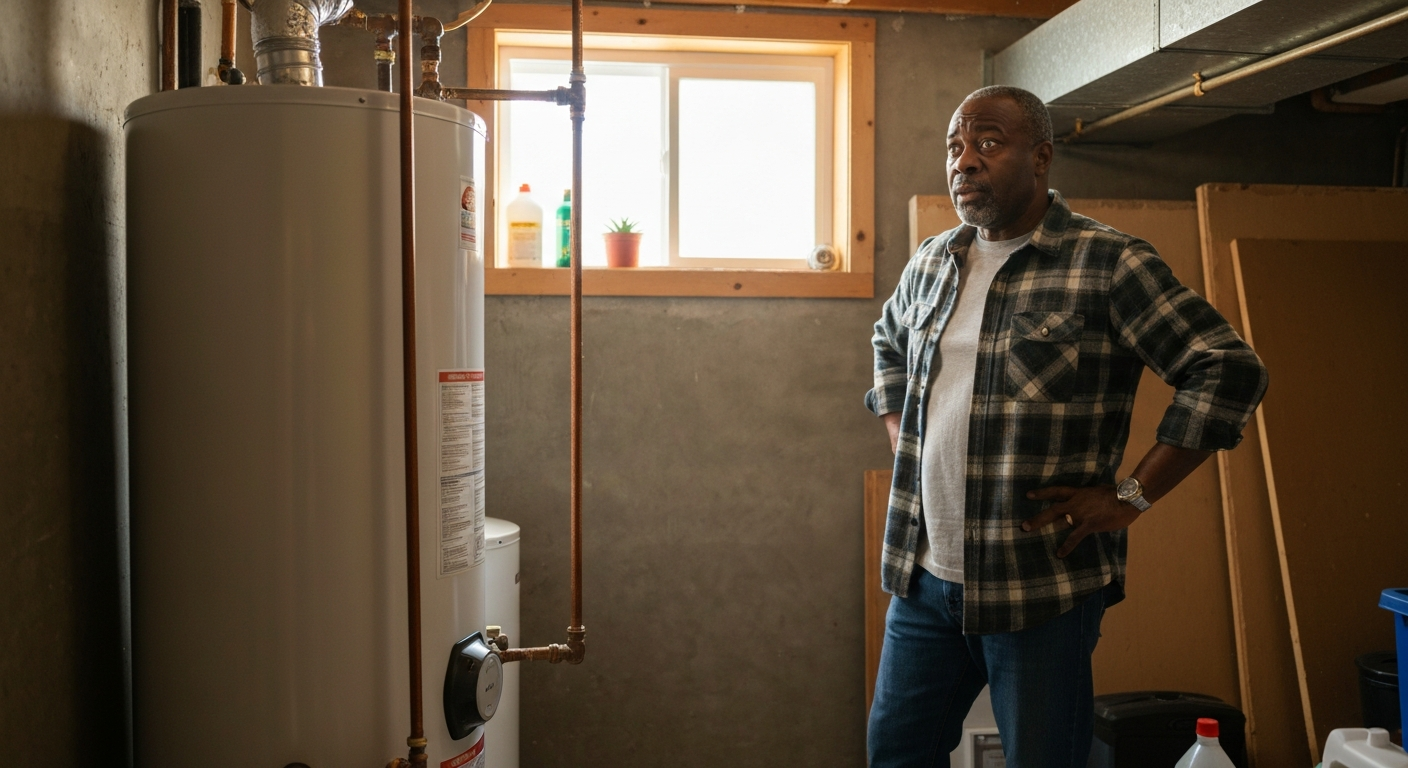

Your water is cold because your water heater has failed, run out of hot water, or lost power — or because cold water is mixing with hot due to a faulty valve, broken dip tube, or plumbing crossover.
When you turn on the hot tap and get nothing but cold water, the problem almost always traces back to your water heater or the pipes leading from it. The fix might be as simple as relighting a pilot light or resetting a tripped breaker, or it could require replacing a heating element or calling a plumber. Below, you'll find every common cause of cold water when you expect hot, plus step-by-step guidance on diagnosing and fixing each one.
| ✓Our Pick |
Water heater replacement parts and accessories Consistently earns five-star reviews — reliable, well-supported, and genuinely effective. See on Amazon → |
The most common reason your water comes out cold is that your water heater has stopped heating — due to a power issue, failed heating element, or depleted fuel supply.
Water heaters are simple machines: they take cold water in, heat it up, and send hot water out when you open a tap. When any part of this process breaks down, you get cold water instead. The specific cause depends on whether you have a gas or electric water heater, how old it is, and what symptoms you're noticing.
Electric water heaters need electricity to function. A tripped circuit breaker is the single most common — and easiest to fix — cause of cold water. Check your electrical panel for a breaker labeled "water heater" and look for one that's flipped to the middle position or all the way off. Reset it by pushing it firmly to OFF, then back to ON.
If the breaker trips again immediately or within a few hours, you have an electrical fault. This could be a short circuit in the wiring, a failing heating element, or a problem with the thermostat. Don't keep resetting it — call an electrician.
Gas water heaters rely on a pilot light to ignite the main burner. If your pilot light has gone out, the burner can't fire, and your water stays cold. Check the small viewing window near the bottom of your tank — you should see a small blue flame. If there's no flame, follow the relighting instructions on the label attached to your heater.
"If the pilot light will not stay lit after several attempts, the thermocouple may need to be replaced. The thermocouple is a safety device that shuts off the gas if it doesn't detect a flame." — U.S. Department of Energy
A thermocouple costs $10 to $30 and takes about 30 minutes to replace if you're comfortable with basic DIY. If you smell gas at any point, leave the house immediately and call your gas company.
Also Read: Why Is My Hot Water Cold? 9 Causes & How to Fix Them
If hot water worked earlier but ran out, you've simply exceeded your tank's capacity — or your tank isn't recovering fast enough to keep up with demand.
Tank water heaters hold a finite amount of hot water, typically 40 to 80 gallons for residential units. Once you've used it up, you have to wait for the tank to reheat. This recovery time varies:
| Water Heater Type | Typical Recovery Time (40-gallon tank) |
|---|---|
| Electric (4500W element) | 60–80 minutes |
| Gas (40,000 BTU) | 30–40 minutes |
| Tankless | Continuous (no tank to deplete) |
If you're running out of hot water faster than you used to, the problem might be sediment buildup. Minerals in your water settle at the bottom of the tank over time, reducing the available space for hot water and insulating the water from the heating element. Flushing your tank annually can prevent this.
Sediment acts like a blanket between your water and the heat source. In gas heaters, it coats the bottom of the tank where the burner heats it. In electric heaters, it can bury the lower heating element entirely. Either way, your heater works harder, takes longer to heat water, and produces less hot water per cycle.
To flush sediment, turn off the power or gas to your heater, connect a garden hose to the drain valve at the bottom, and drain water until it runs clear. This takes 10 to 20 minutes and should be done once a year. If you haven't done it in years, be prepared for rusty-colored water that takes longer to clear.
A broken dip tube lets cold incoming water mix with your hot water supply, making your tap water lukewarm or cold even when the tank is full of hot water.
The dip tube is a plastic pipe inside your tank that directs cold incoming water to the bottom, where it can be heated. Hot water rises to the top and exits through the outlet pipe. If the dip tube cracks or breaks off, cold water enters near the top and immediately mixes with your hot water output.
Signs of a broken dip tube include:
Dip tubes are inexpensive (under $15) but replacing one requires draining the tank and removing the cold water inlet. If your water heater is more than 10 years old and the dip tube has failed, consider whether the tank itself is nearing the end of its lifespan before investing in the repair.
| ✓Our Pick |
Water heater dip tubes and replacement parts No special skills required — straightforward to use and most orders ship quickly. See on Amazon → |
Electric water heaters have one or two heating elements — if one fails, you'll get less hot water or none at all.
Most residential electric water heaters have an upper and lower heating element. The upper element heats the top portion of the tank first (so you get hot water quickly), then the lower element takes over to heat the rest. If the upper element fails, you'll get no hot water at all. If the lower element fails, you'll get a small amount of hot water that runs out quickly.
Testing heating elements requires a multimeter. With the power off, disconnect the wires from the element and test for continuity. A working element shows low resistance (10–30 ohms typically). An open circuit (infinite resistance) means the element is burned out.
"Heating elements are the most commonly replaced parts on electric water heaters. They typically last 6 to 10 years depending on water quality and usage patterns." — Plumbing-Heating-Cooling Contractors Association
Replacement elements cost $15 to $40 and screw into the side of the tank. You can replace them yourself, but you'll need to drain the tank below the element level and have the correct wattage and voltage rating for your heater.
A plumbing crossover occurs when cold water leaks into your hot water line through a faulty valve, mixing cartridge, or improperly installed fixture.
Single-handle faucets and showers have a mixing cartridge that blends hot and cold water. If this cartridge fails, cold water can flow backward into your hot water line, cooling it down throughout your house. You might notice that hot water at one fixture is fine, but it's lukewarm elsewhere.
To test for a crossover:
The most common culprits are single-handle shower valves, washing machine connections, and any fixture with a built-in mixing mechanism. Isolate each fixture by shutting off its dedicated valves until you find the one that stops the crossover.
If your thermostat is set below 120°F or has failed, your water heater may be working but not heating water to a usable temperature.
Most water heaters ship with the thermostat set to 120°F, which is the recommended temperature for balancing energy efficiency with safety. If someone has turned it down, your water might feel cold compared to what you expect. Check the thermostat setting on the front of a gas water heater or behind the access panels on an electric unit.
If the thermostat is set correctly but water still isn't hot, the thermostat itself may have failed. Electric water heaters have separate thermostats for the upper and lower elements. When the upper thermostat fails, the entire heater stops working. When the lower thermostat fails, only the lower element stops heating.
Testing a thermostat requires a multimeter and some comfort with electrical work. If testing confirms a bad thermostat, replacements cost $10 to $30 and install with two screws and two wire connections.
| Symptom | Most Likely Cause | Quick Fix |
|---|---|---|
| No hot water at all (electric) | Tripped breaker or failed upper element | Reset breaker; test/replace element |
| No hot water at all (gas) | Pilot light out or thermocouple failure | Relight pilot; replace thermocouple |
| Hot water runs out quickly | Sediment buildup or broken dip tube | Flush tank; replace dip tube |
| Lukewarm water only | Thermostat set too low or lower element failure | Adjust thermostat; test/replace element |
| Hot water at some fixtures, cold at others | Plumbing crossover at a single fixture | Isolate and repair faulty valve |
| Fluctuating temperature | Failing mixing valve or sediment in lines | Replace cartridge; flush lines |
If your water heater is over 10 years old and experiencing multiple problems, replacement is usually more cost-effective than repair.
Tank water heaters typically last 8 to 12 years. After a decade of use, internal components degrade, the tank itself may be corroding, and efficiency drops significantly. If you're facing a repair that costs more than half the price of a new heater, or if you've already made multiple repairs recently, it's time to consider replacement.
Signs your water heater is at end of life:
Modern water heaters are significantly more efficient than models from 10 to 15 years ago. A new high-efficiency unit can reduce your water heating costs by 10% to 20% while providing more reliable hot water.
Also Read: Why Is My Heat Not Blowing Hot Air? 7 Causes & Fixes
Your water is cold because something has interrupted the heating process — most commonly a tripped breaker, extinguished pilot light, depleted tank, failed heating element, or broken dip tube. Start by checking power and fuel supply, then inspect your thermostat settings and tank for sediment. If your heater is over 10 years old and repairs are piling up, replacement is often the smarter investment. Most cold water problems can be diagnosed in under 30 minutes and fixed without a plumber.
Your water starts hot then turns cold because you've depleted the hot water stored in your tank. This happens faster than expected when sediment has reduced your tank's effective capacity, when your dip tube is broken and allowing cold water to mix in, or when you're using multiple hot water fixtures simultaneously. Try staggering showers and dishwasher or laundry cycles to give your tank time to recover.
Yes, a failed thermostat can cause completely cold water. On electric water heaters, the upper thermostat controls power to both heating elements. If it fails in the "off" position, neither element will heat. Gas water heaters use a thermostat integrated with the gas valve — if it fails, the burner won't ignite. Testing requires a multimeter, and replacement parts are inexpensive.
Recovery time depends on your heater type and tank size. A 40-gallon gas water heater typically recovers in 30 to 40 minutes. A 40-gallon electric water heater takes 60 to 80 minutes. Tankless water heaters provide continuous hot water with no recovery time needed. If your heater is taking significantly longer than these benchmarks, sediment buildup or a failing element may be slowing it down.
When only one faucet has cold water while others are fine, the problem is localized to that fixture rather than your water heater. The most common causes are a failed mixing cartridge in a single-handle faucet, a closed or restricted shut-off valve under the sink, or a clogged aerator or showerhead reducing hot water flow. Check the hot water shut-off valve under the fixture first.
Many cold water problems are DIY-friendly: relighting a pilot, resetting a breaker, adjusting a thermostat, or flushing sediment. However, call a plumber if you smell gas, if water is leaking from the tank, if the breaker keeps tripping, or if you're uncomfortable working with electricity or gas connections. A professional diagnosis typically costs $75 to $150 and can prevent costly mistakes.
Reviewed and Updated on May 3, 2026 by George Wright