DIY
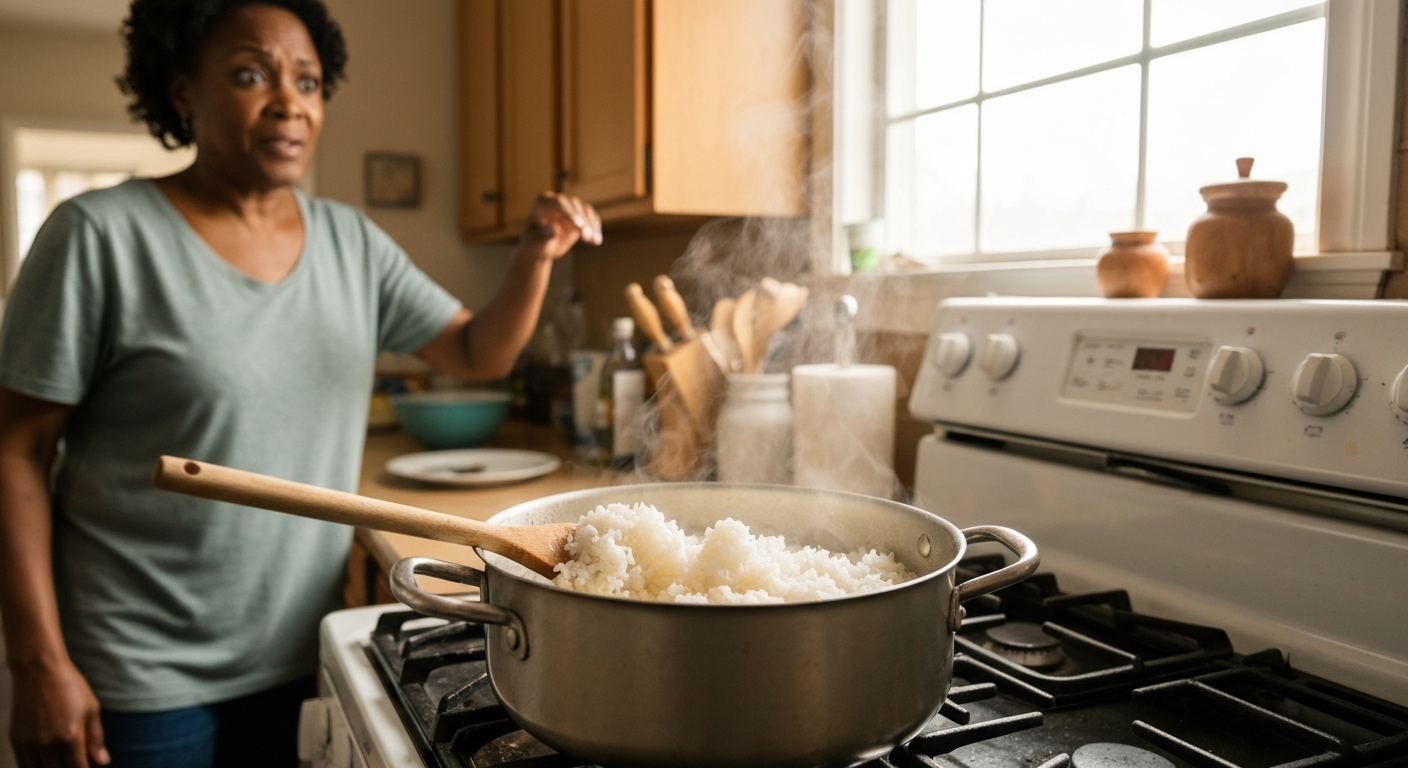

Rice turns gummy when excess starch on the grains isn't rinsed off, when too much water is added, or when the rice is stirred or cooked too long—releasing sticky starch that glues the grains together.
The good news: gummy rice is almost always a technique issue, not a rice quality issue. Once you understand what causes that sticky, clumpy texture, you can fix it immediately and prevent it from happening again. Below, you'll find the six most common causes of gummy rice, exactly how to rescue a pot that's already gone wrong, and the foolproof method for fluffy rice every time.
| ✓Our Pick |
Fine-mesh strainer for rinsing rice No special skills required — straightforward to use and most orders ship quickly. See on Amazon → |
Rice becomes gummy because of a starch called amylopectin, which sits on the surface of every grain and turns into a sticky gel when it absorbs water and heat.
Every rice grain contains two types of starch: amylose and amylopectin. Amylose is a long, straight molecule that stays firm when cooked. Amylopectin is a branched molecule that gets soft and sticky. The ratio between these two starches determines whether your rice cooks up fluffy or gluey.
Short-grain rice (like sushi rice or arborio) naturally contains more amylopectin—that's why it's supposed to be sticky. Long-grain rice (like basmati or jasmine) has more amylose and should cook into separate, fluffy grains. But even long-grain rice will turn gummy if you trigger excessive starch release through the wrong cooking method.
When you don't rinse rice, stir it while cooking, or use too much water, you're essentially doing three things: leaving surface starch in the pot, breaking grains and releasing more starch, and giving that starch extra liquid to gel into a sticky paste.
Unrinsed rice is the number one cause of gummy results.
Raw rice grains are coated in loose starch powder from milling and handling. When you dump unrinsed rice into boiling water, that powder immediately dissolves and turns the cooking liquid into starchy glue. By the time the rice is cooked, every grain is cemented to its neighbor.
Rinsing takes 30 seconds and removes up to 30% of surface starch. Place rice in a fine-mesh strainer, run cold water over it, and swirl with your hand until the water runs clear instead of cloudy. For even better results, soak the rice for 20–30 minutes after rinsing, then drain before cooking.
Excess water over-hydrates the grains and activates more starch than necessary.
The classic "2:1 water-to-rice" ratio is actually too much water for most rice types. That ratio made sense decades ago when rice was less processed and needed more moisture—but modern rice is cleaner and more consistent.
Most long-grain white rice does best with a 1.25:1 to 1.5:1 water-to-rice ratio. That means 1¼ to 1½ cups of water per cup of rice. Short-grain and medium-grain rice need even less because they absorb water more efficiently.
| Rice Type | Water Ratio (per 1 cup rice) |
|---|---|
| Long-grain white (basmati, jasmine) | 1.25–1.5 cups |
| Medium-grain white | 1.25 cups |
| Short-grain white (sushi) | 1:1 |
| Brown rice | 1.75–2 cups |
| Wild rice | 3 cups |
Stirring breaks rice grains and releases starch into the cooking liquid.
Unlike risotto (where stirring is the point), regular rice should be left completely alone after it comes to a simmer. Every time you lift the lid and stir, you rupture grain surfaces, release starch, and let steam escape—which extends cooking time and creates more mush.
The fix: bring rice and water to a boil, stir once, reduce to the lowest possible simmer, cover with a tight-fitting lid, and walk away. Don't lift the lid for the entire cooking time.
High heat causes aggressive boiling that batters the grains and cooks them unevenly.
When rice boils vigorously, the grains tumble and collide constantly. This physical agitation breaks the grain surfaces and releases more amylopectin into the water. At the same time, high heat cooks the outside of each grain faster than the inside, so you end up with mushy exteriors and undercooked centers.
After bringing rice to a boil, immediately drop the heat to the lowest setting your stove allows. The water should barely simmer—just a few lazy bubbles, not a rolling boil. If your stove's lowest setting is still too hot, use a heat diffuser or move the pot to a smaller burner.
Overcooking breaks down the grain structure and turns starches into paste.
White rice finishes cooking in 15–18 minutes once you've reduced to a simmer. Every extra minute on the heat continues breaking down the grain structure, turning fluffy rice into baby-food texture.
Set a timer the moment you cover the pot. When the timer goes off, remove the pot from heat entirely—don't just turn off the burner, as residual heat can continue cooking the rice. Let it rest covered for 5–10 minutes, then fluff with a fork.
"The resting period is essential. It allows moisture to redistribute throughout the rice so you don't have some grains that are wet and sticky while others are dry." — Harold McGee in On Food and Cooking
Rice cooker measuring cups and water lines are calibrated differently than standard cups.
The "cup" that comes with most rice cookers is actually 180ml (about ¾ of a US measuring cup). If you use the rice cooker cup to measure rice but a standard US cup to measure water, you'll accidentally add too much liquid.
Always use the same cup for both rice and water—preferably the one that came with your rice cooker. Follow the water lines marked inside the cooking pot, not a ratio from a recipe written for stovetop cooking.
Also Read: Why Is My Sourdough Gummy and Dense? 7 Causes & Fixes
If your rice is already gummy, you can salvage it by drying it out in the oven or repurposing it into a dish where stickiness is a feature.
This won't produce perfect fluffy rice, but it will rescue rice that's slightly overcooked or waterlogged. Badly gummy rice won't recover—it's better repurposed.
Some dishes actually benefit from sticky, starchy rice:
This technique works for any white rice variety and eliminates guesswork.
Measure your rice. One cup of dry rice yields about 3 cups cooked—enough for 3–4 servings.
Rinse thoroughly. Put rice in a fine-mesh strainer and rinse under cold running water, swirling with your hand, until the water runs clear (about 30 seconds).
Use the right water ratio. For long-grain white rice, use 1.25–1.5 cups water per cup of rice. Err on the side of less water—you can always add more.
Add a pinch of salt and a teaspoon of oil or butter. Salt seasons the rice from within; fat coats the grains and helps keep them separate.
Bring to a boil, then immediately reduce heat. Stir once, then cover tightly and reduce to the lowest simmer.
Cook for 15–18 minutes without lifting the lid. No peeking, no stirring.
Remove from heat and rest for 10 minutes. Keep the lid on—this redistributes moisture.
Fluff with a fork, not a spoon. A fork separates grains gently; a spoon compresses and smears them.
| ✓Our Pick |
Rice washing bowl with built-in strainer One of the highest-rated products in its category — a reliable fix used by thousands of people. See on Amazon → |
Old rice, damaged rice, and certain varieties are naturally stickier—no matter how perfectly you cook them.
Rice continues to absorb and release moisture during storage. Rice stored in humid conditions or past its prime cooks up stickier because the grains have already absorbed environmental moisture and begun breaking down.
Store rice in an airtight container in a cool, dry place. Use within a year of purchase for best results. If your rice smells musty or looks chalky, it's past its prime.
Check your bag of rice for a high percentage of broken grains. Broken rice releases starch much faster than whole grains, making the entire pot gummy. This is common in bargain-brand rice or rice that's been roughly handled in shipping.
Some rice is supposed to be sticky. Sushi rice, glutinous rice (sweet rice), and Arborio are high-amylopectin varieties bred specifically for sticky results. If you want fluffy, separate grains, choose long-grain varieties like:
Rice turns gummy when excess surface starch isn't rinsed off, when too much water is used, or when stirring and high heat break down the grain structure and release sticky amylopectin starch. The fix is simple: rinse rice until the water runs clear, use a 1.25:1 water ratio for long-grain white rice, bring to a boil and immediately reduce to the lowest simmer, never stir or lift the lid, and let it rest for 10 minutes off the heat before fluffing with a fork. Gummy rice that's already cooked can be dried out in a 350°F oven or repurposed into fried rice, rice pudding, or congee.
Sticky rice happens when amylopectin starch—the branched, gel-forming starch in rice—absorbs too much water and coats all the grains. This occurs if you skip rinsing, use too much water, stir during cooking, or cook at too high a heat. Switching to a long-grain variety like basmati or jasmine, rinsing thoroughly, and using a 1.25:1 water ratio will give you fluffier results.
You can partially rescue mushy rice by spreading it on a baking sheet and drying it in a 350°F oven for 5–8 minutes. This evaporates excess moisture and firms up the texture. Badly overcooked rice won't become fluffy, but it can be repurposed into fried rice, rice pudding, congee, or stuffed peppers where stickiness is actually useful.
Rice cookers often produce gummy rice because of water measurement errors. The cup that comes with most rice cookers is smaller than a standard US measuring cup (180ml vs. 240ml). If you measure rice with the rice cooker cup but water with a standard cup, you'll add too much liquid. Always use the same cup for both, and follow the water lines inside the cooker pot.
Yes—rinsing removes the loose starch powder that coats rice grains from milling and packaging. This surface starch dissolves during cooking and turns your cooking liquid into a sticky paste. Rinsing until the water runs clear takes about 30 seconds and noticeably improves the texture of the finished rice, making grains fluffier and more separate.
Long-grain varieties like basmati and jasmine have higher amylose content, which keeps grains firm and separate when cooked. Short-grain and medium-grain varieties (like sushi rice or Arborio) are naturally higher in sticky amylopectin and will always cook up more adhesive. If fluffy, non-sticky rice is your goal, stick with long-grain white or brown rice.
Reviewed and Updated on May 3, 2026 by George Wright