DIY
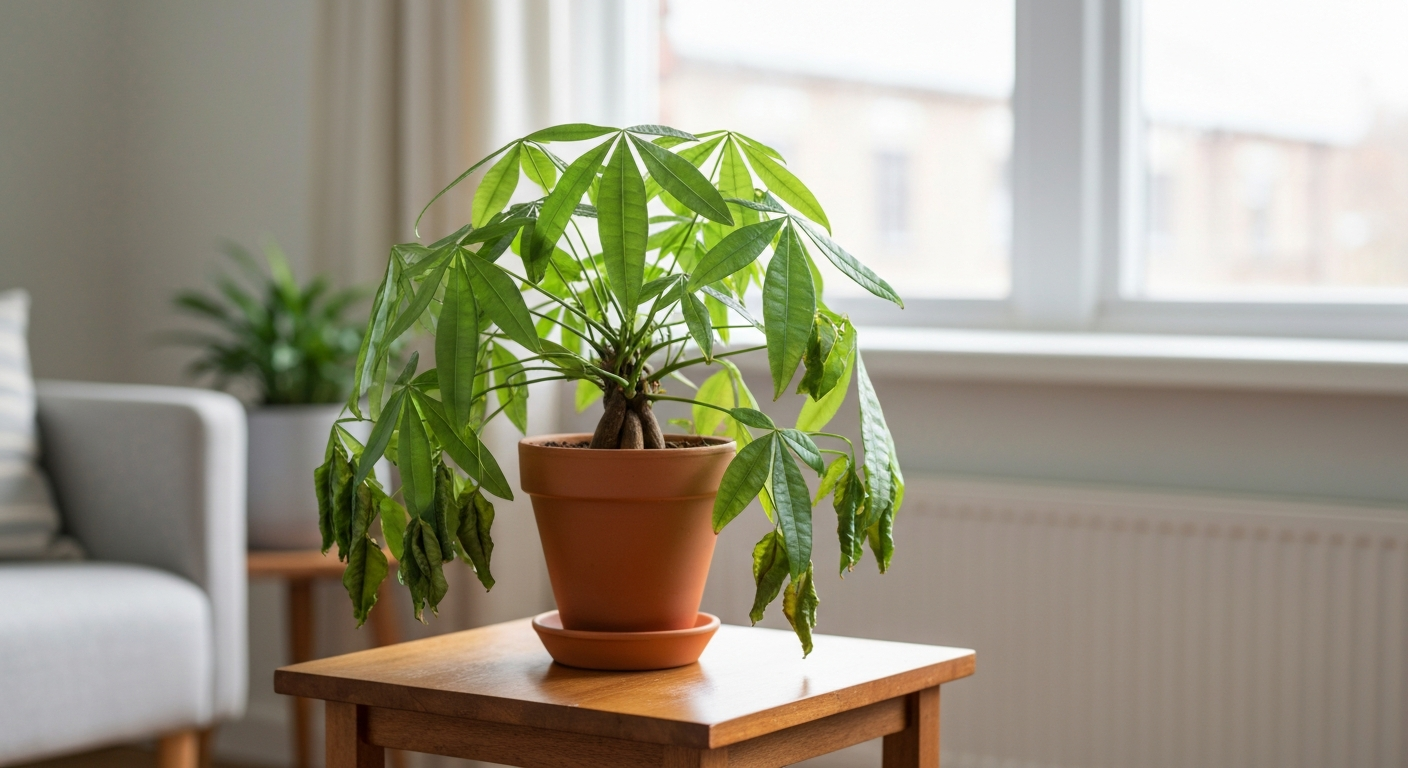

Money tree leaves droop primarily because of watering problems—either too much or too little water disrupts the root system's ability to deliver moisture and nutrients to the foliage, causing stems to lose turgor pressure and hang limply.
Overwatering is the most common culprit, followed by underwatering, low humidity, temperature stress, root rot, and inadequate light. The good news is that drooping is usually reversible once you identify and correct the underlying issue. This guide covers every cause of drooping money tree leaves in 2026, plus why your money tree or Chinese money plant might be turning yellow or brown, and exactly how to bring it back to health.
| ✓Our Pick |
Moisture meter for houseplants — diagnose watering problems instantly Used by over 10,000 satisfied customers — an easy, affordable option you can start using today. See on Amazon → |
Drooping happens when leaf cells lose water pressure (turgor), which can result from too much water, too little water, root damage, environmental stress, or a combination of factors.
The money tree (Pachira aquatica) stores water in its trunk, making it somewhat drought-tolerant but highly sensitive to soggy soil. When roots sit in waterlogged conditions, they suffocate and can't absorb water—ironically causing the same drooping you'd see from underwatering. Below are the seven primary causes ranked by how often they occur.
Overwatering is the number one reason money trees droop. When soil stays constantly wet, oxygen can't reach the roots. Roots begin to rot, and without functional roots, the plant can't move water up to the leaves. The result is limp, drooping foliage even though the soil is soaked.
Signs of overwatering include:
- Soil that feels wet several days after watering
- A musty or sour smell from the pot
- Yellowing lower leaves alongside drooping
- Soft, mushy trunk base
"Overwatering is the most common way to kill houseplants. When soil is waterlogged, roots cannot absorb oxygen, leading to root suffocation and decay." — Dr. Leonard Perry at University of Vermont Extension
Underwatering also causes drooping, but the signs differ from overwatering. When a money tree doesn't get enough water, cells throughout the plant lose turgor pressure. Leaves become limp, curl inward, and feel dry or papery rather than soft.
Signs of underwatering include:
- Bone-dry soil pulling away from pot edges
- Crispy brown leaf tips and edges
- Leaves that feel thin and brittle
- Trunk that looks slightly shriveled
Check the soil before watering by inserting your finger 2 inches deep. If it's completely dry at that depth, your money tree needs water.
Money trees are native to Central and South American swamps and wetlands, where humidity regularly exceeds 50%. Most homes—especially in winter with heating running—hover around 30–40% humidity. This gap causes leaves to lose moisture faster than roots can replace it.
Low humidity stress appears as:
- Drooping that worsens near heating vents
- Brown, crispy leaf edges (not tips)
- Leaves that improve overnight when humidity naturally rises
Money trees prefer temperatures between 65°F and 80°F. Exposure to temperatures below 50°F or sudden cold drafts triggers drooping as the plant's metabolic processes slow down. Similarly, placing your money tree near a heating vent, radiator, or sunny window can cause heat stress.
Common temperature stress sources:
- Drafty windows or exterior doors
- Air conditioning vents in summer
- Heating vents in winter
- Unheated rooms overnight
Root rot is the advanced stage of overwatering damage. Fungal pathogens like Pythium and Phytophthora attack weakened, oxygen-starved roots. Infected roots turn brown or black, become mushy, and can no longer function.
"Root rot pathogens thrive in saturated soil conditions. Once established, they can destroy the entire root system within weeks if drainage is not corrected." — University of Florida IFAS Extension
If you suspect root rot, carefully remove the plant from its pot and inspect the roots. Healthy roots are white or tan and firm. Rotted roots are dark, slimy, and smell unpleasant.
While money trees tolerate lower light than many tropical plants, they still need bright indirect light to thrive. In dim conditions, photosynthesis slows, the plant produces less energy, and foliage weakens and droops.
Signs of insufficient light:
- Leggy, stretched growth toward the nearest window
- Smaller new leaves than older ones
- Pale green or yellowing leaves
- Slow overall growth combined with drooping
If your money tree started drooping shortly after repotting, transplant shock is likely the cause. Disturbing the root system—even during a careful repot—temporarily reduces the plant's ability to absorb water. Drooping from transplant shock typically resolves within 1–2 weeks if you maintain consistent watering and avoid additional stress like moving the plant or changing its light exposure.
Yellow leaves on a money tree usually indicate overwatering, nutrient deficiency, or natural leaf aging—the location and pattern of yellowing helps identify which cause is at play.
| Yellowing Pattern | Most Likely Cause | What to Check |
|---|---|---|
| Lower leaves yellow first, upper leaves green | Overwatering or nitrogen deficiency | Soil moisture; last fertilization date |
| Yellow spots or patches | Pest infestation (spider mites, scale) | Undersides of leaves for insects |
| Uniform yellowing across plant | Light stress or root rot | Light levels; root condition |
| Yellow leaves with brown tips | Underwatering or low humidity | Soil dryness; humidity level |
| Single older leaf yellows and drops | Natural aging | Nothing—this is normal |
Money trees naturally shed their oldest leaves. If only one or two lower leaves turn yellow while the rest of the plant looks healthy, this is normal turnover and not cause for concern.
Also Read: Why Is My Hot Water Cold? 9 Causes & How to Fix Them
Chinese money plants (Pilea peperomioides) droop primarily from underwatering—their thin stems and round leaves lose turgor quickly when soil dries out.
Despite the similar common name, Chinese money plants are a completely different species from money trees. They're native to southern China and have different care requirements.
| Factor | Money Tree (Pachira aquatica) | Chinese Money Plant (Pilea peperomioides) |
|---|---|---|
| Water needs | Allow top 2 inches to dry between waterings | Water when top inch is dry |
| Humidity | Prefers 50%+ | Tolerates average household humidity |
| Light | Bright indirect | Bright indirect to medium |
| Drooping cause #1 | Overwatering | Underwatering |
| Recovery speed | Slow (days to weeks) | Fast (hours after watering) |
Chinese money plants recover remarkably fast—often perking up within hours of a thorough watering. If your Pilea droops after watering, suspect overwatering or root rot instead.
Brown leaves on a money tree result from underwatering, low humidity, fertilizer burn, or direct sun exposure—the browning pattern tells you which cause is responsible.
Brown tips alone usually indicate low humidity or inconsistent watering. Brown edges suggest underwatering or salt buildup from tap water. Brown patches in the middle of leaves often point to sunburn from direct light or fertilizer burn.
Steps to diagnose brown leaves:
| ✓Our Pick |
Humidifier for houseplants — raise humidity without mold Save yourself the frustration — a proven solution with consistently positive feedback from real buyers. See on Amazon → |
Fixing a drooping money tree requires identifying the specific cause first, then adjusting your care routine—recovery typically takes 1–4 weeks depending on severity.
Use this quick diagnostic checklist:
For overwatering:
- Stop watering immediately
- Move the plant to brighter light to speed soil drying
- If severely waterlogged, remove from pot and let root ball air dry for 24 hours
- Repot in fresh, well-draining soil if you see signs of rot
For underwatering:
- Water thoroughly until water drains from the bottom
- Don't let the plant sit in the drainage tray—empty it after 15 minutes
- Set a consistent watering schedule (typically every 1–2 weeks depending on conditions)
Temperature and humidity adjustments:
- Keep the plant away from heating and cooling vents
- Maintain temperatures between 65°F and 80°F
- Group houseplants together to raise local humidity
- Use a pebble tray or humidifier in dry winter months
Light adjustments:
- Place in bright indirect light (near an east or north-facing window works well)
- Avoid direct afternoon sun, which can scorch leaves
- Rotate the plant quarterly so all sides receive even light
If roots are mushy and dark:
Also Read: Why Is My House Not Heating Up? 11 Causes & Quick Fixes
Most drooping resolves within 2 weeks of correcting care issues, but certain signs indicate more serious damage that may be irreversible.
Seek advanced intervention if:
- The trunk is soft, wrinkled, or hollow when squeezed
- All leaves have dropped
- Roots are entirely black or nonexistent
- The plant doesn't respond to care changes after 4 weeks
- You see fuzzy mold growing on the trunk or soil surface
A money tree with a mushy trunk has likely sustained fatal damage to its vascular system. At this stage, the best option is to take any healthy stem cuttings and attempt to propagate a new plant.
Money tree leaves droop most often because of watering mistakes—overwatering is the top cause, followed by underwatering, low humidity, temperature stress, root rot, and insufficient light. Yellow leaves signal overwatering, nutrient issues, or pests, while brown leaves indicate underwatering, low humidity, or sunburn. To fix a drooping money tree, first diagnose the cause using the soil moisture test, then adjust watering, improve drainage, and optimize environmental conditions. Most plants recover within 1–4 weeks once the underlying issue is corrected.
Yellow leaves on a money tree typically result from overwatering, which suffocates roots and prevents nutrient uptake. Less commonly, yellowing indicates nitrogen deficiency from lack of fertilization or pest damage from spider mites or scale insects. Check soil moisture first—if it's soggy, let it dry out completely before watering again. If soil moisture is fine, inspect leaf undersides for tiny pests and consider fertilizing with a balanced houseplant fertilizer during the growing season.
Chinese money plants (Pilea peperomioides) droop primarily from underwatering—their thin stems lose water pressure quickly when soil dries out. Unlike money trees, Chinese money plants prefer more frequent watering and bounce back within hours of a good drink. If your Pilea droops immediately after watering, suspect overwatering or root rot instead. Check that your pot has drainage holes and that you're allowing the top inch of soil to dry between waterings, not the top two inches.
Yes, most drooping money trees can be saved if the trunk is still firm and at least some roots remain healthy. Remove the plant from its pot, inspect the roots, trim any rotted portions, and repot in fresh well-draining soil. Adjust your watering schedule and environmental conditions based on the cause of drooping. Recovery typically takes 1–4 weeks. If the trunk is mushy throughout, the plant likely cannot be saved, but you may be able to propagate stem cuttings.
Water your money tree when the top 2 inches of soil feel dry—typically every 1–2 weeks depending on season, pot size, and humidity levels. Money trees need less water in winter when growth slows. Always water thoroughly until water drains from the bottom, then empty the drainage tray. Using a moisture meter takes the guesswork out of watering schedules and helps prevent both overwatering and underwatering.
Brown leaf tips usually indicate low humidity or inconsistent watering. Brown edges suggest chronic underwatering or mineral buildup from hard tap water. Brown patches in the middle of leaves point to sunburn from direct light exposure or fertilizer burn from over-fertilizing. Address browning by increasing humidity, watering more consistently, flushing soil to remove mineral deposits, or moving the plant away from direct sunlight.
Reviewed and Updated on May 3, 2026 by Adelinda Manna