
Cars
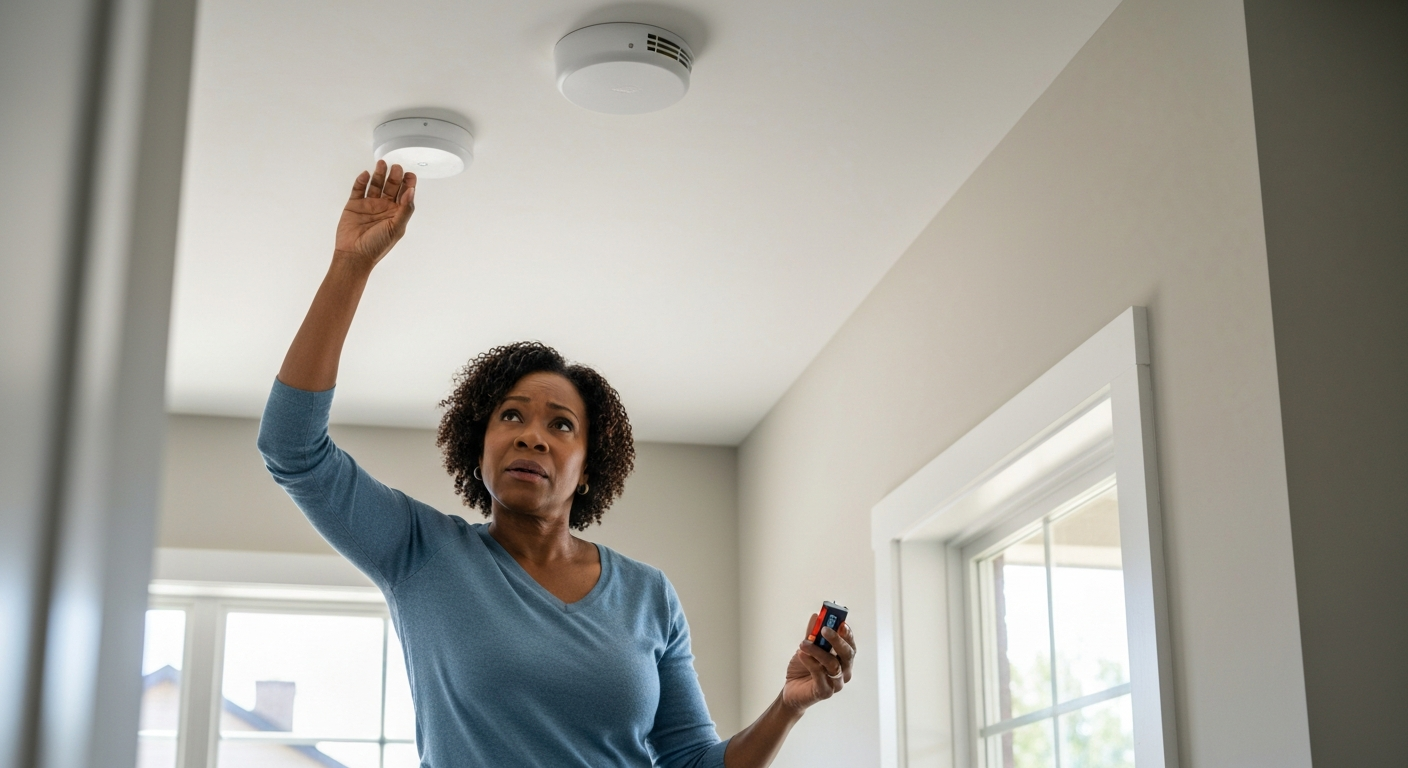

A hardwired smoke detector beeps because of a low backup battery, dust buildup in the sensing chamber, end-of-life expiration, interconnected alarms triggering elsewhere, power interruptions, humidity or temperature extremes, or a malfunction requiring replacement.
That maddening chirp at 3 a.m. isn't random — your wired smoke detector is trying to tell you something specific. Even though it's connected directly to your home's electrical system, hardwired detectors still rely on backup batteries and internal sensors that can fail or need attention. The good news: most causes are simple to diagnose and fix yourself in under ten minutes.
Also Read: Why Is My Smoke Detector Chirping? 6 Causes & Quick Fixes
Your wired smoke detector beeps for one of seven reasons, and identifying the beep pattern tells you exactly which one you're dealing with.
Understanding the difference between a single chirp every 30–60 seconds versus a continuous alarm versus a pattern of three beeps helps you troubleshoot faster. Here's what each cause looks like and how to confirm it.
Yes — and this is the most common reason your hardwired smoke detector won't stop chirping. Every hardwired detector contains a 9-volt or AA backup battery that kicks in during power outages. When this battery drops below a certain voltage threshold, the detector chirps to alert you, regardless of whether household power is working fine.
You'll notice a single chirp every 30 to 60 seconds. The detector's LED light may flash yellow or amber instead of the normal green. This happens because the unit constantly monitors backup battery voltage as a safety redundancy.
"When a smoke alarm chirps (a single high-pitched sound every 30 to 60 seconds), this typically indicates a low battery." — National Fire Protection Association
Replace the backup battery with a fresh name-brand alkaline or lithium 9-volt (check your model's manual — some First Alert and Kidde units use AA batteries instead). After inserting the new battery, press and hold the test button for 15–20 seconds to reset the unit.
A new battery doesn't guarantee silence — residual charge in the unit, incorrect battery installation, or a different underlying problem can keep the chirping going.
If you just replaced the battery and the beeping continues, check these possibilities:
Absolutely. Dust, cobwebs, and insect debris accumulate inside the sensing chamber over time, interfering with the photoelectric or ionization sensors. When particles partially block the sensor, the detector may interpret this as smoke — or simply malfunction and chirp erratically.
You might notice random chirps that don't follow the steady 30–60 second low-battery pattern, or brief alarm bursts that stop on their own.
To clean your detector:
- Remove it from the mounting bracket (twist counterclockwise on most models)
- Use compressed air to blow out the sensing chamber vents
- Gently vacuum the exterior with a brush attachment
- Wipe the cover with a dry microfiber cloth
- Reinstall and test
Smoke detectors expire after 8–10 years, and a chirping pattern or "end" indicator means the entire unit needs replacement — no amount of battery changes will fix it.
Every smoke detector has a manufacture date printed on the back or inside the battery compartment. If yours is more than 10 years old, the sensors have degraded beyond reliable function. Many modern hardwired detectors (including First Alert, Kidde, and Nest) emit a specific end-of-life chirp pattern — often five beeps every 30 seconds or a unique tone different from the low-battery chirp.
"Replace all smoke alarms when they are 10 years old or sooner if they don't respond properly when tested." — U.S. Fire Administration
When you replace an expired hardwired unit, choose a model compatible with your existing wiring harness. Most major brands use a universal connector, but verify before purchasing.
First Alert detectors have model-specific beep codes that tell you exactly what's wrong — decoding the pattern solves the mystery faster.
First Alert is one of the most common hardwired brands in American homes, and their units communicate through distinct chirp patterns:
| Beep Pattern | Meaning | Action |
|---|---|---|
| 1 chirp every 30–60 seconds | Low backup battery | Replace 9V or AA battery |
| 3 beeps, pause, 3 beeps (repeating) | Smoke detected | Check for fire, ventilate if false alarm |
| 4 beeps, pause, 4 beeps (repeating) | Carbon monoxide detected (combo units) | Evacuate, call 911 |
| 5 beeps every 30 seconds | End of life | Replace entire unit |
| 1 chirp every 30 seconds + green light off | Power failure to unit | Check circuit breaker, wiring |
| Random chirps, no pattern | Malfunction or dust | Clean unit, reset, or replace |
If you've tried a new battery and reset and the First Alert unit keeps chirping in a single-beep pattern, the internal sensor may have failed. First Alert recommends replacement rather than repair for hardwired units past their warranty period.
In homes with interconnected hardwired smoke detectors, one beeping unit can trigger chirps or signals throughout the system — the source may be in a different room entirely.
Hardwired smoke detectors are typically wired together so that when one senses smoke, all units alarm simultaneously. This same interconnection means a low-battery warning or malfunction in one unit can sometimes cause others to chirp or flash.
Walk through your home and check each detector individually. Press the test button on each unit to identify which one has the problem. The faulty unit will have a different LED behavior (flashing amber, no light, or continuous flash) compared to the others.
Power surges, outages, and wiring problems cause hardwired detectors to beep even when batteries are fine and the unit isn't expired.
Your detector monitors its AC power connection constantly. When power is interrupted — even briefly — the unit switches to backup battery and may chirp to indicate the transition. After power returns, some models chirp once to confirm reconnection.
Check your electrical panel for a tripped breaker on the smoke detector circuit (often labeled "smoke" or shared with hallway lighting). If breakers look fine but the detector's power LED is off or flickering, you may have a loose wire connection at the unit itself or at the junction box. This requires turning off the circuit and inspecting the wiring — or calling an electrician if you're not comfortable with electrical work.
Also Read: Why Is My Water Pressure Low? 7 Causes & How to Fix It
A hardwired smoke detector can beep with no battery because it runs on household AC power — the battery is only a backup, not the primary power source.
This confuses many homeowners who assume removing the battery will silence the unit. Your hardwired detector receives constant 120V AC power through the wiring in your ceiling or wall. The backup battery exists solely to keep the detector functional during power outages.
If your detector beeps with no battery:
- The unit is signaling that the backup battery is missing (a safety warning)
- The detector may have reached end of life
- There may be a wiring or sensor malfunction
Never leave a hardwired detector without its backup battery installed — you lose protection during power outages, which is exactly when a working smoke detector matters most.
A proper reset clears false alarms, resolves post-battery-change chirping, and restores normal function in under two minutes.
Follow these steps in order:
If the detector still chirps after this full reset, the unit is likely malfunctioning or expired and needs replacement.
Replace the entire unit if it's more than 10 years old, fails the reset procedure, shows physical damage, or continues chirping after battery replacement and cleaning.
| Symptom | Action |
|---|---|
| Chirping stops after new battery + reset | No replacement needed |
| Chirping continues after new battery + reset + cleaning | Replace unit |
| Unit is 8–10+ years old | Replace unit |
| Physical cracks, discoloration, or melted plastic | Replace unit immediately |
| End-of-life beep pattern (5 chirps) | Replace unit |
| Power LED never illuminates | Check wiring; replace if wiring is fine |
Replacement hardwired smoke detectors cost $20–$50 for standard models and $40–$100 for combination smoke/CO detectors with smart features. Installation takes 10–15 minutes if you're comfortable working with electrical connections.
| ✓Our Pick |
Hardwired smoke detector replacement options Consistently earns five-star reviews — reliable, well-supported, and genuinely effective. See on Amazon → |
Your hardwired smoke detector beeps most often because of a dying backup battery, dust contamination, or end-of-life expiration — all fixable within minutes. Start by replacing the backup battery and performing a full reset (power off, battery out, hold test button 20 seconds). If chirping persists, check the manufacture date — any unit over 10 years old must be replaced entirely. For interconnected systems, test each detector individually to find the actual source. When in doubt, a fresh detector costs less than $50 and takes 15 minutes to install.
Hardwired smoke detectors beep because they still rely on a backup battery for power-outage protection. When this battery runs low, the unit chirps to alert you — even though AC power is working perfectly. Other causes include dust in the sensing chamber, an expired unit past its 10-year lifespan, or a wiring problem at the junction box.
A new battery can still trigger beeping if the battery compartment isn't fully closed, the battery terminals are misaligned, or the detector's processor hasn't been reset. Press and hold the test button for 15–20 seconds after installing a new battery to clear the low-battery memory. If beeping continues, the detector itself may be expired or malfunctioning.
Hardwired detectors run on household electricity, not battery power — the battery is only a backup. With no battery installed, the detector beeps to warn you that backup protection is missing. Additionally, the unit may be at end of life or experiencing a sensor malfunction unrelated to battery status.
Five beeps every 30–60 seconds is First Alert's end-of-life signal, meaning the detector's sensors have degraded and the entire unit needs replacement. This happens after 7–10 years of service. No battery change or reset will stop this pattern — you must install a new detector.
Yes. Extreme humidity (above 85%) or rapid temperature changes can trigger false readings in the sensing chamber. Steam from showers, cooking vapors, and attic-mounted detectors in unconditioned spaces are common culprits. If this happens regularly, relocate the detector at least 10 feet from bathrooms and kitchens, or choose a model specifically designed for humid environments.
Reviewed and Updated on May 30, 2026 by George Wright