
Women's Health

Newborns grunt in their sleep because their digestive system is immature, their breathing muscles are still developing, and they cycle through active sleep phases more often than adults — all of which cause involuntary sounds that are almost always completely normal.
Hearing your baby grunt, squeak, and strain throughout the night can be alarming, especially when you're a sleep-deprived new parent trying to figure out if something is wrong. The good news is that most grunting is simply your newborn's way of processing the world outside the womb. Their tiny body is learning to digest milk, pass gas, and breathe independently — and all of that learning happens out loud.
Babies make more noise during sleep than adults because their nervous system, digestive tract, and respiratory muscles are still maturing — every bodily function they're learning to control produces audible effort.
Unlike adults who sleep mostly in quiet, deep stages, newborns spend roughly 50 percent of their sleep in REM (rapid eye movement) or "active sleep." During active sleep, babies twitch, move their eyes, breathe irregularly, and — yes — grunt. This is neurologically normal. Their brain is processing enormous amounts of new sensory information, and the body responds with movement and sound.
The other half of the equation is physical. A newborn's esophageal sphincter (the valve between the stomach and esophagus) is loose, their intestines are learning to move food through, and their diaphragm is strengthening. Every swallow, every gas bubble, and every breath requires more muscular effort than it will in a few months. That effort is audible.
"Grunting during sleep is very common in young infants and is usually related to digestion or the normal sleep cycle. It rarely indicates a serious problem." — American Academy of Pediatrics
Normal grunting happens intermittently, doesn't interfere with feeding or weight gain, and isn't accompanied by color changes, fever, or visible breathing distress.
The key distinction is context. A grunting baby who is feeding well, gaining weight, and has normal color between grunts is almost certainly fine. A baby who grunts with every single breath, turns pale or blue, flares their nostrils, or retracts their chest muscles with each inhale needs immediate medical evaluation.
Here's a quick reference to help you tell the difference:
| Normal Grunting | Concerning Grunting |
|---|---|
| Comes and goes during sleep | Continuous, with every breath |
| Baby's color stays pink | Skin turns pale, gray, or blue |
| No flared nostrils | Nostrils flare with each breath |
| Chest rises normally | Visible rib or chest retractions |
| Baby feeds and gains weight normally | Poor feeding, lethargy, weight loss |
| No fever | Fever above 100.4°F (38°C) |
If your baby shows any signs from the right column, call your pediatrician immediately or go to the emergency room.
| ✓Our Pick |
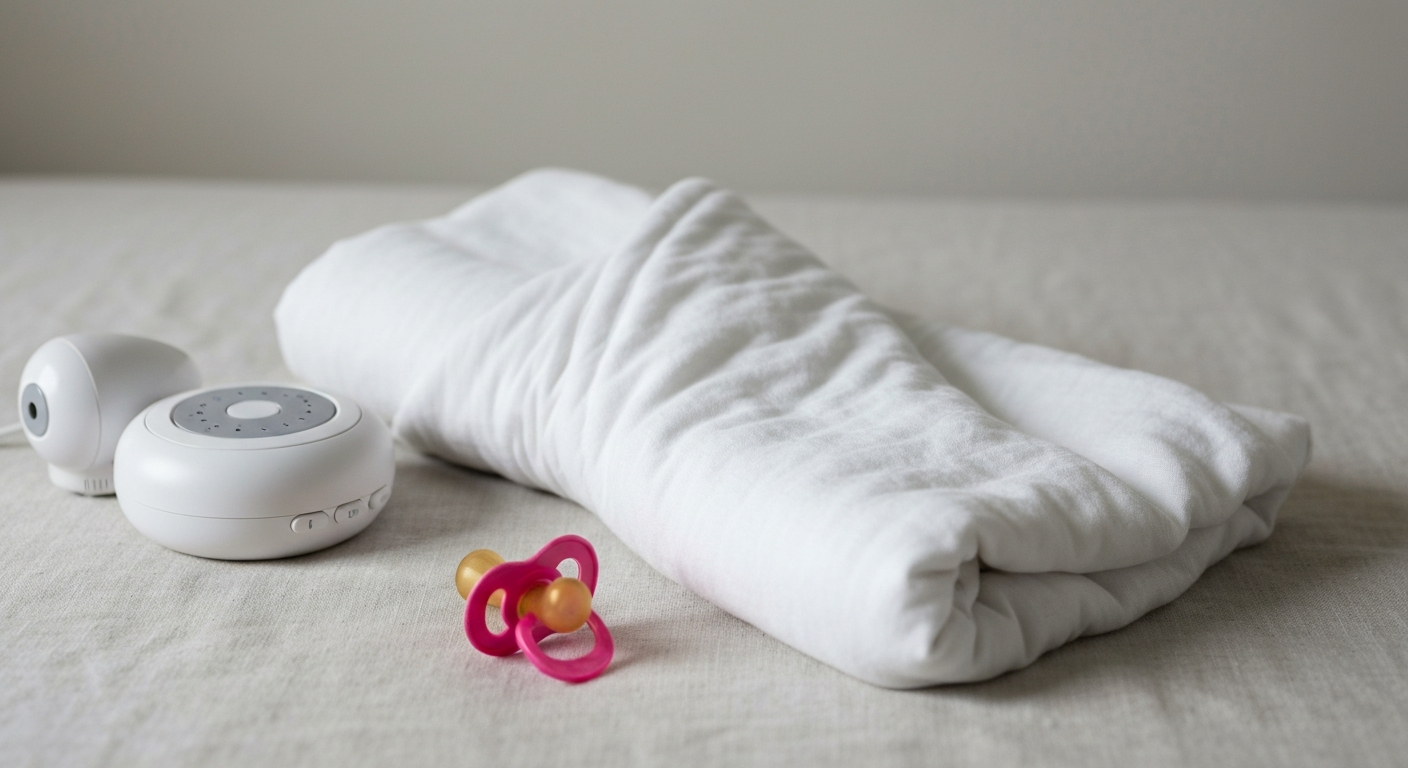
White noise machine, swaddle blanket, and baby monitor on a nursery shelf You'll wonder why you didn't try this sooner — practical, well-reviewed, and easy to get started. See on Amazon → |
Understanding the specific cause of your baby's grunting helps you decide whether to intervene or simply wait it out.
Grunting baby syndrome (GBS) sounds alarming, but it's actually a benign condition where babies grunt and strain while passing stool or gas — even soft stool. The issue isn't constipation. It's that newborns haven't yet learned to coordinate relaxing their pelvic floor muscles while bearing down with their abdomen. They'll grunt, turn red, and push for several minutes before finally passing gas or stool, then immediately relax. This typically resolves by 3 to 4 months of age as muscle coordination improves.
Gastroesophageal reflux (GER) is extremely common in infants because their lower esophageal sphincter is weak. Stomach contents wash back up into the esophagus, causing discomfort that leads to grunting, arching, and restlessness during sleep. Most babies outgrow reflux by 12 months. If your baby seems uncomfortable after feeds, spits up frequently, or refuses to eat, talk to your pediatrician about positioning techniques or, in some cases, medication.
Stretching paired with grunting is almost always digestive. Your baby is physically working gas through their intestines. The stretching motion helps move bubbles along the digestive tract, and the grunting is the sound of abdominal effort. You might notice this more after feedings or in the early morning hours when overnight digestion is finishing up.
By 4 months, some babies begin early teething symptoms even before teeth are visible. The discomfort can cause restless sleep, extra drooling, and grunting or fussing. If your 4-month-old is also chewing on everything and drooling more than usual, teething could be contributing to the nighttime noise.
Newborns are obligate nose breathers — they haven't learned to breathe through their mouths yet. Even minor nasal congestion from dry air, dust, or a mild cold forces them to work harder to breathe, producing grunting and snorting sounds. A cool-mist humidifier in the nursery and saline drops before feeds can help clear the passages.
Yes. During REM sleep, babies make all sorts of sounds — grunts, whimpers, squeaks, and sighs. Their breathing becomes irregular, and they may twitch or move their limbs. This is completely normal brain activity. Many parents mistake active sleep for waking and accidentally interrupt their baby's rest by picking them up too quickly. If your baby's eyes are closed and they're not truly distressed, give them a moment to settle back into deeper sleep.
The diaphragm is the muscle that controls breathing. In newborns, it's still strengthening and coordinating with the rest of the respiratory system. This can cause irregular breathing patterns and occasional grunting sounds, especially during sleep when conscious control is absent. As long as your baby isn't showing signs of respiratory distress (flaring nostrils, retractions, color changes), this resolves on its own.
"Periodic breathing and irregular respiratory patterns are normal in newborns and usually resolve by 6 months of age as the respiratory system matures." — National Institutes of Health
Also Read: Why Is My Cough Worse at Night? 7 Causes & Quick Relief
Simple adjustments to feeding, positioning, and environment can reduce grunting and help both you and your baby get better rest.
Burp thoroughly after feeds. Trapped air is one of the top causes of nighttime grunting. Spend extra time burping your baby, trying different positions if one isn't working.
Keep baby upright for 20–30 minutes after feeding. This helps gravity keep milk down and reduces reflux-related grunting.
Use a cool-mist humidifier. Dry air thickens nasal mucus and makes breathing noisier. Keeping humidity around 50 percent helps keep airways clear.
Try bicycle legs for gas relief. Gently cycling your baby's legs while they lie on their back can help move gas through the intestines and reduce the straining that causes grunting.
Wait before responding. If your baby grunts but doesn't fully wake, pause for a minute before picking them up. You might be interrupting active sleep, which actually makes their sleep worse overall.
Check the room temperature. Overheating can make babies restless and noisy. The ideal nursery temperature is 68–72°F (20–22°C).
Grunting paired with respiratory distress, fever, poor feeding, or changes in skin color requires immediate medical attention.
Most grunting is harmless, but there are situations where it signals something more serious:
Trust your instincts. If something feels wrong, call your pediatrician. They'd rather reassure you over a normal grunt than miss something serious.
Also Read: Why Is My Body Shaking for No Reason at Night? 8 Causes
Newborn grunting during sleep is almost always normal and caused by immature digestion, active sleep cycles, and developing respiratory muscles. Most babies grunt less by 3 to 4 months as their systems mature. Simple fixes like thorough burping, upright positioning after feeds, and humidity control can reduce the noise. However, if grunting is continuous, paired with breathing difficulty, skin color changes, fever, or poor feeding, contact your pediatrician immediately — these are signs of respiratory distress or infection that need prompt attention.
Daytime grunting usually has the same causes as nighttime grunting — digestion, gas, and immature muscle coordination. Babies also grunt when they're working to pass stool or push out gas. If your baby seems content between grunting episodes, feeds well, and gains weight normally, there's no cause for concern.
Around 4 months, babies become more aware of their bodies and may vocalize more during sleep as they process new sensory information. Teething discomfort, growth spurts, and developmental leaps can also increase restless sleep and associated sounds. If there are no signs of illness, this is typically a phase that passes.
No — unless they show signs of distress like color changes, labored breathing, or fever. Grunting during active sleep is normal, and picking up your baby can actually fragment their sleep and make them more overtired. Give them a moment to see if they settle on their own.
Grunting baby syndrome typically resolves between 3 and 4 months of age as your baby learns to coordinate their abdominal muscles with pelvic floor relaxation. Until then, the straining and grunting during bowel movements is uncomfortable to watch but not harmful.
Some babies do experience more gas and digestive discomfort with certain formulas, which can increase grunting. If your formula-fed baby seems unusually gassy or uncomfortable, talk to your pediatrician about trying a different formula — sometimes a switch to a gentle or partially hydrolyzed formula helps reduce symptoms.
Reviewed and Updated on May 30, 2026 by George Wright