Health
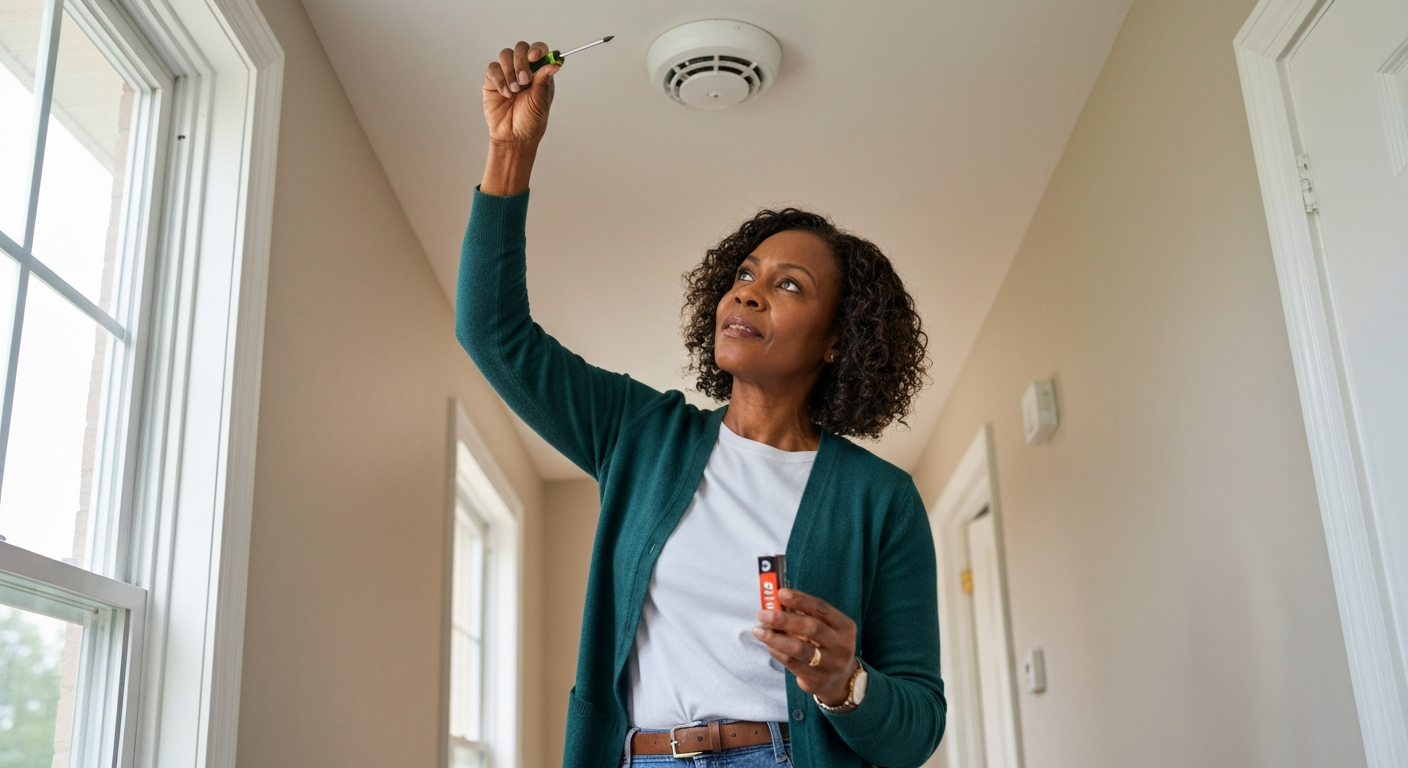

A chirping smoke detector is almost always signaling a low backup battery, but it can also mean the unit has reached its end of life, dust is blocking the sensor, or environmental conditions like humidity or temperature swings are triggering false alerts.
That persistent chirp every 30 to 60 seconds is your detector's way of telling you something needs attention — and it won't stop until you fix it. The good news: most causes take under five minutes to resolve once you know what's behind the noise.
Whether your fire alarm is hardwired into your home's electrical system or runs entirely on batteries, the troubleshooting process follows the same logic. Below, you'll find every reason your smoke detector keeps beeping, how to identify which one applies to your situation, and exactly how to silence it for good.
The timing and number of chirps tell you whether you're dealing with a low battery, a malfunction, or an actual emergency — decoding the pattern is the fastest way to find the fix.
Smoke detectors are designed to communicate through distinct beep patterns. That random beeping you're hearing isn't random at all. Manufacturers follow standardized alert codes so you can quickly determine what's wrong without pulling out the manual.
A single chirp every 30 to 60 seconds is the universal signal for a low battery. This is by far the most common reason your smoke detector is beeping, and it applies to both battery-only units and hardwired systems with battery backup. The detector keeps chirping until you replace the battery — yes, even at 3 AM.
Three chirps in a row, followed by a pause, then three more chirps, typically indicate a malfunction. Your detector has run its internal diagnostic and found a problem with the sensor or circuitry. Four continuous beeps mean the unit is detecting actual smoke or fire — that's not a chirp, that's a full alarm telling you to evacuate and call 911.
Five beeps usually signal end-of-life for the unit itself. Smoke detectors have a lifespan of 8 to 10 years, and once they expire, no amount of battery changing will stop the chirping. The only fix is a full replacement.
| Chirp Pattern | What It Means | Action Required |
|---|---|---|
| 1 chirp every 30–60 seconds | Low battery | Replace the backup battery |
| 3 chirps, pause, repeat | Malfunction or sensor error | Clean the unit or replace it |
| 4 continuous beeps | Smoke or fire detected | Evacuate and call 911 |
| 5 beeps every 30–45 seconds | End of life | Replace the entire unit |
| Continuous chirping after battery change | Residual charge or incorrect install | Hold reset button for 15–20 seconds |
Yes — hardwired smoke detectors contain a backup battery that will chirp when it runs low, even though the unit receives constant power from your home's electrical system.
This confuses a lot of homeowners. You have an electric smoke detector wired directly into your house, so why is it chirping about a battery? The answer is safety redundancy.
Hardwired detectors include a 9-volt or sealed lithium backup battery so the alarm still functions during a power outage. When that backup battery dies, the unit chirps to alert you — the same single chirp every 30 to 60 seconds you'd hear from a battery-only detector.
"All smoke alarms, including those that operate on household current, should have a backup battery to protect you during a power outage." — U.S. Fire Administration
Replacing the backup battery in a hardwired unit is straightforward:
If your hardwired smoke detector keeps chirping after a battery change, there's likely residual charge stored in the unit. Disconnecting the power, removing the battery, and holding the test button for 20 seconds drains this charge and usually stops the beeping.
Smoke detectors have a hard expiration date of 8 to 10 years — after that, the sensor degrades and the unit will chirp continuously until you replace it entirely.
Every smoke detector manufactured in the US is required to have its manufacturing date printed somewhere on the unit, usually on a label on the back or inside the battery compartment. If your detector is more than 10 years old, that's almost certainly why it's chirping.
The sensing element in smoke detectors (whether ionization or photoelectric) breaks down over time. Ionization detectors contain a small amount of radioactive material that naturally decays, reducing sensitivity. Photoelectric detectors accumulate dust and film on the optical chamber that eventually interferes with accurate detection.
Modern detectors are programmed to recognize when their sensor can no longer reliably detect smoke and will chirp five times every 30 to 45 seconds to tell you it's time for a replacement. No amount of cleaning or battery swapping will stop this — the unit has reached its end of life and needs to be retired.
The National Fire Protection Association recommends replacing all smoke alarms every 10 years regardless of apparent function. If you don't know when your detector was installed, check for the date stamp. No date? Replace it.
Dust, cobwebs, and insect debris inside the sensing chamber can trigger false alarms and erratic chirping — a quick cleaning often solves the problem immediately.
Smoke detectors work by monitoring air for particles. When dust or debris accumulates inside the sensing chamber, the detector can misread it as smoke, causing random beeping that doesn't follow the standard chirp patterns.
This is especially common in:
To clean your smoke detector:
According to the Consumer Product Safety Commission, you should vacuum smoke detectors at least once a year to prevent dust-related malfunctions.
Extreme temperature swings and high humidity can cause smoke detectors to chirp intermittently, especially if the unit is installed in a poorly ventilated location.
Smoke detectors have an operating temperature range, typically between 40°F and 100°F. Units installed in unheated garages, attics, or near exterior doors may experience temperature fluctuations that push them outside this range, triggering error chirps.
Humidity is an even more common culprit. Detectors near bathrooms, kitchens, or laundry rooms can pick up steam and moisture that fogs the optical sensor in photoelectric units. This often causes the "random beeping" that seems to happen for no reason — it's not random, it's reacting to environmental changes you might not notice.
If your smoke detector chirps primarily:
The fix is often relocating the detector. Building codes require smoke detectors outside each bedroom and on every floor, but within those requirements, you have flexibility. Moving a detector 6 to 10 feet away from a bathroom door or kitchen can eliminate humidity-triggered chirps.
Also Read: Why Is My Bedroom So Hot? 8 Causes & How to Fix It
Most chirping smoke detectors can be silenced permanently with a fresh battery and a proper reset — here's the exact sequence that works for both battery-only and hardwired units.
Before you start, grab a fresh 9-volt battery or the specific battery type listed on your detector (some newer units use AA or sealed lithium cells). Using an old battery from the junk drawer often leads to the chirping restarting within days.
For battery-only smoke detectors:
For hardwired electric smoke detectors:
If your fire alarm continues chirping after this full reset, the unit itself has likely failed. Smoke detectors cost between $15 and $40, and given their critical safety function, replacement is the right call when troubleshooting fails.
| ✓Our Pick |
Top-rated smoke detectors with sealed 10-year batteries You'll wonder why you didn't try this sooner — practical, well-reviewed, and easy to get started. See on Amazon → |
A chirping smoke detector is usually asking for a fresh backup battery — even hardwired units have batteries that need replacing. If new batteries don't stop the beeping, check the manufacture date: detectors older than 10 years chirp continuously when they've reached end of life and must be replaced entirely. Dust, humidity, and temperature swings can also trigger erratic beeping, so clean your detectors annually and keep them away from bathrooms and kitchens. When in doubt, a $20 replacement gives you peace of mind and a guaranteed quiet night's sleep.
A single chirp every 30 seconds is the universal low-battery signal. This pattern means the backup battery (in hardwired units) or the main battery (in battery-only units) needs replacement. Swap in a fresh battery, hold the reset button for 15 seconds, and the chirping should stop immediately.
Residual electrical charge stored in the detector's circuitry can keep it chirping after a battery change. To clear it: disconnect power at the breaker, remove the new battery, and hold the test button for 20 full seconds. This drains the capacitor. Reinstall the battery, restore power, and test again.
Three beeps followed by a pause indicates a malfunction, not a low battery. The sensor has detected an internal error. Try cleaning the unit with compressed air first — dust in the sensing chamber is a common cause. If three-chirp patterns continue after cleaning, the detector needs to be replaced.
You can, but you shouldn't. Removing the battery disables your smoke detector entirely, leaving you unprotected. If a fire starts while the battery is out, the detector won't alert you. Replace the battery rather than removing it, or replace the whole unit if it's malfunctioning.
Check the back of the unit or inside the battery compartment for a date stamp showing month and year of manufacture. If the detector is more than 10 years old, it has reached its end of life and should be replaced regardless of whether it appears to work. An expired detector may not reliably detect smoke.
Reviewed and Updated on May 28, 2026 by George Wright