DIY

Low water pressure usually comes from one of seven common problems: a partially closed main shutoff valve, a failing pressure regulator, clogged pipes or fixtures, a leaking supply line, municipal supply issues, or—if you're on a well—a struggling pressure tank or pump. The fix can be as simple as turning a valve a quarter-turn or as involved as replacing corroded galvanized pipes. This guide walks you through every cause, how to diagnose it yourself, and when to call a plumber.
Normal residential water pressure falls between 40 and 60 psi (pounds per square inch), with 50 psi considered ideal for most homes.
Anything below 40 psi qualifies as low pressure and will make showers feel weak, dishwashers run longer cycles, and irrigation systems underperform. Above 80 psi puts stress on pipes and appliances.
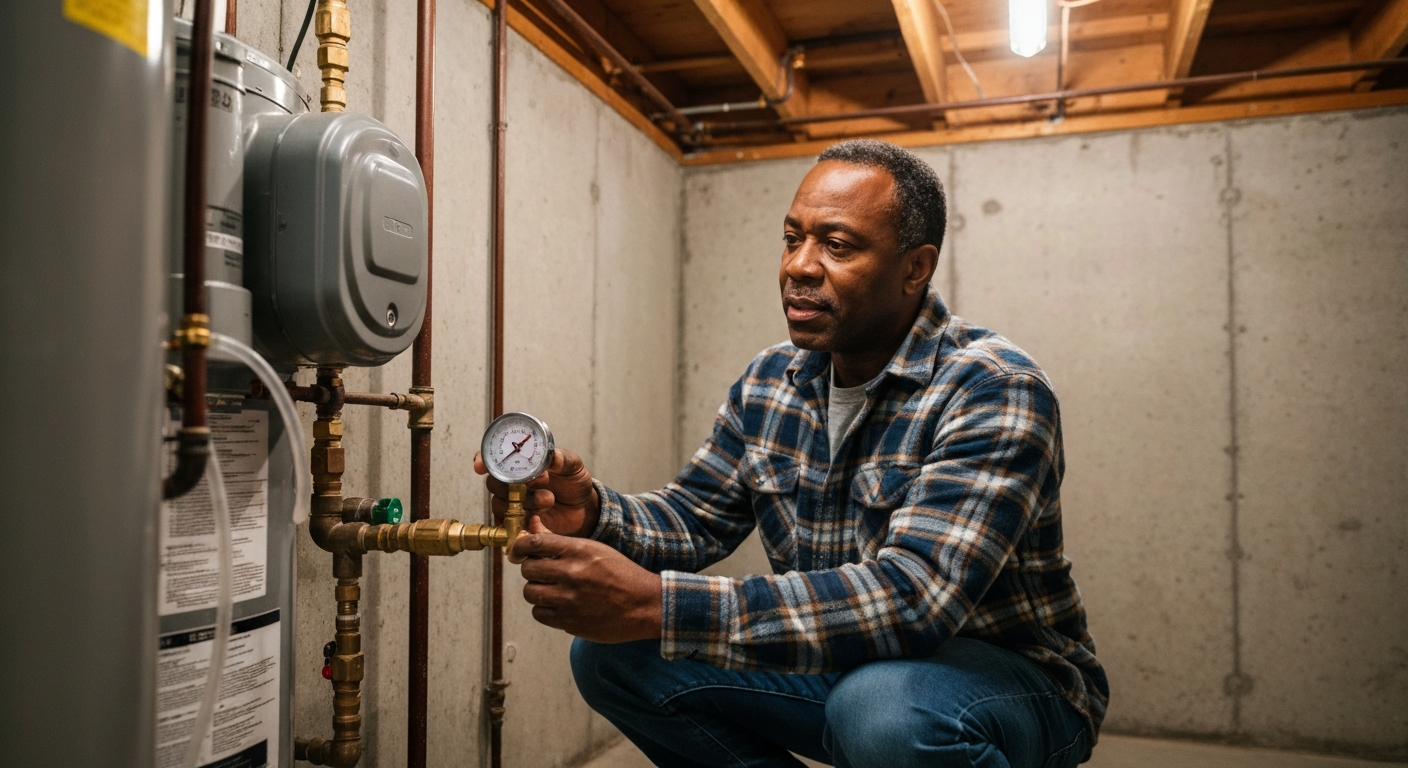
You can measure your home's pressure with a simple gauge that threads onto any hose bib. Test in the morning before anyone uses water for the most accurate baseline reading.
| Pressure Range | What You'll Experience |
|---|---|
| Below 30 psi | Barely functional trickle from faucets |
| 30–40 psi | Noticeably weak flow, slow-filling toilets |
| 40–60 psi | Normal, comfortable pressure |
| 60–80 psi | Strong flow, acceptable but on the high side |
| Above 80 psi | Risk of pipe damage, appliance wear |
Pinpointing whether the problem is isolated or system-wide is the fastest way to narrow down the cause.
Turn on multiple faucets and showers throughout your home. If only one fixture suffers, the clog or restriction is local to that fixture. If every tap runs weak, the problem lies in your main supply, pressure regulator, or well system.
This single test saves hours of troubleshooting. A clogged aerator takes two minutes to clean. A failed pressure regulator requires professional replacement.
A partially closed shutoff valve is the most overlooked cause of low water pressure—and the easiest to fix.
Your home has at least one main shutoff valve, typically located where the water line enters the house (often in the basement, crawl space, or near the water heater). Gate valves require multiple full turns to open completely. Ball valves should have the handle parallel to the pipe.
If you've had recent plumbing work, someone may have left the valve partially closed. Turn it fully counterclockwise for gate valves or align the ball valve handle with the pipe. Check pressure again immediately.
Pressure regulators (also called pressure-reducing valves) wear out after 10–15 years, causing sudden drops in water pressure throughout the house.
These bell-shaped devices are usually located near your main shutoff valve. They reduce high incoming municipal pressure to a safe level for your plumbing. When they fail, pressure either drops significantly or becomes inconsistent.
"A faulty pressure regulator can cause pressure to fluctuate wildly or drop below usable levels. Homeowners often mistake this for a municipal supply problem." — International Association of Certified Home Inspectors
Replacement costs $250–$400 including labor in most markets. If your regulator is over a decade old and you're experiencing whole-house pressure loss, this is a prime suspect.
Hard water deposits and corrosion build up inside pipes over time, gradually restricting flow like cholesterol in arteries.
Galvanized steel pipes—common in homes built before 1970—are especially prone to internal corrosion. The zinc coating breaks down, and rust accumulates inside the pipe walls. You might see reddish-brown water when you first turn on a tap after a long absence.
Copper pipes handle hard water better but still accumulate mineral scale in areas with very hard water. The fix depends on severity: spot repairs for isolated sections, or whole-house repiping for extensively corroded systems. Repiping a typical home runs $4,000–$15,000 depending on size and accessibility.
Also Read: Why Is My Bedroom So Hot? 8 Causes & How to Fix It
Hidden leaks divert water before it reaches your fixtures, reducing pressure throughout the affected section of your home.
Check your water meter while all fixtures are off. If the dial continues moving, water is escaping somewhere. Other signs include unexplained wet spots in the yard, mold growth on walls, or a spike in your water bill.
Common leak locations:
Small visible leaks you can repair yourself. Underground or in-wall leaks typically require professional diagnosis and repair.
Sometimes low pressure isn't your problem at all—it's the municipal water supply experiencing high demand or maintenance issues.
Call your water utility's customer service line to ask about known pressure issues in your area. Many utilities have online outage maps that show active maintenance or main breaks. Summer months often bring lower pressure as irrigation demand peaks across neighborhoods.
If neighbors are experiencing the same problem, the issue is almost certainly municipal. In this case, you wait it out—or install a booster pump if low municipal pressure is chronic in your area.
A single weak faucet or showerhead usually means a clogged aerator, cartridge, or showerhead—not a whole-house problem.
Aerators (the mesh screens at faucet tips) catch debris and mineral deposits. Unscrew the aerator, soak it in white vinegar for an hour, scrub with an old toothbrush, and reinstall. Showerheads respond to the same treatment—remove the head and soak overnight in a plastic bag of vinegar.
For faucets with cartridge valves, sediment can clog the cartridge itself. Turn off the water supply, remove the cartridge, inspect for debris, clean or replace as needed. Most cartridges cost $15–$40 and take 20 minutes to swap.
If your home relies on a private well, low pressure typically traces back to the pressure tank, pressure switch, or the well pump itself.
Well systems maintain pressure through a bladder tank that stores pressurized water. When you open a tap, the tank delivers water until pressure drops to a set point (usually 30–40 psi), triggering the pump to refill the tank.
Common well pressure problems include:
"Most well pressure problems start at the pressure tank. Check the tank's air pressure first—it should be 2 psi below your pressure switch's cut-in setting." — Penn State Extension Water Resources
If you've ruled out the pressure tank and switch, have a well contractor test your pump's output. A pump producing significantly less than its rated gallons per minute is nearing end of life.
Use this step-by-step process to find your pressure problem fast:
Certain pressure problems require professional tools, expertise, or licensing to fix safely.
Call a licensed plumber when you encounter:
For well-specific issues, a well drilling contractor or pump specialist often provides better expertise than a general plumber.
Expect to pay $75–$150 per hour for plumber labor in most US markets, with diagnostic visits running $100–$200 before any repairs begin.
| ✓Our Pick |
Whole-house water pressure booster pump for low-flow homes Consistently earns five-star reviews — reliable, well-supported, and genuinely effective. See on Amazon → |
Low water pressure stems from one of seven common causes: a partially closed valve, failing pressure regulator, clogged pipes, leaks, municipal supply issues, fixture-level clogs, or well system problems. Start by testing your actual pressure with a gauge, then work through the diagnostic checklist from simplest fixes (opening valves, cleaning aerators) to more complex repairs. Well owners should check pressure tanks and switches before assuming the pump has failed. Most homeowners can diagnose the cause themselves, but repairs involving main lines, regulators, or well pumps typically require professional help.
Your pressure tank may be undersized for your household's morning demand, or the pump isn't keeping up with simultaneous showers, toilets, and coffee makers. Check your tank's gallon capacity against your peak usage. Upgrading to a larger pressure tank often solves morning-only pressure drops without replacing the pump.
Yes, but only on the hot water side. Sediment buildup in the tank or a partially closed inlet valve restricts hot water flow while cold water remains normal. Flush your water heater annually to prevent sediment accumulation. If the shutoff valve at the heater inlet is a gate valve, verify it's fully open.
Start with free fixes: fully open all shutoff valves, clean aerators and showerheads, and check for visible leaks. If your pressure regulator has an adjustment screw, you can increase the setting yourself—turn clockwise in small increments, testing after each adjustment. Never exceed 80 psi.
Dishwashers and washing machines require minimum pressure (usually 20 psi) to fill properly. Below that threshold, cycles run longer, cleaning suffers, and some appliances display error codes. Tankless water heaters are especially sensitive—most won't ignite below 30 psi.
Most pressure regulators last 10–15 years under normal conditions. Hard water, debris, and high incoming pressure accelerate wear. If your regulator is within this age range and you're experiencing unexplained pressure drops, replacement should be high on your list of suspects.
Reviewed and Updated on May 28, 2026 by George Wright