
Technology
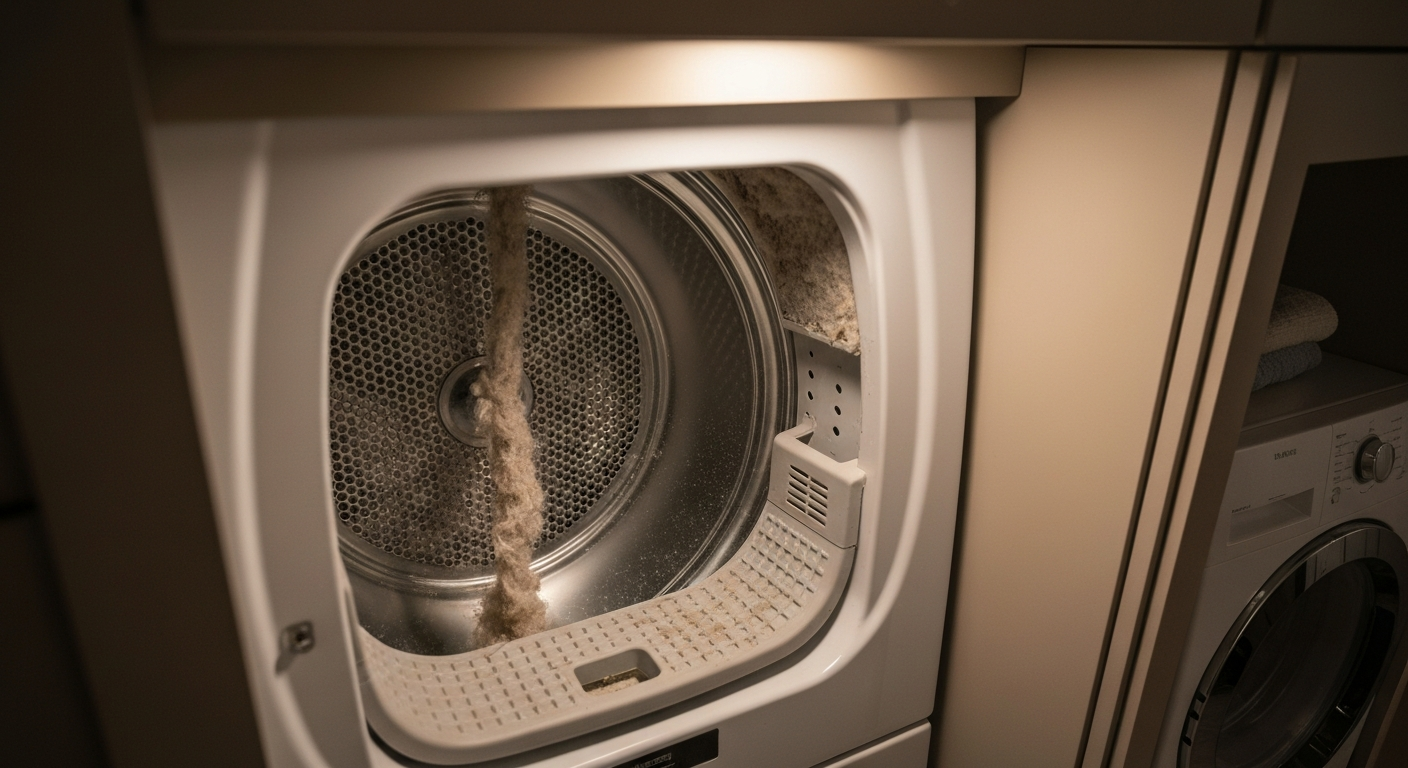

Your dryer is taking so long to dry because airflow is restricted — most commonly by a clogged lint trap, blocked vent hose, or crushed exhaust duct — or because the heating element, gas igniter, or thermal fuse has failed, leaving the drum spinning without producing heat.
A dryer that once finished a load in 45 minutes but now needs two or three cycles isn't just frustrating — it's costing you money and wearing out your clothes. The good news: most causes are straightforward to diagnose and many are DIY-fixable in under an hour. This guide walks you through every reason your dryer isn't drying efficiently, from simple lint buildup to failed heating components, with specific troubleshooting steps for electric, gas, Samsung, and LG models.
| ✓Our Pick |
Dryer vent cleaning kit with 30-foot flexible brush Trusted by professionals and everyday users alike — a smart investment that pays for itself. See on Amazon → |
Roughly 80% of dryer performance issues trace back to restricted airflow — lint, debris, or a kinked vent hose preventing hot, moist air from escaping the drum.
Your dryer works by heating air, tumbling clothes through it, and exhausting the moisture-laden air outside. When that exhaust path is blocked, humid air stays trapped in the drum. Clothes stay damp no matter how long the cycle runs.
"Reduced exhaust airflow is the most common cause of long drying times and accounts for the majority of dryer service calls." — Whirlpool Corporation
Here's where airflow typically breaks down:
The lint screen catches fibers every cycle, but it also traps residue from dryer sheets and fabric softener. Hold your lint screen under running water — if water pools on the surface instead of flowing through, the mesh is coated with invisible buildup. Scrub it monthly with dish soap and a soft brush.
Even when you clean the screen, lint falls into the housing below it. Use a long, narrow brush or vacuum attachment to reach into the slot where the screen sits. You'll often pull out a surprising amount of packed lint.
Pull your dryer away from the wall and inspect the flexible duct connecting the back of the dryer to the wall vent. Foil ducts crush easily when the dryer is pushed back. A kinked hose can cut airflow by 50% or more. Replace foil ducts with semi-rigid aluminum for better durability.
Go outside and locate where your dryer vents. The flap should open freely when the dryer runs. Birds sometimes nest in vent openings, and lint accumulates at the exit point. If the flap doesn't move, airflow is blocked.
| Airflow Problem | Symptoms | Fix Time |
|---|---|---|
| Lint screen clogged | Clothes damp, dryer hot to touch | 2 minutes |
| Lint trap housing full | Slight burning smell, long cycles | 10 minutes |
| Vent hose kinked | Drum spins but clothes stay wet | 15 minutes |
| Exterior vent blocked | Flap doesn't open, humidity in laundry room | 20–30 minutes |
| Full duct blockage | Dryer shuts off mid-cycle (thermal cutoff) | 30–60 minutes |
Also Read: Why Is My Breaker Keep Tripping? 7 Causes & Fixes
| ✓Quick Fix |
The First Thing Most People Try Most people dealing with this exact problem start here — quick, affordable, and easy to try today. See on Amazon → |
An electric dryer that spins but produces no heat usually has a failed heating element, tripped thermal fuse, or faulty cycling thermostat — all testable with a basic multimeter.
Electric dryers use a coiled heating element (similar to an oven element) to warm the air. Several components work together to regulate temperature and prevent overheating.
The thermal fuse is a one-time safety device that cuts power to the heating element if the dryer overheats — usually because of a vent blockage. Once blown, it won't reset. Locate it on the exhaust duct inside the dryer cabinet (check your model's diagram) and test for continuity with a multimeter. No continuity means it's blown and needs replacing. Thermal fuses cost $5–15 and take about 20 minutes to swap.
Over time, the coiled wire inside the heating element can break. Visually inspect it for gaps or damage. Test with a multimeter — you should see 10–50 ohms of resistance on a working element. Zero or infinite resistance means it's failed.
This safety thermostat cuts power if the dryer gets too hot. Unlike the thermal fuse, it's usually resettable, but repeated tripping damages it. Test continuity at room temperature — it should read closed (continuous). If open, replace it.
"If your dryer drum turns but there's no heat, the most likely causes are a tripped thermal fuse or a burned-out heating element." — Family Handyman
Gas dryers that fail to heat typically have a faulty igniter, defective gas valve solenoids, or a failed flame sensor — the igniter is the most common failure point.
Gas dryers work differently from electric models. A glow-bar igniter heats up until it reaches the right temperature, then opens the gas valve. If any part of this sequence fails, you get no heat.
Open the dryer door, remove the lower front panel (on most models), and watch the igniter when you start a cycle. If it glows orange then shuts off without igniting, the gas valve solenoids have likely failed. These coils open the valve when the igniter reaches temperature. Replacing them is a moderate DIY job.
If the igniter doesn't glow, it's either burned out or not receiving power. Test continuity — a working igniter shows 50–400 ohms. Igniters are fragile and fail regularly; they're inexpensive to replace.
The flame sensor detects whether the burner has ignited. If it's faulty, it may shut off gas flow even when ignition is successful. Test continuity and replace if open.
| Gas Dryer Component | What It Does | Signs of Failure |
|---|---|---|
| Igniter | Heats to ignite gas | Glows then shuts off (or doesn't glow at all) |
| Gas valve solenoids | Open valve when igniter is hot | Igniter glows repeatedly but no flame |
| Flame sensor | Confirms ignition | Flame lights then immediately goes out |
| Thermal fuse | Safety cutoff | No heat at all, dryer runs cold |
Also Read: Why Is My GFCI Tripping? 7 Causes & How to Fix It
Samsung dryers commonly fail to heat due to a tripped thermal fuse, burned-out heating element, or clogged vent — but check for error codes first, as Samsung models display diagnostic messages.
Samsung dryers show error codes on the display panel. If you see "hE" or "hE2," the dryer detected a heating problem. "dC" with "0" means airflow is restricted.
Samsung-specific issues to check:
For Samsung models showing no heat with no error code, test the thermal fuse and heating element following the steps in the electric dryer section above.
LG dryers that fail to heat most often have a defective thermal fuse, failed heating element, or — on gas models — worn igniter coils, but LG's Flow Sense indicator can help you diagnose airflow issues before they escalate.
LG dryers include a "Flow Sense" indicator that monitors exhaust blockages. If you see d80, d90, or d95 codes, your vent is significantly blocked (80%, 90%, or 95% restriction). Address this immediately — it's both a performance and a fire safety issue.
LG-specific considerations:
Clothes coming out slightly damp but not soaking usually points to partial vent blockage, overloaded drums, or malfunctioning moisture sensors rather than total heating failure.
This is different from a dryer with no heat — here, the dryer heats but can't finish the job.
Clothes need room to tumble freely. Overstuffed loads trap moisture in the center of the pile where hot air can't reach. Fill the drum no more than two-thirds full.
Most modern dryers use metal sensor bars inside the drum to detect moisture. Fabric softener residue coats these sensors, making them think clothes are dry when they're not. Wipe the bars with rubbing alcohol monthly.
A 50% vent blockage may still allow the dryer to heat but drastically extends drying time. Clean the entire vent run from dryer to exterior at least once a year — more often if you dry frequently or have a long duct run.
Towels and jeans take much longer than t-shirts. Mixing them means light items over-dry while heavy items stay damp. Separate loads by fabric weight.
Also Read: Why Is My Dryer Not Spinning? 7 Causes & DIY Fixes
Follow this sequence to systematically identify whether your problem is airflow, heating, or mechanical — you'll need 30 minutes and a multimeter for complete diagnosis.
Check airflow first. Clean the lint screen and run the dryer for 5 minutes. Go outside and hold your hand near the vent exit — you should feel strong, warm airflow. Weak or no airflow means a vent blockage.
Test for heat. Run the dryer on high heat for 5 minutes. Open the door and feel inside the drum. Warm but not hot suggests a partial heating issue. Cold means the heating system has failed.
Inspect the vent hose. Pull the dryer out and examine the duct. Replace crushed foil with semi-rigid aluminum.
Test the thermal fuse. Unplug the dryer, locate the fuse (usually near the exhaust), and check continuity. Replace if blown.
Test the heating element (electric) or igniter (gas). Follow the steps in the sections above.
Test thermostats. If the fuse and element check out, test the cycling and high-limit thermostats.
| Dryer Type | Most Common Failure | Parts Cost | DIY Difficulty |
|---|---|---|---|
| Electric | Thermal fuse | $5–15 | Easy |
| Electric | Heating element | $30–80 | Moderate |
| Gas | Igniter | $15–40 | Moderate |
| Gas | Gas valve solenoids | $20–50 | Moderate |
| All types | Vent blockage | $0–30 (cleaning kit) | Easy |
Call a technician if you smell gas, see burn marks on wiring, or if the dryer repeatedly trips breakers — these indicate potentially dangerous electrical or gas problems beyond DIY repair.
Situations that warrant professional service:
Also Read: Why Is My Fridge Freezing Everything? 9 Causes & Fixes
Most dryers take too long to dry because of clogged vents or lint buildup — problems you can fix in under an hour with a cleaning brush and a vacuum. If airflow is clear but there's no heat, test the thermal fuse first (it's the most common failure), then the heating element or igniter. Clean your lint trap after every load, deep-clean your vent run once a year, and your dryer should run efficiently for years.
If your dryer drum spins but produces no heat, the thermal fuse has likely blown — this is the first component to test. On electric dryers, a failed heating element is the second most common cause. On gas dryers, a worn igniter or defective gas valve solenoid usually prevents heat. All of these parts can be tested with a multimeter and replaced as a moderate DIY project. Check for vent blockages before replacing parts, as restricted airflow causes thermal fuse failure.
Samsung dryers display error codes when heating fails — look for "hE" or "hE2" on the panel. The most common causes are a blown thermal fuse, failed heating element, or clogged vent system. Samsung's moisture sensors can also become coated with fabric softener residue, causing extended dry times even when heating works. Wipe the sensor bars with rubbing alcohol and clean both lint filter components. Use the SmartThings app for additional diagnostics if your model supports it.
Gas dryers need a functioning igniter, gas valve solenoids, and flame sensor to produce heat. Watch the igniter when you start a cycle — if it glows then shuts off without igniting the gas, the solenoids have likely failed. If it doesn't glow at all, the igniter itself is burned out. The thermal fuse can also blow on gas dryers just like electric models. Never attempt gas line repairs yourself — if you smell gas, shut off the supply and call a professional.
Check LG's Flow Sense indicator first — codes like d80 or d90 show your vent is severely blocked, which causes overheating and thermal fuse failure. For standard models, test the thermal fuse and heating element. LG heat pump dryers don't have traditional heating elements and require professional service if the heat pump system fails. Clean LG's dual lint filter system regularly, as both screens can restrict airflow.
Reviewed and Updated on June 20, 2026 by George Wright