Health
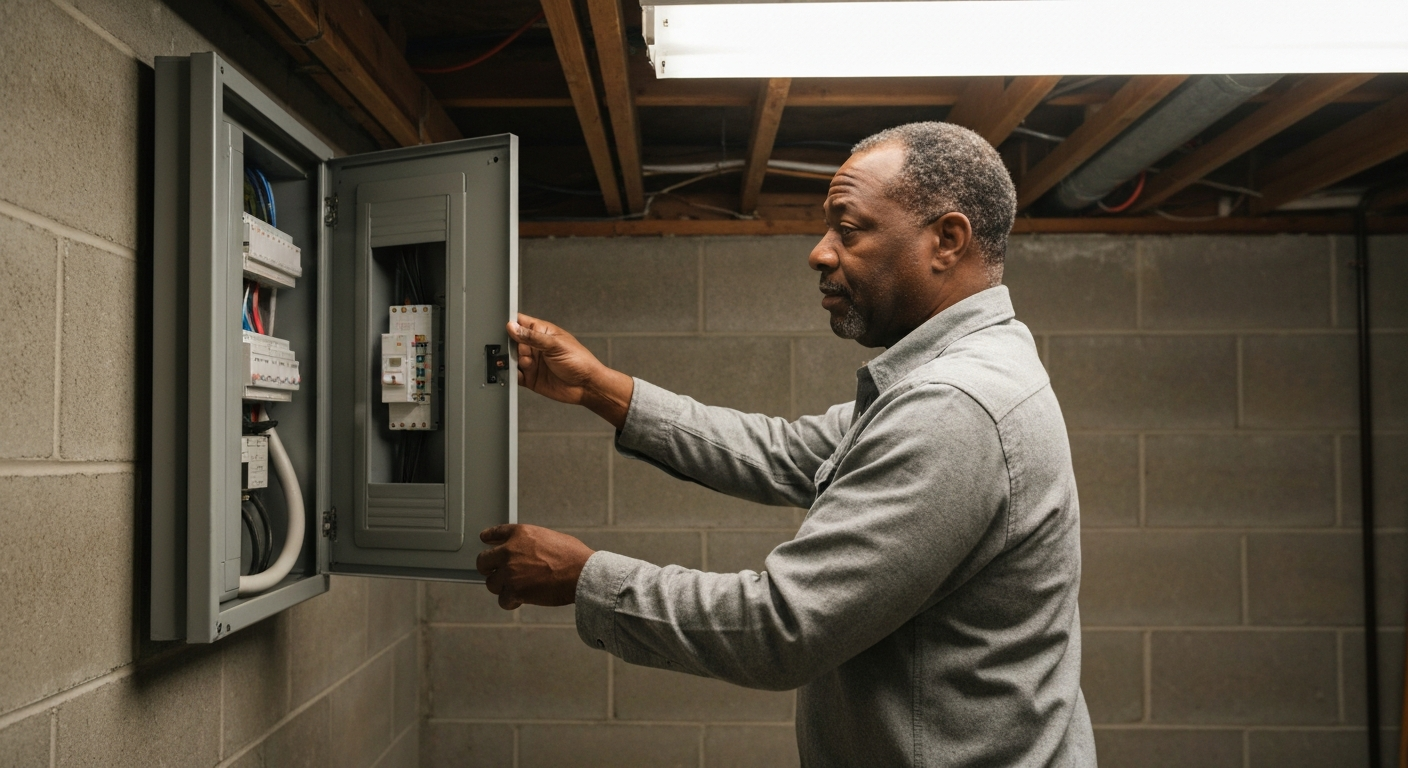

Your circuit breaker keeps tripping because it's doing exactly what it's designed to do: protecting your home from electrical fires caused by overloaded circuits, short circuits, or ground faults. The fix depends on which of these three problems you're dealing with—and most homeowners can diagnose the cause themselves before calling an electrician.
| ✓Our Pick |
Circuit breaker finder tool for locating problem circuits Great value for money — this product tackles the root cause rather than just masking the symptoms. See on Amazon → |
When your breaker trips, it's interrupting dangerous current flow before wires overheat and start a fire inside your walls.
Circuit breakers are automatic safety switches. Inside each one sits a mechanism that monitors how much electrical current flows through that circuit. When current exceeds the breaker's rated capacity—typically 15 or 20 amps for household circuits—the breaker "trips" and cuts power.
This isn't a malfunction. It's the system working correctly.
The problem is what's causing the excessive current in the first place. There are three main culprits: circuit overloads (too many devices drawing power), short circuits (hot wires touching neutral wires), and ground faults (current escaping to unintended paths). Each has different warning signs and different fixes.
"Circuit breakers are designed to trip when they sense an overload or fault condition. A breaker that trips repeatedly is indicating a real problem that needs to be addressed—not a nuisance to work around." — Electrical Safety Foundation International
| ✓Quick Fix |
See What Solves This in Minutes Quick to get, easy to try — a sensible first move while you figure out next steps. See on Amazon → |
Circuit overload is the most common reason breakers trip—you're drawing more power than that circuit can safely deliver.
Every circuit in your home has a maximum amperage rating, usually 15 or 20 amps. Add up the wattage of everything plugged into outlets on that circuit, divide by 120 (your voltage), and you get the amperage draw. Exceed the breaker's rating, and it trips.
Modern homes have more high-draw devices than ever: window AC units (5-15 amps), space heaters (12-15 amps), hair dryers (10-15 amps), microwaves (8-15 amps). Running two or three of these on the same circuit trips a 15-amp breaker instantly.
The fix is straightforward: redistribute your devices across multiple circuits, or have an electrician add a dedicated circuit for high-draw appliances.
A short circuit occurs when a hot (live) wire touches a neutral wire, creating a sudden surge of current that trips the breaker immediately.
Short circuits are more serious than overloads. They often produce visible signs: burn marks or discoloration around outlets, a burning smell, or a popping sound when the breaker trips. The breaker trips the instant you reset it, often before you can even flip it fully to the "on" position.
Common causes include damaged appliance cords (frayed insulation exposing wires), loose wire connections inside outlets or switches, and rodent damage to wiring inside walls. Old homes with deteriorating wiring insulation are particularly susceptible.
If you suspect a short circuit, unplug everything on that circuit before resetting the breaker. If it holds, plug devices back in one at a time. The one that trips the breaker is your culprit. If the breaker trips with nothing plugged in, the short is in your home's wiring itself—that requires an electrician.
A ground fault happens when electrical current escapes its intended path and flows to ground through an unintended conductor—often water, a person, or a metal surface.
Ground faults are especially dangerous in wet areas. That's why kitchens, bathrooms, garages, and outdoor outlets are required to have GFCI (Ground Fault Circuit Interrupter) outlets or breakers. These devices trip at much lower current levels than standard breakers—typically 5 milliamps versus 15-20 amps—because ground faults can electrocute people.
If GFCI outlets or breakers in wet areas keep tripping, moisture is usually the culprit. Water in an outdoor outlet box, a leaky dishwasher wetting the outlet behind it, or condensation inside a bathroom outlet can all trigger trips.
Check for water intrusion first. Let the area dry completely before resetting. If the GFCI continues tripping with no visible moisture, the outlet or appliance wiring may be damaged internally.
A single malfunctioning appliance with damaged internal wiring can trip your breaker every time it runs—or even when it's just plugged in.
Appliances develop internal shorts over time. The motor windings in refrigerators, washing machines, and dryers can degrade. Heating elements in toasters, coffee makers, and space heaters can crack. Power supply boards in electronics can fail.
The diagnostic approach: unplug every device on the tripping circuit, reset the breaker, then plug items back in one at a time. Run each device for a few minutes before adding the next. When the breaker trips, you've found your problem appliance.
Pay special attention to older appliances, anything with a frayed power cord, and devices that recently got wet or were moved.
Yes—circuit breakers wear out over time, becoming oversensitive and tripping at current levels below their rating.
Breakers are mechanical devices with moving parts. After thousands of trips over decades of use, the internal mechanisms fatigue. The thermal or magnetic trip components lose calibration. A 20-amp breaker might start tripping at 15 amps.
Signs of a failing breaker include: tripping under loads that previously worked fine, difficulty resetting (the switch feels loose or won't stay in position), and visible damage like cracks, scorch marks, or a burning smell from the panel.
Breaker replacement is relatively inexpensive ($5-30 for the part) but should be done by a qualified electrician because it involves working inside an energized electrical panel.
"Breakers are not designed to last forever. Most manufacturers suggest replacement after 30-40 years, or sooner if the breaker shows signs of physical damage or fails to reset properly." — National Fire Protection Association
Heat reduces the trip threshold of circuit breakers, causing them to trip at lower current levels during summer months.
Breakers use thermal elements that respond to heat generated by current flow. When ambient temperatures rise—inside a hot garage, an attic electrical panel, or during heat waves—the breaker is already warm before any current flows. It takes less current to push it over the trip threshold.
This doesn't mean your breaker is broken. It means your circuit is running closer to capacity than you realized, and heat is revealing it. The solution is reducing the load on that circuit, improving ventilation around your electrical panel, or upgrading to a higher-capacity circuit if appropriate.
Older panels—especially those with split-bus designs, Federal Pacific Stab-Lok breakers, or Zinsco panels—are known fire hazards that trip unpredictably or fail to trip when they should.
Federal Pacific Electric (FPE) panels, installed in millions of homes from the 1950s to 1980s, have documented failure rates where breakers don't trip during overloads or shorts. Zinsco panels have similar issues with breakers fusing to the bus bar. Both are serious fire risks.
Even functional older panels may simply be undersized for modern electrical demands. A 100-amp service that was adequate in 1970 struggles with today's air conditioning loads, electric vehicle chargers, and home offices full of electronics.
If your panel is over 25 years old, has any recalled brand name, or you've added significant electrical load to your home, have a licensed electrician evaluate whether an upgrade is needed.
Also Read: Why Is My Light Bulb Flickering? 9 Causes & Quick Fixes
Start by identifying which circuit is tripping and what's connected to it—most problems become obvious once you map the load.
Follow this sequence:
Identify the tripped breaker. Look for the one that's in the middle position (between on and off) or has a red indicator visible.
Turn off everything on that circuit. Unplug all devices and flip light switches off.
Reset the breaker. Push it firmly to "off" first, then to "on." It should click solidly into position.
Wait and observe. If it holds with nothing drawing power, the problem is a connected device or overload. If it trips immediately with nothing plugged in, you likely have a wiring fault.
Reconnect devices one at a time. Plug in and turn on one device, wait a few minutes, then add the next. Note which device triggers the trip.
| Symptom | Likely Cause | Next Step |
|---|---|---|
| Trips when multiple devices run | Circuit overload | Redistribute devices to other circuits |
| Trips instantly when reset | Short circuit or ground fault | Check for damaged cords, call electrician if wiring issue |
| Trips after running for a while | Overheating motor or gradual overload | Identify high-draw device, check for motor burnout |
| Trips only in hot weather | Heat-sensitive trip threshold | Reduce load or improve panel ventilation |
| Trips randomly, load hasn't changed | Worn breaker or loose connection | Have electrician inspect panel |
Also Read: Why Is My Upstairs So Hot? 8 Causes & Fixes That Work
Call a professional immediately if you smell burning, see scorch marks, hear buzzing from the panel, or the breaker won't reset at all.
Some situations require professional diagnosis:
For standard diagnostic visits, electricians typically charge $75-150 for the service call plus time. Panel replacements run $1,500-4,000 depending on amperage and complexity. Given that electrical fires cause over $1 billion in property damage annually in the US, these aren't costs to defer.
Also Read: Why Is My Fire Alarm Blinking Red? 6 Causes & Fixes
The simplest prevention is knowing your circuit capacity and staying within it—most modern households are running circuits designed for 1970s electrical loads.
Practical strategies:
A circuit breaker that keeps tripping is warning you about an electrical problem—overload, short circuit, ground fault, or failing breaker—that needs attention before it becomes a fire hazard. Most tripping issues are caused by circuit overloads that you can fix by redistributing your devices across multiple circuits. Short circuits and ground faults require more investigation but are often traceable to a single faulty appliance or damaged cord. If your breaker trips with nothing plugged in, trips instantly when reset, or your panel shows any signs of damage or overheating, call a licensed electrician. Don't ignore a breaker that keeps tripping, and never "solve" the problem by replacing it with a higher-amp breaker—that defeats the safety mechanism and risks a fire.
A breaker that trips with no obvious load indicates a fault in your home's permanent wiring—a short circuit or ground fault hidden inside a wall, junction box, or outlet. This requires an electrician to locate and repair. The fault could be from rodent damage, deteriorating insulation, a loose wire connection, or water intrusion. Do not repeatedly reset a breaker that trips with nothing drawing power; each trip could be arcing and generating heat inside your walls.
No—this is dangerous and violates electrical codes. The breaker amperage must match the wire gauge. 15-amp circuits use 14-gauge wire; 20-amp circuits require 12-gauge wire. Installing a 20-amp breaker on 14-gauge wire allows more current than the wire can safely carry, creating a fire risk. The breaker exists to protect the wire, not to be convenient for your devices. If you need more capacity, have an electrician install a proper 20-amp circuit with appropriately sized wire.
Nighttime tripping often correlates with specific usage patterns—running the dishwasher while the AC cycles on, turning on multiple lights and the TV, or using space heaters as temperatures drop. It could also indicate a timer-controlled appliance (like a water heater or HVAC system) kicking on at scheduled times. Track what's running when the breaker trips. Refrigerator compressors and HVAC systems draw high startup current and may push an already-loaded circuit over the edge.
Signs your panel needs replacement include: it's over 25 years old, it's a Federal Pacific, Zinsco, or Pushmatic brand, breakers trip frequently without clear cause, breakers don't stay reset, you see rust or corrosion, you hear buzzing or crackling sounds, you smell burning, or your home has grown in electrical demand (added AC, EV charger, home office) beyond the panel's capacity. A licensed electrician can evaluate your specific situation and recommend whether repair or replacement is appropriate.
Yes, for a standard reset—firmly push the breaker to "off" then to "on." This is safe for occasional trips caused by overloads. However, if the breaker trips immediately upon reset, trips repeatedly, feels hot, shows scorch marks, or if you smell burning, do not continue resetting it. Repeated resetting of a breaker that won't hold can cause arcing and heat buildup. In those cases, leave the breaker off and call an electrician before using that circuit again.
Reviewed and Updated on June 20, 2026 by George Wright