Technology
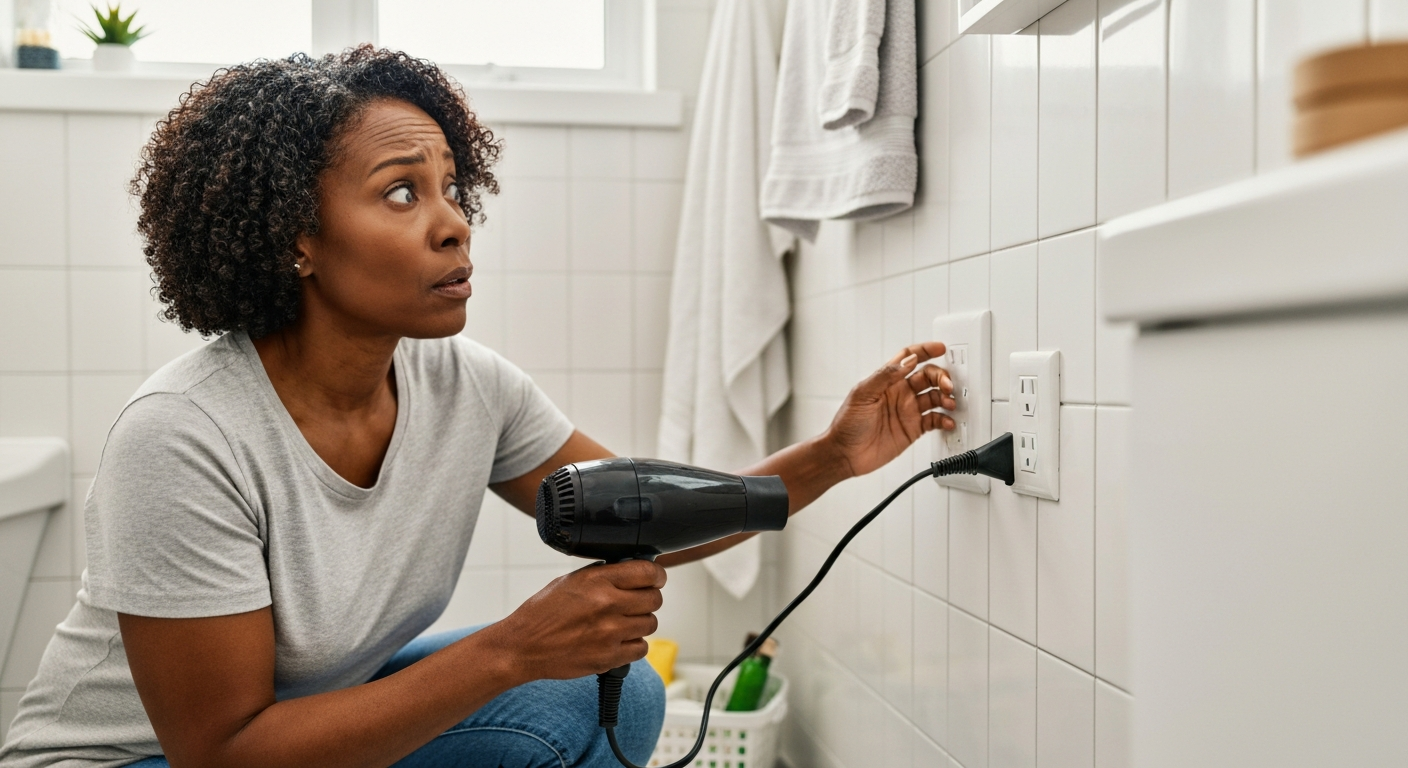

Your GFCI outlet is tripping because it has detected a ground fault — a situation where electrical current is flowing along an unintended path, often through water or damaged wiring, which creates a shock hazard that the outlet is designed to prevent.
A ground fault circuit interrupter (GFCI) constantly monitors the current flowing out through the hot wire and returning through the neutral wire. When those two values differ by as little as 4 to 6 milliamps, the GFCI assumes current is escaping — possibly through your body — and cuts power in about 1/40th of a second. That's the trip. The outlet is doing its job. The real question is why current is leaking in the first place. The causes range from moisture in an outdoor outlet box to a failing appliance to a worn-out GFCI device itself. This article walks you through the most common reasons your GFCI keeps tripping in 2026, how to diagnose each one, and when to call an electrician.
| ✓Our Pick |
GFCI outlet tester and circuit analyzer for DIY troubleshooting You'll wonder why you didn't try this sooner — practical, well-reviewed, and easy to get started. See on Amazon → |
A GFCI trips when it senses an imbalance between the hot and neutral conductors, which can be caused by moisture, faulty appliances, wiring problems, overloaded circuits, or a defective GFCI device itself.
Understanding the specific cause helps you fix the problem rather than simply resetting the outlet over and over. Below are the seven most common culprits homeowners encounter.
Moisture is the number one reason GFCIs trip, especially in bathrooms, kitchens, garages, and outdoor locations. Water is a conductor. When it seeps into an outlet box, splashes onto a plug, or condenses inside a receptacle, it creates a path for current to escape to ground — exactly what a GFCI is designed to detect.
Common moisture scenarios include:
- Rain entering an outdoor outlet box with a damaged or missing weatherproof cover
- Condensation inside a garage GFCI during humid summer months
- A leaky pipe dripping onto a kitchen outlet
- Splashing from a sink, shower, or washing machine
If your GFCI trips after rain, after using a nearby sink, or during high-humidity weather, moisture is your likely culprit. Let the outlet dry completely (a fan or dehumidifier helps) and ensure weatherproof covers are intact before resetting.
Yes — a defective appliance is one of the most common causes of persistent GFCI tripping, because internal insulation breakdown allows current to leak to the appliance's metal housing or ground wire.
Hair dryers, coffee makers, space heaters, and any motor-driven appliance (vacuums, blenders, power tools) are frequent offenders. Over time, internal wiring insulation degrades, especially in appliances exposed to heat or moisture. The GFCI senses the leakage current and trips.
To identify a faulty appliance:
1. Unplug everything from the GFCI-protected circuit
2. Reset the GFCI
3. Plug appliances back in one at a time, waiting 30 seconds between each
4. Note which appliance causes the trip — that's your problem
"Ground faults occur when current leaks from the hot wire to a grounded surface or enclosure. Appliances with damaged cords or internal insulation failures are a leading cause of these faults in residential settings." — National Fire Protection Association (Electrical Fire Facts Report)
Wiring problems behind walls or inside outlet boxes can cause ground faults that trip your GFCI. This includes:
Wiring issues are harder to diagnose because they're hidden. If you've ruled out moisture and appliances, and your GFCI still trips (especially when nothing is plugged in), suspect wiring. This requires an electrician with testing equipment.
A GFCI itself doesn't trip from overload — that's the job of the circuit breaker — but high current draw can heat connections and worsen existing ground faults, making trips more frequent.
GFCIs are rated for 15 or 20 amps, matching their circuit. If you're running multiple high-draw appliances (space heater plus hair dryer plus curling iron), you may trip the breaker, not the GFCI. However, if one of those appliances has a marginal insulation fault that only leaks current when the appliance heats up under heavy use, the GFCI will trip.
The fix: redistribute loads across multiple circuits, and test appliances individually to find any with heat-related faults.
GFCI outlets don't last forever — manufacturers and the Consumer Product Safety Commission recommend replacing them every 10 years, or sooner if they fail self-tests.
The sensing circuitry inside a GFCI degrades over time. An aging GFCI may become oversensitive (nuisance tripping) or fail entirely (won't trip when it should). If your GFCI is more than a decade old and trips frequently with no identifiable cause, replacement is the safest solution.
To test your GFCI:
1. Press the "TEST" button — the outlet should trip immediately
2. Press "RESET" — power should restore
3. If either step fails, replace the outlet
Many 2026-model GFCIs include self-test features and indicator lights that alert you when the device has failed. Upgrading to a modern unit provides better protection and diagnostic feedback.
Also Read: Why Is My Breaker Keep Tripping? 7 Causes & Fixes
In some older wiring configurations, two circuits share a single neutral wire (called a multi-wire branch circuit or MWBC). This is code-compliant when done correctly, but it can cause GFCI trips if not handled properly.
A GFCI measures current on its hot and neutral wires. If another circuit's current returns through the shared neutral, the GFCI sees an imbalance and trips — even though no actual ground fault exists. This is a nuisance trip caused by installation issues.
Signs of a shared neutral problem:
- GFCI trips only when a specific light or outlet on a different circuit is used
- Multiple circuits seem interconnected in unexpected ways
- The problem appeared after recent electrical work
Fixing shared neutral issues requires an electrician to either separate the neutrals or install a two-pole GFCI breaker that monitors both circuits together.
Very long wire runs — especially in older homes — can develop enough capacitive leakage to trip a sensitive GFCI, even without a true fault.
All wiring has a tiny amount of capacitance to ground. Over hundreds of feet, this normal leakage can add up to the 4-6 milliamp trip threshold. This is more common with:
- Outdoor circuits running to detached garages, sheds, or pools
- Underground feeder cable (UF-B) in contact with damp soil
- Circuits with many outlets daisy-chained together
If your GFCI protects a long circuit and trips without an obvious cause, an electrician may recommend moving the GFCI closer to the end of the circuit or using a GFCI breaker with slightly higher leakage tolerance.
| ✓Quick Fix |
The First Thing Most People Try Quick to get, easy to try — a sensible first move while you figure out next steps. See on Amazon → |
Systematic troubleshooting eliminates possible causes one by one, starting with the simplest fixes before calling a professional.
| Step | Action | What You're Testing |
|---|---|---|
| 1 | Unplug all devices from GFCI-protected outlets | Eliminates appliance faults |
| 2 | Reset the GFCI and wait 5 minutes | Checks for wiring-only faults |
| 3 | If it holds, plug in devices one at a time | Identifies problem appliance |
| 4 | Inspect outlet and cover for moisture | Checks environmental causes |
| 5 | Press TEST and RESET buttons | Verifies GFCI functionality |
| 6 | Check outlet age (replace if over 10 years) | Addresses device wear |
| 7 | If still tripping, call an electrician | Wiring, shared neutral, or long-run issues |
"GFCI devices should be tested monthly by pressing the TEST button to ensure proper operation. Devices that do not trip when tested should be replaced immediately." — Electrical Safety Foundation International (GFCI Fact Sheet)
Call a licensed electrician if the GFCI trips with nothing plugged in, if you suspect wiring damage, if the GFCI is part of a complex multi-wire circuit, or if you've replaced the outlet and trips continue.
DIY troubleshooting has limits. Situations requiring professional help include:
- Burning smell or scorch marks near the outlet
- GFCI trips immediately upon reset with nothing connected
- Multiple GFCIs on different circuits tripping simultaneously
- Home is more than 40 years old with original wiring
- You're uncomfortable working with electrical systems
An electrician can use a megohmmeter to test insulation resistance, trace wiring paths, and identify hidden faults that simple outlet testers can't detect.
Also Read: Why Is My Humidifier Not Working? 7 Causes & Quick Fixes
Understanding protection types helps you know what your GFCI can and can't do.
| Device | Protects Against | Required Locations (2026 NEC) |
|---|---|---|
| GFCI | Ground faults (shock hazard) | Bathrooms, kitchens, garages, outdoors, basements, laundry rooms |
| AFCI | Arc faults (fire hazard) | Bedrooms, living rooms, hallways, closets |
| Standard breaker | Overloads and short circuits | General circuits |
| Dual-function GFCI/AFCI | Both ground and arc faults | New construction in many jurisdictions |
A GFCI won't protect you from arc faults (sparking from damaged wires that can start fires), and an AFCI won't protect you from shock. Many newer homes require both types of protection in different areas.
Regular maintenance and proper use significantly reduce nuisance trips and extend GFCI lifespan.
| ✓Our Pick |
GFCI outlet with LED indicator and self-test function Trusted by professionals and everyday users alike — a smart investment that pays for itself. See on Amazon → |
Your GFCI trips because it detects current escaping along an unintended path — most commonly caused by moisture, faulty appliances, or wiring problems. Start troubleshooting by unplugging all devices and testing the outlet itself. If the GFCI is over 10 years old, replace it. For trips that continue with nothing plugged in, or if you find signs of damaged wiring, call a licensed electrician. Monthly testing and keeping outlets dry will prevent most nuisance trips.
A GFCI that trips with nothing plugged in indicates a problem in the wiring itself rather than an appliance. Possible causes include moisture inside the outlet box, damaged wire insulation behind the wall, a shared neutral configuration, or a failing GFCI device. Try drying the outlet thoroughly and replacing the GFCI. If trips continue, you likely have a wiring issue that requires an electrician to diagnose with professional testing equipment.
Rain-related trips almost always indicate moisture intrusion into an outdoor outlet box or underground wiring. Check that your weatherproof cover is intact and properly seated. Inspect the conduit connections for gaps where water could enter. If the GFCI protects a circuit that runs underground to a shed or detached garage, the buried cable may have damaged insulation allowing ground contact when soil becomes saturated.
You could physically do this, but it's dangerous and violates electrical code. GFCIs are required in specific locations (bathrooms, kitchens, garages, outdoors) because those areas have elevated shock risk from water presence. A regular outlet won't trip during a ground fault — meaning you or a family member could receive a serious or fatal shock. Fix the underlying problem rather than removing the protection.
The Consumer Product Safety Commission and most manufacturers recommend replacing GFCI outlets every 10 years, or immediately if they fail the monthly TEST button check. GFCIs manufactured since 2015 include self-test features that check the device automatically and display warning lights when protection has failed. If your GFCI lacks these features, it's likely old enough to warrant replacement regardless of symptoms.
This happens because multiple outlets often connect to a single GFCI for protection — when the GFCI trips, all downstream outlets lose power. It can also indicate a shared neutral wiring configuration where current from the garage circuit returns through the bathroom GFCI's neutral wire, creating an apparent imbalance. Check your electrical panel to see if both areas share a circuit, and consult an electrician if you suspect shared neutral wiring.
Reviewed and Updated on June 20, 2026 by George Wright