Technology
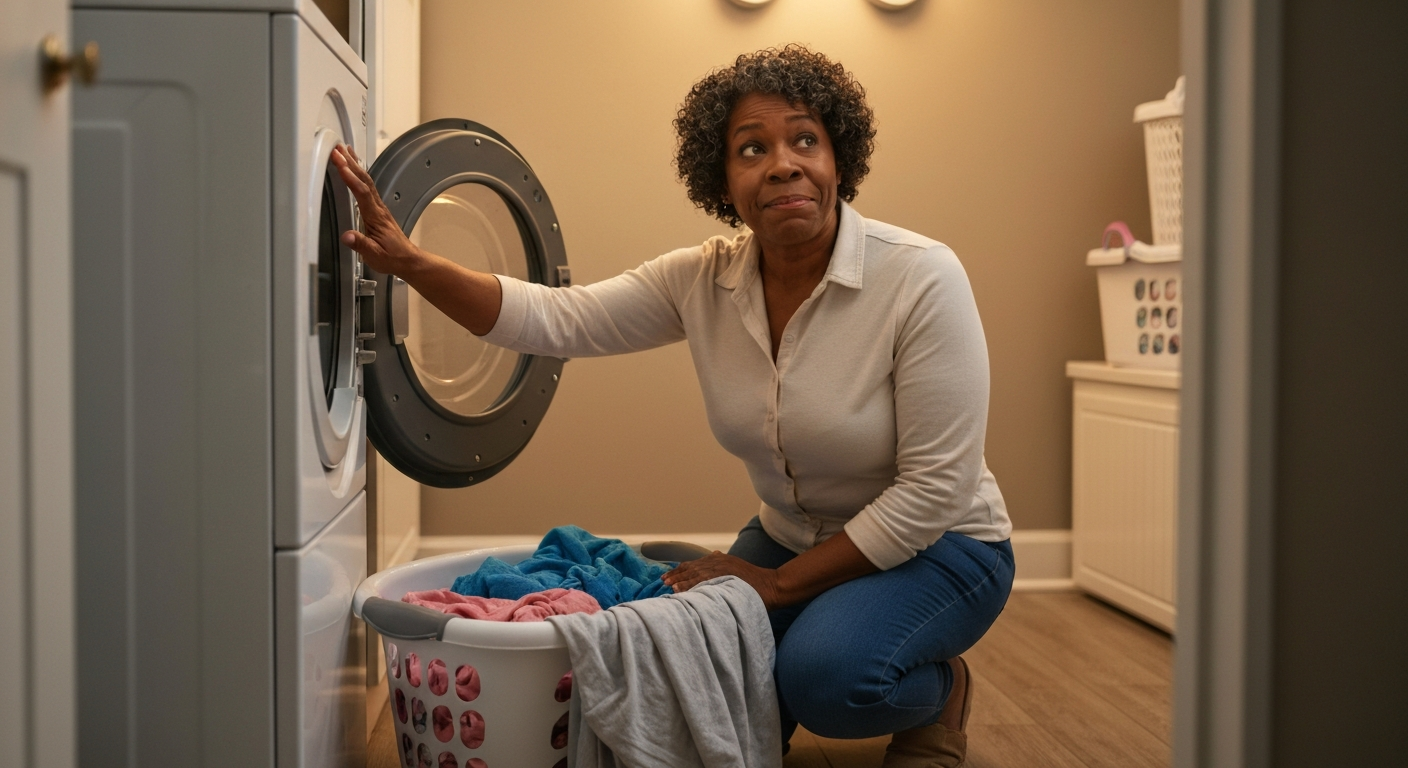

Your dryer isn't spinning because something is stopping the drum from rotating—most commonly a broken drive belt, a failed motor, a worn drum roller, or a jammed idler pulley—and identifying which part failed takes about 10 minutes of basic troubleshooting.
A dryer that heats but won't tumble is one of the most frustrating appliance failures because your clothes come out just as wet as they went in. The good news: this problem is almost always mechanical, not electrical, which means you can often diagnose it yourself and decide whether it's a DIY repair or a job for a technician. Below, you'll find every common cause, how to test for each one, and what the fix actually costs in 2026.
| ✓Our Pick |
Replacement dryer drive belts for all major brands You'll wonder why you didn't try this sooner — practical, well-reviewed, and easy to get started. See on Amazon → |
The drum rotation system in a dryer is surprisingly simple: an electric motor turns a pulley, which pulls a rubber belt wrapped around the drum, and the drum rolls on plastic or metal rollers.
Understanding this basic anatomy helps you pinpoint failures faster. Here's how the key components work together:
| Component | Function | What Happens When It Fails |
|---|---|---|
| Drive belt | Wraps around drum and motor pulley to transfer rotation | Drum won't spin; motor may still hum |
| Drive motor | Powers the belt and often the blower fan | No spin, no heat, or burning smell |
| Drum rollers | Support the drum's weight and allow it to rotate smoothly | Squealing, thumping, or seized drum |
| Idler pulley | Keeps tension on the belt so it grips the drum | Belt slips off or drum spins erratically |
| Door switch | Signals the dryer that the door is closed | Dryer won't start at all |
| Main control board | Sends power to the motor | Intermittent operation or no response |
When your dryer stops spinning, one of these six components is almost always the culprit. The belt fails most often simply because it's a wear item—thin rubber under constant tension eventually snaps.
| ✓Quick Fix |
The Quick Fix Most People Reach for First One of the simplest things to try immediately — no appointment, no waiting. See on Amazon → |
Yes—a snapped drive belt is the single most common reason a dryer drum won't spin, and it's also one of the easiest to diagnose.
Open your dryer door and try to rotate the drum by hand. If it spins freely with almost no resistance, the belt has broken. A working belt creates noticeable drag because the motor and pulley system resist movement. In gas dryers and most electric models, the belt is a thin rubber loop (about 1/4 inch wide) that wraps around the entire drum circumference, then threads through an idler pulley and around the motor pulley.
Belts typically last 10–15 years but fail sooner if the dryer is overloaded regularly or if the drum rollers are worn, which puts extra strain on the belt. Replacement belts cost $10–$30, and the repair takes 30–60 minutes if you're comfortable removing the front or top panel of your dryer.
"Most dryer problems are caused by a broken belt or a faulty motor. The belt is a common wear item and should be one of the first things you check." — Family Handyman
A failing drive motor can prevent spinning entirely, but it often gives warning signs first—like a humming sound without rotation, a burning smell, or intermittent stopping.
If you press start and hear the motor hum but the drum doesn't move, the motor may be trying to run but can't overcome resistance (possibly from seized bearings inside the motor itself). A motor that's completely dead will produce no sound at all when you press start—though you should first rule out a tripped thermal fuse or door switch issue.
Testing a motor requires a multimeter to check for continuity. If you're not comfortable with electrical testing, this is a good point to call a technician. Motor replacement costs $150–$300 for parts alone, and the repair is moderately complex.
Worn drum rollers won't stop the drum immediately, but they create so much friction that the motor eventually can't turn the drum—or the belt snaps under the strain.
Most dryers have two to four drum rollers (small wheels) that the drum sits on. Over time, the bearings inside these rollers wear out, causing them to seize or spin unevenly. You'll usually hear this problem before it stops the dryer completely: a loud thumping or squealing noise during operation is the classic sign.
To test, remove the belt and try spinning the drum by hand. If it wobbles, catches, or feels rough, the rollers need replacing. Always replace all rollers at once—they wear at similar rates, and replacing one at a time means you'll be opening the dryer again in a few months.
Also Read: Why Is My Fridge Making a Loud Humming Noise? 7 Causes & Fixes
A failed idler pulley lets the belt lose tension and slip off the motor pulley, which stops the drum from spinning even though the belt itself may be intact.
The idler pulley is a small wheel on a spring-loaded arm that presses against the belt to keep it taut. If the pulley's bearing wears out, it can seize, melt, or wobble—any of which allows the belt to slip. You may hear a scraping or squeaking noise before complete failure.
With the dryer unplugged and the panel removed, push on the idler pulley arm. It should move smoothly against spring tension and return to position. If the pulley doesn't spin freely on its shaft, or if you see visible damage, replace it. Idler pulleys cost $10–$25 and are often sold in kits with a new belt, which makes sense since you're already in there.
A defective door switch won't let the dryer start at all—not just stop it from spinning—but it's worth checking because the symptom can look similar.
The door switch is a small plastic component that clicks when you close the door, telling the control board it's safe to start. If this switch fails, the dryer thinks the door is open and won't run the motor. Press the door switch manually with a pen while listening for a click. No click often means the switch needs replacing.
You can test continuity with a multimeter: the switch should show continuity when pressed and none when released. Door switches cost under $15 and are one of the easiest dryer parts to replace—usually just two screws and a wire connector.
Yes—stuffing too many heavy items into the dryer creates so much weight that the motor can't turn the drum, especially if other components are already worn.
This is more common with comforters, blankets, and multiple pairs of jeans than with regular laundry loads. The motor may hum and try to start but fail to rotate the drum. If you suspect overloading, remove half the load and try again. If the dryer spins normally with a lighter load, you've found your answer.
Chronic overloading accelerates wear on the belt, motor, and rollers. If your dryer has struggled with heavy loads for a while, inspect those components even after reducing the load size—damage may already be done.
A malfunctioning main control board can cause erratic behavior including failure to spin, but this is less common than mechanical failures and harder to diagnose.
Modern dryers use an electronic control board to manage all functions. If this board fails, it may not send power to the motor even when everything else works. Symptoms include the dryer starting and stopping randomly, buttons not responding, or error codes on digital displays.
Before assuming the control board is bad, rule out simpler causes. Control boards cost $100–$250 and require precise installation. If you've checked the belt, motor, rollers, pulley, and door switch without finding a problem, the control board becomes a more likely suspect—but consider having a technician confirm the diagnosis before buying the part.
Start with the simplest test—manually spinning the drum—and work your way through the components in order of likelihood and ease of access.
Here's a diagnostic sequence that covers 95% of cases:
"A dryer that won't spin but will still heat suggests a mechanical problem rather than an electrical one. Check the belt first—it's the most common failure point." — Repair Clinic
Also Read: Why Is My Breaker Keep Tripping? 7 Causes & Fixes
Expect to pay $100–$400 for professional dryer repair depending on the part and your location, or $15–$80 in parts if you do it yourself.
| Repair | DIY Parts Cost | Professional Repair Cost | Difficulty |
|---|---|---|---|
| Drive belt replacement | $10–$30 | $100–$200 | Easy |
| Drum roller replacement | $20–$50 | $150–$250 | Moderate |
| Idler pulley replacement | $10–$25 | $100–$175 | Easy |
| Door switch replacement | $10–$20 | $75–$150 | Easy |
| Drive motor replacement | $150–$300 | $250–$450 | Difficult |
| Control board replacement | $100–$250 | $200–$400 | Moderate |
Service call fees typically run $50–$100 just for a technician to diagnose the problem, which is then applied to the repair cost if you proceed. For older dryers (10+ years), compare repair costs against replacement—a new basic dryer starts around $400–$600 in 2026.
| ✓Our Pick |
Dryer drum roller and belt repair kits Simple to use and genuinely effective — for many people this is all they ever needed. See on Amazon → |
Call a technician if the problem involves the motor, control board, gas valve (on gas dryers), or if you're not comfortable working with electrical components.
DIY-friendly repairs include the belt, idler pulley, door switch, and drum rollers—these require basic tools and no electrical expertise beyond unplugging the machine. Motor and control board replacements involve more wiring and carry higher stakes if something goes wrong.
For gas dryers specifically, any repair that involves disconnecting gas lines should be left to a licensed professional. A gas leak is far more dangerous than a broken dryer.
Also Read: Why Is My Light Bulb Flickering? 9 Causes & Quick Fixes
A dryer that won't spin is almost always caused by a broken drive belt, worn drum rollers, a failed idler pulley, or a motor issue—and you can diagnose most of these by simply opening the door and trying to spin the drum by hand. A freely spinning drum means the belt is broken. A drum that's hard to turn or makes noise points to rollers or motor problems. Most repairs cost under $50 in parts if you do them yourself, or $100–$300 with a technician. For dryers older than 10 years, weigh repair costs against the price of a new machine before investing in expensive fixes.
If the motor runs (you can hear it humming) but the drum stays still, the drive belt has almost certainly snapped. The motor spins its pulley, but with no belt connecting it to the drum, nothing happens. Open the door, try to spin the drum manually, and if it moves freely without resistance, replace the belt.
A clogged vent won't stop the drum from spinning, but it will cause the dryer to overheat, which can trip the thermal fuse. A blown thermal fuse prevents the dryer from running at all. If your dryer suddenly stops and won't restart, check both the vent for blockages and the thermal fuse for continuity.
Most dryer belts last 10–15 years with normal use, but heavy loads, frequent use, and worn drum rollers can shorten that lifespan significantly. If your dryer is 8+ years old and the belt has never been replaced, consider inspecting it during your next maintenance check.
A humming sound without rotation usually means the motor is trying to run but can't overcome resistance. This could be a seized motor bearing, a jammed drum roller, or an overloaded drum. Reduce the load size first, then check for mechanical obstructions. If the humming continues with an empty drum, the motor or rollers likely need attention.
For minor repairs like belts, pulleys, and rollers (under $100 in parts), a 10-year-old dryer is usually worth fixing. For major repairs like motors or control boards ($200+), compare the repair cost to the price of a new dryer. If the repair exceeds 50% of a new machine's cost, replacement often makes more financial sense.
Reviewed and Updated on June 20, 2026 by George Wright