Technology
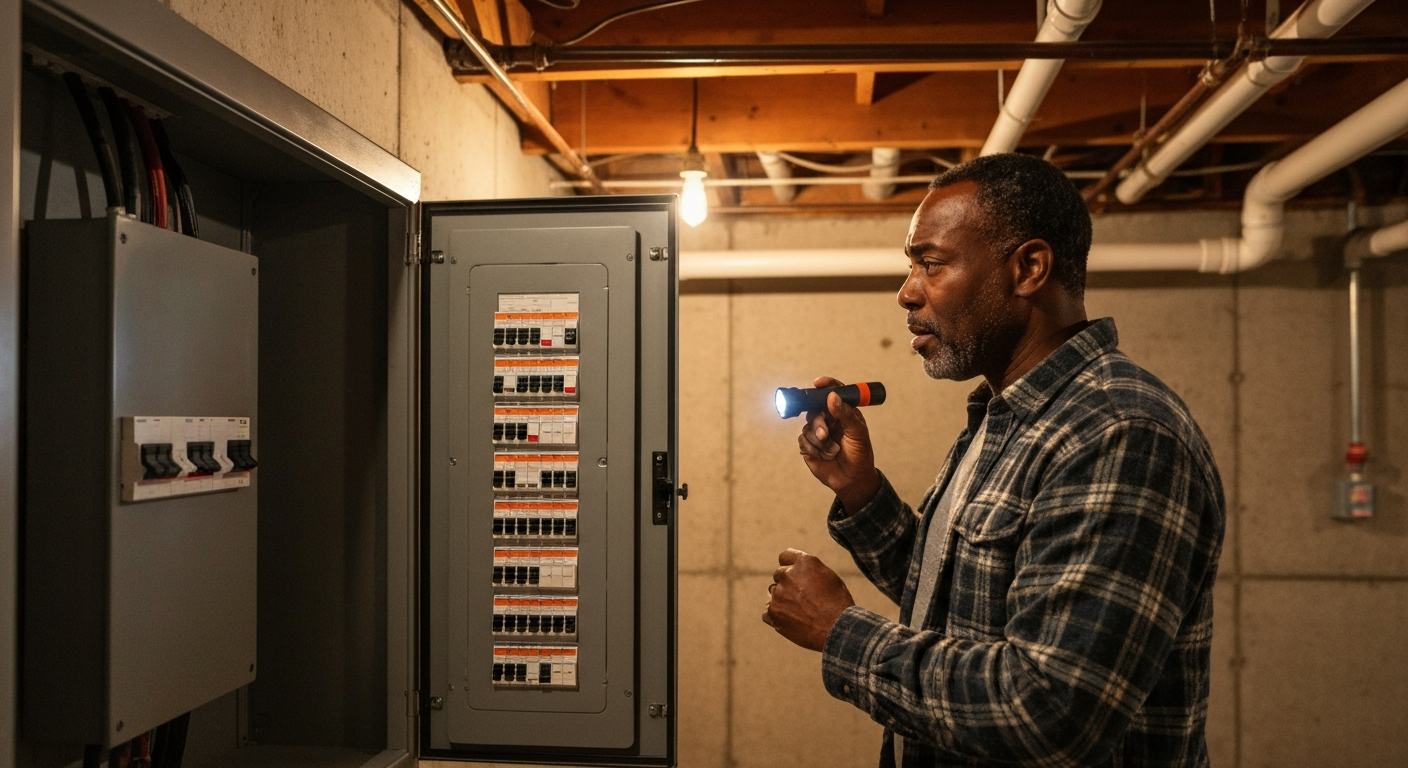

Your circuit breaker is tripping because it's detecting a potentially dangerous electrical condition—most commonly an overloaded circuit, a short circuit, or a ground fault—and cutting power to prevent fire or electrocution.
A tripping breaker isn't a malfunction; it's your home's electrical system working exactly as designed. The breaker acts as a safety valve, interrupting current flow the moment it senses something wrong. While an occasional trip after plugging in too many devices is usually harmless, frequent or unexplained trips signal a problem that needs investigation. Understanding why your breaker keeps tripping helps you decide whether you can fix it yourself or need to call an electrician.
| ✓Quick Fix |
The Quick Fix Most People Reach for First Many readers dealing with this exact issue start with something like this before trying anything else. See on Amazon → |
Circuit breakers trip for six main reasons: circuit overloads, short circuits, ground faults, arc faults, a faulty breaker, or loose wiring connections.
Each cause has distinct warning signs and requires a different response. Some you can safely address yourself; others demand professional help immediately.
Circuit overload is the most frequent reason a breaker trips. It happens when the total electrical demand on a circuit exceeds what the breaker is rated to handle. A 15-amp breaker, for example, can safely deliver about 1,800 watts continuously. Plug in a space heater (1,500 watts), a hair dryer (1,800 watts), and a lamp (60 watts) on the same circuit, and you're asking for 3,360 watts—nearly double the safe limit.
Modern homes often have more devices than the original electrical system was designed for. Older houses built in the 1970s typically had 60 to 100-amp service panels, while today's homes commonly require 200 amps or more. The National Electrical Code now recommends dedicated circuits for high-draw appliances like microwaves, dishwashers, and window AC units.
Signs of an overloaded circuit include:
- Breaker trips when you turn on a specific appliance
- Lights dim momentarily when large appliances start
- Outlets or switch plates feel warm to the touch
- You're using multiple power strips or extension cords on one outlet
A short circuit is more serious than an overload. It occurs when a hot (live) wire touches a neutral wire, creating a path of almost zero resistance. This causes a massive surge of current—sometimes hundreds of amps in a fraction of a second—which the breaker detects and interrupts immediately.
"A short circuit creates an unintended pathway for electricity that bypasses the normal load. The resulting current surge can generate enough heat to start a fire within seconds." — Electrical Safety Foundation International
Short circuits often happen inside appliances, in damaged cords, or within wall wiring. Warning signs include:
- A burning smell near outlets or the breaker panel
- Visible scorch marks or discoloration around outlets
- Breaker trips the instant you flip it back on
- Sparks when plugging in or unplugging devices
If you suspect a short circuit, do not repeatedly reset the breaker. Each reset sends another surge through the damaged wiring, increasing fire risk.
Also Read: Why Is My Breaker Box Buzzing? 6 Causes & Safety Guide
| ✓Our Pick |
Circuit breaker finder to trace which outlets are on each circuit You'll wonder why you didn't try this sooner — practical, well-reviewed, and easy to get started. See on Amazon → |
A ground fault happens when electricity escapes its intended path and flows through a grounding conductor—or worse, through you. Ground faults are especially dangerous in wet areas like bathrooms, kitchens, and outdoor spaces, where water can provide a conductive path to ground.
Ground Fault Circuit Interrupters (GFCIs) are designed specifically to detect these faults. They monitor the current flowing out on the hot wire and returning on the neutral wire. If even a tiny imbalance occurs (as little as 5 milliamps), the GFCI trips in about 1/30th of a second—fast enough to prevent electrocution.
If your GFCI outlet keeps tripping, check for:
- Moisture in the outlet or junction box
- Damaged insulation on wires
- A faulty appliance with internal wiring problems
- Too many devices daisy-chained on the GFCI-protected circuit
Arc Fault Circuit Interrupters (AFCIs) detect dangerous electrical arcs—sparks that jump across gaps in damaged wiring. Since 2014, the National Electrical Code has required AFCIs in most living areas of new construction, including bedrooms, living rooms, and hallways.
AFCIs are more sensitive than standard breakers. They can sometimes trip from:
- Vacuum cleaners and treadmills with brushed motors
- Certain LED dimmers and compact fluorescent bulbs
- Loose plug connections
- Old wiring with degraded insulation
While nuisance trips are frustrating, the protection is worth it. Arc faults cause an estimated 30,000 home fires annually in the United States, according to the Consumer Product Safety Commission.
Circuit breakers don't last forever. After thousands of cycles—or even just 15 to 20 years of normal use—the internal mechanism can wear out. A worn breaker may trip at lower currents than its rating, or it may fail to hold in the "on" position reliably.
Signs of a faulty breaker include:
- Trips randomly without any apparent cause
- Feels loose or doesn't click firmly into position
- Won't stay reset even with nothing connected to the circuit
- Visible damage, corrosion, or burn marks
Replacing a breaker is relatively inexpensive ($10 to $50 for the part), but the work should be done by a licensed electrician. Incorrect installation can leave your home unprotected or create new hazards.
Loose wire connections generate heat and resistance, which can cause breakers to trip and—more dangerously—start fires. Over time, thermal expansion and contraction, vibration from nearby HVAC equipment, or simply poor initial installation can cause connections to loosen.
"Loose electrical connections are among the leading causes of electrical fires. The resistance at a poor connection creates heat, which can ignite surrounding materials." — National Fire Protection Association
Loose connections can occur at:
- The breaker terminal in your panel
- Wire nuts inside junction boxes
- Outlet and switch terminals
- The service entrance where utility lines connect
Diagnosing loose connections requires opening your electrical panel, which exposes live busbars carrying full utility voltage. This work should only be performed by a qualified electrician.
Start by identifying which circuit is tripping, unplug everything on that circuit, reset the breaker, and reconnect devices one at a time to isolate the problem.
Before touching your breaker panel, understand the risks. Even with the main breaker off, the service entrance wires coming from your utility remain live. Never remove the panel cover unless you're a trained professional.
| Step | Action | What to Look For |
|---|---|---|
| 1 | Identify the tripped breaker | Handle in middle position or clearly "off" |
| 2 | Turn off or unplug all devices on that circuit | Check lamps, appliances, and anything plugged in |
| 3 | Reset the breaker firmly | Push fully to "off," then to "on" |
| 4 | Wait 30 seconds | Immediate trip suggests short circuit |
| 5 | Reconnect devices one at a time | Note which device causes the trip |
| 6 | Check the device that caused the trip | Look for damaged cords or burned smell |
If the breaker trips immediately upon reset with nothing connected, the problem is likely in the wiring itself—either a short circuit or ground fault in the walls. Call an electrician.
Also Read: Why Is My Fire Alarm Going Off? 6 Causes & Quick Fixes
Call an electrician immediately if you smell burning, see scorch marks, the breaker won't stay reset, or if multiple breakers trip simultaneously.
Some situations require professional diagnosis:
Licensed electricians have tools like thermal cameras, circuit analyzers, and insulation resistance testers that can identify problems invisible to the naked eye. The cost of a diagnostic visit ($75 to $200 in most areas) is minimal compared to the risk of an electrical fire.
Distribute high-draw appliances across different circuits, avoid daisy-chaining power strips, and have your electrical system inspected every 10 years.
Prevention is straightforward once you understand what causes trips:
Also Read: Why Is My Bedroom So Cold? 7 Causes & Easy Fixes
A tripping circuit breaker is a safety feature, not a nuisance—it's preventing overheating, electrical fires, and electrocution. The most common causes are circuit overloads (too many devices), short circuits (damaged wiring), and ground faults (especially in wet areas). Start troubleshooting by unplugging everything on the circuit and resetting the breaker. If it trips immediately with nothing connected, or if you notice burning smells, scorch marks, or a hot breaker, call a licensed electrician right away.
If your breaker trips with nothing connected to the circuit, the problem is almost certainly in the wiring itself—not an appliance. This typically indicates a short circuit or ground fault somewhere in the walls, at a junction box, or at an outlet. Damaged wire insulation from rodents, nails accidentally driven through wires, or moisture infiltration can all cause this. You'll need an electrician to trace the circuit and locate the fault.
Yes, a faulty breaker can contribute to a fire. If the breaker fails to trip when it should, an overloaded or shorted circuit can overheat unchecked. Additionally, a breaker with loose internal connections can arc and generate heat inside your panel. If your breaker shows signs of physical damage, corrosion, or burn marks, have it replaced immediately by a licensed electrician.
Air conditioners draw a large surge of current when the compressor starts—often 5 to 7 times their running amperage. An older AC unit, a weak breaker, or an undersized circuit can struggle to handle this inrush current. If this happens consistently, have an electrician check whether the circuit is properly sized for your AC unit and whether the breaker itself is functioning correctly.
Add up the wattage of everything running on the circuit. If the total exceeds 1,800 watts for a 15-amp circuit or 2,400 watts for a 20-amp circuit, you're overloaded. Signs include warm outlets, dimming lights when appliances start, and breakers that trip during peak usage times. A circuit breaker finder tool can help you map which outlets belong to which circuit.
Not necessarily—the breaker is usually doing its job by tripping. First, identify why it's tripping (overload, short circuit, ground fault, or arc fault). If the circuit is genuinely overloaded, you need to reduce the load or add a new circuit, not replace the breaker. However, if the breaker is old, damaged, or trips randomly without cause, replacement may be warranted. Always have a licensed electrician perform breaker replacements.
Reviewed and Updated on June 20, 2026 by George Wright