Technology
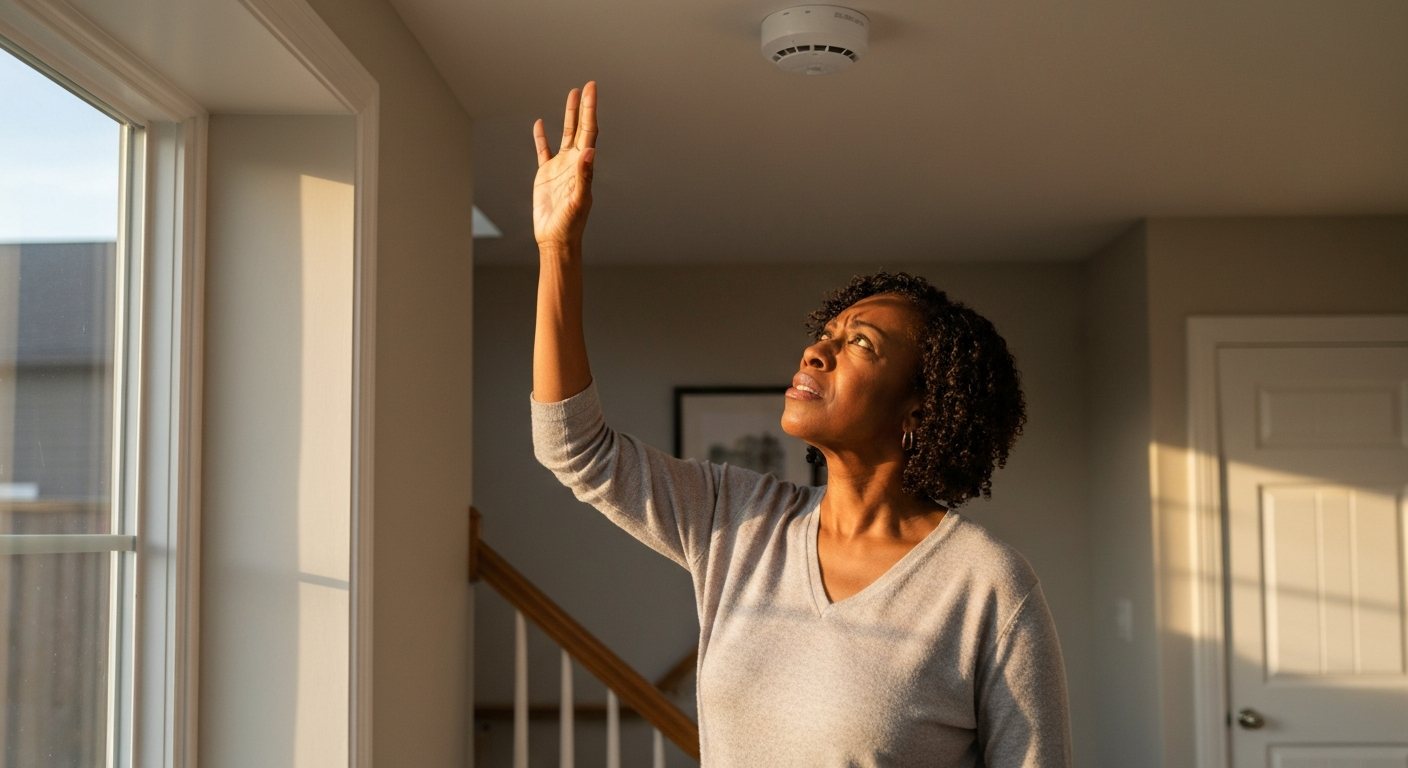

Fire alarms go off without visible smoke for six main reasons: low or dying batteries, dust and debris buildup on the sensor, high humidity or steam, cooking fumes, a malfunctioning or expired unit, or placement too close to heat sources—and identifying which one applies to your situation takes less than five minutes.
| ✓Our Pick |
Replacement smoke alarm batteries with 10-year lifespan No special skills required — straightforward to use and most orders ship quickly. See on Amazon → |
Your fire alarm is designed to be sensitive—that's what keeps you safe—but this sensitivity means everyday household conditions can trigger false alarms when the sensor interprets harmless particles or environmental changes as smoke.
Modern smoke detectors use one of two sensing technologies: ionization or photoelectric. Ionization alarms detect fast-flaming fires by sensing tiny combustion particles, while photoelectric alarms use a light beam to detect larger smoke particles from smoldering fires. Both types can be fooled by non-smoke particles or environmental interference.
The good news is that false alarms almost always have a straightforward cause. Running through a quick diagnostic checklist will usually reveal the culprit within minutes—and the fix is often as simple as replacing a battery or relocating the unit.
| ✓Quick Fix |
See What Solves This in Minutes Quick to get, easy to try — a sensible first move while you figure out next steps. See on Amazon → |
A dying battery is the single most common reason fire alarms activate unexpectedly, and the alarm will often chirp intermittently before going into full alarm mode.
When battery voltage drops below a certain threshold, the alarm's circuitry becomes erratic. Some units chirp as a warning, while others may trigger a full alarm. This happens more frequently at night because cooler temperatures cause battery voltage to drop slightly—which is why 2 AM false alarms are frustratingly common.
If your alarm is hardwired with battery backup, the battery still needs replacement every 6-12 months for standard alkaline batteries, or every 10 years for sealed lithium units. Check your alarm's manufacture date printed on the back—if it's approaching 10 years old, the entire unit needs replacement, not just the battery.
Dust, cobwebs, and even small insects inside the sensing chamber are frequent false-alarm culprits because the sensor cannot distinguish between smoke particles and other airborne debris.
Over time, dust accumulates inside the sensing chamber. When enough builds up—or when a spider decides the warm, enclosed space makes a good home—the sensor registers these obstructions as smoke particles. A study by the National Fire Protection Association found that dust contamination is a leading cause of nuisance alarms in residential settings.
To clean your smoke alarm:
Perform this cleaning every six months—mark it on your calendar when you change your clocks for daylight saving time.
High humidity and steam from showers, boiling water, or humidifiers can trigger photoelectric smoke detectors because water vapor scatters light in a similar way to smoke particles.
Photoelectric alarms work by shining a light beam across a sensing chamber. When particles enter and scatter the light onto the sensor, the alarm activates. Steam and humidity create water droplets that scatter light in the same pattern as smoke, which the sensor cannot differentiate.
If your alarm is within 10 feet of a bathroom door or directly above a stove, consider relocating it. The U.S. Fire Administration recommends installing smoke alarms at least 10 feet away from cooking appliances and keeping bathroom doors closed when showering if an alarm is nearby.
| Alarm Type | Steam Sensitivity | Best Placement |
|---|---|---|
| Photoelectric | High | Away from bathrooms and kitchens |
| Ionization | Moderate | Away from kitchens; prone to cooking false alarms |
| Dual-sensor | Moderate | Versatile; still avoid direct steam exposure |
Cooking produces airborne particles—grease, smoke from high-heat searing, and burnt food residue—that ionization alarms are particularly sensitive to, even when there's no actual fire danger.
Ionization smoke detectors are notorious for false alarms from cooking. The small particles released when oil hits a hot pan or food gets slightly charred are similar in size to combustion particles from actual fires. This is why the NFPA has recommended homeowners consider replacing ionization alarms near kitchens with photoelectric models.
"Ionization smoke alarms are more responsive to flaming fires, but they are also more prone to nuisance alarms from cooking." — National Fire Protection Association
Short-term solutions include using the range hood exhaust fan every time you cook, opening a window for cross-ventilation, or pressing the "hush" button on your alarm (if equipped) when you know you're about to sear steaks. Long-term, relocating the alarm or switching to a photoelectric model near the kitchen prevents recurring frustration.
Also Read: Why Is My Breaker Box Buzzing? 6 Causes & Safety Guide
Smoke detectors have a limited lifespan of 10 years, after which the sensors degrade and become unreliable—either failing to detect real fires or triggering frequent false alarms.
The sensing components inside smoke alarms deteriorate over time. Radioactive material in ionization sensors decays, and photoelectric sensors become less accurate. After a decade, the alarm may start behaving erratically regardless of battery status or cleanliness.
Check the manufacture date printed on the back of your alarm. If it was made more than 10 years ago, replace it immediately—this is a safety issue, not just a nuisance issue. Many 2026 models include 10-year sealed lithium batteries, eliminating the need for battery changes over the unit's entire lifespan.
"Replace all smoke alarms when they are 10 years old or sooner if they don't respond properly when tested." — U.S. Fire Administration
Extreme temperature fluctuations and direct sunlight exposure can cause the internal components of smoke detectors to expand, contract, or malfunction, leading to false alarms.
Some smoke alarms include heat-sensing elements in addition to smoke detection. If your alarm is positioned near a heat vent, in direct sunlight from a window, or in an attic space with extreme temperature swings, these environmental factors can trigger alarms without any smoke present.
Relocate alarms away from HVAC vents, skylights, and windows with direct sun exposure. The optimal placement is on the ceiling at least 4 inches from any wall, or high on a wall 4-12 inches below the ceiling, away from corners where air doesn't circulate well.
A green blinking light on most smoke detectors indicates normal operation and means the unit is receiving power and functioning correctly—this is not a sign of a problem.
Different manufacturers use different LED indicators, but green typically signals that everything is working as intended:
| LED Color | Typical Meaning |
|---|---|
| Green (steady or blinking) | Normal operation, receiving power |
| Red (blinking every 30-60 seconds) | Normal operation on battery power |
| Red (rapid blinking) | Alarm triggered or in test mode |
| Yellow/Amber | Malfunction or end-of-life warning |
| No light | No power—check battery or wiring |
Consult your specific alarm's manual for exact LED meanings, as they vary by manufacturer. If your alarm blinks green but also chirps regularly, the battery likely needs replacement even though the unit has power.
When your fire alarm goes off unexpectedly, follow these steps:
Never remove batteries and forget to replace them. A disabled smoke alarm cannot protect you from a real fire.
Also Read: Why Is My Keurig Not Working? 7 Causes & Quick Fixes
Replace your smoke detector immediately if any of these apply:
When shopping for a new smoke detector in 2026, look for dual-sensor models that combine ionization and photoelectric technology. These reduce false alarms while providing comprehensive fire detection. Smart smoke detectors that connect to your phone can also send alerts when you're away from home and let you silence nuisance alarms remotely.
| ✓Our Pick |
Smart smoke detectors with phone alerts Consistently earns five-star reviews — reliable, well-supported, and genuinely effective. See on Amazon → |
Strategic placement minimizes nuisance alarms while maximizing safety:
False fire alarms almost always come down to one of six causes: dying batteries, dust contamination, humidity or steam, cooking fumes, an expired or malfunctioning unit, or poor placement near heat sources. Start by checking the battery and manufacture date, clean the sensing chamber with compressed air, and consider relocating alarms that sit too close to kitchens or bathrooms. A green blinking light typically means normal operation—not a problem. Replace any smoke detector older than 10 years, and test all units monthly by pressing the test button.
A green blinking light indicates your smoke detector is receiving power and operating normally. This is the standard status indicator for most hardwired and battery-powered alarms when everything is functioning correctly. The alarm only sounds when it detects smoke particles or when you press the test button. If the green light suddenly stops blinking, check the power source—the battery may be dead or the circuit breaker may have tripped for hardwired units.
Several factors trigger alarms without visible smoke: dust accumulation inside the sensing chamber, high humidity or steam from showers and cooking, low battery voltage causing erratic sensor behavior, insects inside the unit, or a detector past its 10-year lifespan. Start troubleshooting by replacing the battery, then vacuum and blow compressed air through the vents. If the problem persists and the unit is more than 8 years old, replacement is the most reliable fix.
Yes, particularly photoelectric smoke detectors. Water vapor droplets scatter light inside the sensing chamber the same way smoke particles do. If your alarm activates frequently after showers or when using a humidifier, relocate it at least 10 feet away from moisture sources. Running the bathroom exhaust fan and keeping the door closed while showering also helps prevent humidity-triggered false alarms.
Test every smoke alarm monthly by pressing and holding the test button until you hear the alarm sound. Additionally, clean alarms every six months using a vacuum with a soft brush attachment, replace batteries annually (unless you have a 10-year sealed lithium unit), and replace the entire alarm every 10 years regardless of whether it seems to be working. Mark these maintenance dates on your calendar.
A single chirp every 30-60 seconds typically indicates low battery and is a warning to replace it soon. A continuous loud alarm means the detector has sensed what it interprets as smoke or fire—investigate immediately before assuming it's false. Some alarms also chirp in specific patterns to indicate malfunction, end-of-life, or interconnected alarm activation. Check your alarm's manual for the exact chirp patterns and their meanings.
Reviewed and Updated on June 20, 2026 by George Wright