
Health
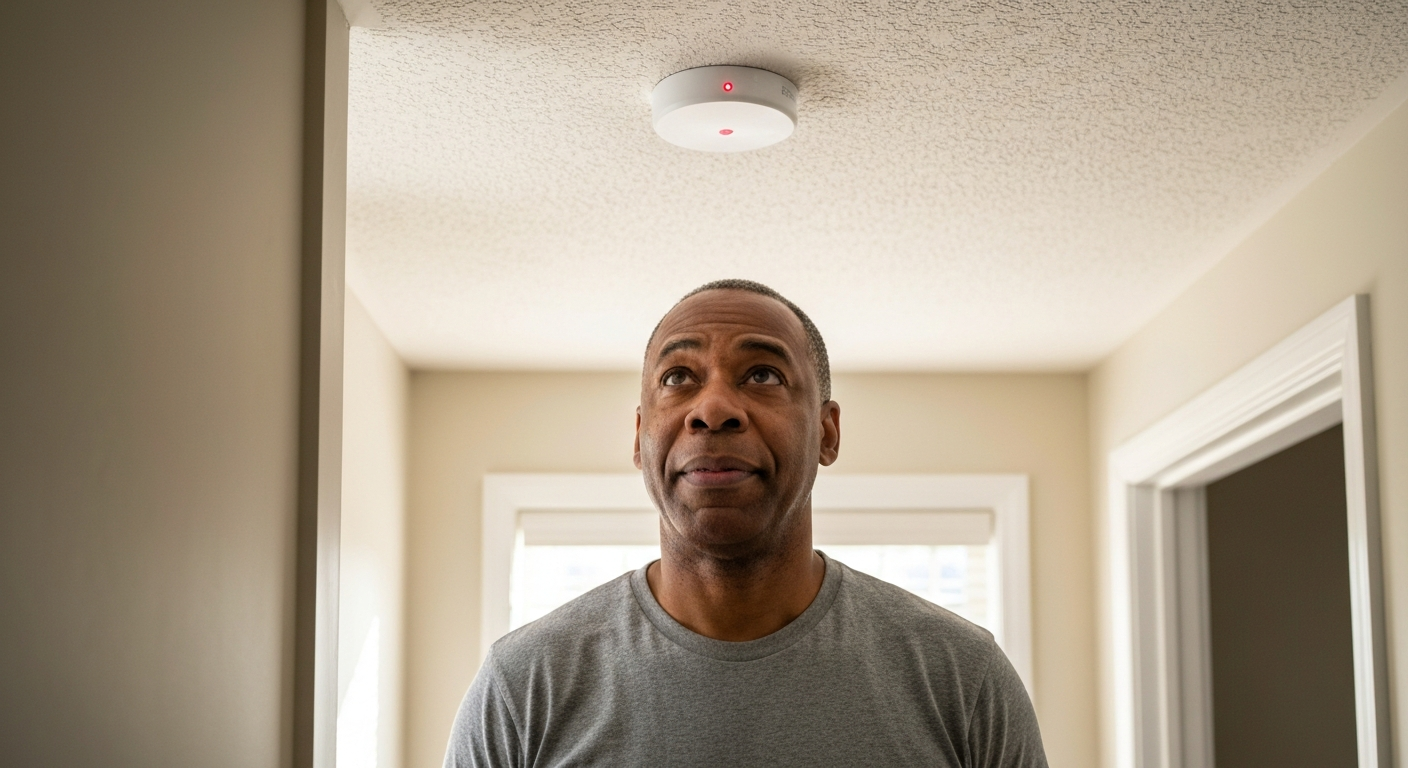

A blinking red light on your fire alarm or smoke detector almost always means the device is working normally—it's a visual heartbeat that confirms the unit has power and is actively monitoring for smoke. However, certain blink patterns, speeds, or accompanying chirps can signal a low battery, sensor malfunction, dust contamination, or end-of-life warning that requires your attention.
| ✓Our Pick |
Top-rated smoke detector replacement options for 2026 Highly rated by thousands of buyers — this is one of the most effective solutions for this issue you can try at home. See on Amazon → |
The red LED on most smoke alarms blinks once every 30 to 60 seconds to show the unit is receiving power and functioning correctly—this is normal operation, not a warning.
Smoke detectors use indicator lights to communicate their status without requiring you to press a button or connect to an app. A slow, steady red blink is the manufacturer's way of saying "I'm awake and watching." This applies whether your smoke alarm is battery-powered, hardwired, or hardwired with battery backup.
The confusion arises because the same red light can flash in different patterns to communicate different problems. A rapid blink every few seconds, a solid red glow, or a blink accompanied by a chirp each carries a distinct meaning. Understanding these patterns helps you distinguish between normal operation and an actual issue requiring action.
"A single LED blink every 40-60 seconds indicates the smoke alarm is operating normally. If the LED blinks rapidly or the alarm chirps, the battery may need replacing or the unit may require attention." — Kidde Safety
| ✓Quick Fix |
See What Solves This in Minutes One of the simplest things to try immediately — no appointment, no waiting. See on Amazon → |
Yes—a single red flash every 30 to 60 seconds confirms your smoke detector is powered on and functioning as designed.
This pattern exists because smoke detectors are silent devices. Unlike a refrigerator that hums or a thermostat with a display, a smoke alarm has no obvious way to show it's working. The periodic red blink serves as that confirmation. If you see this pattern and hear no chirping, your alarm is doing exactly what it should.
Both battery-operated and hardwired units use this same indicator system. Hardwired alarms may also have a green LED that stays solid when AC power is present. The red blink continues regardless to confirm the sensor itself is active.
A red light blinking every 10 to 30 seconds—faster than the normal pattern—combined with a chirp every 30 to 60 seconds typically indicates the battery needs replacement.
When battery voltage drops below the threshold for reliable operation, the smoke detector enters a low-battery warning mode. The faster blink rate draws your attention visually, while the periodic chirp provides an audible alert. This dual-signal approach ensures you notice the warning whether you're looking at the device or not.
For hardwired alarms with battery backup, this warning means the backup battery is low. The unit will continue to function on AC power, but you'll lose protection during power outages until you replace the battery. Most manufacturers recommend replacing backup batteries annually, even if they haven't triggered a low-battery warning.
| Blink Pattern | Chirp? | Meaning | Action Required |
|---|---|---|---|
| Once every 40–60 seconds | No | Normal operation | None |
| Once every 10–30 seconds | Yes, every 30–60 seconds | Low battery | Replace battery |
| Rapid continuous blinking | No | Recent alarm silenced or smoke clearing | Wait 10 minutes; ventilate area |
| Solid red (not blinking) | May vary | Active alarm or malfunction | Check for smoke; consult manual |
Yes—debris inside the sensing chamber can cause erratic blinking, false alarms, or a constant rapid flash as the sensor struggles to read accurately.
Smoke detectors work by detecting particles in the air. Ionization alarms use a small radioactive source to ionize air molecules; smoke particles disrupt this ionization and trigger the alarm. Photoelectric alarms use a light beam; smoke scatters the beam onto a sensor. In both cases, dust, cobwebs, or insects in the chamber can mimic smoke particles.
When contamination is present, you may see the red light blink irregularly or more rapidly than normal. Some units enter a fault mode and blink a specific pattern (often 3 quick blinks repeated) to indicate a sensor issue. Cleaning the alarm with compressed air or a vacuum with a soft brush attachment often resolves this.
The National Fire Protection Association recommends testing smoke alarms monthly and cleaning them according to manufacturer instructions. Dust accumulation is one of the leading causes of nuisance alarms and malfunctioning indicators.
Also Read: Why Is My Room So Hot? 9 Causes & Fixes That Work
A rapid or continuous red flash immediately after your smoke alarm sounds indicates the unit detected smoke and is now in a "memory" or reset mode.
Many smoke detectors retain a memory of recent alarm events. After you silence the alarm or the smoke clears, the red LED may blink rapidly for several minutes—sometimes up to 10 minutes—before returning to normal operation. This serves two purposes: it confirms which detector in a multi-unit system triggered the alarm, and it alerts you that smoke was recently present.
If the rapid blinking continues beyond 15 minutes after all smoke has cleared, the sensor may still be detecting particles. Check for residual smoke, steam, or cooking fumes. Opening windows or running an exhaust fan helps clear the air. If the pattern persists, the sensor chamber may be contaminated and require cleaning or replacement.
Smoke detectors have a 10-year lifespan, and a specific blink pattern—often 5 quick blinks every few seconds—signals the unit has reached end of life and must be replaced.
The sensors inside smoke alarms degrade over time. Ionization chambers lose sensitivity as the radioactive source decays. Photoelectric sensors accumulate contamination that cleaning can't fully remove. After a decade, even a well-maintained alarm becomes unreliable.
Manufacturers program an end-of-life warning into the device. This typically appears as a distinct blink pattern different from the low-battery warning, often accompanied by a chirp pattern that doesn't stop when you install fresh batteries. Check the manufacture date printed on the back of the unit—if it's more than 10 years old, the blinking red light is telling you to replace the entire alarm.
"Replace all smoke alarms when they are 10 years old or sooner if they don't respond properly when tested." — U.S. Fire Administration
For hardwired smoke detectors, irregular blinking or a red light that won't follow normal patterns may indicate loose wiring, a tripped breaker, or an issue with the interconnect circuit.
Hardwired alarms receive power from your home's electrical system. If the connection is loose, corroded, or interrupted, the unit may behave erratically. Symptoms include blinking that doesn't match any documented pattern, intermittent chirping, or failure to respond to the test button.
Interconnected systems—where triggering one alarm sounds all alarms—use an additional wire to communicate between units. A problem with this wire can cause all units to blink abnormally or fail to synchronize. If multiple hardwired alarms in your home show unusual blink patterns simultaneously, the interconnect circuit may be the issue.
Electrical troubleshooting for hardwired alarms should be performed by a qualified electrician, especially in homes built before 1990 where wiring standards may differ from modern codes.
Also Read: Why Is My Gas Fireplace Beeping? 6 Causes & Quick Fixes
Start by counting the blink rate and listening for chirps—these two factors together identify whether your alarm is operating normally or signaling a specific problem.
Here's a systematic approach to diagnosing what your smoke detector is telling you:
Count the interval. Use a clock or phone timer. A blink every 40–60 seconds is normal. Every 10–30 seconds suggests low battery or a fault.
Listen for chirps. A chirp every 30–60 seconds paired with faster blinking points to low battery. A chirp pattern that continues after battery replacement signals end of life.
Check the manufacture date. Look on the back or side of the unit. If it's older than 10 years, replace it regardless of other symptoms.
Test the alarm. Press and hold the test button for 3–5 seconds. A loud alarm confirms the sensor and horn are functioning. No sound indicates a dead battery or failed unit.
Clean the unit. Use compressed air or a vacuum with a brush attachment around the vents. Remove the cover if your model allows and gently clean the sensor area.
Replace the battery. Use a fresh 9-volt or AA battery (check your model's requirements). After replacement, test the alarm again.
Check interconnected alarms. If you have a hardwired system, determine whether the issue affects one unit or all units. A single misbehaving alarm suggests that specific unit is faulty; all alarms blinking abnormally suggests a wiring issue.
| ✓Our Pick |
Top-rated 9-volt batteries for smoke detectors Trusted by professionals and everyday users alike — a smart investment that pays for itself. See on Amazon → |
Replace the entire smoke detector if it's over 10 years old, fails the test button after a fresh battery, or continues showing fault patterns after cleaning—otherwise, a reset often resolves temporary issues.
| Symptom | Try This First | Replace If... |
|---|---|---|
| Slow normal blink | No action needed | — |
| Fast blink + chirp | Replace battery; reset | Chirping continues with new battery |
| Rapid blink after alarm | Ventilate area; wait 15 min | Pattern doesn't return to normal |
| Irregular/erratic blink | Clean sensor; check wiring | Cleaning and new battery don't help |
| 5-blink fault pattern | Check manufacture date | Unit is 10+ years old |
To reset most smoke alarms, remove the battery, hold the test button for 15–20 seconds, then reinstall a fresh battery. For hardwired units, turn off the breaker, wait 30 seconds, restore power, then test. If problems persist after a reset and cleaning, replacement is the safest choice.
A blinking red light on your smoke detector or fire alarm is usually a good sign—it means the unit is powered and monitoring for smoke. A slow blink every 30–60 seconds is normal operation. Faster blinking, especially with chirps, signals low battery, sensor contamination, or end of life. Clean your alarms regularly, replace batteries annually, and replace the entire unit every 10 years. When in doubt, press the test button—a loud alarm means your detector is ready to protect your home.
A red blink every 10 seconds, especially when accompanied by a periodic chirp, typically indicates a low battery. The faster rate is designed to catch your attention more urgently than the normal 40–60 second interval. Replace the battery with a fresh one and test the alarm. If the rapid blinking continues after battery replacement, the unit may be faulty or at end of life.
A red flash without any chirp usually means the alarm is operating normally. The LED blinks to confirm the unit has power and the sensor is active. If the blink rate seems faster than usual but there's no sound, the unit may have recently detected trace smoke or particles and is still clearing. Ventilate the area and wait 10–15 minutes. If the pattern doesn't normalize, clean the sensor or check for contamination.
After a battery change, many smoke detectors go through a brief initialization period. The red light may flash rapidly for 30 seconds to a few minutes before settling into the normal slow blink. This is standard behavior. If rapid blinking continues beyond 5 minutes, remove the battery again, hold the test button for 20 seconds to discharge any residual power, then reinstall the battery and test.
Yes—high humidity or steam from showers and cooking can enter the sensor chamber and be misread as smoke particles. This can trigger rapid blinking or false alarms. If your smoke detector is installed near a bathroom or kitchen, consider relocating it at least 10 feet from these moisture sources. Photoelectric alarms are generally less sensitive to humidity than ionization types.
Check the manufacture date on the back of the unit. If it's more than 10 years old, replace it immediately regardless of how it's behaving. Other replacement signals include: the alarm fails the test button even with a fresh battery, the unit chirps continuously after battery replacement, or you see a specific fault blink pattern (often 5 rapid blinks) that indicates end of life. When in doubt, a new smoke detector costs $20–$40 and provides peace of mind.
Also Read: Why Is My House So Humid? 8 Causes & Proven Fixes
Reviewed and Updated on June 20, 2026 by George Wright