Health
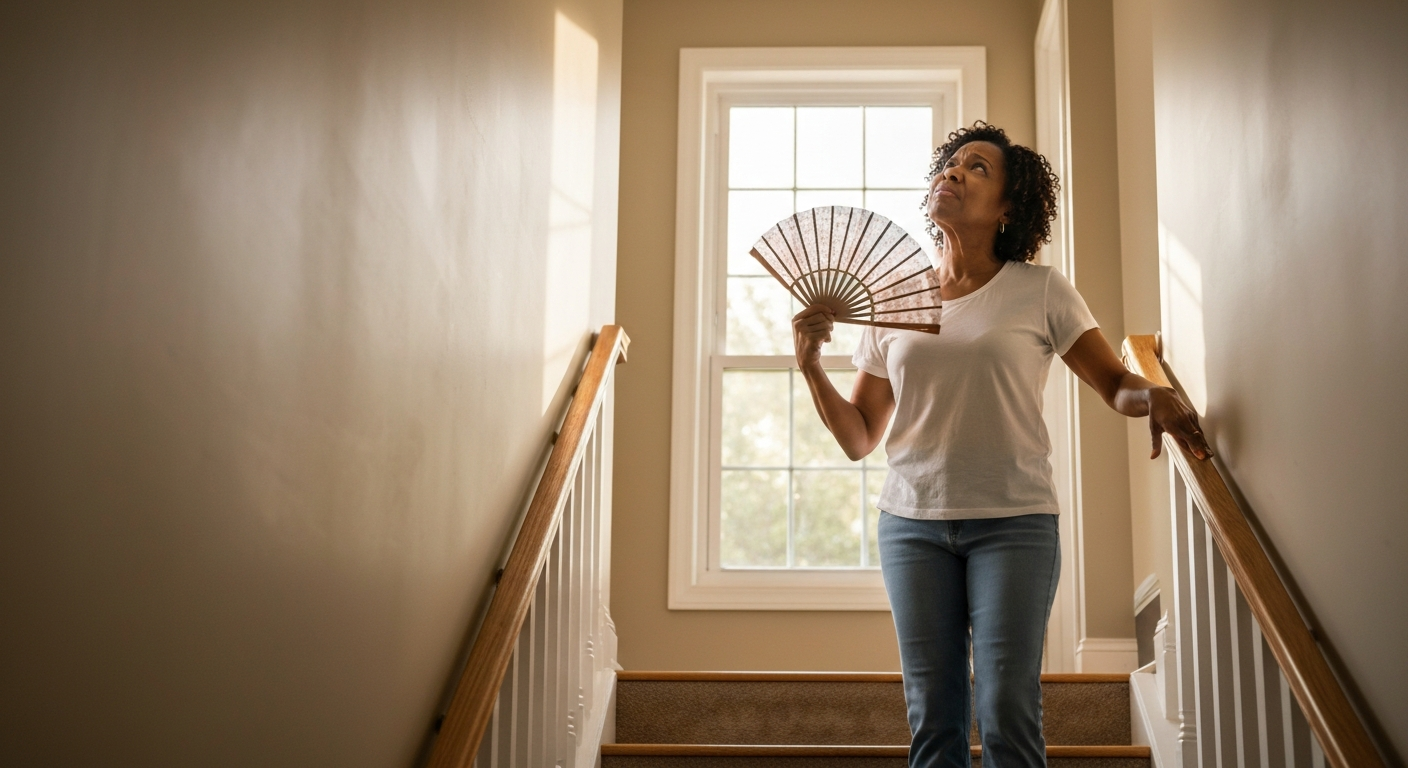

Your upstairs is hot because heat naturally rises, and most two-story homes have HVAC systems, ductwork, and insulation that weren't designed to compensate for this basic physics problem — the result is a second floor that can be 8–15°F warmer than the main level, especially during summer months.
| ✓Our Pick |
Smart thermostat for multi-zone temperature control Simple to use and genuinely effective — for many people this is all they ever needed. See on Amazon → |
The hot air in your home rises due to convection — warm air is less dense than cool air, so it naturally floats upward and accumulates in your upstairs rooms.
This isn't a flaw in your house. It's physics doing exactly what it's supposed to do. Hot air molecules move faster and spread farther apart than cold ones. This makes warm air lighter per cubic foot. Your upstairs becomes a collection zone for every BTU of heat generated on the lower floors.
But here's what makes it worse in modern homes: your roof absorbs solar radiation all day long. Attic temperatures can reach 150°F or higher during summer. Even with insulation, that heat radiates downward into your second floor. Your upstairs is essentially sandwiched between rising heat from below and baking heat from above.
"In a typical two-story home, the temperature differential between floors can exceed 10 degrees Fahrenheit, primarily due to the stack effect and solar heat gain through the roof." — U.S. Department of Energy
Also Read: Why Is My Room So Hot? 9 Causes & Fixes That Work
| ✓Quick Fix |
What Actually Works for This, Fast A fast first step before anything more expensive or time-consuming — worth a look right now. See on Amazon → |
Inadequate attic insulation is the single biggest factor in upstairs overheating — without proper insulation, your roof essentially becomes a heat lamp aimed at your second floor.
Most homes built before 2000 have R-19 to R-30 insulation in the attic. Current Energy Star recommendations call for R-38 to R-60 depending on your climate zone. The difference matters: upgrading from R-19 to R-49 can reduce heat transfer through your ceiling by 60%.
Check your attic. If you can see the tops of the floor joists, you don't have enough insulation. The insulation should cover them completely.
Ductwork running through unconditioned spaces like attics loses 20–30% of cooled air before it ever reaches your upstairs vents.
Here's what happens: your air conditioner sends 55°F air through ducts that snake through a 140°F attic. The ducts absorb heat. Joints pull apart over time. By the time that air reaches your bedroom, it's closer to 65°F — and there's less of it.
Duct leakage is surprisingly common. According to Energy Star, the average home loses about 25% of conditioned air through duct leaks. If those ducts run through your attic, your upstairs pays the price.
A single-zone HVAC system treats your entire house as one temperature area — but your upstairs needs significantly more cooling capacity than your downstairs to achieve the same temperature.
Most homes have one thermostat, typically on the main floor. When it reaches 72°F downstairs, the system shuts off. Meanwhile, your upstairs is sitting at 78°F and climbing.
The problem compounds during peak afternoon hours. Your system cycles on and off based on downstairs conditions while upstairs never gets adequate cooling time.
Closing vents in unused rooms or letting furniture block registers doesn't save energy — it creates pressure imbalances that reduce overall airflow to your second floor.
Your HVAC system is designed to move a specific volume of air. When you block vents, that air has to go somewhere. It either leaks through duct joints or creates back-pressure that forces the blower to work harder and move less air overall.
Walk through your upstairs. Check that every vent is open and unobstructed by furniture, curtains, or rugs. A vent blocked by a bed creates a dead zone in that room.
South- and west-facing windows on your second floor act as solar collectors, adding hundreds of BTUs of heat per hour during afternoon sun.
Solar heat gain through windows is often underestimated. A single south-facing window receives 100–300 BTUs per square foot per hour on a sunny day. That 4-by-6-foot bedroom window? It's pumping 2,400–7,200 BTUs of heat into the room — equivalent to running a small space heater.
Older single-pane windows make this worse. Modern low-E glass blocks up to 70% of solar heat gain while still letting in visible light.
A clogged air filter reduces airflow by up to 15%, and since your upstairs requires more airflow to compensate for heat rise, it feels the shortage first.
Think of your filter like a straw. A clean straw lets you drink easily. A dirty one makes you work harder and get less. Your blower motor does the same thing — it strains against a dirty filter and moves less air.
Check your filter monthly during summer. If it looks gray or you can't see light through it, replace it immediately.
Many homes have return vents only on the first floor, which creates a pressure imbalance that makes it harder to pull warm air from upstairs back to the air handler.
When your system can't pull air from upstairs efficiently, that air just sits there getting warmer. Meanwhile, the system recirculates cooler downstairs air. This self-reinforcing cycle makes the temperature gap worse over time.
Look at your return vent placement. Ideally, each floor should have its own return. If all your returns are downstairs, this is likely contributing to your problem.
Dark-colored shingles can be 50–70°F hotter than light-colored or reflective roofing materials, radiating significantly more heat into your attic and through to your second floor.
| Roof Type | Surface Temp on 90°F Day | Heat Transfer to Attic |
|---|---|---|
| Standard dark shingles | 150–170°F | High |
| Light-colored shingles | 120–130°F | Moderate |
| Cool roof/reflective coating | 100–110°F | Low |
| Metal roof (light color) | 105–115°F | Low |
If you're due for a roof replacement, choosing a cooler material can reduce your attic temperature by 20–30°F.
Start with free or low-cost solutions that address airflow and solar heat gain — these won't solve the root cause but can drop upstairs temperatures 3–5°F immediately.
These improvements typically cost $100–$500 and target the most common causes of second-floor overheating.
| ✓Our Pick |
Attic vent fan with thermostat control Simple to use and genuinely effective — for many people this is all they ever needed. See on Amazon → |
These solutions require larger investments ($500–$5,000+) but address the structural causes of upstairs heat.
| Fix | Typical Cost | Expected Temperature Reduction |
|---|---|---|
| Add attic insulation to R-49 | $1,500–$3,000 | 4–8°F |
| Professional duct sealing | $500–$1,500 | 3–6°F |
| Install zoned HVAC system | $2,000–$5,000 | 5–10°F |
| Add attic radiant barrier | $500–$1,500 | 2–5°F |
| Install mini-split for upstairs | $3,000–$5,000 | Full independent control |
"Duct sealing and adding insulation are among the most cost-effective ways to improve home energy efficiency and comfort, often paying for themselves in reduced energy bills within 2–5 years." — Environmental Protection Agency
Also Read: Why Is My House So Humid? 8 Causes & Proven Fixes
If you've tried the basic fixes and your upstairs is still 8°F or more warmer than your thermostat setting, you likely have a system design or ductwork problem that requires professional diagnosis.
Consider calling a pro if:
A qualified HVAC technician can perform a Manual J load calculation to determine if your system is properly sized. They can also conduct a duct blaster test to measure actual duct leakage.
Your upstairs is hot because heat rises, your attic absorbs solar radiation, and most HVAC systems aren't designed to compensate for these physics realities. The most common fixable causes are inadequate attic insulation, leaky ductwork, blocked vents, and solar heat gain through windows. Start with free fixes like opening all vents and closing afternoon blinds, then consider adding attic insulation or a zoned thermostat system for lasting improvement.
Your AC may be running, but if your ducts leak or your system is single-zone, most of that cool air never makes it upstairs — or the thermostat shuts off the system before your second floor is cool enough. A smart thermostat with an upstairs sensor can help your system recognize the real temperature where you need it. If airflow seems weak upstairs, check for blocked vents and a dirty filter first.
Focus on reducing heat gain and improving air movement. Close blinds or curtains on sun-facing windows during peak hours. Run ceiling fans counterclockwise to create a wind chill effect. Open windows at night when outdoor temperatures drop below indoor temperatures, and close them in the morning to trap cool air. A portable evaporative cooler can help in dry climates.
No — closing vents creates pressure imbalances that actually reduce your system's overall efficiency. Your ductwork is designed for a specific airflow volume. Closing vents forces air to leak through duct joints or creates back-pressure on the blower. A better solution is to partially close upstairs vents and leave downstairs vents fully open, or install dampers in your ductwork for proper zone control.
Not necessarily. Some temperature difference between floors is normal due to basic physics. However, a gap exceeding 8–10°F suggests a problem worth investigating — either undersized equipment, duct leaks, insufficient insulation, or poor system design. If your AC is older than 15 years and struggling to cool your upstairs, it may be approaching end of life.
Yes — attic insulation is one of the most effective fixes for an overheated second floor. Your attic acts as a buffer between your roof (which can reach 150°F in summer) and your living space. Adding insulation from R-19 to R-49 can reduce heat transfer through your ceiling by 60% and lower upstairs temperatures by 4–8°F during peak summer hours.
Reviewed and Updated on June 20, 2026 by George Wright