
Health
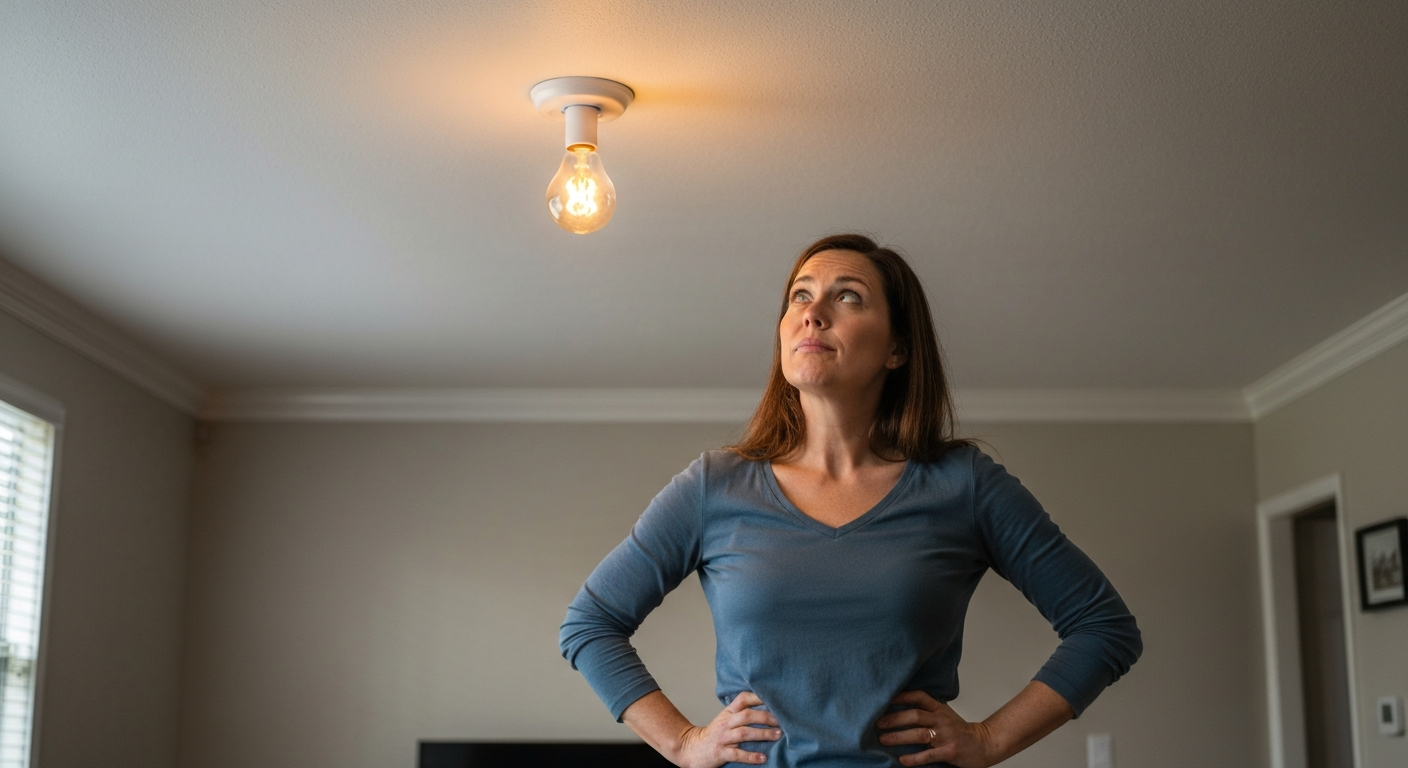

A flickering light bulb usually signals a loose connection, an incompatible dimmer switch, a failing bulb, or voltage fluctuations in your home's electrical system—and in most cases, you can fix it yourself in under ten minutes.
That annoying strobe effect isn't just irritating; it's your lighting system trying to tell you something. Whether you're dealing with an LED light blinking in a ceiling fixture, a lamp flickering on your desk, or car headlights that pulse at idle, the underlying causes share common themes. The good news? Most flickering problems trace back to simple, inexpensive fixes. The key is knowing which type of flicker you're dealing with and what's causing it.
| ✓Our Pick |
LED-compatible dimmer switches for flicker-free lighting Save yourself the frustration — a proven solution with consistently positive feedback from real buyers. See on Amazon → |
Light bulbs flicker when the electrical current flowing through them becomes inconsistent—either because of a physical interruption in the circuit or because the power supply itself is fluctuating.
Every light bulb needs a steady flow of electricity to produce consistent illumination. When that flow gets interrupted or varies, even for fractions of a second, you see it as a flicker. Think of it like a garden hose with someone occasionally stepping on it. The water (electricity) still flows, but it pulses instead of streaming smoothly.
The human eye can detect light fluctuations down to about 50–60 Hz, which is why flickering bothers us so much. LEDs are particularly susceptible because they respond instantly to current changes. Incandescent bulbs, with their heated filaments, have some "thermal lag" that masks minor fluctuations. This difference explains why you might notice flickering after switching to LED bulbs even though your old incandescents seemed fine.
| ✓Quick Fix |
The Quick Fix Most People Reach for First One of the simplest things to try immediately — no appointment, no waiting. See on Amazon → |
A bulb that isn't screwed in completely creates an intermittent connection that causes visible flickering—especially when vibrations from foot traffic or closing doors jostle the fixture.
This is the most common cause and the easiest to fix. Turn off the switch, let the bulb cool, and screw it in firmly. For pin-base bulbs (like GU10 spotlights), make sure the pins are fully seated in the socket. If the bulb still wobbles after tightening, the socket's center contact tab may be bent down. You can gently pry it up with a flathead screwdriver (with the power off) to restore solid contact.
Traditional dimmer switches designed for incandescent bulbs often cause LED lights to flash, strobe, or flicker because they regulate power in ways that LEDs can't interpret correctly.
Older dimmers work by rapidly chopping the electrical current—a technique called "trailing edge" or "leading edge" dimming. Incandescent bulbs don't mind because their hot filaments smooth out the interruptions. LEDs, however, react to every chop, creating visible flicker or a buzzing sound.
"Many existing dimmers are not designed for the low wattages of LED lamps and may not perform well." — U.S. Department of Energy
The fix is replacing your dimmer with one specifically labeled "LED compatible" or "CFL/LED." These use a different modulation method that LEDs handle smoothly. Check the dimmer's packaging for a minimum wattage rating, too. If your LED bulbs total less than the dimmer's minimum load, flickering is almost guaranteed.
LED bulbs don't burn out suddenly like incandescents—they degrade over time, and flickering is often one of the first signs that a bulb is reaching the end of its lifespan.
Quality LED bulbs last 15,000 to 50,000 hours, but cheap ones may fail much sooner. Internal driver components can degrade from heat, causing the bulb to flicker before going dark entirely. If a bulb flickers consistently regardless of fixture or switch, replace it. If the flickering follows the bulb when you move it to a different lamp, that confirms the bulb is the problem.
Flickering that happens when major appliances kick on—like your AC, refrigerator, or washing machine—usually indicates voltage fluctuations on your home's electrical circuit.
Large appliances draw significant startup current (called inrush current), which can momentarily dip the voltage on shared circuits. If your lights are on the same circuit as these appliances, they'll flicker briefly when the appliance cycles. This type of flicker is usually harmless if it's brief and occasional.
However, persistent or severe voltage swings could indicate:
- An overloaded circuit
- Loose wiring at the main panel
- Problems with your utility's supply
If lights throughout your house dim significantly (more than 5%) when appliances run, have an electrician evaluate your panel and wiring.
Also Read: Why Is My Fire Alarm Blinking Red? 6 Causes & Fixes
Loose or corroded wire connections anywhere between your electrical panel and the light fixture can cause intermittent flickering—and this is the cause that warrants the most caution.
Electrical connections can loosen over time from thermal cycling (heating and cooling as current flows) or simply from age. A loose wire nut, a corroded terminal, or a backstabbed outlet connection can all create the high-resistance connection that causes flickering.
Warning signs that suggest a wiring problem:
- Flickering that worsens over time
- Flickering limited to one room or circuit
- Warm or discolored switch plates
- Burning smell near outlets or fixtures
- Flickering that correlates with movement (walking past a switch, closing a door)
Loose wiring is a fire hazard. If you suspect it, stop using the affected circuit and call a licensed electrician.
Fluorescent light flickering usually stems from aging tubes, a failing ballast, or cold temperatures that prevent the gas inside the tube from ionizing properly.
Fluorescent tubes work by exciting mercury vapor to produce UV light, which then activates the phosphor coating inside the tube. This process is less stable than LED or incandescent operation, making fluorescent lights more prone to flickering.
| Symptom | Likely Cause | Fix |
|---|---|---|
| Flickering at startup, then steady | Normal tube warmup | No action needed |
| Persistent flicker or dancing light | Failing tube | Replace tube |
| Flickering with gray/black ends on tube | Tube at end of life | Replace tube |
| Flickering with buzzing sound | Failing ballast | Replace ballast or fixture |
| Flickering in cold rooms (<50°F) | Low-temp operation issue | Use cold-weather ballast or switch to LED |
If your workplace has fluorescent lighting that constantly flickers, it's worth noting that prolonged exposure to flicker can cause headaches and eye strain in some people.
Some LED bulbs contain low-quality internal drivers that don't filter incoming power effectively, making them flicker even on perfectly stable circuits.
The driver is the electronic component that converts your home's AC power into the DC power that LEDs need. Quality drivers include capacitors that smooth out power fluctuations. Budget bulbs often skimp on these components, resulting in visible flicker—sometimes at 120 Hz (imperceptible to most people) but sometimes at lower frequencies that you can clearly see.
If you've ruled out switches, wiring, and fixtures, try a bulb from a reputable brand with documented flicker specifications. Energy Star-certified LED bulbs must pass flicker tests, making them a safer choice.
Also Read: Why Is My Hotspot So Slow? 9 Causes & Quick Fixes
Flickering car headlights typically indicate a failing alternator, a loose battery connection, a dying bulb, or—in vehicles with HID or LED headlights—a ballast or driver problem.
Vehicle electrical systems are different from home wiring, but the core principle is the same: inconsistent power causes visible flicker.
| Symptom | Likely Cause | What to Check |
|---|---|---|
| Flickering at idle, steady when driving | Weak alternator output | Have alternator tested |
| Flickering one headlight only | Failing bulb or loose connector | Inspect bulb and wiring harness |
| Flickering both headlights with other electrical issues | Battery/charging system | Test battery and alternator |
| HID headlight cycling off and on | Failing ballast | Replace HID ballast |
| LED headlight strobing rapidly | Incompatible with vehicle CANBUS system | Install CANBUS decoder |
If your headlights flicker along with your dashboard lights dimming, that's a strong sign your alternator is struggling. Many auto parts stores will test your charging system for free.
Also Read: Why Is My Truck Shaking? 8 Causes & How to Fix It
Start with the simplest possibilities—a loose bulb or a bad bulb—before investigating switches, circuits, and wiring.
Follow this sequence to pinpoint the cause:
"Flickering lights that are only a slight annoyance are usually easily corrected. However, if the flickering worsens or suddenly changes, have an electrician inspect your home wiring." — Electrical Safety Foundation International
Any flickering accompanied by burning smells, warm outlets, visible sparks, or lights that dim significantly (more than 5%) when appliances run warrants professional evaluation.
While loose bulbs and bad dimmers are easy DIY fixes, electrical panel problems and loose wiring are not. Aluminum wiring (common in homes built between 1965 and 1973) is especially prone to loose connections that cause flickering and fire risk.
Call an electrician if:
- Multiple circuits flicker simultaneously
- You've ruled out bulbs, fixtures, and switches
- Switches or outlets feel warm to the touch
- You see scorch marks or melted plastic
- Your home has aluminum wiring and hasn't been inspected recently
- Flickering started after a storm or power outage
| ✓Our Pick |
Whole-house surge protector for voltage protection One of the highest-rated products in its category — a reliable fix used by thousands of people. See on Amazon → |
Most flickering problems resolve with one of these five simple actions—no electrician required.
For cars, start by checking battery terminal connections. Corrosion or looseness there causes more electrical weirdness than any other single issue.
A flickering light bulb is almost always caused by a loose connection, an incompatible dimmer, a failing bulb, or voltage fluctuations from large appliances. Start by tightening the bulb and testing with a replacement. If you're using LEDs on a dimmer, check that the dimmer is LED-compatible—this is the most common overlooked cause in 2026. For car headlights, check battery connections and alternator output. Call an electrician only if flickering persists across multiple circuits, accompanies burning smells, or involves noticeably warm switches.
Some LED bulbs blink or glow faintly when switched off because small amounts of current still flow through the circuit—often from illuminated switches, smart switches, or old wiring with residual capacitance. Installing a "dummy load" or bypass capacitor on the circuit usually stops this, or you can replace the illuminated switch with a standard one.
A lamp that flickers in one outlet but works fine in another has identified a problem with that specific outlet. The outlet may have loose wiring, worn contacts, or a poor connection at the receptacle. Try plugging in a different device to confirm. If other devices also behave erratically, have an electrician inspect or replace the outlet.
When a fluorescent light both flickers and buzzes, the ballast is usually failing. The ballast regulates current to the tubes, and as it ages, it can cause tubes to flicker while also producing an audible hum. Replacing the ballast is possible, but in many cases, it's more cost-effective to replace the entire fixture with an LED panel.
When multiple vehicle lights flicker together, the charging system is the likely culprit. The alternator may be failing to maintain adequate voltage, or the battery may be unable to buffer fluctuations. Have both tested—most auto parts stores offer free testing. A failing alternator can leave you stranded if not addressed.
Flickering itself doesn't significantly increase electricity consumption, but the underlying cause might. A loose connection creates electrical resistance, which converts energy to heat instead of light. This wastes power and creates a fire risk. Fixing the flicker improves both safety and efficiency.
Reviewed and Updated on June 20, 2026 by George Wright