


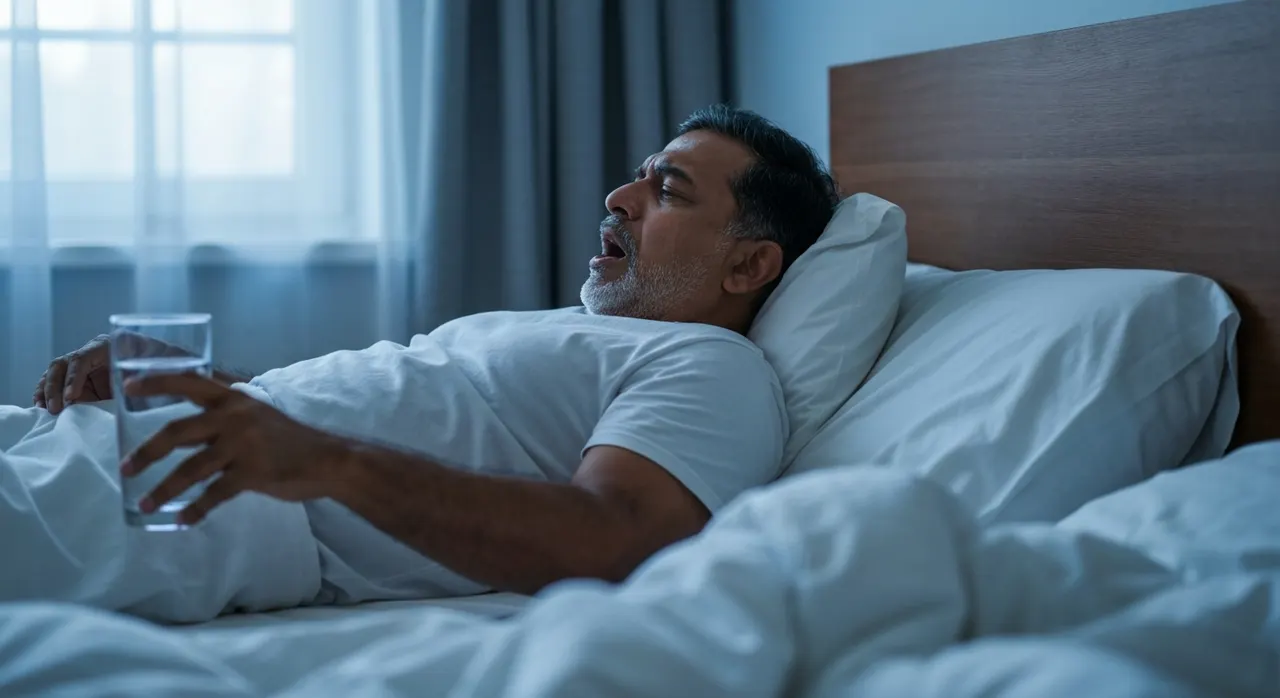
Snoring and dry mouth often go hand in hand because mouth breathing during sleep bypasses your nasal passages, allowing moisture to evaporate rapidly from your tongue, palate, and throat tissues — leaving you parched when you wake up.
When you breathe through your mouth at night (whether due to nasal congestion, sleep position, or airway obstruction), the continuous airflow acts like a dehumidifier inside your oral cavity. This creates a feedback loop: the drier your mouth becomes, the more your soft tissues stick together and vibrate, which can actually intensify snoring. Understanding this connection is the first step toward waking up refreshed instead of reaching for water at 3 a.m.
Also Read: What Type of Snoring Is Dangerous? 5 Warning Signs
Why Does Snoring Cause Dry Mouth in the First Place?
Snoring forces air through your mouth at higher-than-normal velocities, stripping away the protective saliva layer that normally keeps oral tissues hydrated throughout the night.
Your mouth wasn't designed to be a primary airway during sleep. When you breathe nasally, air passes through mucous membranes that warm, filter, and humidify it before reaching your lungs. Mouth breathing skips this entire conditioning process.
The mechanics work like this: during a snore, the soft palate and uvula vibrate rapidly as air rushes past collapsed or narrowed airways. This turbulent airflow accelerates moisture loss from every surface it contacts — your tongue, cheeks, gums, and throat lining all lose hydration simultaneously.
"Mouth breathing during sleep is the primary cause of xerostomia (dry mouth) upon waking, as it increases evaporative water loss from the oral cavity by up to 42% compared to nasal breathing." — Dr. Michael Gelb at the Gelb Center for Airway and Sleep Medicine
Additionally, snorers often sleep with their mouths partially or fully open to compensate for restricted nasal airflow. Even if you fall asleep breathing through your nose, your jaw may drop open once deeper sleep relaxes your muscles — and the drying process begins.
| ✓Quick Fix |
What Actually Works for This, Fast Many readers dealing with this exact issue start with something like this before trying anything else. See on Amazon → |
7 Reasons Your Mouth Is Dry at Night (Even After Drinking Water)
Hydration alone won't solve nighttime dry mouth if the underlying cause — whether anatomical, environmental, or medication-related — continues to pull moisture from your oral tissues faster than your body can replace it.
Does Nasal Congestion Force Mouth Breathing?
When your nose is blocked from allergies, a deviated septum, or chronic sinusitis, your body automatically switches to mouth breathing. This is the single most common trigger for the snoring-dry mouth combination. Even mild congestion that doesn't bother you during the day can become problematic when you lie down and blood pools in your nasal tissues.
Can Medications Cause Dry Mouth While You Sleep?
Over 500 medications list dry mouth (xerostomia) as a side effect. The worst offenders include antihistamines, decongestants, antidepressants, blood pressure medications, and muscle relaxants. Many of these drugs reduce saliva production systemically, meaning even nasal breathing won't fully protect you from overnight dryness.
Does Alcohol Dry Out Your Mouth?
Alcohol is a diuretic that dehydrates your entire body, but it also relaxes throat muscles — increasing both snoring intensity and the likelihood that your mouth will fall open during sleep. A nightcap creates a perfect storm for morning dry mouth.
Is Sleep Apnea Behind Your Symptoms?
Obstructive sleep apnea (OSA) causes repeated airway collapses that force gasping mouth breaths throughout the night. Many people with undiagnosed apnea experience severe dry mouth as one of their earliest symptoms. If you snore loudly, wake with headaches, or feel exhausted despite "enough" sleep, apnea may be the culprit.
Does Your Sleep Position Matter?
Back sleeping allows gravity to pull your jaw open and your tongue backward, narrowing your airway and encouraging mouth breathing. Side sleeping typically reduces both snoring and dry mouth symptoms significantly.
Can Low Humidity Worsen Overnight Dryness?
Bedroom humidity below 30% accelerates moisture loss from exposed oral tissues. Winter heating and air conditioning both strip humidity from indoor air, making seasonal dry mouth a common complaint even among non-snorers.
Is Age a Factor?
Saliva production naturally decreases with age, and older adults are more likely to take multiple medications with drying side effects. This means the same amount of mouth breathing causes progressively worse dry mouth as you get older.
Also Read: Audiobooks and guided listens that help you wind down at night
The Health Risks of Chronic Dry Mouth
Beyond discomfort, persistent dry mouth damages teeth, gums, and throat tissues while disrupting the sleep quality you need for daytime functioning.
Saliva isn't just for comfort — it's a critical defense system. It neutralizes acids that cause tooth decay, washes away food particles that feed bacteria, and contains antimicrobial proteins that protect against infection. Without adequate saliva, problems accumulate quickly.
| Health Risk | How Dry Mouth Contributes | Timeline |
|---|---|---|
| Tooth decay | Acids remain on enamel longer | Months |
| Gum disease | Bacteria proliferate unchecked | Weeks to months |
| Bad breath | Anaerobic bacteria thrive | Days |
| Oral thrush | Yeast overgrows without saliva's antifungal properties | Weeks |
| Difficulty swallowing | Throat tissues become irritated and inflamed | Ongoing |
| Sleep fragmentation | Discomfort causes micro-awakenings | Nightly |
"Patients with chronic xerostomia have a three-fold increased risk of dental caries and are significantly more likely to develop oral candidiasis, particularly when the condition persists for more than three months." — American Dental Association
The sleep disruption aspect deserves special attention. When your mouth becomes uncomfortably dry, you may wake just enough to swallow, lick your lips, or reach for water — fragmenting your sleep architecture without your conscious awareness. This explains why snorers with dry mouth often feel unrested even after eight hours in bed.
Also Read: Does Alcohol Cause Snoring? 6 Facts & How to Stop It
How to Stop Dry Mouth From Snoring: 2026 Solutions
Addressing both the snoring and the dryness simultaneously produces better results than targeting either symptom alone.
Fix Nasal Breathing First
Before trying mouth-specific interventions, optimize your nasal airway. Saline rinses clear mucus and allergens. Nasal strips or dilators mechanically open nasal passages. Treating underlying allergies with appropriate medications (preferably non-drying options like nasal corticosteroid sprays) addresses the root cause for many people.
Reposition Your Jaw During Sleep
Mandibular advancement devices (MADs) hold your lower jaw slightly forward, opening the airway behind your tongue and reducing the collapse that causes snoring. Many users find that better airflow means they can keep their mouths closed naturally throughout the night.
Humidify Your Bedroom
A bedroom humidifier maintaining 40–50% relative humidity significantly reduces evaporative moisture loss. Cool-mist models are generally safer and easier to maintain than warm-mist versions. Place the humidifier several feet from your bed and clean it weekly to prevent mold growth.
Stay Hydrated — Strategically
Drinking water throughout the day maintains systemic hydration, but chugging fluids right before bed just means bathroom trips that fragment your sleep. Instead, focus on consistent daytime hydration and keep a small glass of water on your nightstand for quick sips if you wake dry.
Consider a Chin Strap
For some mouth breathers, a simple chin strap that holds the jaw closed can make a dramatic difference. These work best when nasal breathing is already possible but jaw relaxation during sleep causes the mouth to fall open.
Review Your Medications
If you take medications known to cause dry mouth, speak with your doctor about timing adjustments or alternatives. Sometimes taking a drying medication in the morning rather than evening reduces overnight effects without compromising its therapeutic benefit.
Also Read: Is Snoring Unhealthy? 6 Risks & What Your Body Is Telling You
When to See a Doctor About Snoring and Dry Mouth
Seek medical evaluation if your dry mouth persists despite home interventions, if your snoring includes gasping or choking sounds, or if a partner observes pauses in your breathing during sleep.
These warning signs suggest obstructive sleep apnea, which requires professional diagnosis and treatment:
- Snoring loud enough to disturb others or wake yourself
- Witnessed breathing pauses during sleep
- Waking with gasping or choking sensations
- Morning headaches that fade within an hour of waking
- Excessive daytime sleepiness despite adequate time in bed
- Difficulty concentrating or irritability
A sleep study (polysomnography) can definitively diagnose apnea and determine its severity. Treatment options range from CPAP therapy to oral appliances to surgical interventions, depending on your specific anatomy and apnea severity.
Even without apnea, persistent dry mouth warrants dental evaluation. Your dentist can assess for early decay, prescribe saliva substitutes or stimulants, and recommend fluoride treatments to protect vulnerable enamel.
| ✓Our Pick |
Anti-snoring mouthpiece — adjustable mandibular advancement device (MAD) Consistently earns five-star reviews — reliable, well-supported, and genuinely effective. See on Amazon → |
In Short
Snoring and dry mouth form a self-reinforcing cycle: mouth breathing during sleep causes tissue vibration (snoring) while simultaneously stripping moisture from your oral cavity. Breaking this cycle requires addressing the root cause of mouth breathing — whether that's nasal congestion, sleep position, airway anatomy, or medication side effects. Home interventions like humidifiers, nasal treatments, and jaw-repositioning devices help many people, but persistent symptoms or signs of sleep apnea warrant professional evaluation. Protecting your oral health means protecting your sleep quality, and vice versa.
Also Read: Snoring vs Sleep Apnea
What You Also May Want To Know
Why Is My Mouth So Dry All the Time, Not Just at Night?
Persistent all-day dry mouth points toward systemic causes rather than sleep-specific ones. Medications are the most common culprit — antihistamines, antidepressants, and blood pressure drugs frequently reduce saliva production around the clock. Medical conditions including Sjögren's syndrome, diabetes, and certain autoimmune disorders also cause chronic dryness. If daytime hydration doesn't help and you've ruled out obvious medication effects, see your doctor for evaluation.
Why Is My Mouth Dry Even After Drinking Water?
Drinking water moistens your mouth temporarily but doesn't address the underlying cause of dryness. If low humidity, mouth breathing, or reduced saliva production continues, that moisture evaporates or gets swallowed quickly. Think of it like pouring water on hot pavement — it disappears fast without changing the conditions. Addressing the root cause (humidifying air, switching to nasal breathing, treating medication side effects) produces lasting improvement that water alone cannot.
Can Dry Mouth From Snoring Damage My Teeth?
Yes, significantly. Saliva is your teeth's primary defense against decay — it neutralizes acids, remineralizes enamel, and washes away bacteria. Chronic overnight dry mouth leaves your teeth unprotected for hours every night, dramatically accelerating cavity formation. Dentists frequently identify snoring-related dry mouth patients by their unusual pattern of decay affecting surfaces normally protected by saliva.
Does Using a CPAP Machine Help With Dry Mouth?
CPAP therapy can either help or worsen dry mouth depending on setup. Properly fitted CPAP with adequate humidification often eliminates dry mouth by keeping airways open (reducing mouth breathing) while adding moisture to the airflow. However, mask leaks or insufficient humidification can make dryness worse. If you use CPAP and still wake with dry mouth, check your mask seal and increase your humidifier setting.
Are There Products Specifically for Nighttime Dry Mouth?
Several products target overnight dryness. Dry mouth sprays and gels create a protective coating that lasts several hours. Saliva substitutes mimic natural saliva's lubricating properties. Biotène and similar brands offer rinses, toothpastes, and moisturizing gels formulated for xerostomia. For severe cases, prescription medications like pilocarpine can stimulate saliva production, though these require medical supervision due to potential side effects.