Sleep

Snoring sounds range from soft rumbles to loud rattling and gasping — and the type of sound can indicate where in the airway the snoring originates and how serious it is. Soft palate flutter produces a low rumble; tongue-base snoring creates a deeper, heavier sound; snoring with gasping or choking is a warning sign of sleep apnea.
The snoring sound is created when tissues in the upper airway vibrate as air passes through a narrowed passage during sleep. Different tissue types and locations produce different sounds.
When you fall asleep, the muscles that hold your throat open relax. If the airway narrows below a critical threshold, the passing airstream causes nearby soft tissue to flutter rapidly. The resulting vibrations produce sound — the snore.
The pitch, rhythm, and intensity of the sound depend on:
"Snoring sounds are produced by vibration of the soft tissues of the upper airway, including the soft palate, uvula, tongue, and pharyngeal walls. The acoustic characteristics of snoring can provide information about the site and mechanism of obstruction." — National Institutes of Health at nih.gov
Not all snoring sounds are alike — and the pattern can help identify the anatomical source.
A low-pitched, rhythmic, even sound is typically palatal snoring — vibration of the soft palate and uvula. This is the most common snoring pattern and is associated with primary snoring (without apnea). It is usually positional, worsening when the person sleeps on their back.
A deeper, more irregular sound — often with noticeable pauses followed by a restart — suggests tongue-base snoring. The tongue falls backward and periodically obstructs the airway more fully before being cleared by a breath. This pattern overlaps with obstructive sleep apnea and warrants medical evaluation.
Gasping, choking, or snorting sounds mid-snore are significant warning signs. They indicate the airway has momentarily closed completely, oxygen levels have dropped, and the brain has triggered an arousal to restart breathing. This is the hallmark sound pattern of obstructive sleep apnea.
If a bed partner reports this sound pattern, a sleep study is warranted.
A high-pitched, wheezing, or whistling sound often indicates nasal obstruction — the airway is narrow at the nose rather than the throat. A deviated septum, nasal polyps, or chronic congestion can produce this sound. Nasal dilation strips or internal dilators often reduce this pattern immediately.
Also Read: Does Snoring Make Your Throat Sore? Yes — Here Is Why
Snoring loudness is determined by airflow velocity, tissue compliance (how loose and vibration-prone the tissue is), and airway geometry. Several common factors increase loudness.
| Factor | Effect on Snoring Sound |
|---|---|
| Sleeping on your back | Louder — tongue and palate fall into airway |
| Alcohol consumption | Louder — muscles relax further |
| Severe nasal congestion | Louder — more airflow shifts to throat |
| Weight gain around neck | Louder — reduced airway caliber |
| Deep sleep stages | Louder — maximum muscle relaxation |
| Dry bedroom air | Louder — desiccated tissues vibrate more |
The same person can snore quietly one night and loudly the next, purely based on position, alcohol intake, or nasal status — without any structural change.
Two sound patterns warrant immediate medical attention regardless of how long the snoring has been occurring: gasping/choking sounds and snoring with behavioral changes like daytime sleepiness or morning headaches.
The sound of obstructive sleep apnea has been described as a cycle: a period of progressively louder snoring, then silence (the apnea event), then a loud gasp or snort as breathing resumes. This cycle repeats throughout the night, sometimes 30 to 90 times per hour in severe cases.
"Partners of patients with obstructive sleep apnea often describe the characteristic sounds of apnea as cycles of loud snoring followed by silence and then a gasp — a pattern that accurately predicts clinically significant sleep apnea in the majority of cases." — American Academy of Sleep Medicine at aasm.org
Identifying the snoring sound pattern helps direct the intervention.
For palatal (soft palate) snoring — the regular rumble — side sleeping, alcohol avoidance, and a mandibular advancement device are the most effective approaches. The MAD holds the jaw forward, which changes the angle of the soft palate and reduces its tendency to vibrate.
For nasal-origin snoring — the whistling or high-pitched sound — nasal strips, internal dilators, and congestion treatment (saline rinses, nasal corticosteroids) address the source.
For tongue-base snoring — the deep, heavy pattern — a mandibular advancement device that pulls the tongue forward with the jaw is typically the most effective non-prescription intervention.
SnoreMeds provides a self-impression MAD that is effective for both palatal and tongue-base snoring — the two most common patterns.
| ✓Our Pick |
Stop snoring where it starts — SnoreMeds jaw-repositioning mouthpiece targets both palatal and tongue-base snoring A top-rated pick that works — readers who tried this reported noticeable improvement within days. Learn More → |
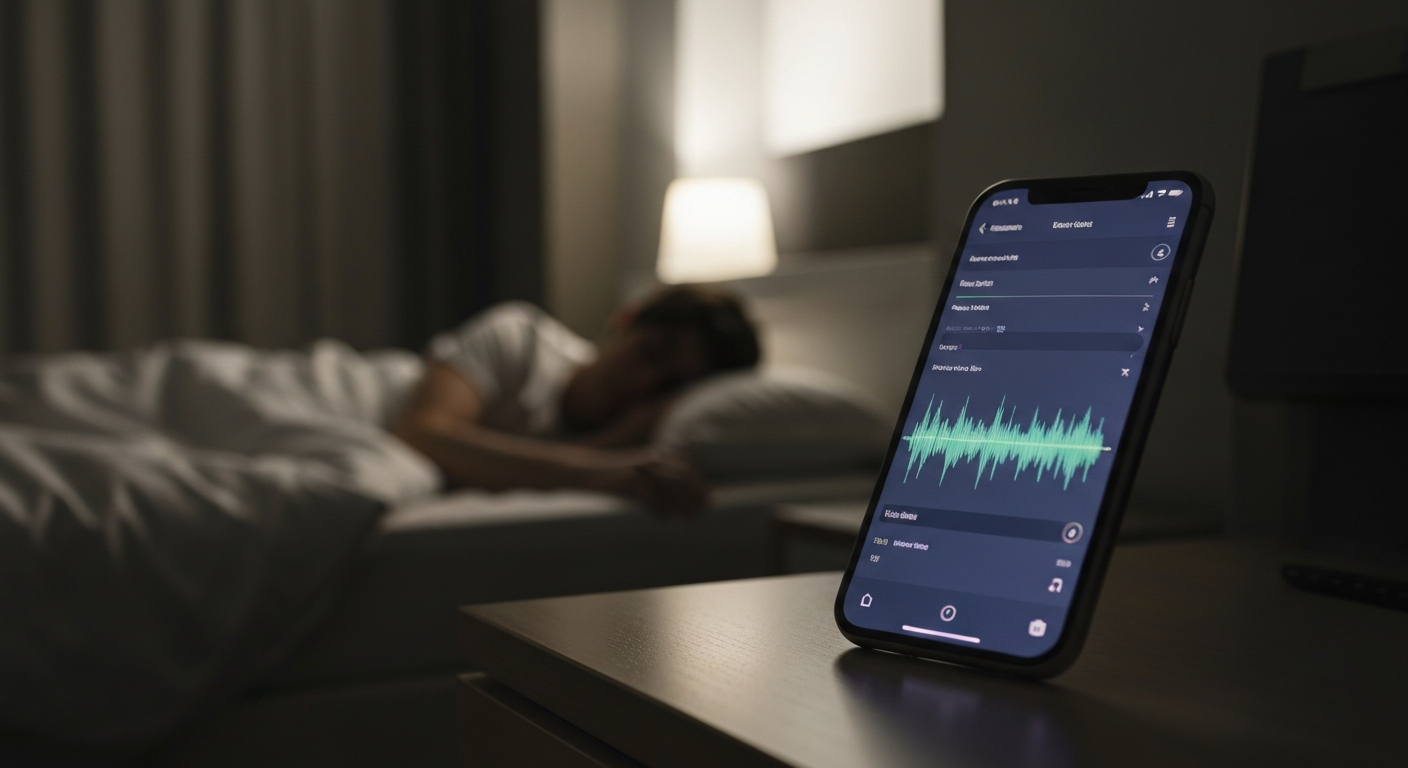
Recording snoring at home is a useful tool for sharing with a doctor or sleep specialist. Many smartphones have free or inexpensive sleep sound apps that record audio throughout the night (SnoreLab, Sleep Cycle, and built-in health apps on some phones all have this feature). A recording that captures the sound pattern — especially any gasping or choking — provides objective information that speeds up evaluation.
If a recording suggests apnea patterns (gasping, cycling), bring it to a physician. Home sleep tests that measure oxygen saturation throughout the night are now widely available without requiring an overnight lab stay.
Also Read: Hearing Yourself Snore While Sleeping: What It Actually Means
The snoring sound reveals where and how the airway is narrowing. A low, regular rumble is usually palatal — the most common and most benign type. Deep snoring with pauses suggests tongue-base involvement. Gasping, choking, or cycling patterns indicate possible sleep apnea and warrant medical evaluation. Match your intervention to the sound pattern: nasal strips for whistling, a mandibular advancement device for rumbling or deep patterns, and a sleep study for gasping or choking sounds.
Yes. Apps like SnoreLab, Sleep Cycle, and others record audio throughout the night and display snoring intensity over time. Some apps categorize snoring events. While these apps are not medical devices, they can identify patterns, provide objective data for a doctor visit, and track whether interventions are reducing snoring over time.
Snoring intensity and sound change based on sleep position, alcohol intake, nasal congestion, and sleep stage. Drinking before bed or having nasal congestion can transform light snoring into loud snoring. This variability is normal and does not mean snoring is worsening structurally — it reflects the nightly variation in these contributing factors.
Loudness alone is not a reliable severity indicator. Very loud primary snoring without breathing pauses carries less health risk than quieter snoring associated with frequent apnea events. The pattern (gasping, cycling, pauses) matters more than decibel level for assessing severity.
Snoring typically reaches 60 to 80 decibels, with very loud cases reaching 90 decibels — similar to a lawn mower. The bed partner is more at risk for hearing effects from prolonged nightly exposure than the snorer, who generates the sound but is partially shielded by distance from their own throat. Partners who are regularly exposed to loud snoring should consider earplugs or white noise.
Reviewed and Updated on June 17, 2026 by George Wright