


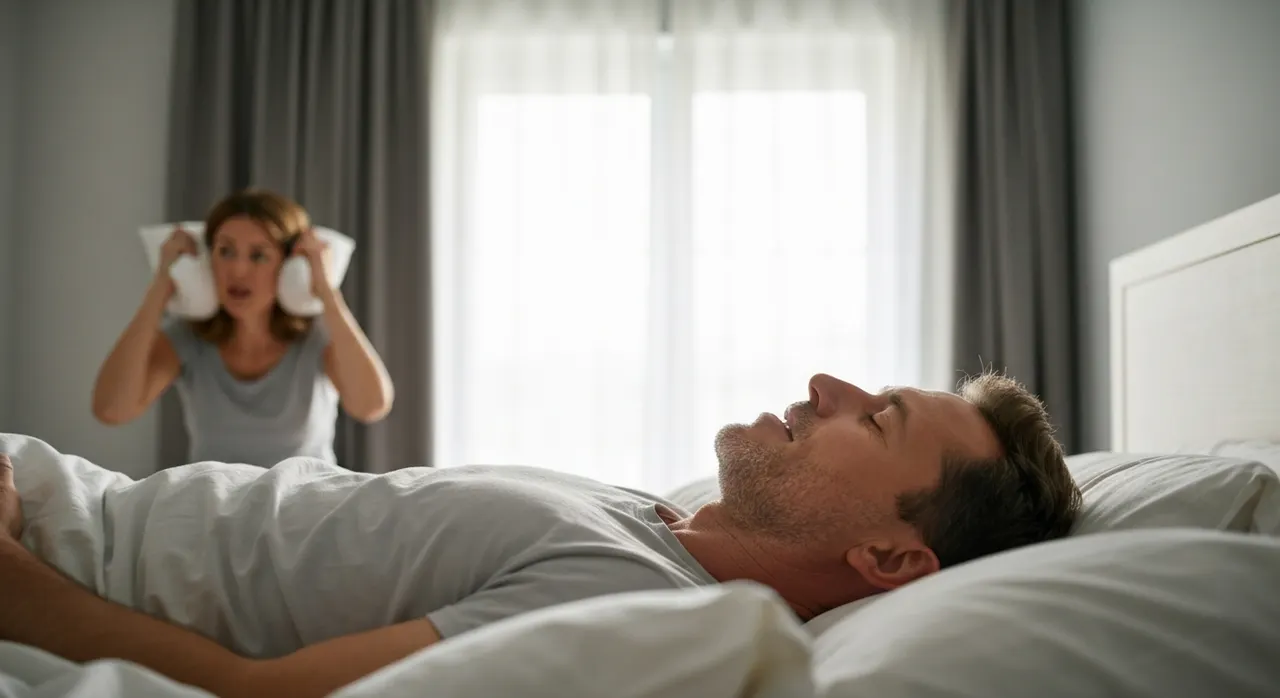
The "Knud Adams Snore" refers to a distinctive, theatrical snore sound that became famous through choreographer Knud Adams' viral TikTok videos — but if you're searching for this term because you snore loudly on your back, the real issue is positional obstructive snoring caused by gravity collapsing your airway when you lie face-up.
Knud Adams, a New York-based choreographer and dancer, gained internet fame in 2023–2024 for videos demonstrating an exaggerated, almost comically loud snoring sound. While the videos were meant as humor, they resonated with millions of people who recognized that distinctive back-sleeping snore in their own partners, family members, or themselves. The sound Adams mimics — that rattling, gasping, sawing noise — is the classic signature of positional snoring, and it's one of the most common sleep complaints worldwide.
If you landed here because your own snoring sounds like a Knud Adams impression, you're not alone. Let's break down why sleeping on your back triggers that unmistakable sound, and more importantly, what you can actually do about it.
Why Do You Only Snore on Your Back?
When you sleep on your back, gravity pulls your tongue, soft palate, and throat tissues directly backward into your airway — this narrowing creates turbulent airflow and the vibration you hear as snoring.
This phenomenon is called positional obstructive snoring, and it's distinct from snoring that happens in every sleep position. In a 2020 study published in Sleep Medicine Reviews, researchers found that approximately 54% of all snorers experience position-dependent snoring, meaning they snore exclusively or predominantly when lying supine (face-up).
Here's what happens mechanically:
| Sleep Position | Tongue Position | Airway Status | Snoring Likelihood |
|---|---|---|---|
| Back (supine) | Falls backward toward throat | Partially obstructed | High |
| Side (lateral) | Falls to the side, away from airway | Mostly open | Low to moderate |
| Stomach (prone) | Falls forward, away from airway | Open | Very low |
"In the supine position, gravity causes the tongue and soft palate to fall posteriorly, reducing the cross-sectional area of the upper airway." — Dr. Atul Malhotra at UC San Diego Health
The narrower your airway becomes, the faster air must travel through it. That increased velocity creates turbulence, and turbulent air makes the relaxed tissues of your throat vibrate — producing snoring.
| ✓Quick Fix |
The First Thing Most People Try A low-cost, no-commitment option to rule out before spending more on this problem. See on Amazon → |
The Anatomy Behind the "Knud Adams Snore" Sound in 2026
That loud, rhythmic, almost theatrical snoring sound isn't just annoying — it's a signal that your airway is working harder than it should during sleep.
The viral quality of Knud Adams' snore demonstrations hit home because they captured something universal: the back-sleeping snore has a distinctive acoustic profile. It tends to be:
- Louder than side-sleeping snores (often 10–15 decibels higher)
- More rhythmic and consistent, matching breathing cycles
- Lower-pitched due to the larger mass of tissue vibrating
- Interrupted by pauses in severe cases (which may indicate sleep apnea)
The sound originates from multiple structures vibrating simultaneously:
- Soft palate — the floppy tissue at the back of your mouth's roof
- Uvula — the dangling tissue at the back of your throat
- Tongue base — the thick rear portion of your tongue
- Pharyngeal walls — the sides of your throat
When you're awake, muscle tone keeps all these structures taut. During sleep — especially REM sleep — muscle tone drops significantly. Add gravity's backward pull when you're supine, and you get a perfect storm for loud snoring.
Also Read: Snoring With Mouth Closed: 4 Causes & How to Stop It
5 Factors That Make Back-Sleeping Snoring Worse
Not everyone who sleeps on their back snores — additional factors determine whether you'll produce that signature sound.
Does Excess Weight Contribute to Back-Sleeping Snores?
Yes, significantly. Fat deposits around the neck and throat narrow the airway even before you lie down. When you add gravity's effect in the supine position, the airway obstruction becomes more severe. Research from Johns Hopkins found that a neck circumference over 17 inches in men or 16 inches in women substantially increases snoring risk.
Can Alcohol Make You Snore Louder on Your Back?
Alcohol is a muscle relaxant. Drinking within three hours of bedtime causes your throat muscles to relax more than usual, making them more likely to collapse when gravity pulls on them. Many people who don't normally snore will produce loud back-sleeping snores after a few drinks.
Does Age Affect Position-Dependent Snoring?
Throat muscle tone naturally decreases with age. The soft palate becomes more prone to vibration, and the tongue is more likely to fall backward. This is why many people develop positional snoring in their 40s or 50s even without other risk factors.
"Age-related changes in upper airway muscle function contribute significantly to the increased prevalence of snoring in older adults." — American Academy of Sleep Medicine
Do Nasal Problems Cause Back-Sleeping Snoring?
Nasal congestion, a deviated septum, or chronic allergies force you to breathe through your mouth. Mouth breathing during sleep dramatically increases snoring because the lower jaw drops open, allowing the tongue to fall further back into the airway.
Can Medications Trigger Position-Dependent Snoring?
Sedatives, antihistamines, and certain pain medications have similar effects to alcohol — they relax throat muscles beyond their normal sleep state. If you started snoring after beginning a new medication, this could be the cause.
Also Read: Free sleep stories and calming audiobooks to quiet a racing mind
How to Tell If Your Back-Sleeping Snore Is Serious
Simple positional snoring is annoying but harmless — obstructive sleep apnea is a medical condition that needs treatment.
The Knud Adams-style snore can be either one. Here's how to distinguish them:
| Characteristic | Simple Positional Snoring | Possible Sleep Apnea |
|---|---|---|
| Sound pattern | Continuous, rhythmic | Interrupted by silent pauses |
| Breathing | Consistent | Gasping or choking sounds |
| Daytime symptoms | None or mild | Excessive sleepiness, morning headaches |
| Partner observations | Just noise | Witnessed breathing stops |
| Duration of pauses | None | 10+ seconds |
If you experience any symptoms from the sleep apnea column, see a sleep specialist. Untreated obstructive sleep apnea increases your risk of high blood pressure, heart disease, stroke, and type 2 diabetes.
Also Read: Does Snoring Mean Deep Sleep? The Truth About Sleep Quality
6 Evidence-Based Fixes for Back-Sleeping Snoring
The good news about positional snoring is that it responds well to targeted interventions — you don't necessarily need invasive treatments.
Fix 1: Train Yourself to Side-Sleep
Positional therapy is the first-line treatment for back-sleeping snorers. Options include:
- Tennis ball technique — sew a tennis ball into the back of a sleep shirt to make back-sleeping uncomfortable
- Positional pillows — wedge-shaped pillows that make side-sleeping more comfortable
- Wearable devices — vibrating sensors that gently nudge you when you roll onto your back
Studies show that 70–80% of positional snorers experience significant improvement with consistent side-sleeping.
Fix 2: Elevate Your Head
Raising your head 4–6 inches can reduce tongue collapse even when sleeping on your back. Use a wedge pillow or an adjustable bed frame rather than stacking regular pillows, which can kink your neck and create new problems.
Fix 3: Try a Mandibular Advancement Device
These dental devices look like sports mouthguards. They hold your lower jaw slightly forward during sleep, which keeps your tongue from falling back into your airway. Custom-fitted versions from a dentist work better than over-the-counter options, though both can be effective for mild to moderate snoring.
Fix 4: Address Nasal Congestion
If you're a mouth breather, treating the underlying nasal issue often resolves snoring:
- Saline rinses before bed
- Nasal steroid sprays (like Flonase) for chronic congestion
- Nasal dilator strips for structural issues
- Allergy management if allergies are the cause
Fix 5: Modify Lifestyle Factors
For many people, these changes alone eliminate back-sleeping snoring:
- Lose weight if your BMI is over 25
- Avoid alcohol within 3–4 hours of bedtime
- Establish a consistent sleep schedule
- Stay hydrated (dehydration thickens mucus)
Fix 6: Consider an Anti-Snoring Mouthpiece
A mandibular advancement device (MAD) gently repositions your jaw forward during sleep, preventing the tongue and soft tissues from collapsing backward — directly addressing the mechanism behind positional snoring. These devices are backed by clinical research and recommended by sleep specialists for snorers who don't have severe sleep apnea.
Also Read: Snoring vs Sleep Apnea: Key Differences & When to Worry
When to See a Doctor About Your Snoring
If lifestyle changes and positional therapy don't help, or if you have symptoms of sleep apnea, medical evaluation is warranted.
A sleep specialist can offer:
- Polysomnography — an overnight sleep study that measures your breathing, oxygen levels, and sleep stages
- CPAP therapy — continuous positive airway pressure machines that keep your airway open (the gold standard for sleep apnea)
- Surgical options — procedures to remove excess tissue or stiffen the soft palate (reserved for severe cases)
Don't dismiss chronic snoring as "just noise." It disrupts your sleep architecture, robs you of restorative rest, and strains relationships. The Knud Adams snore may be funny on TikTok, but in your bedroom, it deserves attention.
| ✓Our Pick |
Anti-snoring mouthpiece — adjustable mandibular advancement device (MAD) One of the highest-rated products in its category — a reliable, widely used fix. See on Amazon → |
In Short
The "Knud Adams Snore" — that loud, theatrical, back-sleeping snore that went viral — is the acoustic signature of positional obstructive snoring, caused by gravity pulling your tongue and soft tissues into your airway when you lie face-up. For most people, this type of snoring responds well to side-sleeping, head elevation, anti-snoring mouthpieces, and lifestyle modifications like avoiding alcohol before bed. If your snoring includes breathing pauses, gasping, or causes excessive daytime sleepiness, see a sleep specialist to rule out obstructive sleep apnea.
Also Read: Help With Snoring: 9 Natural Fixes & When to See a Doctor
What You Also May Want To Know
Why do I snore when sleeping on my back but not on my side?
When you sleep on your back, gravity pulls your tongue and soft palate directly backward into your airway, narrowing it and causing the tissues to vibrate. On your side, these structures fall to the side rather than backward, keeping your airway more open. This is why positional therapy — training yourself to sleep on your side — is one of the most effective treatments for positional snorers.
Is back-sleeping snoring dangerous?
Simple positional snoring without breathing pauses is annoying but not medically dangerous. However, if your back-sleeping snoring includes silent pauses lasting 10+ seconds, gasping or choking sounds, or causes excessive daytime sleepiness, you may have obstructive sleep apnea, which does carry health risks and requires treatment.
Can I train myself to stop sleeping on my back?
Yes, most people can successfully train themselves to side-sleep within 2–4 weeks. The tennis ball technique (wearing a shirt with a ball sewn into the back) is surprisingly effective because it makes back-sleeping uncomfortable without fully waking you. Positional pillows and wearable vibrating devices are more comfortable alternatives that achieve the same goal.
Will losing weight stop my back-sleeping snoring?
For many people, yes. Excess weight around the neck narrows your airway even before gravity's effects. Studies show that losing 10–15% of body weight can significantly reduce or eliminate positional snoring. However, some people with normal weight also snore on their backs due to anatomical factors like a naturally narrow airway or long soft palate.
Do anti-snoring mouthpieces work for back sleepers?
Mandibular advancement devices are particularly effective for back sleepers because they address the root cause — they hold the lower jaw forward, which in turn keeps the tongue from falling back into the airway. Clinical studies show 70–90% of users experience significant snoring reduction with properly fitted devices.