Sleep
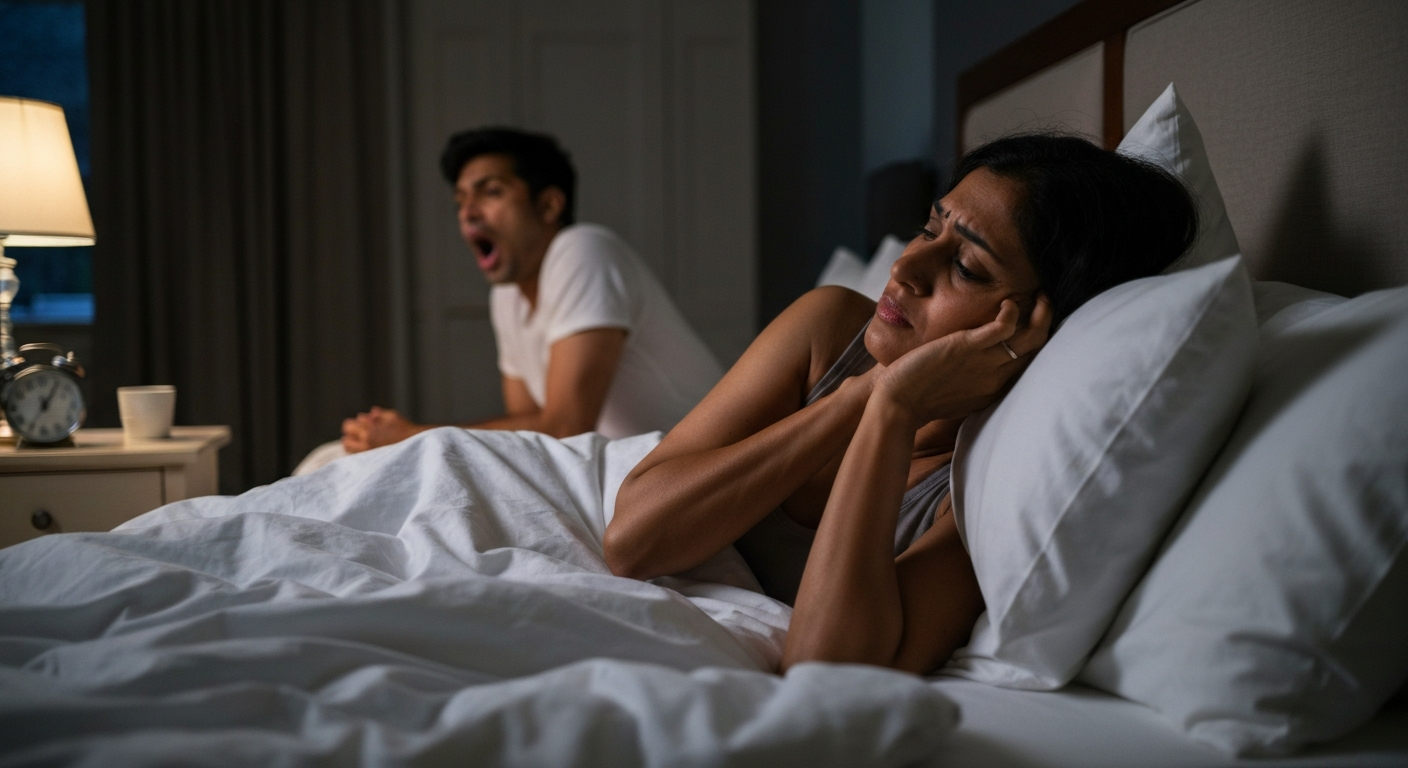

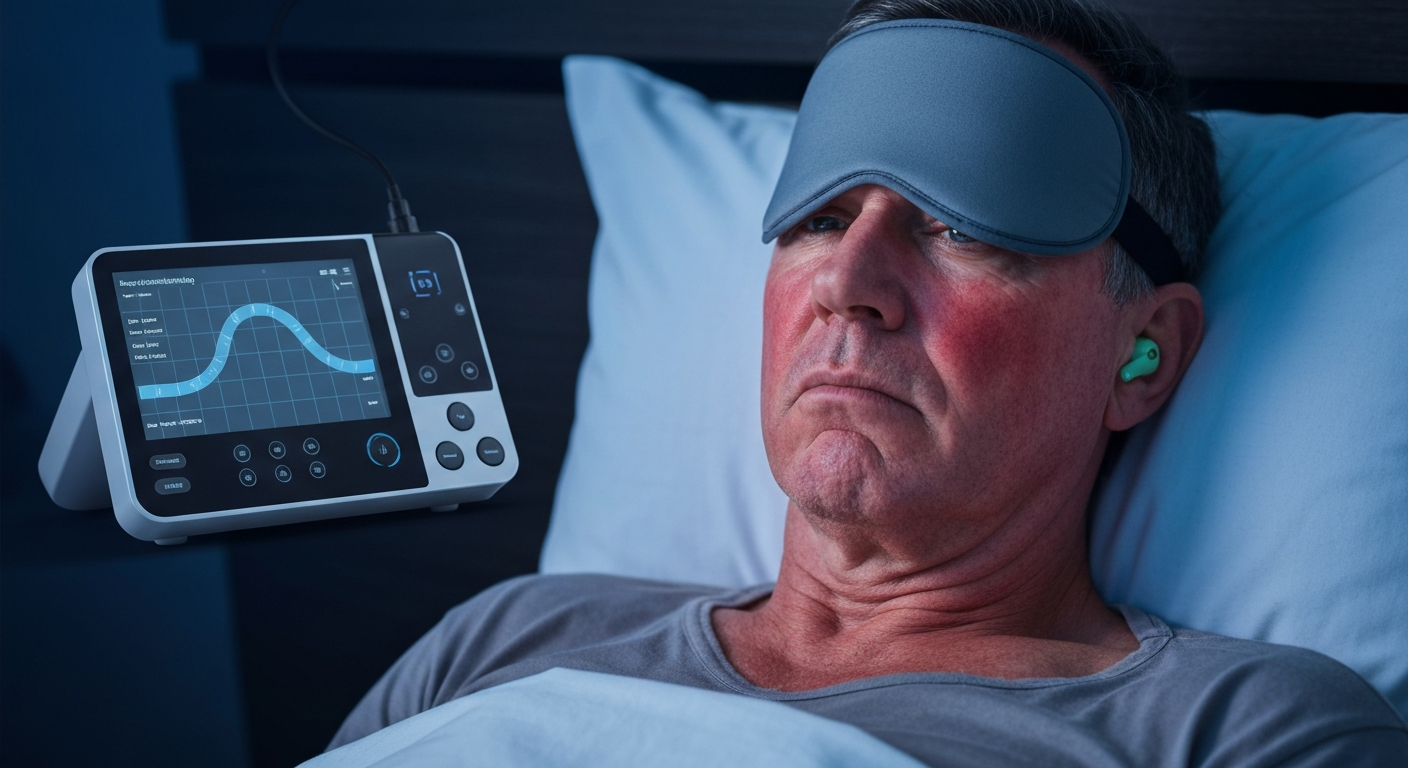
Sleeping next to someone who snores can cost you up to an hour of sleep per night, but you don't have to choose between your relationship and your rest. The key strategies that actually work include using high-NRR earplugs rated 30 decibels or higher, running white noise at 50–60 decibels to mask the snoring frequency, going to bed 15–30 minutes before your partner, and encouraging them to sleep on their side instead of their back. If the snoring is severe, a custom-fit anti-snoring mouthpiece can reduce your partner's noise output by repositioning their jaw while they sleep.
Snoring operates at frequencies and volumes that trigger your brain's arousal response, pulling you out of deep sleep even when you don't fully wake up.
Human snoring typically ranges from 50 to 90 decibels — roughly the same volume as a running vacuum cleaner or busy traffic. But volume alone isn't the full story. Snoring sound waves oscillate irregularly, with sudden starts, stops, and pitch changes that your brain interprets as potential threats requiring attention.
Even if you don't consciously wake up, these sound patterns trigger what sleep researchers call "micro-arousals." Your brain shifts from restorative deep sleep into lighter stages, reducing the quality of your rest without you realizing it. Over weeks and months, this sleep fragmentation leads to daytime fatigue, irritability, difficulty concentrating, and increased stress hormones.
"The bed partner of a snorer may lose up to one hour of sleep per night." — Dr. Timothy Morgenthaler at Mayo Clinic
Partners of snorers often report feeling more exhausted than the snorers themselves, which makes sense when you consider the brain's alerting response. Your nervous system is hardwired to monitor sounds during sleep — an evolutionary survival mechanism that now works against you when the "threat" is your husband's blocked airway.
Also Read: Why Do Men Snore More Than Women? 6 Reasons Explained
The most effective approach combines multiple strategies — sound masking, timing adjustments, and physical interventions — rather than relying on any single solution.
Earplugs can significantly reduce snoring volume, but you need the right type. Standard foam earplugs offer a Noise Reduction Rating (NRR) of 22–33 decibels. For snoring that hits 60–80 decibels, even the best earplugs won't eliminate the sound completely — they'll reduce it to a more manageable 30–50 decibels, roughly the level of a quiet conversation.
The best earplugs for sleeping with a snorer are soft foam or silicone varieties rated NRR 30 or higher. Look for earplugs specifically designed for sleep rather than industrial or concert use — sleep earplugs prioritize comfort for side sleeping and extended wear. Moldable silicone earplugs conform to your ear canal shape and often feel more comfortable for 8-hour stretches than rigid foam.
One practical note: if you need to hear alarms, children, or emergencies, consider earplugs with a lower NRR (around 22–25) or use only one earplug in the ear facing upward when you're on your side.
| ✓Our Pick |
Custom-fit anti-snoring mouthpiece — repositions jaw to reduce snoring at the source This is the go-to fix recommended by professionals — save time and money by getting it right the first time. Learn More → |
White noise works by "masking" the snoring frequency rather than blocking it. A consistent sound at 50–60 decibels creates a steady backdrop that makes the irregular snoring sounds less jarring to your brain. Your nervous system stops registering the snoring as a novel sound requiring attention.
White noise machines, fan sounds, or sleep apps generating pink noise (slightly lower frequency, often described as more pleasant) can all help. The key is consistency — your brain needs a steady sound envelope that stays at roughly the same volume as the snoring peaks. If the snoring hits 70 decibels and your white noise is at 40, you'll still hear every snort and rumble.
Some people combine earplugs with white noise for maximum effect. The earplugs reduce overall volume while the white noise fills in the remaining sound gaps with a non-alerting frequency.
Going to bed 15–30 minutes before your partner gives your brain time to enter deeper sleep stages before the snoring begins. Once you're in slow-wave sleep (the deepest, most restorative phase), your arousal threshold increases — meaning sounds that would wake you during lighter sleep are less likely to disturb you.
This strategy works best when combined with good sleep hygiene on your end. Dim lights 30 minutes before bed, avoid screens, and create conditions that help you fall asleep quickly so you maximize the head start.
Sleeping in separate bedrooms — sometimes called a "sleep divorce" — is more common than most couples admit. A 2023 survey by the American Academy of Sleep Medicine found that over one-third of Americans occasionally or regularly sleep separately from their partner, often due to snoring.
This isn't a failure of your relationship; it's a practical solution to a physical problem. Some couples find that better sleep improves their relationship during waking hours more than forced togetherness in bed. If you try this approach, maintaining physical connection through morning cuddles, evening conversations in bed before separating, or weekend nights together can preserve intimacy while protecting your sleep.
Addressing the snoring itself is often more sustainable than endlessly adapting to the noise.
Sleeping on the back allows gravity to pull the tongue and soft palate backward, narrowing the airway and increasing snoring intensity. Side sleeping keeps the airway more open and can reduce snoring volume by 50% or more in some people.
Encouraging your partner to stay on their side throughout the night is tricky since people naturally roll during sleep. A few approaches that help:
"Positional therapy, which involves training oneself to sleep on one's side, can be effective for individuals whose snoring and sleep apnea occur primarily when sleeping on their back." — Dr. Raj Dasgupta at Keck Medicine of USC
Excess weight, particularly around the neck and throat, compresses the airway during sleep. Even a 10% reduction in body weight can significantly improve or eliminate snoring in overweight individuals. The fat deposits narrow the air passage, and when the surrounding muscles relax during sleep, the tissue vibrates more intensely.
This isn't a quick fix, but if your partner is carrying extra weight, gradual lifestyle changes may provide a permanent solution rather than nightly workarounds.
Also Read: Does Weight Gain Cause Snoring? 6 Facts & How to Fix It
Mandibular advancement devices (MADs) are custom-fit or boil-and-bite mouthpieces that hold the lower jaw slightly forward during sleep. This positioning prevents the tongue from falling back and keeps the airway open.
Clinical studies show MADs reduce snoring frequency and volume in 70–90% of users. They're most effective for snoring caused by tongue-base collapse and less effective for nasal snoring or snoring related to obesity. Custom-fit versions from a dentist offer the best results, but over-the-counter options that you mold at home can also work well.
Your partner may need an adjustment period of 1–2 weeks as their jaw gets used to the position. Some initial soreness is normal.
| Solution | Effectiveness | Best For | Cost Range |
|---|---|---|---|
| Foam earplugs (NRR 30+) | Moderate | Mild-moderate snoring | $5–15 |
| White noise machine | Moderate | Irregular snoring patterns | $20–80 |
| Anti-snoring mouthpiece | High | Tongue-base snoring | $30–200 |
| Positional therapy | Moderate-High | Back sleepers only | $15–50 |
| Separate bedrooms | High | Severe, treatment-resistant snoring | Free–varies |
Loud, frequent snoring accompanied by gasping, choking, or breathing pauses may indicate obstructive sleep apnea, which requires medical evaluation.
If you notice your partner stops breathing for several seconds during sleep, wakes up gasping or choking, or seems excessively tired despite getting enough hours in bed, they should see a sleep specialist. Untreated sleep apnea increases the risk of high blood pressure, heart disease, stroke, and type 2 diabetes.
A sleep study (polysomnography) can diagnose sleep apnea and determine its severity. Treatment options include CPAP machines, oral appliances, and in some cases, surgery.
Don't dismiss severe snoring as "just snoring" — it may be a symptom of a condition that affects both your partner's health and your sleep quality.
Also Read: Help With Snoring: 9 Natural Fixes & When to See a Doctor
You can protect your sleep while sharing a bed with a snorer by combining high-NRR earplugs, white noise machines, and strategic timing — going to bed before your partner gives your brain a head start on deep sleep. For lasting relief, address the snoring itself: side sleeping, weight management, and anti-snoring mouthpieces reduce snoring volume at the source. Sleeping in separate rooms isn't a relationship failure; it's a practical solution that over a third of American couples use. If the snoring includes gasping, choking, or breathing pauses, see a doctor — those symptoms may indicate sleep apnea requiring treatment.
The most effective earplugs for snoring partners are soft foam or moldable silicone varieties rated NRR 30 or higher. Look for "sleep" or "nighttime" earplugs rather than industrial ones — they're designed for comfort during extended wear and side sleeping. Moldable silicone earplugs conform to your ear shape and tend to stay in place better through the night than foam.
Start by combining earplugs with a white noise machine set to 50–60 decibels. Going to bed 15–30 minutes before him lets you reach deeper sleep stages before the snoring starts. If these adjustments aren't enough, encourage him to try side sleeping or an anti-snoring mouthpiece that repositions the jaw. Sleeping in separate rooms on the worst nights isn't giving up — it's protecting your health.
Loud snoring requires aggressive sound management. Use NRR 30+ earplugs combined with white noise or fan sounds. If the snoring exceeds 80 decibels regularly, even these measures may not fully mask the sound — at that point, addressing the snoring directly with positional changes, mouthpieces, or medical evaluation becomes essential. Separate bedrooms remain an option when nothing else works.
Many cases of snoring can be eliminated or significantly reduced with the right intervention. Side sleeping, weight loss, and mandibular advancement devices resolve snoring for the majority of people. Snoring caused by anatomical issues like a deviated septum or enlarged tonsils may require surgical correction. Sleep apnea-related snoring typically needs CPAP therapy or oral appliances for long-term control.
Research suggests that sleep quality often matters more than sleeping location for relationship satisfaction. Partners who sleep separately but get better rest frequently report improved mood, patience, and connection during waking hours. The key is maintaining intimacy through other means — morning conversations in bed, dedicated couple time before sleeping apart, or weekend nights together when schedules allow.
Reviewed and Updated on June 14, 2026 by George Wright