


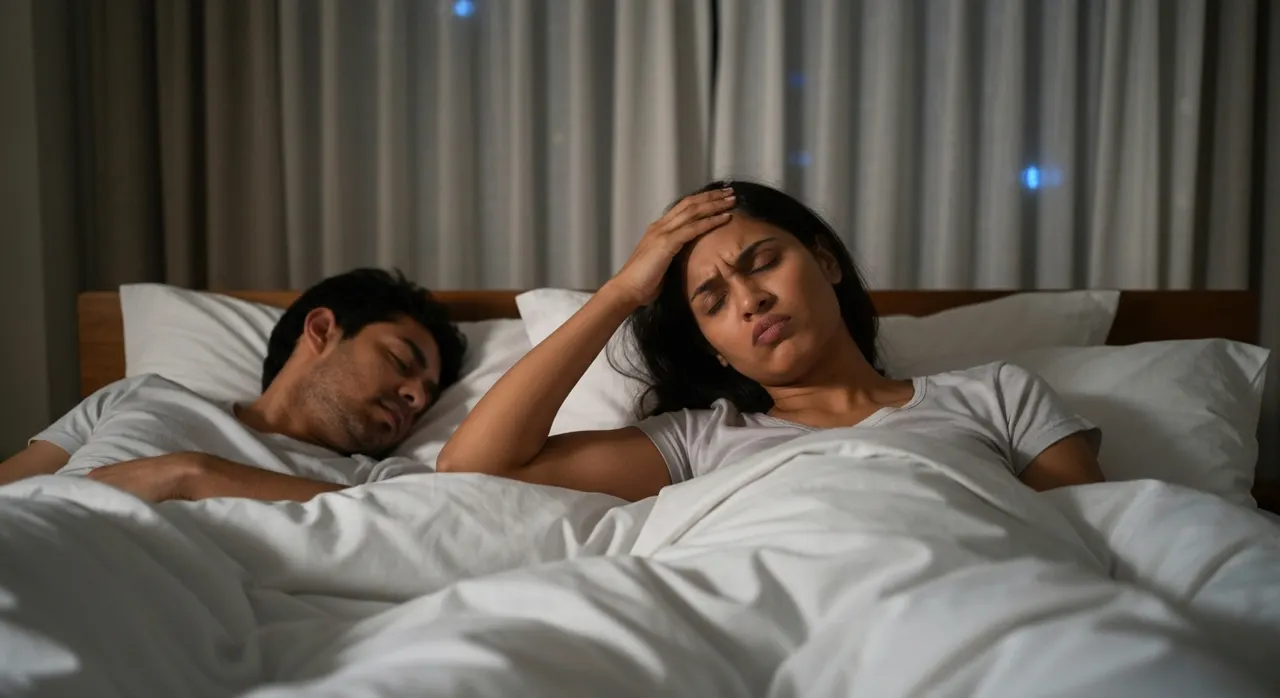
SnoreX is a category of anti-snoring products — typically mouthpieces, nasal devices, or wearables — designed to physically reposition your jaw or open your airway so you stop snoring. If you're searching "snore x" because your husband, boyfriend, or partner snores so loud it wakes you up, you're likely looking for something that actually works. This guide explains what SnoreX-style devices do, why your partner snores so much in the first place, and how to choose the right solution based on the root cause.
| ✓Quick Fix |
The Quick Fix Most People Reach for First Many readers dealing with this exact issue start with something like this before trying anything else. See on Amazon → |
Why Does My Husband (or Boyfriend) Snore So Loud?
Loud snoring happens when relaxed throat tissues partially block the airway, causing turbulent airflow that makes the soft palate and uvula vibrate at high volume — and men are anatomically predisposed to snore louder than women.
Understanding why people snore loud is the first step to fixing it. When someone falls asleep, their throat muscles relax. If the airway narrows too much, air rushing through creates that familiar rattling, buzzing, or sawing sound. The louder the snore, the more restricted the airway.
Several factors explain why your husband or boyfriend snores so much:
Do Men Have Narrower Airways?
Men naturally have narrower air passages than women, which means less room for error when throat tissues relax during sleep. The male larynx sits lower in the throat, creating a longer soft palate that's more prone to vibration. This is why men account for roughly 40% of habitual snorers compared to 24% of women.
"Men are more likely to snore because of the anatomy of their airway. Males tend to have larger upper airways but also more collapsible tissue." — Dr. Raj Dasgupta, Sleep Foundation
Does Sleeping Position Make Snoring Worse?
Sleeping on your back lets gravity pull the tongue and soft tissues backward into the airway. This is why your partner might snore like a freight train on their back but barely make a sound on their side. Back sleeping is the single most common reason someone snores louder on certain nights.
Can Weight Gain Cause Loud Snoring?
Extra weight around the neck compresses the airway from the outside, making it even narrower. Research shows that a neck circumference over 17 inches in men (or 16 inches in women) significantly increases snoring severity. Even 10-15 pounds of weight gain can turn occasional snoring into nightly thundering.
Does Alcohol Make Snoring Louder?
Alcohol relaxes throat muscles more than normal sleep would, causing tissues to collapse further into the airway. If your husband snores louder after a few drinks, this is exactly why. The effect lasts several hours, which is why evening drinking often leads to the worst snoring of the night.
Can Nasal Congestion Cause Loud Snoring?
Blocked nasal passages force mouth breathing, which creates more turbulent airflow and louder vibrations. Allergies, sinus infections, deviated septums, and even dry air can turn a quiet sleeper into a loud snorer overnight.
Also Read: Why Do Men Snore More Than Women? 6 Reasons Explained
What Is a SnoreX Device and How Does It Work?
SnoreX-type products fall into three main categories: mandibular advancement devices (MADs) that push the jaw forward, tongue-retaining devices (TRDs) that hold the tongue in place, and nasal dilators or strips that open blocked nasal passages.
When people search for "snore x," they're usually looking for a physical device rather than lifestyle changes. Here's how each type works:
| Device Type | How It Works | Best For | Effectiveness |
|---|---|---|---|
| Mandibular Advancement Device (MAD) | Holds lower jaw slightly forward to prevent throat collapse | Loud snorers, back sleepers, mild sleep apnea | 70-90% reduction in snoring |
| Tongue Retaining Device (TRD) | Uses suction to hold tongue forward, away from airway | People who can't tolerate jaw positioning | 50-70% reduction |
| Nasal Dilators/Strips | Mechanically opens nasal passages | Nasal congestion, deviated septum | Variable; works best combined with other methods |
| Positional Devices | Prevents back sleeping via wearables or pillows | Positional snorers only | 60-80% when snoring is position-dependent |
MADs are the most widely studied and generally most effective option for loud snoring. They work by advancing the mandible (lower jaw) 5-10mm forward, which tightens the soft tissues of the throat and prevents the collapse that causes snoring.
"Mandibular advancement devices have been shown to reduce snoring in approximately 70-90% of users, with some studies demonstrating effectiveness comparable to CPAP for mild to moderate obstructive sleep apnea." — American Academy of Dental Sleep Medicine
Also Read: Free audiobooks on managing stress and sleeping better
How to Choose the Right Anti-Snore Device in 2026
The right device depends entirely on why the snoring happens — a MAD won't help nasal congestion, and nasal strips won't fix a collapsing throat.
Before buying anything, identify the root cause:
Step 1: Determine the Snoring Source
Have your partner try this simple test: with their mouth closed, try to make a snoring sound through their nose. If they can't, the snoring is mouth-based and needs a jaw-repositioning device. If they can make the sound, nasal blockage is at least part of the problem.
Step 2: Check for Sleep Apnea Signs
Loud snoring combined with gasping, choking, or silent pauses in breathing suggests obstructive sleep apnea — a serious condition that needs medical diagnosis, not just a snore device. Other warning signs include excessive daytime fatigue, morning headaches, and waking up unrefreshed despite 7+ hours of sleep.
Step 3: Consider Comfort and Compliance
The best anti-snoring device is the one your partner will actually wear. Custom-fit MADs from a dentist are most comfortable but cost $1,000-2,000. Boil-and-bite home MADs cost $30-150 and work well for most people. TRDs suit those who find jaw advancement uncomfortable or have dental work that prevents MAD use.
Step 4: Start With the Most Likely Fix
For loud snorers who sleep on their back: try a positional device or MAD first. For congested snorers: start with nasal dilators or allergy treatment. For overweight snorers: weight loss remains the most effective long-term solution, though devices help while losing weight.
Also Read: Snore Mouth Guard: How It Works, Types & Best Picks
When Snore Devices Aren't Enough: Signs You Need Medical Help
If your partner stops breathing during sleep, gasps awake, or snores despite trying multiple devices, they may have obstructive sleep apnea and need a sleep study rather than another gadget.
Over-the-counter snore devices work for simple snoring caused by tissue vibration. They don't work — and can even be dangerous — when the underlying problem is sleep apnea. The distinction matters:
- Simple snoring: Annoying but not dangerous; soft tissues vibrate without fully blocking airflow
- Obstructive sleep apnea (OSA): Dangerous; airway completely collapses repeatedly, causing oxygen drops and cardiovascular stress
Warning signs that require a doctor rather than a device:
- Witnessed breathing pauses lasting 10+ seconds
- Gasping or choking sounds that wake the sleeper
- Blood pressure that won't respond to medication
- Morning headaches most days
- Severe daytime sleepiness despite adequate sleep time
- Snoring that hasn't improved with MAD use after 2 weeks
If any of these apply, your partner needs a sleep study (polysomnography) to measure oxygen levels, brain waves, and breathing patterns overnight. Treatment for confirmed sleep apnea often includes CPAP therapy, which is far more effective than any snore mouthpiece.
Also Read: 7 Best Anti-Snore Devices That Actually Work in 2026
Practical Solutions for Partners of Loud Snorers
While your partner works on fixing their snoring, you need sleep too — white noise machines, earplugs rated 30+ NRR, and staggered bedtimes can help you survive in the meantime.
Living with a loud snorer affects your health as much as theirs. Research shows that partners of heavy snorers lose an average of one hour of sleep per night. That adds up to nearly two weeks of lost sleep per year.
Short-term survival strategies:
- White noise machine: Masks irregular snoring sounds with consistent background noise
- High-quality earplugs: Foam earplugs rated NRR 30+ block significant sound while still allowing alarms
- Staggered bedtimes: Falling asleep before your partner starts snoring helps you reach deep sleep before the noise begins
- Separate blankets: Reduces sleep disturbance from movement even if sound remains
Long-term, though, the snorer needs to address the root cause. No amount of earplugs fixes the cardiovascular strain that comes from untreated severe snoring or sleep apnea.
Also Read: Snoring vs Sleep Apnea
In Short
SnoreX-style devices — particularly mandibular advancement mouthpieces — work for 70-90% of loud snorers by physically holding the jaw forward and preventing airway collapse. The reason your husband or boyfriend snores so loud usually comes down to anatomy (men have narrower airways), sleep position (back sleeping is the worst), weight (extra neck tissue compresses the airway), or congestion. Match the device to the cause: MADs for throat-based snoring, nasal dilators for congestion, positional aids for back sleepers. If snoring continues despite devices, or if you notice breathing pauses, a sleep study is the necessary next step — you may be dealing with sleep apnea rather than simple snoring.
| ✓Our Pick |
Anti-snoring mouthpiece — adjustable mandibular advancement device (MAD) A well-reviewed choice that delivers real results — worth a look before anything pricier. See on Amazon → |
What You Also May Want To Know
Why Does My Husband Snore So Loud Every Single Night?
Consistent loud snoring points to a structural or anatomical cause rather than a temporary one like alcohol or allergies. The most common reasons are excess weight around the neck, a naturally narrow airway, or an enlarged uvula or tonsils. Men are also more prone to loud nightly snoring because their airways are anatomically narrower and their soft palates are longer. If the volume has increased over time, weight gain is the most likely culprit — even 10-15 pounds can significantly worsen snoring.
Why Do Some People Snore Louder Than Others?
Snoring volume depends on how much the airway is restricted and how fast air moves through the narrowed space. A severely narrowed airway with forceful breathing produces louder vibrations than a mildly narrowed one. Factors that increase volume include higher body weight, back sleeping position, alcohol consumption, nasal congestion, and simply having more collapsible soft tissue in the throat. Two people with identical lifestyles can snore at completely different volumes based purely on their anatomy.
Can My Boyfriend Stop Snoring Without Surgery?
Yes, most snoring responds to non-surgical interventions. Mandibular advancement devices reduce snoring in 70-90% of users. Weight loss of just 10% body weight often eliminates snoring entirely in overweight individuals. Side sleeping, reducing alcohol intake, and treating allergies also help significantly. Surgery is typically reserved for cases where anatomical abnormalities (like enlarged tonsils or a severely deviated septum) don't respond to conservative treatment.
Do Anti-Snoring Mouthpieces Actually Work?
Clinical studies consistently show that mandibular advancement devices reduce snoring frequency and volume in the majority of users. A 2015 Cochrane review found MADs significantly more effective than placebo devices. However, effectiveness varies by individual — people with nasal obstruction as the primary cause won't benefit as much as those with throat-based snoring. The key is matching the device type to the snoring cause and ensuring proper fit for comfort and compliance.
When Should I Be Worried About My Partner's Snoring?
Be concerned if you notice breathing pauses during sleep, gasping or choking sounds, or if your partner wakes up feeling exhausted despite sleeping 7+ hours. These are classic signs of obstructive sleep apnea, which increases the risk of heart attack, stroke, and high blood pressure. Other red flags include morning headaches, difficulty concentrating during the day, and snoring that doesn't improve with positional changes or anti-snore devices. Any of these symptoms warrant a medical evaluation rather than another over-the-counter gadget.