Cars
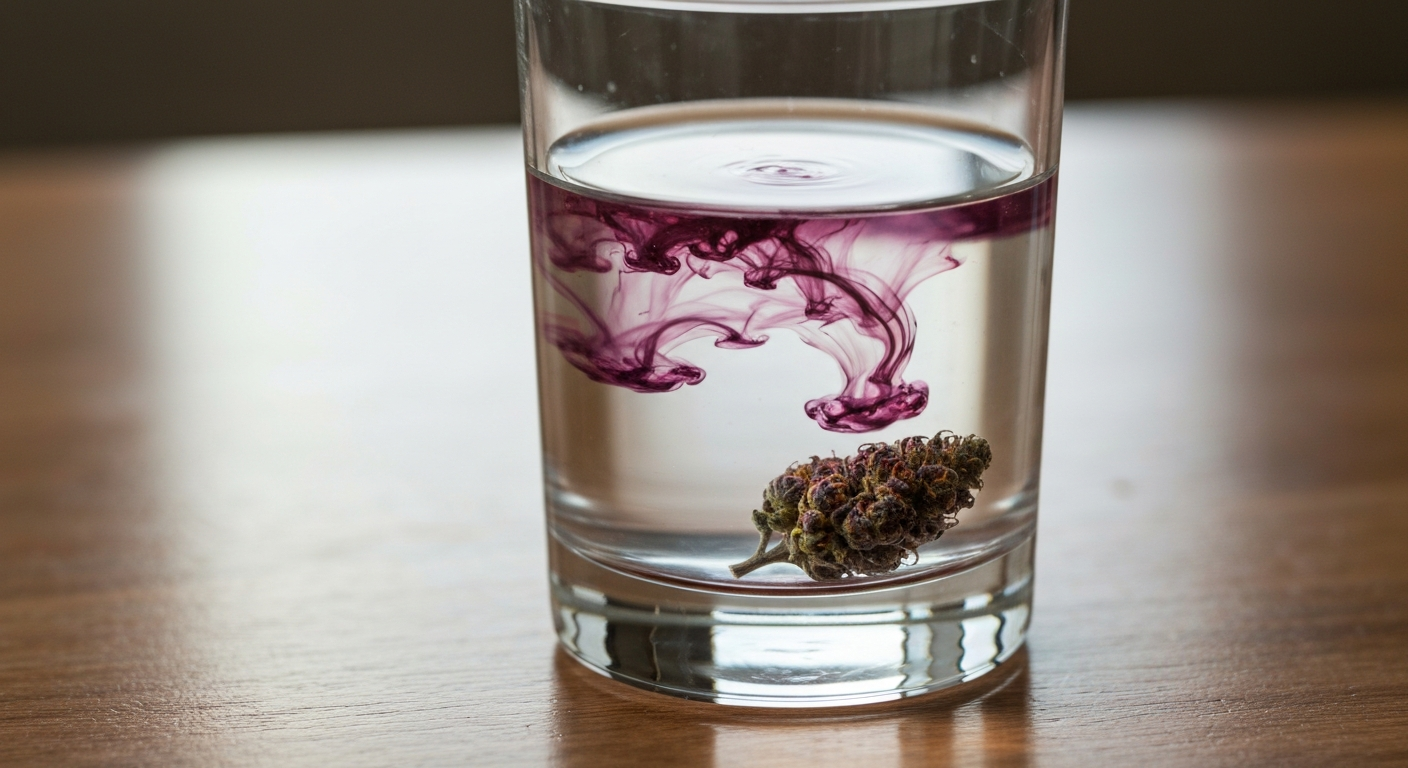

When you submerge cannabis flower in water and see purple or reddish liquid seeping out, you're witnessing anthocyanins — natural plant pigments — dissolving from the plant material, which is completely normal and indicates your weed contains these water-soluble compounds rather than anything harmful or artificial.
This phenomenon surprises many cannabis users, but it's actually a sign that your flower developed genuine purple coloration during growth. The "bleeding" happens because anthocyanins are hydrophilic (water-loving) molecules that readily dissolve when exposed to moisture. Understanding why this occurs can help you distinguish quality purple strains from artificially colored products.
Anthocyanins are the same natural pigments that give blueberries, red cabbage, and purple grapes their distinctive colors — and they're responsible for purple, blue, and red hues in cannabis.
These pigments belong to a class of compounds called flavonoids. Unlike chlorophyll (which gives plants their green color), anthocyanins are water-soluble. This means they dissolve easily when the plant material contacts water.
When cannabis develops purple coloration, anthocyanins accumulate in the cell vacuoles of leaves, stems, and flowers. Once you introduce water, these pigments begin migrating out of the plant cells. The result is that telltale purple or reddish tint in the water.
The intensity of the color depends on several factors. Higher anthocyanin concentrations produce more vivid bleeding. The temperature of the water matters too — warmer water extracts pigments faster. Even the pH of the water affects color expression, with acidic water producing redder tones and alkaline water shifting toward blue.
"Anthocyanins are water-soluble pigments that may appear red, purple, blue or black depending on the pH." — Royal Society of Chemistry
Natural purple bleeding is a sign of genuine anthocyanin content — not contamination — but artificial dyes or food coloring would also bleed, so you need to know how to tell the difference.
Authentic purple cannabis develops its color through genetics and environmental conditions during growth. Certain strains like Granddaddy Purple, Purple Haze, and Purple Kush carry genes that produce higher anthocyanin levels. Cold nighttime temperatures during flowering trigger increased anthocyanin production as the plant reduces chlorophyll.
Here's how to distinguish natural anthocyanin bleeding from artificial coloring:
| Characteristic | Natural Anthocyanins | Artificial Dyes |
|---|---|---|
| Color in water | Muted purple, burgundy, or wine-red | Bright, vivid, unnatural purple |
| Bleeding speed | Gradual, over several minutes | Immediate, aggressive color release |
| Flower appearance | Purple throughout trichomes and calyxes | Color concentrated on surface only |
| Smell | Normal cannabis terpenes | Chemical or off-putting odor |
| Texture | Natural, sticky trichomes | Residue or coating on surface |
Naturally colored cannabis bleeds slowly. The color emerges as water penetrates cell walls and dissolves the pigments. Artificial dyes typically release immediately and produce unnaturally bright colors that look more like food coloring than plant extract.
| ✓Our Pick |
Professional growing supplies for cannabis cultivation Great value for money — this product tackles the root cause rather than just masking the symptoms. See on Amazon → |
Cold nighttime temperatures during the flowering stage stress cannabis plants into producing more anthocyanins as a protective response, which is why purple strains often show more color when grown in cooler climates.
Anthocyanin production serves several biological purposes. These pigments act as a natural sunscreen, protecting plant cells from UV damage. They also function as antioxidants and may help the plant cope with temperature stress.
When nighttime temperatures drop below 50°F (10°C) during flowering, cannabis plants often increase anthocyanin production. This is particularly true for strains that already carry the genetic potential for purple coloration. The cold doesn't create the color — it triggers expression of genes that were already present.
Some growers deliberately lower temperatures in the final weeks of flowering to enhance purple coloration. This technique works because chlorophyll breaks down faster in cold conditions while anthocyanin production increases. The result is more visible purple coloring as the green fades.
However, not all purple cannabis will bleed the same amount. Strains bred specifically for color tend to have higher anthocyanin concentrations. A plant that turned purple due to mild cold stress might bleed less than one genetically predisposed to deep purple coloration.
Also Read: Why Is My Ivy Dying? 7 Causes & How to Save It
The purple color itself has no direct relationship to THC or CBD levels — potency depends on genetics, growing conditions, and harvest timing, not pigment content.
This is one of the most persistent myths in cannabis culture. Many consumers assume purple buds are stronger, but the science doesn't support this claim. Anthocyanins and cannabinoids are completely different compounds produced through separate metabolic pathways.
What purple coloration does indicate is genetic diversity and sometimes careful cultivation. Growers who produce consistently purple flower often pay close attention to their plants, which can correlate with overall quality. But the color itself is merely aesthetic.
Some research suggests anthocyanins may offer their own benefits. As antioxidants, they could contribute to the entourage effect — the theory that cannabis compounds work together synergistically. However, studies specifically examining anthocyanins in cannabis and their effects on humans remain limited as of 2026.
"The color of cannabis flowers is determined by the presence of pigments like anthocyanins and does not correlate directly with cannabinoid content." — Journal of Cannabis Research
The takeaway: enjoy purple cannabis for its appearance and potential antioxidant properties, but don't assume it will get you higher than green flower of the same strain and quality.
A simple water test can help determine whether purple coloration is natural or artificial — genuine anthocyanins bleed gradually and produce wine-like colors, while fake dyes release immediately with unnatural brightness.
Here's a straightforward testing method:
Natural anthocyanin bleeding creates a subtle, gradual color change. The water may take on a light purple, burgundy, or brownish-red tint depending on the specific anthocyanins present and the water's pH. The color should look organic — similar to what happens when you soak blueberries or purple cabbage.
Red flags include immediate bright purple color release, water that looks like grape juice or food coloring, and any residue or coating that washes off the bud's surface. Artificial coloring tends to be more concentrated on the outside of the flower rather than throughout the plant tissue.
Another test involves examining the flower itself. Natural purple coloration appears in the calyxes, leaves, and sometimes even the trichomes. The color should be integrated into the plant structure, not sitting on top like a coating. If the purple wipes off onto your fingers or appears only on the outer surface, be suspicious.
Also Read: Why Is My House So Dry? 7 Causes & How to Fix It
Yes, naturally colored purple cannabis that bleeds anthocyanins in water is completely safe to smoke — these are the same harmless plant pigments found in foods like eggplant, purple potatoes, and berries.
Anthocyanins are non-toxic compounds that humans consume regularly. They're present in many purple and red foods and are even sold as dietary supplements for their antioxidant properties. When you smoke cannabis containing anthocyanins, these compounds simply combust along with the rest of the plant material.
The concern arises only when artificial colorants are involved. Dyes not intended for inhalation could release harmful compounds when heated. This is why distinguishing natural from artificial coloring matters.
If your water test suggests natural anthocyanin content — gradual bleeding, natural-looking color, no surface residue — you can proceed with confidence. The purple bleeding is merely visual confirmation of the pigments you're about to consume.
For maximum safety, source your cannabis from reputable dispensaries or growers who can verify their cultivation practices. Licensed producers rarely resort to artificial coloring since regulations typically prohibit adulterants. Black market products carry more risk of adulteration.
Purple cannabis bleeding color in water is a natural phenomenon caused by water-soluble anthocyanin pigments dissolving out of the plant material. This bleeding indicates genuine purple coloration from genetics and growing conditions, not contamination. Natural bleeding appears gradual with wine-like colors, while artificial dyes release immediately with unnatural brightness. The purple color has no effect on potency — that depends on cannabinoid content, not pigmentation. When sourced from reputable suppliers, purple weed is completely safe to consume.
No, purple coloration doesn't affect potency. THC and CBD levels depend on genetics, cultivation practices, and harvest timing — not anthocyanin content. The color is purely aesthetic. A green and purple flower from the same strain grown identically would have equivalent cannabinoid profiles. Judge quality by trichome coverage, aroma, and lab test results rather than color.
Purple coloration requires two factors: genetics and environmental triggers. Only strains carrying genes for anthocyanin production can turn purple. Even then, cooler temperatures during flowering typically activate these genes. Strains lacking the genetic potential stay green regardless of temperature, while purple-capable strains may remain green if grown in consistently warm conditions.
Purple coloration appears in both indica and sativa strains — it's determined by genetics for anthocyanin production, not the plant's indica/sativa classification. Popular purple indicas include Granddaddy Purple and Purple Kush, while purple sativas include Purple Haze. The color tells you nothing about the effects you'll experience.
No, only strains with genetic potential for anthocyanin production can develop purple coloration. Growers can enhance purple expression in predisposed strains by lowering nighttime temperatures during flowering, but they cannot make a strain without the relevant genes turn purple through environmental manipulation alone. Attempts to artificially color non-purple strains would require dyes or additives.
Anthocyanins themselves have minimal flavor impact. Any taste differences you notice in purple versus green cannabis typically come from the terpene profile, which varies by strain and growing conditions. The pigments contribute to visual appeal and potential antioxidant properties, but they don't significantly alter the flavor experience during consumption.
Reviewed and Updated on May 27, 2026 by George Wright