
Skin
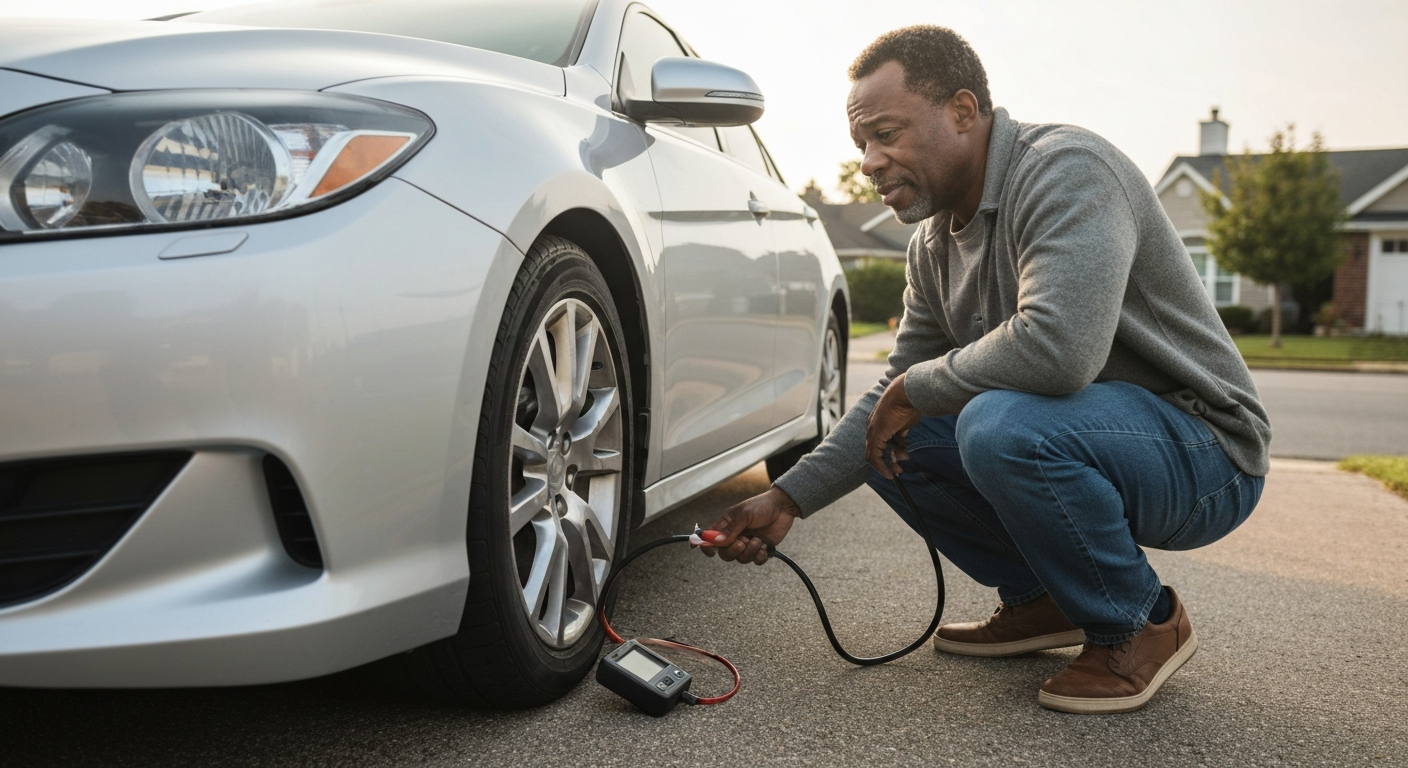

Your traction light is on because your vehicle's traction control system (TCS) is either actively working to prevent wheel slip, or it has detected a fault that requires attention — most commonly low tire pressure, a failing wheel speed sensor, or the system being manually disabled.
The traction light and tire pressure monitoring system (TPMS) light often work together, so if you're also seeing your tire pressure light blinking, flashing, or staying solid, the underlying cause is usually related. Understanding what each light pattern means helps you decide whether you can drive safely or need immediate service.
The traction light communicates in three distinct ways: flashing during active intervention, staying solid to indicate a fault, or appearing alongside other warning lights to signal a broader issue.
When you see the traction control light flash briefly while driving on wet roads or loose gravel, that's actually good news. Your system is doing its job, reducing engine power or applying brakes to specific wheels to keep you in control. This is normal behavior and the light should turn off once you regain traction.
A solid traction light that stays on continuously tells a different story. This typically means the system has been disabled (either by you or automatically) or has detected a malfunction that prevents it from working properly. In most 2020–2026 vehicles, the traction control and stability control systems share sensors with your TPMS, which explains why tire pressure issues can trigger your traction light.
| Light Behavior | What It Means | Urgency |
|---|---|---|
| Flashing briefly | System actively preventing wheel slip | Normal — no action needed |
| Solid and constant | System disabled or fault detected | Check soon — reduced safety |
| Solid with ABS light | Wheel speed sensor or module issue | Service promptly |
| Solid with TPMS light | Tire pressure or sensor problem | Check tires immediately |
| Flashing continuously | TPMS sensor malfunction | Needs diagnosis |
A blinking or flashing tire pressure light indicates a TPMS sensor malfunction rather than an actual tire pressure problem, while a solid TPMS light means at least one tire is significantly underinflated.
This distinction matters because the fix is completely different. A solid tire pressure sensor light usually just needs you to add air. A flashing TPMS light — whether it blinks for 60–90 seconds before going solid or keeps flashing continuously — signals that the monitoring system itself has a problem.
"A flashing TPMS indicator light means the system has detected a malfunction. This could be due to a dead sensor battery, a sensor that has become dislodged, or interference from aftermarket equipment." — National Highway Traffic Safety Administration
Common reasons your tire light is blinking in 2026 vehicles include sensor batteries reaching end-of-life (most last 5–10 years), sensors damaged during tire changes, sensors not relearned after tire rotation, and extreme temperature swings affecting sensor communication.
Also Read: Why Is My Auxiliary Heat On? 7 Causes & How to Stop It
Yes, significantly low tire pressure can activate your traction light because underinflated tires spin at different speeds than properly inflated ones, confusing the wheel speed sensors that both systems rely on.
Your traction control system uses wheel speed sensors to detect when one wheel is spinning faster than the others. When a tire is low on air, its effective diameter changes slightly, causing it to rotate faster to cover the same distance. The traction control computer interprets this speed differential as wheel slip and may illuminate the traction light.
This is why you'll often see both your low tire pressure light on and your traction light on simultaneously. The TPMS detects the actual pressure problem while the traction control responds to the symptoms.
Here's how tire pressure affects your warning lights:
| Pressure Status | TPMS Light | Traction Light | Action Needed |
|---|---|---|---|
| All tires correct | Off | Off | None |
| One tire 5+ PSI low | Solid on | May come on | Add air |
| Multiple tires low | Solid on | Likely on | Add air to all |
| Rapid pressure loss | Solid on | On with possible ABS | Pull over safely, inspect tire |
Your tire monitor system light and traction light can both illuminate due to sensor failures, tire pressure imbalances, recent service work, or electronic module glitches.
Tire pressure drops approximately 1 PSI for every 10°F decrease in temperature. If you filled your tires during summer and the first cold morning arrives, you might see your tire pressure light on without any actual leak. The traction system may also respond to the slight differences in tire rotation speed this creates.
Each wheel has a speed sensor that feeds data to both your ABS and traction control systems. A failing sensor sends erratic signals that trigger both lights. Symptoms include one light coming on during turns, lights that flicker at certain speeds, or warnings that appear only when driving over bumps.
After tire rotation, replacement, or even inflation adjustments, your TPMS may need to relearn sensor positions. Many vehicles require a specific relearn procedure — driving at certain speeds or using a scan tool. Until this is completed, you might see your TPMS light flashing or staying on.
TPMS sensors are sealed units with batteries that typically last 5–10 years. When batteries die, the sensor stops transmitting and your tire light flashes to indicate the malfunction. Unfortunately, batteries cannot be replaced separately — you need new sensors.
Corroded connectors, damaged wiring near the wheel wells, or a loose ground connection can cause intermittent sensor readings. This often produces lights that come on randomly, go away, then return.
The body control module (BCM) or dedicated TPMS module processes all sensor signals. If this module fails or loses programming, it can turn on warning lights even when everything else works correctly. This is less common but worth checking if all other causes are ruled out.
Many vehicles have a button to disable traction control for specific driving conditions. If this was pressed accidentally, your traction light will stay on until the system is re-enabled. Check your dashboard for a "TCS Off" or similar indicator.
| ✓Our Pick |
Portable tire inflator with digital gauge Highly rated by thousands of buyers — this is one of the most effective solutions for this issue you can try at home. See on Amazon → |
Most TPMS and traction control lights reset automatically once the underlying issue is resolved, but some vehicles require a manual reset procedure.
Start with the basics before attempting any reset:
If the lights persist, most vehicles have a TPMS reset button or procedure:
| Vehicle Brand | Reset Method |
|---|---|
| Honda/Acura | TPMS button below steering column, hold until light blinks |
| Toyota/Lexus | TPMS button under dash, hold with ignition on until light blinks 3 times |
| Ford/Lincoln | Info display menu: Settings > Vehicle > TPMS Reset |
| GM (Chevrolet, GMC, etc.) | Turn key to ON, press hazards 3 times, horn confirms |
| Nissan/Infiniti | Turn ignition to ON (not start), press TPMS button until light blinks |
Consult your owner's manual for the exact procedure for your vehicle year and model. For traction control lights, ensure the TCS button is not engaged, then disconnect the battery for 30 seconds to reset the system if the light persists after addressing any tire pressure issues.
If your traction light or TPMS light remains on after checking tire pressure and performing a reset, or if multiple warning lights appear simultaneously, professional diagnosis is necessary to identify sensor or module failures.
A qualified technician with a diagnostic scan tool can read fault codes from your vehicle's computer, identifying exactly which sensor is failing or which circuit has a problem. This targeted approach is faster and often cheaper than guessing and replacing parts.
Warning signs that you should not delay professional service include the traction light appearing with ABS and brake warning lights, any warning light combined with unusual vehicle behavior (pulling, vibration, or noise), and lights that appeared suddenly after hitting a pothole or curb.
"When multiple stability-related warning lights illuminate simultaneously, the vehicle should be inspected promptly. These systems are designed with redundancy, but multiple failures indicate a condition that may affect vehicle control." — AAA Automotive Research
You can generally drive short distances with a traction light or TPMS light on, but your safety systems are compromised, so adjust your driving accordingly and address the issue promptly.
With traction control disabled, your wheels can spin freely during acceleration on slippery surfaces. You lose the electronic intervention that helps maintain control. Drive more cautiously, especially in rain, snow, or on loose surfaces.
With a TPMS warning, your tires may be underinflated, increasing stopping distances, reducing fuel economy, and accelerating tire wear. If the tire is significantly low, you risk a blowout at highway speeds.
Do not ignore a flashing TPMS light combined with visible tire damage or a rapidly deflating tire. Pull over safely and inspect immediately.
Also Read: Why Is My House So Dry? 7 Causes & How to Fix It
Your traction light typically comes on due to low tire pressure, a wheel speed sensor issue, or the system being disabled — and it often appears alongside a blinking or solid TPMS light because these systems share sensors. Check your tire pressure first, as this solves the majority of cases. If the lights persist after correcting pressure and performing a reset, a professional scan will pinpoint the faulty sensor or module. Never ignore these lights for extended periods, as they indicate your vehicle's safety systems are not functioning at full capacity.
Cold temperatures cause the air inside your tires to contract, dropping pressure by roughly 1 PSI for every 10°F decrease. Your TPMS is calibrated to alert you when pressure falls 25% below the recommended level, so a sudden cold snap can push borderline tires into the warning zone. Adding air to the manufacturer-specified pressure solves this immediately.
Yes, you can drive, but your traction control system is either disabled or not working properly, meaning you lose the electronic assistance that prevents wheel spin. Drive more cautiously, especially on wet, icy, or loose surfaces. Avoid hard acceleration and allow extra stopping distance until the issue is resolved.
A TPMS light that flashes for 60–90 seconds before turning solid indicates a sensor malfunction rather than a tire pressure issue. This pattern typically means a sensor battery has died, a sensor was damaged during tire service, or the system cannot communicate with one or more sensors. You'll need a diagnostic scan to identify which sensor has failed.
Most vehicles can have their TPMS reset using a button or menu procedure without special tools. However, some vehicles (particularly certain GM, Ford, and European models) require a TPMS relearn tool or dealership scan tool to register sensor IDs after tire rotation or sensor replacement. Check your owner's manual for your specific requirements.
An oil change alone will not affect your traction or TPMS lights. However, many shops perform a multi-point inspection and may top off tire pressure, which could resolve a pressure-related warning. If your light was on before service and is off afterward, the technician likely corrected an underinflated tire.
Reviewed and Updated on May 27, 2026 by George Wright