
Skin
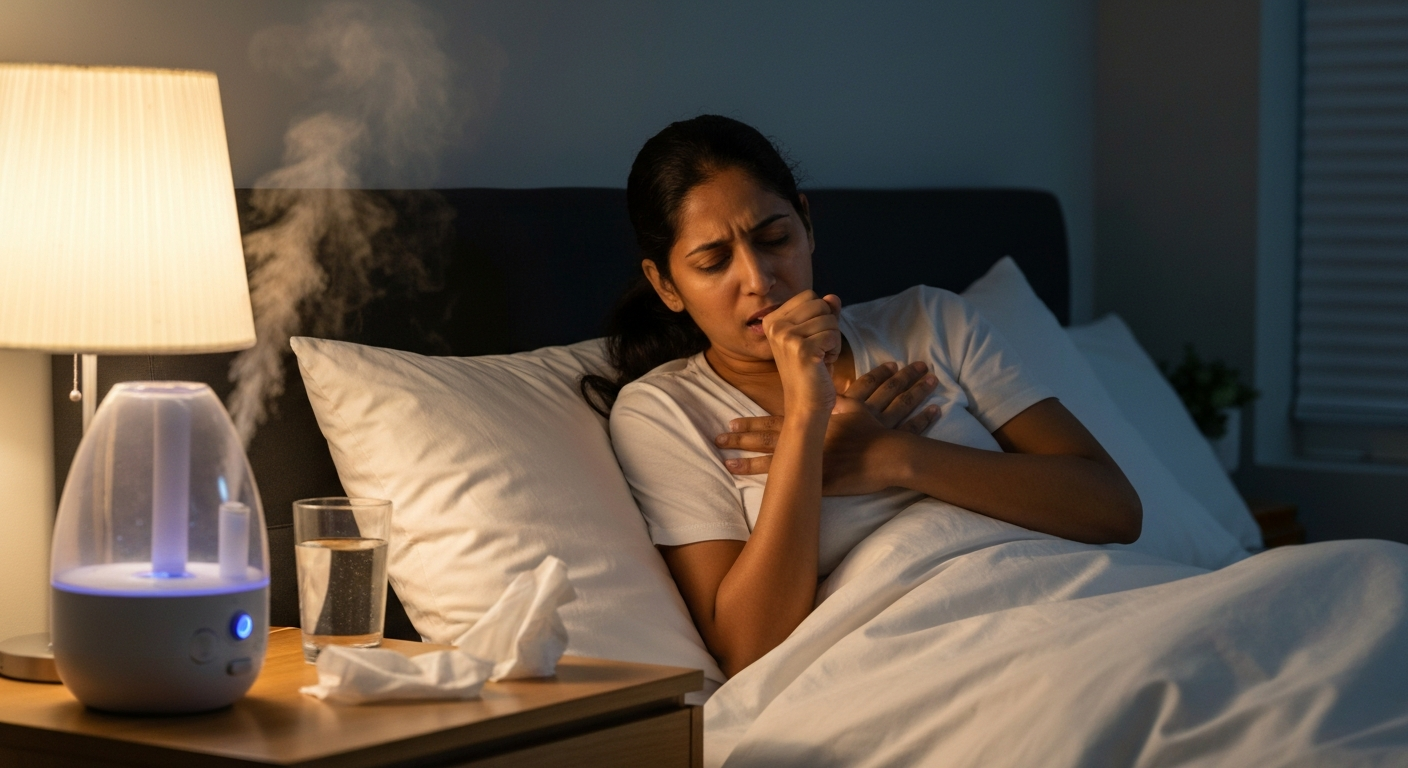

Your cough is worse at night primarily because lying down allows mucus to pool in your throat, gravity no longer helps drain your sinuses, and your body's natural anti-inflammatory hormones drop to their lowest levels while you sleep.
These factors combine to create a perfect storm for nighttime coughing fits. When you're upright during the day, gravity continuously drains mucus away from your airways. The moment you lie flat, that drainage reverses, irritating sensitive nerve endings in your throat and triggering your cough reflex. Add in dry bedroom air, dust mites in your bedding, and your body's reduced cortisol production after midnight, and it's no wonder you find yourself reaching for tissues instead of getting restful sleep.
When you shift from standing to lying flat, mucus that drained harmlessly during the day now trickles backward into your throat and upper airways, triggering your cough reflex.
This phenomenon, called postnasal drip, intensifies dramatically at night. During the day, you unconsciously swallow this mucus every few minutes. But lying down changes the physics entirely — gravity now works against you, allowing secretions to accumulate right where they cause the most irritation.
Your throat contains thousands of nerve endings exquisitely sensitive to foreign material. When mucus pools there, these nerves fire signals to your brain demanding immediate action: cough. This is your body's protective mechanism working exactly as designed, even if the timing feels cruel.
"The supine position impairs mucociliary clearance in the airways and allows secretions to pool, which stimulates cough receptors." — American Lung Association at Lung.org
The angle matters too. Lying completely flat creates the worst-case scenario for nighttime coughing. Even a slight incline can dramatically reduce how much mucus reaches your throat, which is why many people instinctively stack pillows when they're sick.
Also Read: Why Is My Nose Always Stuffy? 8 Causes & How to Fix It
Your cold genuinely does get worse at night, not just because you're lying down, but because your immune system follows a 24-hour cycle that peaks inflammation after dark.
Many people assume nighttime symptoms feel worse simply because there are fewer distractions. While that plays a small role, research confirms something more significant is happening: your body's inflammatory response actually intensifies during nighttime hours.
Cortisol, your body's primary anti-inflammatory hormone, follows a predictable daily rhythm. Levels peak around 8 AM and drop to their lowest point between midnight and 4 AM. This natural dip means inflammation in your airways — already elevated from fighting your cold — faces less opposition exactly when you're trying to sleep.
Your immune system also releases more cytokines (inflammatory signaling molecules) during sleep. This is actually helpful for fighting infection, but the side effect is increased swelling in your nasal passages and throat, making your sickness feel dramatically worse at night.
| Time of Day | Cortisol Level | Inflammation | Typical Symptom Severity |
|---|---|---|---|
| 6 AM – 10 AM | Highest | Suppressed | Mildest |
| 10 AM – 6 PM | Moderate | Balanced | Moderate |
| 6 PM – 10 PM | Declining | Rising | Increasing |
| 10 PM – 4 AM | Lowest | Highest | Most severe |
This explains why your cough often seems worse in the evening and reaches its peak intensity in the middle of the night. Your body isn't playing tricks on you — there's real physiology behind that 2 AM coughing fit.
Acid reflux is one of the most overlooked causes of chronic nighttime cough, and lying down after dinner creates ideal conditions for stomach acid to reach your throat.
Gastroesophageal reflux disease (GERD) causes up to 40% of chronic cough cases, according to pulmonology research. Here's why it strikes at night: when you're upright, gravity keeps stomach contents where they belong. Lie flat, and the protective barrier weakens significantly.
The connection isn't always obvious. Many people with reflux-related cough never experience classic heartburn. Instead, small amounts of acid silently creep up the esophagus and irritate the voice box and lower throat. These tissues are extremely sensitive to acid — even microscopic amounts trigger violent coughing.
"Chronic cough due to gastroesophageal reflux disease is among the most common causes of persistent cough, and patients may have no other symptoms of reflux." — American College of Gastroenterology at GI.org
Signs your nighttime cough might be reflux-related include:
- Coughing that starts 1–2 hours after eating dinner
- A bitter or sour taste in your mouth upon waking
- Hoarse voice in the morning
- Cough that doesn't improve with standard cold remedies
- Symptoms that worsen after alcohol, spicy foods, or large meals
If this sounds familiar, elevating the head of your bed (not just adding pillows, which can worsen reflux by bending your stomach) and avoiding food within 3 hours of bedtime often brings significant relief.
Also Read: Why Is My Throat Always Sore?
Dry air, dust mites, and allergens concentrated in your bedding can independently cause or worsen nighttime coughing, even without an underlying illness.
Your bedroom may be working against you. Most homes have humidity levels between 30–50% in winter, but forced-air heating can drop this below 20%. At these levels, the mucous membranes lining your airways dry out and become irritated, lowering your cough threshold dramatically.
Then there's what's living in your mattress. Dust mites — microscopic creatures that feed on dead skin cells — produce allergens that become airborne when you move in bed. You inhale these particles with every breath, and if you're sensitive, your airways respond with inflammation and coughing.
Environmental factors that worsen nighttime coughing:
A simple test: if your cough improves when you sleep elsewhere — a hotel room, a friend's house — your bedroom environment is likely contributing to the problem.
Nocturnal asthma affects up to 75% of people with asthma, and the condition causes airways to narrow most severely between 4 AM and 6 AM.
If you have asthma, nighttime coughing isn't just annoying — it's a warning sign that your condition may not be well-controlled. The medical term is "nocturnal asthma," and it follows the same circadian patterns that affect everyone, just with more severe consequences.
Several mechanisms converge to make asthma worse at night. Your airways naturally narrow during sleep (a phenomenon called circadian bronchoconstriction). Lying flat increases blood flow to your lungs, which can trigger airway swelling. And the same cortisol drop that worsens cold symptoms leaves asthmatic inflammation unchecked.
Watch for these signs that nighttime coughing might indicate asthma:
- Cough accompanied by wheezing or whistling sounds
- Chest tightness that wakes you from sleep
- Coughing triggered by exercise or cold air during the day
- Symptoms that improve with asthma medication
- Family history of asthma or allergies
If your nighttime cough follows this pattern, particularly if you've never been formally diagnosed, it's worth discussing with your doctor. Uncontrolled nocturnal asthma increases the risk of serious attacks and disrupts sleep quality for months or years.
The position you sleep in directly impacts how severely you cough at night, and research confirms that even small adjustments can reduce symptoms by 30% or more.
Not all sleeping positions are equal when you're dealing with a cough. Lying completely flat on your back creates the worst conditions — maximum postnasal drip, maximum reflux risk, and optimal positioning for mucus to pool exactly where it triggers your cough reflex.
Here's how different positions compare:
| Position | Postnasal Drip | Reflux Risk | Overall Cough Severity |
|---|---|---|---|
| Flat on back | Severe | High | Worst |
| Flat on stomach | Moderate | Moderate | Poor |
| Flat on side | Moderate | Moderate | Fair |
| Elevated (30°) on back | Mild | Low | Good |
| Elevated on left side | Minimal | Lowest | Best |
The left-side position with elevation wins because of anatomy. Your stomach sits on your left side, and sleeping in this position keeps the junction between your stomach and esophagus above the level of stomach acid. Elevation adds gravity's assistance back into the equation.
You don't need special equipment — a wedge pillow or even raising the head of your bed frame 6–8 inches on blocks accomplishes the same goal. The key is elevating your entire upper body, not just your head, which would only kink your neck without helping drainage.
Also Read: Why Is My Mouth Producing So Much Saliva Suddenly? 9 Causes
Immediate relief comes from a combination of positioning changes, humidity control, and targeted remedies that address the specific mechanisms behind your nighttime cough.
You don't have to suffer through another sleepless night. These evidence-based strategies target the actual causes of nighttime coughing rather than just masking symptoms.
Quick fixes for tonight:
Elevate your upper body — Prop yourself at a 30-degree angle using a wedge pillow or stacked regular pillows. This keeps mucus draining downward.
Run a humidifier — Aim for 40–50% humidity. Cool-mist humidifiers are safest and most effective for overnight use.
Take a hot shower before bed — Steam loosens mucus and soothes irritated airways. The relief typically lasts 1–2 hours.
Honey before bed — A tablespoon of honey coats and soothes the throat. Studies show it's as effective as some over-the-counter cough suppressants for nighttime cough. (Note: never give honey to children under 12 months.)
Keep water at your bedside — Small sips between coughing fits keep your throat moist and reduce irritation.
Remove or wash bedding — If you haven't washed your sheets in over a week, dust mite levels may be contributing to your symptoms.
Longer-term solutions:
| ✓Our Pick |
Bedroom humidifier for dry air and cough relief Highly rated by thousands of buyers — this is one of the most effective solutions for this issue you can try at home. See on Amazon → |
Most nighttime coughs resolve within 2–3 weeks, but certain warning signs indicate you need professional evaluation sooner.
A cough accompanying a cold or flu is normal and rarely requires medical attention. However, your body is telling you something important if specific red flags appear.
Seek medical attention if you experience:
- Cough lasting longer than 3 weeks without improvement
- Coughing up blood or blood-tinged mucus
- Shortness of breath or difficulty breathing
- Fever above 103°F (39.4°C) or fever lasting more than 3 days
- Unexplained weight loss alongside chronic cough
- Chest pain when coughing
- Nighttime cough that disrupts sleep multiple nights per week for a month or more
These symptoms can indicate conditions ranging from pneumonia to undiagnosed asthma to more serious lung conditions that require proper diagnosis and treatment.
If your nighttime cough has become chronic (lasting 8 weeks or more), your doctor may investigate less obvious causes like silent reflux, medication side effects, or postnasal drip from chronic sinusitis. Treatment depends entirely on identifying the underlying cause, which is why persistent cases warrant professional evaluation rather than endless rounds of over-the-counter remedies.
Your cough worsens at night because lying down allows mucus to pool in your throat, your body's natural anti-inflammatory hormones drop after midnight, and bedroom environments often contain hidden irritants like dry air and dust mites. Quick relief comes from sleeping elevated at a 30-degree angle, running a humidifier, and taking honey before bed. If your nighttime cough persists beyond 3 weeks, produces blood, or accompanies shortness of breath or fever, see a doctor to rule out conditions like asthma, reflux, or respiratory infection that require specific treatment.
Your cold genuinely intensifies at night due to your body's circadian rhythm. Cortisol, your main anti-inflammatory hormone, drops to its lowest levels between midnight and 4 AM, allowing inflammation in your airways to peak. Combined with mucus pooling from lying flat and reduced distractions that make you more aware of symptoms, colds objectively and subjectively worsen after dark.
Evening cough intensification begins before bedtime because cortisol levels start declining around 6 PM. Your airways gradually become more reactive as this natural anti-inflammatory protection fades. Additionally, if you've eaten dinner, any reflux tendency worsens as you digest, and indoor allergen exposure accumulates throughout the evening hours.
Yes, this is called "silent reflux" or laryngopharyngeal reflux (LPR). Small amounts of stomach acid can reach your throat and voice box without causing traditional heartburn symptoms. The only sign may be a chronic cough, hoarse morning voice, or persistent throat clearing, especially at night or after meals.
A cough from a cold or respiratory infection typically resolves within 2–3 weeks. If your nighttime cough persists beyond 3 weeks without improvement, or reaches 8 weeks (chronic cough territory), schedule a medical evaluation. Earlier evaluation is warranted if you experience blood in mucus, fever, shortness of breath, or unexplained weight loss.
Yes, humidifiers demonstrably reduce nighttime coughing by maintaining airway moisture. Dry air thickens mucus and irritates sensitive throat tissues, lowering your cough threshold. Aim for 40–50% humidity using a cool-mist humidifier, and clean it regularly to prevent mold growth that could worsen respiratory symptoms.
Reviewed and Updated on May 28, 2026 by George Wright