
Health
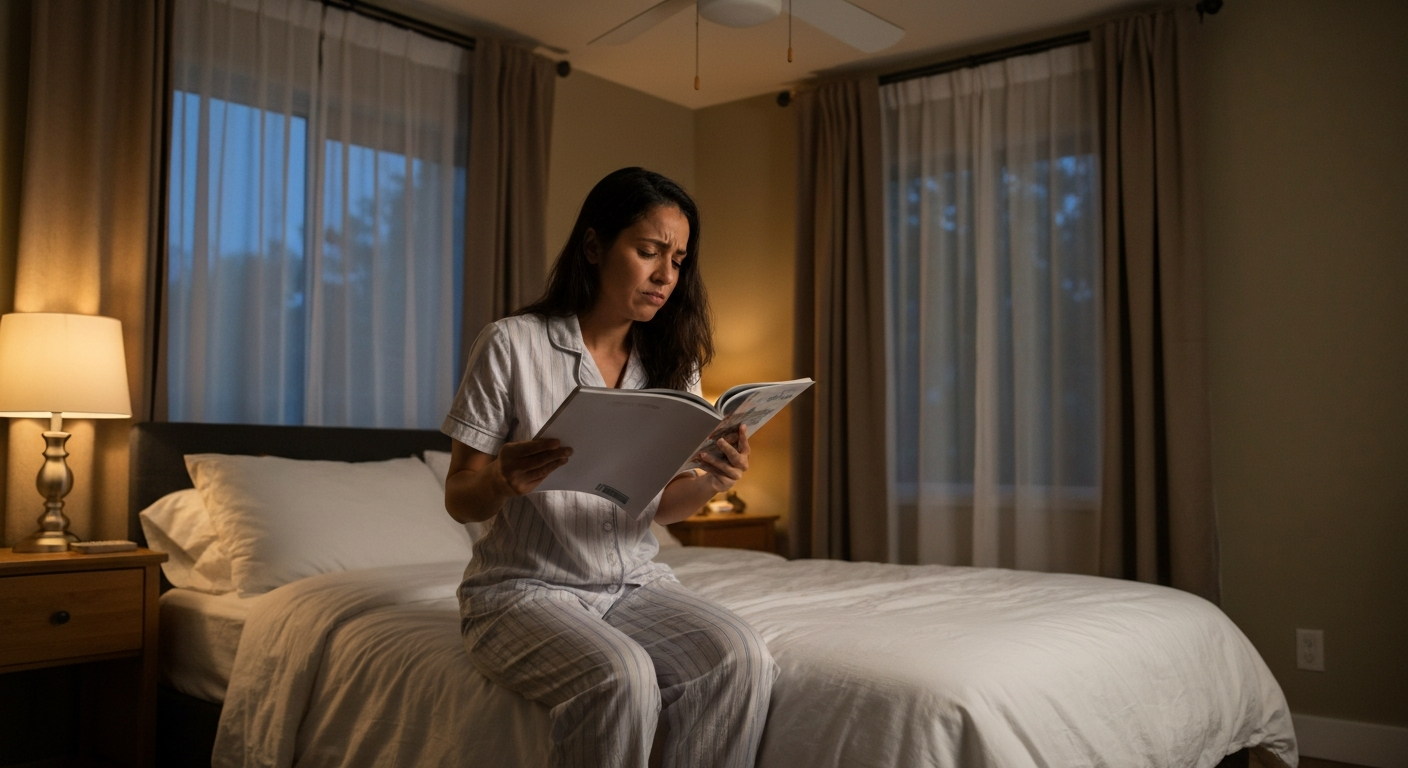

Your bedroom is hotter than the rest of your house because heat naturally rises and gets trapped in upper-floor rooms, poor airflow prevents cooling, or your HVAC system isn't delivering enough conditioned air to that specific space. The fix depends on whether the problem is structural (insulation, sun exposure, ductwork) or behavioral (electronics, closed doors, thermostat placement). Most people can drop their bedroom temperature by 5–10°F with simple adjustments that cost little or nothing.
Heat follows predictable physics: it rises, it transfers through poorly insulated surfaces, and it gets trapped when airflow is restricted.
Understanding why your bedroom specifically runs hot requires thinking about your home as a thermal system. Warm air is less dense than cool air, so it naturally migrates upward through stairwells, gaps around fixtures, and even through ceiling materials. If your bedroom is on an upper floor, it's literally receiving the heat rejected by every room below it.
But location isn't the only factor. Bedrooms tend to be smaller than living spaces, which means the same amount of heat has less volume to disperse into. They also tend to have doors that stay closed—especially at night—which cuts them off from the central air circulation that keeps other rooms comfortable.
The Department of Energy notes that temperature differences of 4–6°F between floors are common in multi-story homes, but differences greater than that typically indicate fixable problems with insulation, air sealing, or duct design.
The most common culprits are poor attic insulation, sun-facing windows, undersized or leaky ductwork, and heat-generating electronics—but the real problem is usually a combination of several factors working together.
Rooms with south-facing or west-facing windows receive the most direct sunlight, especially during afternoon hours when solar gain peaks. A single unshaded window can add the equivalent of a 1,000-watt space heater running continuously during summer afternoons.
West-facing bedrooms are particularly brutal because they absorb heat all afternoon and then trap it into evening hours—exactly when you're trying to sleep. The thermal mass of walls, furniture, and flooring stores that heat and releases it slowly, keeping the room warm well past sunset.
If your bedroom is directly below the attic, insufficient insulation is likely the primary cause of overheating. The sun heats your roof to 150–170°F on summer days, and that heat radiates downward. Without adequate insulation (R-38 to R-60 is recommended for most US climate zones), your ceiling becomes a radiant heating panel.
"Adding insulation to an under-insulated attic is one of the most cost-effective energy improvements a homeowner can make, often paying for itself in 2–4 years through reduced heating and cooling costs." — ENERGY STAR
You can check your attic insulation yourself. If you can see the ceiling joists, you almost certainly need more insulation. Modern standards call for 10–14 inches of fiberglass batts or equivalent.
HVAC systems are designed as a balanced whole. Your bedroom's supply vent needs to deliver a specific volume of conditioned air to offset the room's heat gain. If the vent is undersized, partially closed, blocked by furniture, or served by crimped ductwork, the room won't cool properly.
Check that your supply registers are fully open and unobstructed. Then feel the airflow—it should be strong and noticeably cool. Weak flow suggests a problem upstream in the duct run.
| Symptom | Likely Cause | Fix |
|---|---|---|
| Weak airflow from vent | Duct obstruction, closed damper, or undersized duct | Inspect duct run; have HVAC tech adjust dampers |
| Cool air at vent but room still hot | Insufficient supply for room size | Add a duct booster fan or secondary supply |
| No air at all | Disconnected duct in attic/crawlspace | Reconnect and seal with mastic |
Supply air can only enter a room if return air can exit. When bedroom doors are closed—as they typically are at night—return air must escape through the gap under the door or a dedicated return vent. Standard 1/2-inch door gaps don't provide enough airflow for most bedrooms.
The result is positive pressure that literally pushes against incoming supply air. Your HVAC system is working, but the air has nowhere to go.
Solutions include undercutting the door to create a 1-inch gap, installing a jump duct through the ceiling, or adding a dedicated return vent in the bedroom.
Also Read: Why Is My House So Dry? 7 Causes & How to Fix It
Every watt of electricity consumed in your bedroom eventually becomes heat. A gaming PC can dump 300–500 watts into the room. A 55-inch TV adds 80–150 watts. Even phone chargers, routers, and that old cable box contribute.
This matters more than people realize. A bedroom with a TV, computer, game console, and a few chargers can have 500+ watts of continuous heat generation—equivalent to a small space heater running around the clock.
Relocate electronics to other rooms when possible, or at minimum, turn them off (not just to sleep mode) when not in use.
Most thermostats are installed in hallways or living areas—not bedrooms. If the thermostat's location runs cooler than your bedroom, the system will think the house is at target temperature while your bedroom is still hot.
This is especially problematic when the thermostat is:
- On a lower floor while your bedroom is upstairs
- Near a supply vent that cools it directly
- On an interior wall while your bedroom has exterior exposure
Smart thermostats with remote sensors (Ecobee, newer Nest models) can address this by measuring temperature at multiple points and averaging or prioritizing specific rooms.
Also Read: Why Is My Auxiliary Heat On? 7 Causes & How to Stop It
Ceiling fans should run counterclockwise in summer (when viewed from below), pushing air downward to create a wind-chill effect. Running them clockwise—the winter setting—does the opposite, circulating warm air from the ceiling down without the cooling breeze.
Check the small switch on your fan's motor housing to confirm the direction. In summer mode, you should feel airflow directly below the fan.
Air sealing failures let superheated attic air leak into your bedroom through recessed lights, electrical outlets, attic hatches, and gaps around plumbing penetrations. This infiltration can add hundreds of BTUs per hour of unwanted heat.
Recessed can lights are notorious offenders—older models have gaps around the housing that allow hot attic air to pour directly into the room. Replacing them with airtight IC-rated LED fixtures eliminates this pathway entirely.
The fastest improvements are behavioral and low-cost: improve airflow, reduce internal heat sources, and block solar gain before it enters the room.
Start with these no-cost or low-cost actions:
If these don't solve the problem, move to targeted upgrades:
For solar heat gain: Install blackout cellular shades (the honeycomb design traps an insulating air layer), exterior solar screens (blocks 70–90% of heat before it hits glass), or reflective window film.
For attic heat: Add insulation to reach R-49 minimum in most US zones. Seal air leaks around penetrations with fire-rated caulk and foam. Consider a radiant barrier if your attic reaches extreme temperatures.
For ductwork problems: Have an HVAC technician measure airflow at each register and balance the system using zone dampers. A duct booster fan ($30–80) can increase flow to undersupplied rooms.
For nighttime cooling: A portable AC unit or mini-split provides zone cooling independent of your central system. This makes sense when the bedroom is the only problematic room.
If you've addressed the obvious causes and your bedroom is still 5°F or more hotter than other rooms, it's time for professional diagnostics.
An energy auditor can perform a blower door test to identify air leakage points and use thermal imaging to reveal insulation gaps. HVAC technicians can measure duct leakage and static pressure to diagnose airflow problems.
Issues worth professional attention include:
- Ductwork that was improperly sized during original construction
- Insulation that has settled, gotten wet, or been disturbed by pests
- Radiant roof heat requiring a barrier or improved ventilation
- AC systems that are undersized for your home's actual heat load
The cost of professional diagnosis ($200–500 for an energy audit) is typically recovered quickly through targeted fixes rather than throwing money at the wrong problem.
"A comprehensive energy audit can identify improvements that save 5–30% on energy bills, with the added benefit of increased comfort in problem rooms." — Department of Energy
Your bedroom runs hot because of physics (heat rises, sun exposure, poor insulation) combined with system issues (inadequate airflow, closed-door pressure, thermostat placement). Most people can fix the problem by improving ventilation, blocking solar gain, removing heat-generating electronics, and ensuring supply and return airflow are unobstructed. If basic fixes don't work, professional diagnosis of insulation and ductwork is the next step—targeted solutions beat guesswork every time.
Heat absorbed by your bedroom's walls, ceiling, and furniture during the day radiates back into the room after sunset. This "thermal lag" is worse in rooms with poor insulation or significant west-facing sun exposure. Running a ceiling fan helps because it creates a wind-chill effect even when the actual air temperature is elevated. Opening the bedroom door at night improves circulation with cooler parts of the house.
A portable AC can effectively cool a single room regardless of central system limitations. Units rated at 8,000–10,000 BTU handle most bedrooms well. However, portable units are less efficient than central air or mini-splits because they exhaust some conditioned air through the window vent hose. They work best as a targeted solution for one problem room rather than whole-house cooling.
Closing vents in unused rooms seems logical but often backfires. Residential HVAC systems are designed for balanced airflow—closing vents increases static pressure, which can reduce blower efficiency, increase duct leakage, and actually deliver less air to every room including your bedroom. A better approach is having a technician adjust zone dampers in the ductwork itself, which achieves rebalancing without the negative pressure effects.
Sleep research suggests an optimal bedroom temperature of 60–67°F (15–19°C) for most adults. Your core body temperature naturally drops during sleep, and a cooler room supports this process. If your bedroom runs above 75°F at night, sleep quality suffers—you'll experience more wakefulness, less REM sleep, and feel less rested in the morning even after a full night in bed.
Yes. Reflective or ceramic window films can block 30–80% of solar heat gain depending on the product. They work by reflecting infrared radiation before it passes through the glass. Professional installation costs $5–12 per square foot; DIY films run $1–3 per square foot but require careful application to avoid bubbles. Films work best on windows with direct sun exposure—they make little difference on north-facing or shaded windows.
Reviewed and Updated on May 27, 2026 by George Wright